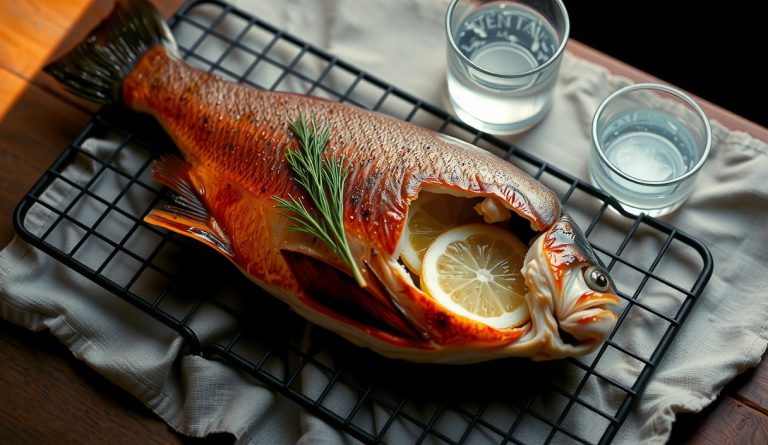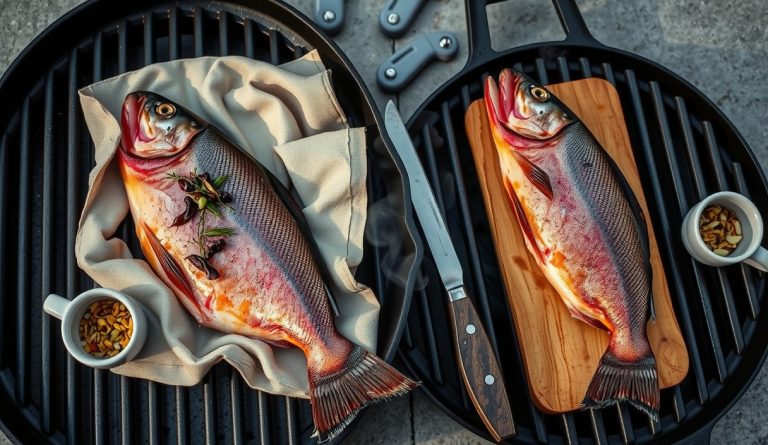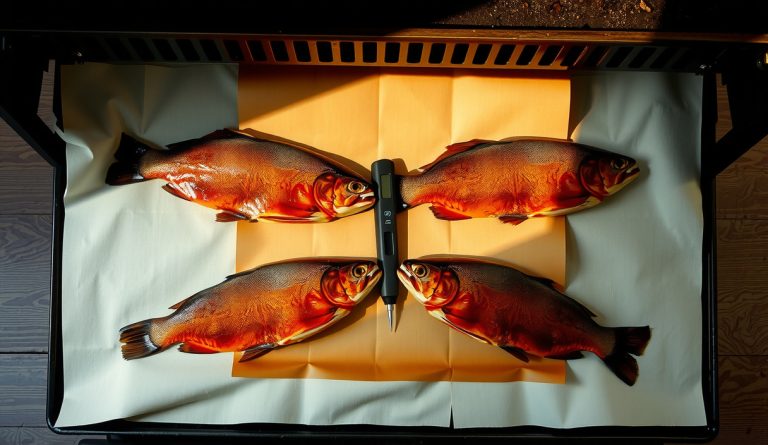
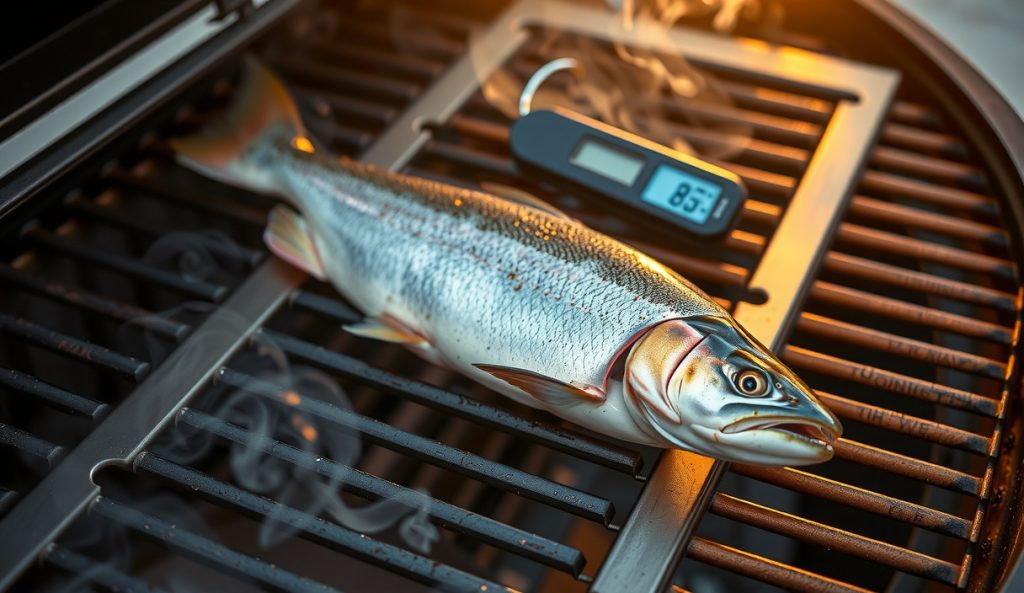
Hot smoking and cold smoking share a wood-and-smoke aesthetic but are operationally and microbiologically distinct processes. This recipe is exclusively a hot-smoke method: the smoker chamber runs well above 140°F and the fish reaches a verified food-safe internal temperature before it leaves the grill. Cold smoking holds the environment below 85°F and does not cook the fish at all — cold smoking relies on a water-activity-reducing cure that typically contains nitrate or nitrite salts to suppress pathogen growth during the extended exposure window. Confusing the two protocols carries real food-safety risk.
What changes between hot smoking and cold smoking?
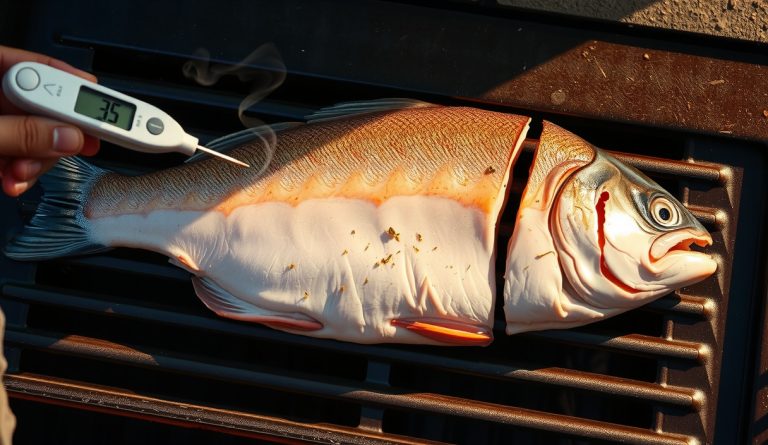
In hot smoking, the chamber temperature drives protein denaturation directly. Myosin in trout muscle begins to denature around 104°F and actin around 140°F; by the time the thickest point of the shoulder flesh reaches the 140–145°F target, the trout is structurally cooked, moisture has migrated outward, and any vegetative pathogens have been eliminated by heat alone. No cure, no nitrate, and no controlled-humidity environment is required because temperature does the safety work.
Cold smoking inverts this logic entirely: the fish is never brought to a lethal temperature for pathogens, so the water activity of the flesh must be pre-reduced through a salt-and-cure step — often an overnight dry or wet brine with curing salts — before smoke is ever applied. The two processes cannot be swapped step-for-step. If you want cold-smoked lox-style trout, that is a separate recipe with separate equipment requirements and a validated curing protocol.
What stays the same in the hot-smoke method?
The wood selection, the dry brine ratio, and the general low-and-slow chamber temperature of around 200°F all remain intact for the hot-smoke method described in the canonical recipe. The goal is still a gentle smoke application that penetrates the flesh without overwhelming a delicate fish. Only the safety mechanism changes — heat, not cure chemistry.
When is hot smoking the better choice for trout?
Hot smoking is the right choice for virtually all home cooks and backyard grillers. Hot smoking requires no specialized curing salts, no humidity-controlled smoking cabinet, and no multi-day preparation window. A standard pellet grill and a reliable instant-read thermometer are all the equipment needed to produce fully cooked, flaky, smoke-infused trout in roughly 90 minutes. Cold smoking is a worthwhile craft, but cold smoking demands equipment precision and food-safety knowledge that go well beyond a single recipe swap.
Use the full method, equipment list, and brine measurements from the original Smoked Whole Rainbow Trout on a Pellet Grill.