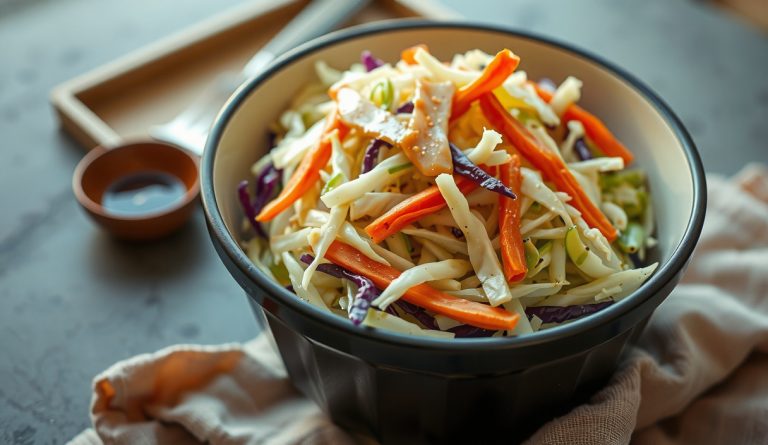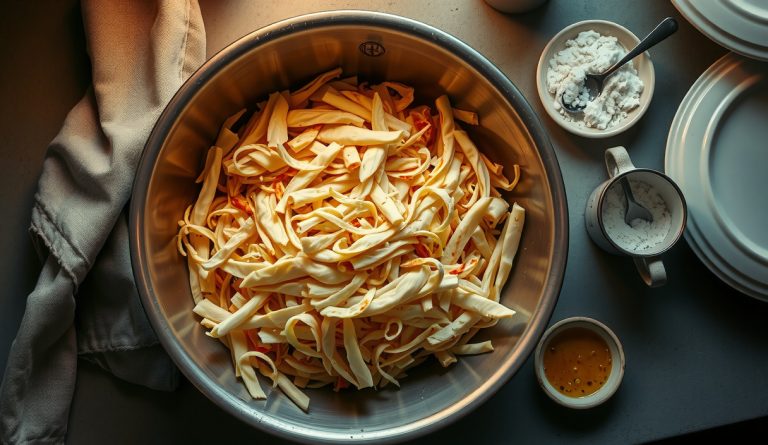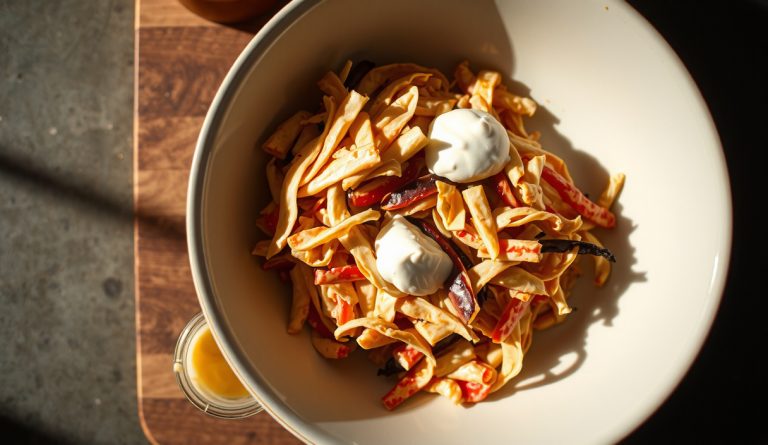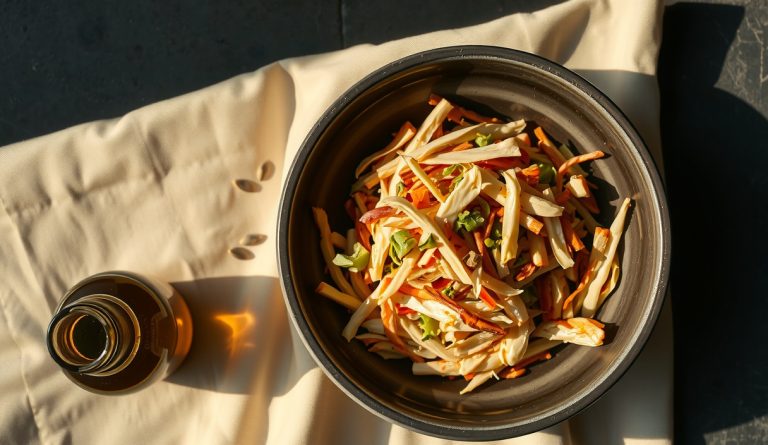
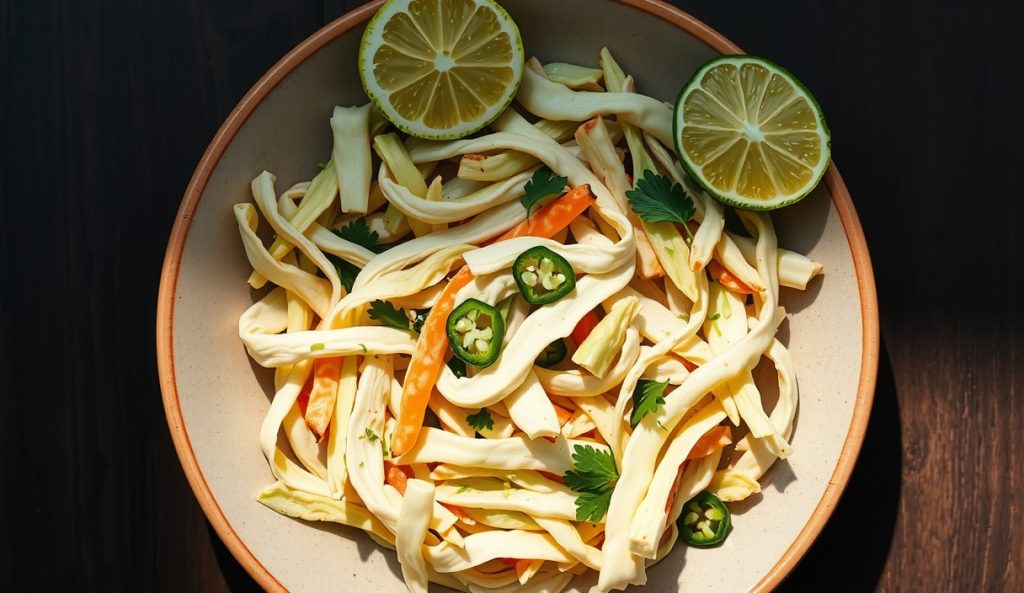
Apple cider vinegar is fermentation-forward — its volatile acids carry stone-fruit and barnyard notes that anchor Classic American barbecue. Lime juice operates at a similar pH range but through an entirely different aromatic register: citrus esters, primarily limonene-adjacent compounds, that feel bright and high rather than deep and tangy. Pair that with fresh jalapeño and the result is a slaw that belongs next to al pastor, achiote-rubbed pork shoulder, or any smoked protein that carries Mexican or Latin flavor architecture. This is not a cross-cultural novelty — it is a deliberate alignment of acid profiles to protein profiles.
What changes in the Jalapeño-Lime riff?
Half the apple cider vinegar is replaced with an equal volume of freshly squeezed lime juice. Bottled lime juice is not an acceptable substitute — the volatile ester content degrades sharply after pasteurization and storage, and the citrus aromatic impact is the primary reason to make this version. Fresh lime juice drops dressing pH by a degree comparable to ACV, so the cabbage-softening and flavor-penetration dynamics during the rest period are nearly equivalent to the base recipe. What changes is the flavor vector: fermentation-forward becomes citrus-forward.
One finely minced jalapeño is added to the dressing. Seeds removed produces medium heat with a clean vegetal note; seeds included drives aggressive heat and a slightly more resinous capsaicin delivery. Add the jalapeño to the dressing before the dressing contacts the cabbage, so the chile oils disperse through the emulsion rather than pooling in hot spots.
What stays the same in this slaw?
The salt-draw step, rest duration, mayonnaise quantity, sugar, and celery seed all carry over from the base recipe without modification. The structural intent — a moisture-purged, acid-dressed slaw that will not puddle on a plate — is identical to the original. Only the aromatic and heat profile shift.
When is the Jalapeño-Lime version the better choice?
Use the Jalapeño-Lime slaw whenever the accompanying protein carries achiote, cumin, citrus marinade, or dried chile rubs — situations where the fermentation notes of ACV create flavor dissonance rather than harmony. This version is also the correct build for fish tacos when a smoked or grilled fish application is on the menu, where apple cider vinegar would read as incongruous against the citrus and chile architecture already present in the dish.
Use the full salt-draw method, rest timing, and base measurements from the original Pit-Master Coleslaw — Vinegar-Forward.