Pit-Master Coleslaw — Vinegar-Forward

Equipment
- 1 Large mixing bowl At least 5-quart capacity for tossing 1.5 lbs of cabbage comfortably
- 1 Colander For draining the osmotically expelled water after the salt draw
- 1 Salad spinner or clean kitchen towels For removing surface moisture after rinsing — critical step for preventing a watery slaw
- 1 Mandoline slicer or sharp chef’s knife Mandoline at 2mm setting gives the most consistent shred; a sharp knife works fine
- 1 Whisk For emulsifying the dressing before it contacts the cabbage
- 1 Kitchen scale Strongly recommended — salt concentration relative to cabbage mass drives the osmotic step
Ingredients
Cabbage
- 1.25 lbs green cabbage about 1/2 medium head, cored and very thinly shredded (approximately 570g); firm, dense head preferred
- 0.25 lb red (purple) cabbage about 1/8 small head, cored and thinly shredded (approximately 115g); adds color and mild sulfur complexity
- 2 medium carrots peeled and coarsely grated on the large holes of a box grater (approximately 110g)
- 10 g kosher salt for the osmotic draw step — approximately 1.5 teaspoons Diamond Crystal or 1 teaspoon Morton kosher; weigh if possible
Vinegar-Dijon Dressing
- 3 tablespoons apple cider vinegar raw unfiltered preferred (5% acidity); adds fermentation-ester depth beyond plain acetic acid
- 1.5 tablespoons smooth Dijon mustard acts as the primary emulsifier via amphiphilic mucilage proteins; whole-grain Dijon is a fine swap for texture variation
- 1.5 tablespoons mayonnaise full-fat; small amount rounds the acidity and extends dressing stability via egg yolk lecithin
- 1 tablespoon neutral oil avocado, grapeseed, or refined sunflower — not EVOO (too assertive)
- 1 teaspoon granulated sugar balances acidity; do not increase — this is a savory-acid profile, not a sweet slaw
- 0.25 teaspoon celery seed non-negotiable for the BBQ pitmaster profile; provides volatile terpene complexity (limonene, selinene)
- 0.25 teaspoon freshly ground black pepper
- 0.5 teaspoon kosher salt for the dressing — adjust after tasting post-rest; the rinsed cabbage will carry some residual salt
Finish
- 3 tablespoons fresh flat-leaf parsley finely chopped; added just before serving for fresh volatile top-notes
- 2 whole scallions thinly sliced, green parts only; adds mild allium brightness without FODMAP fructan load of raw onion

Instructions
Salt Draw — Osmotic Dehydration (30 minutes)
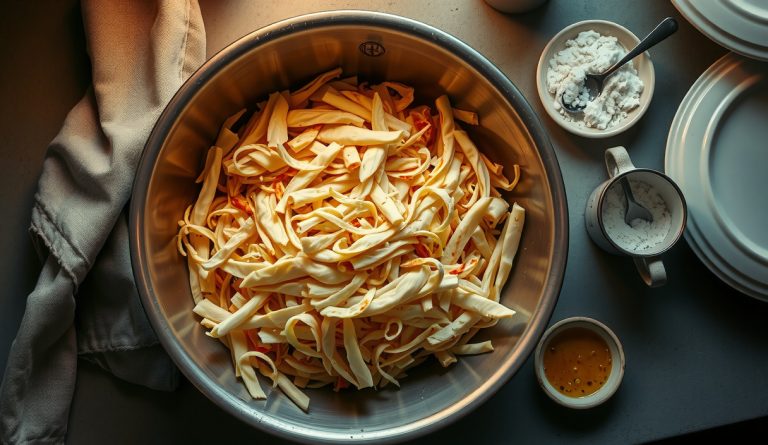
- Combine the shredded green cabbage, red cabbage, and grated carrots in a large bowl. Weigh or measure the kosher salt for the draw step and scatter it evenly over the cabbage. Toss aggressively for 60 seconds with clean hands, squeezing and massaging the salt into the shredded tissue to ensure full surface contact.0.25 lb red (purple) cabbage, 2 medium carrots, 10 g kosher salt
- Set the bowl aside at room temperature for exactly 30 minutes. You will see water begin pooling in the bottom of the bowl within 5 to 8 minutes as osmotic pressure drives intracellular water out through the cabbage cell membranes. Do not rush this step — the full 30 minutes is required to expel a meaningful water fraction and achieve the slightly softened, leathery texture that characterizes properly prepared slaw base.
- Transfer the wilted cabbage to a colander set over the sink. Rinse thoroughly under cold running water, tossing with your hands, for about 30 seconds. Rinse a second time. Taste a shred — it should taste barely, pleasantly salty. If it tastes aggressively salty, rinse a third time. Transfer to a salad spinner and spin until very dry, or spread on clean kitchen towels and squeeze firmly. The cabbage must be as dry as possible before dressing — surface moisture dilutes the emulsion on contact.
Build the Dressing
- In the now-empty large bowl (dried), combine the apple cider vinegar, Dijon mustard, sugar, celery seed, black pepper, and the 0.5 teaspoon of kosher salt for the dressing. Whisk vigorously until the sugar and salt fully dissolve, about 30 seconds. The Dijon mustard will begin to emulsify and thicken the liquid slightly as the whisk incorporates air.3 tablespoons apple cider vinegar, 1.5 tablespoons smooth Dijon mustard, 0.25 teaspoon celery seed, 1 teaspoon granulated sugar, 0.25 teaspoon freshly ground black pepper, 0.5 teaspoon kosher salt
- Drizzle in the neutral oil in a slow, steady stream while whisking constantly to create a temporary oil-in-water emulsion. The dressing should look slightly opaque and unified rather than visibly separated. Whisk in the mayonnaise last until fully smooth and incorporated. The dressing should coat the back of a spoon. Taste it — it should be aggressively vinegary and mustardy at this stage. That sharpness will mellow once it contacts the cabbage.1 tablespoon neutral oil, 1.5 tablespoons mayonnaise
Dress and Rest (1 hour)
- Add the dried salted cabbage and carrots to the bowl with the dressing. Toss thoroughly with tongs or two large spoons for a full 2 minutes, ensuring every shred is evenly coated. The dressing should cling without pooling in the bottom of the bowl. If dressing pools heavily, the cabbage was not dried sufficiently — use the tongs to lift and toss from the bottom, distributing the dressing back upward.0.25 lb red (purple) cabbage, 2 medium carrots
- Cover the bowl tightly with plastic wrap and refrigerate for at least 1 hour before serving. This rest is the flavor-integration step: the apple cider vinegar acids continue mild osmotic conditioning of the cabbage, the celery seed volatile compounds bloom into the fat phase of the dressing, and the dressing loses its raw assembled quality and becomes cohesive. Do not skip this step.
- After the hour rest, remove from the refrigerator and stir from the bottom to redistribute any dressing that has settled. Taste and adjust: if it needs more acid brightness, add a small splash of apple cider vinegar (start with 1 teaspoon). If it tastes flat, it likely needs a tiny pinch more salt. Fold in the fresh chopped parsley and sliced scallion greens now — adding them earlier would cause the parsley to lose its volatile aromatic compounds and the scallions to turn soft and sulfurous in the acid.3 tablespoons fresh flat-leaf parsley, 2 whole scallions
Serve
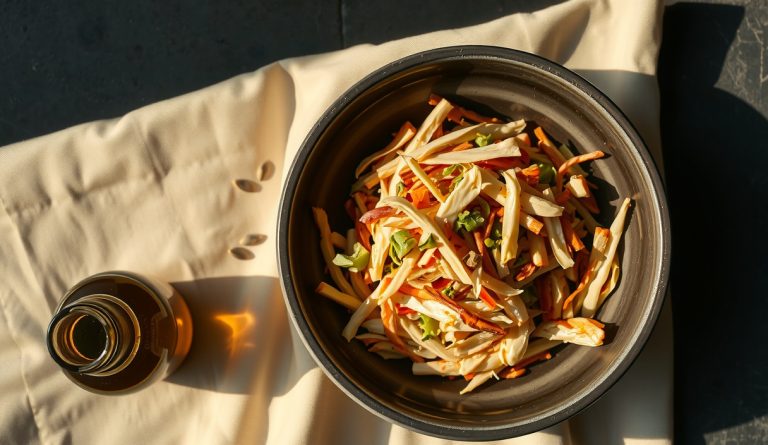
- Transfer the slaw to a chilled serving bowl. Serve immediately alongside smoked meats, BBQ sandwiches, or fried chicken. The slaw holds well refrigerated for up to 18 hours after dressing; beyond that, continued acid exposure softens the texture past the ideal firm-tender bite. Do not let it sit at room temperature for longer than 2 hours once plated.
Notes
Nutrition
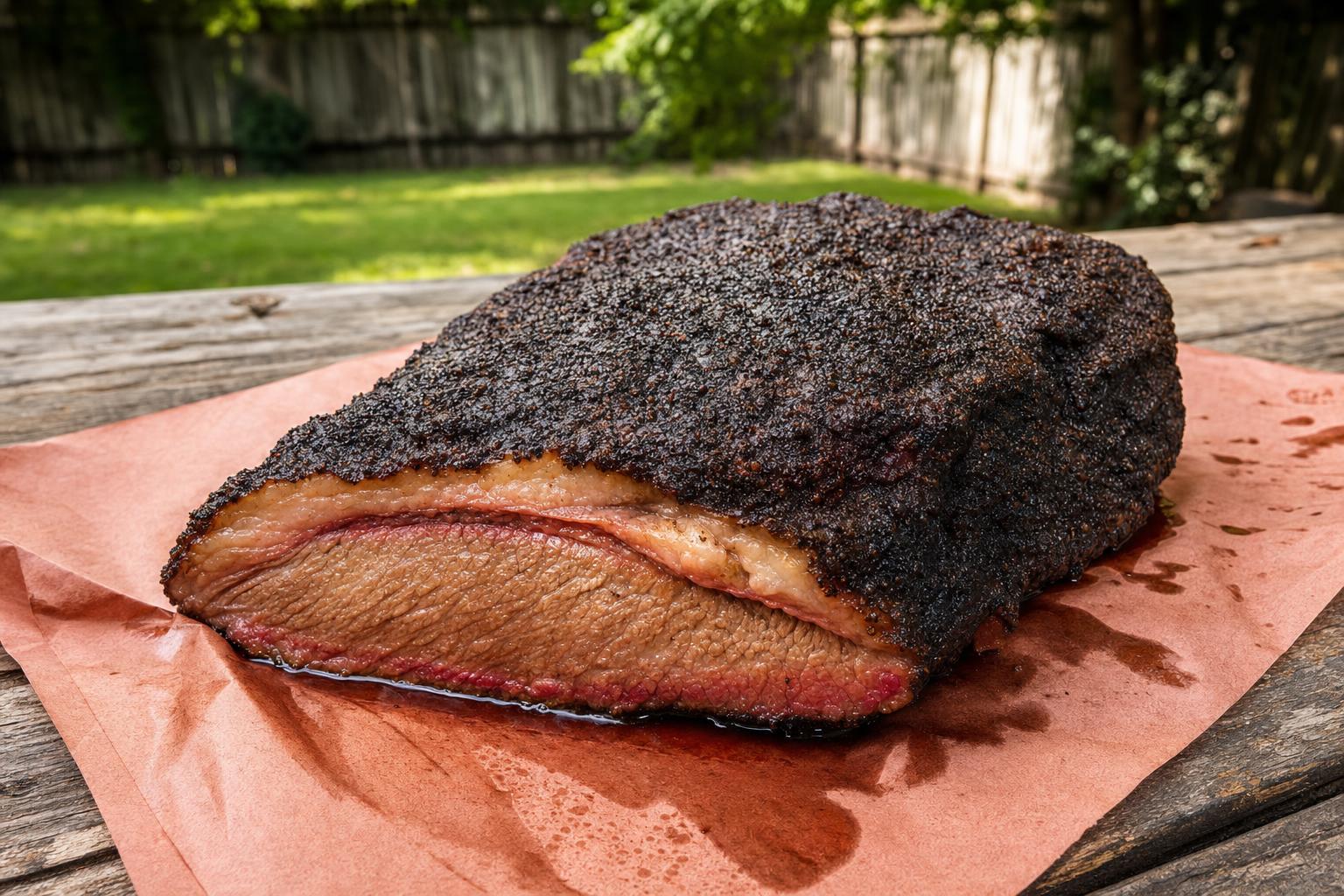
Every pitmaster worth their smoke ring knows that the coleslaw sitting next to the brisket can make or break the plate. Too sweet and it fights the bark. Too wet and it turns your paper-lined tray into a swamp within three minutes of plating. The fix is not a better dressing recipe — it is understanding that coleslaw failure is a water-management problem before it is a flavor problem.
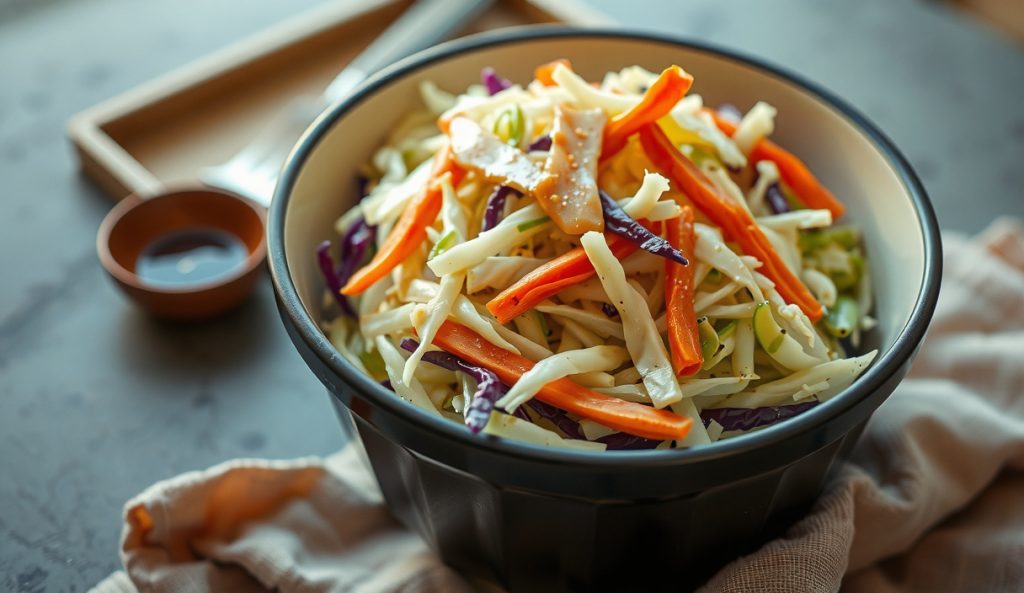
This is the slaw we have been running alongside pulled pork and smoked brisket for years at American Meathead. It is bright, acidic, and assertive enough to cut through rendered fat and heavy smoke. The foundation is apple cider vinegar sharpened with Dijon, held together by a small mayo base that emulsifies the dressing without turning this into a mayonnaise salad. The real technique is the 30-minute salt draw, and the science behind it is worth understanding before you ever pick up a knife.
Why does pit-master coleslaw turn watery — and how does the salt draw fix it?
Coleslaw turns watery because cabbage is approximately 92% water by mass, and that water is held under positive turgor pressure inside intact plant cells. When raw cabbage sits in dressing, acid and osmotic pressure pull that water out after the fact, pooling at the bottom of the bowl. The salt draw solves this by expelling the water before the dressing ever touches the cabbage.
Salting raw cabbage creates a steep osmotic gradient across the semi-permeable cell membranes. Water activity inside each cell is near 1.0, while the salt-saturated exterior environment is dramatically lower. The thermodynamic resolution is inevitable: free water migrates outward through the membranes and out of the shredded tissue in a process called osmotic dehydration. At a salt concentration of roughly 1.5 to 2.0% by weight of the cabbage, the salt draw pulls between 10 and 20% of the total water mass out of the shreds in 30 minutes at room temperature. That expelled water is discarded before the dressing is added — so the vinaigrette is never diluted and the slaw never puddles.
The secondary mechanism is textural. As water exits the cells, the rigid pectin-cellulose cell walls collapse partially inward, softening the cabbage from a snapping-brittle raw texture to a leathery, pliable, pleasantly firm bite. Simultaneously, the osmotic contraction increases the concentration of dissolved flavor compounds — sugars, sulfur-containing glucosinolates, and organic acids — per gram of remaining tissue. The cabbage tastes more like itself after salting, not less. This is the identical principle used in traditional kimchi preparation and German sauerkraut to condition raw brassica before fermentation or dressing.
The dressing is a temporary oil-in-water emulsion anchored by Dijon mustard. Mustard contains amphiphilic proteins and polysaccharides — specifically sinigrin and mucilage compounds — that adsorb to the oil-water interface and reduce interfacial tension, providing short-term kinetic emulsion stability without requiring egg lecithin. A small fraction of mayonnaise (itself a stable O/W emulsion built on egg yolk lipoproteins) extends that stability further and rounds the sharp vinegar edge with fat. The Maillard-derived depth of apple cider vinegar — acetic acid layered over residual fermentation esters like ethyl acetate and 3-methylbutyl acetate — provides the top-note brightness that registers immediately against fatty smoked proteins. Resting the dressed slaw for one hour before service allows those acids to continue the osmotic conditioning already begun by the salt step, further tightening the cabbage texture and marrying the dressing flavor into the vegetable matrix.
What equipment and ingredients do I need for vinegar-forward pit-master coleslaw?
Cabbage: Use a firm head of green cabbage for the structural base — the dense, tightly packed inner leaves have the highest water content and respond best to the salt draw. One cup of shredded red (purple) cabbage adds anthocyanin pigment and a mild sulfur note that reads as complexity, not bitterness. A mandoline set to 2mm gives the most consistent shred; a sharp chef’s knife yields excellent results with a bit more effort. Avoid the pre-shredded bags: they are often 3 to 5 days old, oxidized at the cut surfaces, and the cross-sections have already lost structural integrity that cannot be recovered through salting.
Apple cider vinegar: Raw, unfiltered ACV carries a softer acidity (pH ~3.0 to 3.5) than distilled white vinegar and carries more ester-derived flavor. Pasteurized ACV works identically here since we are not relying on live culture activity. Avoid balsamic or rice wine vinegar — the residual sugar loads shift the flavor profile toward sweet-sour rather than the dry-acid punch this slaw requires. Use full-strength ACV at 5% acidity; diluted or culinary-grade products will flatten the dressing.
Dijon mustard: Whole-grain Dijon is a legitimate swap and adds pleasant textural variation, but smooth Dijon suspends more evenly in the dressing and provides better interfacial activity per gram. Do not use yellow ballpark mustard — the turmeric and high water content will flatten both color and acidity.
Celery seed: Celery seed is non-negotiable for the pit-side flavor profile. Celery seed contains volatile terpenes (limonene, selinene) and phthalide compounds that read as savory-herbal and reinforce the association with classic American BBQ condiment flavors. A quarter teaspoon is the right dose; more tips into medicinal.
Large bowl and colander: A bowl large enough to aggressively toss 1.5 pounds of shredded cabbage is required, along with a colander that fits inside or over a second bowl to drain the expelled water cleanly after the salt step. A salad spinner works excellently for the final moisture removal after rinsing.
Pit-Master Coleslaw — Vinegar-Forward
Equipment
- 1 Large mixing bowl At least 5-quart capacity for tossing 1.5 lbs of cabbage comfortably
- 1 Colander For draining the osmotically expelled water after the salt draw
- 1 Salad spinner or clean kitchen towels For removing surface moisture after rinsing — critical step for preventing a watery slaw
- 1 Mandoline slicer or sharp chef’s knife Mandoline at 2mm setting gives the most consistent shred; a sharp knife works fine
- 1 Whisk For emulsifying the dressing before it contacts the cabbage
- 1 Kitchen scale Strongly recommended — salt concentration relative to cabbage mass drives the osmotic step
Ingredients
Cabbage
- 1.25 lbs green cabbage about 1/2 medium head, cored and very thinly shredded (approximately 570g); firm, dense head preferred
- 0.25 lb red (purple) cabbage about 1/8 small head, cored and thinly shredded (approximately 115g); adds color and mild sulfur complexity
- 2 medium carrots peeled and coarsely grated on the large holes of a box grater (approximately 110g)
- 10 g kosher salt for the osmotic draw step — approximately 1.5 teaspoons Diamond Crystal or 1 teaspoon Morton kosher; weigh if possible
Vinegar-Dijon Dressing
- 3 tablespoons apple cider vinegar raw unfiltered preferred (5% acidity); adds fermentation-ester depth beyond plain acetic acid
- 1.5 tablespoons smooth Dijon mustard acts as the primary emulsifier via amphiphilic mucilage proteins; whole-grain Dijon is a fine swap for texture variation
- 1.5 tablespoons mayonnaise full-fat; small amount rounds the acidity and extends dressing stability via egg yolk lecithin
- 1 tablespoon neutral oil avocado, grapeseed, or refined sunflower — not EVOO (too assertive)
- 1 teaspoon granulated sugar balances acidity; do not increase — this is a savory-acid profile, not a sweet slaw
- 0.25 teaspoon celery seed non-negotiable for the BBQ pitmaster profile; provides volatile terpene complexity (limonene, selinene)
- 0.25 teaspoon freshly ground black pepper
- 0.5 teaspoon kosher salt for the dressing — adjust after tasting post-rest; the rinsed cabbage will carry some residual salt
Finish
- 3 tablespoons fresh flat-leaf parsley finely chopped; added just before serving for fresh volatile top-notes
- 2 whole scallions thinly sliced, green parts only; adds mild allium brightness without FODMAP fructan load of raw onion
Instructions
Salt Draw — Osmotic Dehydration (30 minutes)
- Combine the shredded green cabbage, red cabbage, and grated carrots in a large bowl. Weigh or measure the kosher salt for the draw step and scatter it evenly over the cabbage. Toss aggressively for 60 seconds with clean hands, squeezing and massaging the salt into the shredded tissue to ensure full surface contact.0.25 lb red (purple) cabbage, 2 medium carrots, 10 g kosher salt
- Set the bowl aside at room temperature for exactly 30 minutes. You will see water begin pooling in the bottom of the bowl within 5 to 8 minutes as osmotic pressure drives intracellular water out through the cabbage cell membranes. Do not rush this step — the full 30 minutes is required to expel a meaningful water fraction and achieve the slightly softened, leathery texture that characterizes properly prepared slaw base.
- Transfer the wilted cabbage to a colander set over the sink. Rinse thoroughly under cold running water, tossing with your hands, for about 30 seconds. Rinse a second time. Taste a shred — it should taste barely, pleasantly salty. If it tastes aggressively salty, rinse a third time. Transfer to a salad spinner and spin until very dry, or spread on clean kitchen towels and squeeze firmly. The cabbage must be as dry as possible before dressing — surface moisture dilutes the emulsion on contact.
Build the Dressing
- In the now-empty large bowl (dried), combine the apple cider vinegar, Dijon mustard, sugar, celery seed, black pepper, and the 0.5 teaspoon of kosher salt for the dressing. Whisk vigorously until the sugar and salt fully dissolve, about 30 seconds. The Dijon mustard will begin to emulsify and thicken the liquid slightly as the whisk incorporates air.3 tablespoons apple cider vinegar, 1.5 tablespoons smooth Dijon mustard, 0.25 teaspoon celery seed, 1 teaspoon granulated sugar, 0.25 teaspoon freshly ground black pepper, 0.5 teaspoon kosher salt
- Drizzle in the neutral oil in a slow, steady stream while whisking constantly to create a temporary oil-in-water emulsion. The dressing should look slightly opaque and unified rather than visibly separated. Whisk in the mayonnaise last until fully smooth and incorporated. The dressing should coat the back of a spoon. Taste it — it should be aggressively vinegary and mustardy at this stage. That sharpness will mellow once it contacts the cabbage.1 tablespoon neutral oil, 1.5 tablespoons mayonnaise
Dress and Rest (1 hour)
- Add the dried salted cabbage and carrots to the bowl with the dressing. Toss thoroughly with tongs or two large spoons for a full 2 minutes, ensuring every shred is evenly coated. The dressing should cling without pooling in the bottom of the bowl. If dressing pools heavily, the cabbage was not dried sufficiently — use the tongs to lift and toss from the bottom, distributing the dressing back upward.0.25 lb red (purple) cabbage, 2 medium carrots
- Cover the bowl tightly with plastic wrap and refrigerate for at least 1 hour before serving. This rest is the flavor-integration step: the apple cider vinegar acids continue mild osmotic conditioning of the cabbage, the celery seed volatile compounds bloom into the fat phase of the dressing, and the dressing loses its raw assembled quality and becomes cohesive. Do not skip this step.
- After the hour rest, remove from the refrigerator and stir from the bottom to redistribute any dressing that has settled. Taste and adjust: if it needs more acid brightness, add a small splash of apple cider vinegar (start with 1 teaspoon). If it tastes flat, it likely needs a tiny pinch more salt. Fold in the fresh chopped parsley and sliced scallion greens now — adding them earlier would cause the parsley to lose its volatile aromatic compounds and the scallions to turn soft and sulfurous in the acid.3 tablespoons fresh flat-leaf parsley, 2 whole scallions
Serve
- Transfer the slaw to a chilled serving bowl. Serve immediately alongside smoked meats, BBQ sandwiches, or fried chicken. The slaw holds well refrigerated for up to 18 hours after dressing; beyond that, continued acid exposure softens the texture past the ideal firm-tender bite. Do not let it sit at room temperature for longer than 2 hours once plated.
Notes
Nutrition
How do I nail pit-master coleslaw every time?
- Weigh the salt, do not eyeball it. The osmotic gradient depends on salt concentration relative to cabbage mass. Too little salt and water does not move fast enough; too much and it cannot be fully rinsed out, leaving a saline slaw that overpowers the dressing. Target 1.5% to 2.0% salt by weight of the shredded cabbage — that is 10 to 13 grams per 650 grams of cabbage.
- Rinse and dry thoroughly after salting. The most common failure is skipping or rushing the rinse step. Residual surface salt after the draw will push the final seasoning over the edge. Rinse twice under cold water, then spin or squeeze dry. The cabbage should taste barely salty at this stage — the dressing carries the rest.
- Build the dressing in the bowl before adding cabbage. Whisk the vinegar, Dijon, sugar, and celery seed together first, then stream in the oil while whisking to create at least a temporary emulsion. Add the mayo last and whisk it in smooth. Tossing dry cabbage into undispersed vinegar creates uneven coating and hot acid spots.
- Do not skip the one-hour rest. Fresh-dressed slaw has raw dressing flavor — the individual components are detectable separately. After one hour refrigerated, the acids continue mild osmotic conditioning, the dressing penetrates the slightly softened cell structure, and the celery seed blooms its volatile compounds into the fat phase. The slaw becomes cohesive rather than assembled.
- Taste and adjust acid only after the rest. Cabbage releases residual sugars as it sits, slightly softening the perceived sharpness of the vinegar. What tastes aggressively tart at the time of dressing will be correct after the rest. Add a second splash of ACV only if the slaw still tastes flat after the hour is up.
- Serve cold and plate last. Cold temperature increases the viscosity of the mayo emulsion and keeps the dressing from sliding off the cabbage. Plate the slaw directly from the refrigerator and serve within two hours of plating for maximum textural contrast against the hot smoked meat.
What variations can I make on this vinegar coleslaw?
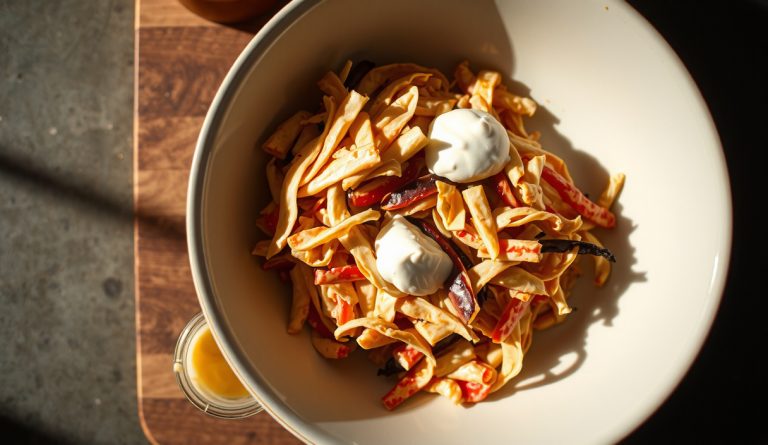
Creamy vinegar hybrid: For crowds that want a bit more richness without losing the acid punch, double the mayonnaise to 3 tablespoons and add 2 tablespoons of sour cream. The added casein proteins in the sour cream further stabilize the emulsion and provide a lactic acid note that is distinct from but complementary to the apple cider vinegar. Keep all other ratios identical.
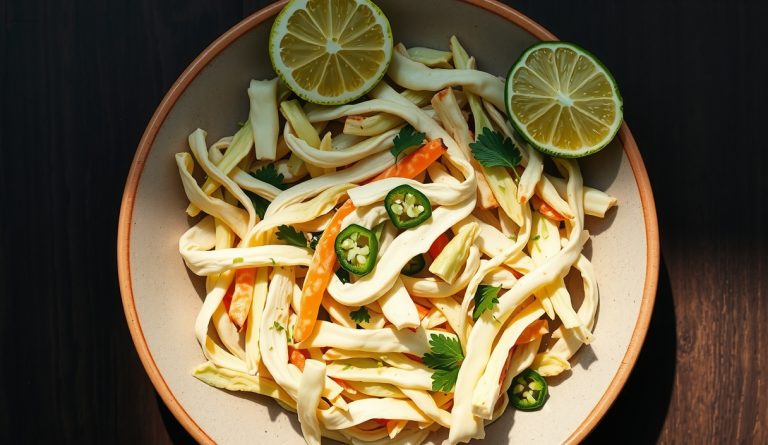
Jalapeño-lime riff: Substitute half the apple cider vinegar with fresh lime juice and add one finely minced jalapeño (seeds removed for medium heat, seeds in for aggressive heat). Lime juice drops the pH by a similar degree to ACV but carries different volatile esters — citrus-forward rather than fermentation-forward — which pairs particularly well with Mexican-style smoked meats like al pastor or achiote-rubbed pork shoulder.
No-mayo / dairy-free: Replace the mayonnaise entirely with 1 extra tablespoon of a neutral oil (avocado or refined sunflower) plus 1 teaspoon of aquafaba (chickpea brine). The aquafaba provides saponin and protein-based interfacial activity that mimics some of the emulsifying load previously carried by egg yolk lecithin in the mayo. The dressing will be slightly thinner and less rich but is fully functional and vegan-compatible.
Scaling up for competition BBQ: This recipe scales linearly with no changes to technique. For 10 pounds of cabbage (a competition or catering volume), increase salt to 145 grams, use a large sheet-pan hotel pan for the salt draw, and dress in two large batches to ensure even coating. The one-hour rest holds at any scale. Do not increase the sugar — the sweetness threshold becomes cloying at high volume even when the acid is proportionally scaled.
Frequently asked questions about pit-master vinegar coleslaw
Can I make this coleslaw the night before? Yes, with one caveat. Dress and rest the slaw for the initial hour as directed, then taste and finalize seasoning. Cover tightly and refrigerate for up to 18 hours. Beyond 18 hours, the acetic acid continues to denature cell wall pectins via beta-elimination, softening the cabbage past the ideal firm-tender texture into something closer to a pickle. The flavor will still be good, but the texture will be noticeably softer — fine for a sandwich topping, less ideal as a standalone side dish.
Why does coleslaw always end up watery at the bottom of the bowl? The cause is skipping or shortcutting the osmotic dehydration step. Water that was not expelled during the salt draw gets pulled out by the acetic acid in the dressing after the fact, pooling at the bottom of the bowl. There is no technique fix once the slaw is dressed — the only solution is to commit to the full 30-minute salt draw and thorough drying before dressing. The expelled liquid collected during the salt step is exactly the water that would otherwise appear in the bowl at the table.
Why does the cabbage taste flat even after salting and dressing? Two likely culprits: over-rinsing removed too much surface flavor along with the salt, or the cabbage was already old. Cabbage stored for more than a week post-harvest has undergone significant glucosinolate degradation — the sulfur-forward flavor compounds that give cabbage its character have partially broken down. Buy the firmest, densest head available and use it within two to three days of purchase. If the raw shred tastes watery and bland before salting, no amount of dressing will rescue it. Also verify that the apple cider vinegar is full-strength at 5% acidity rather than a diluted or culinary-grade product.