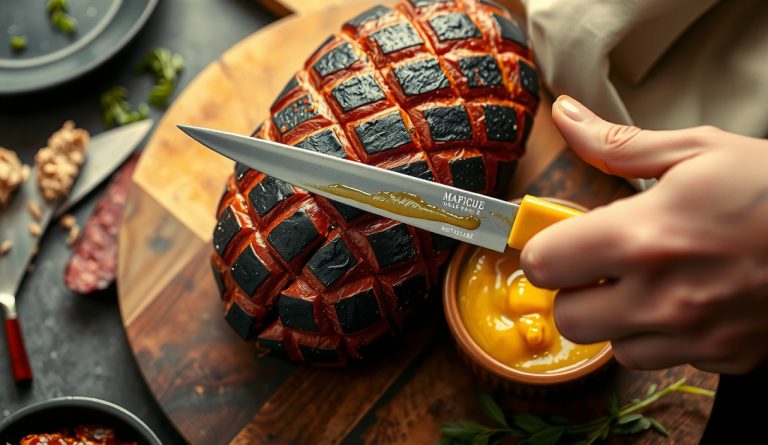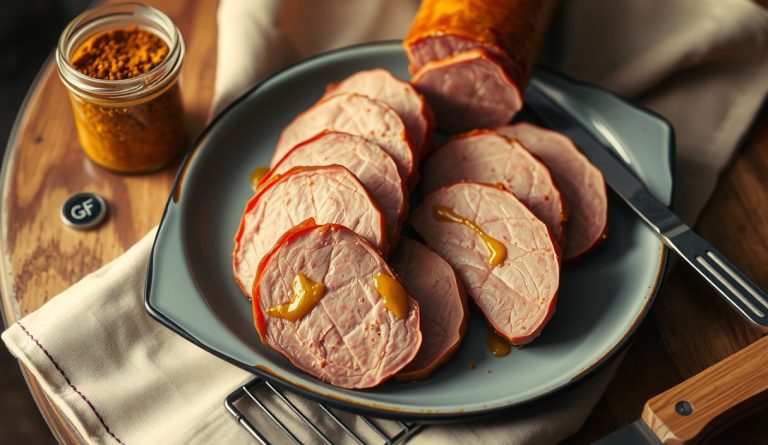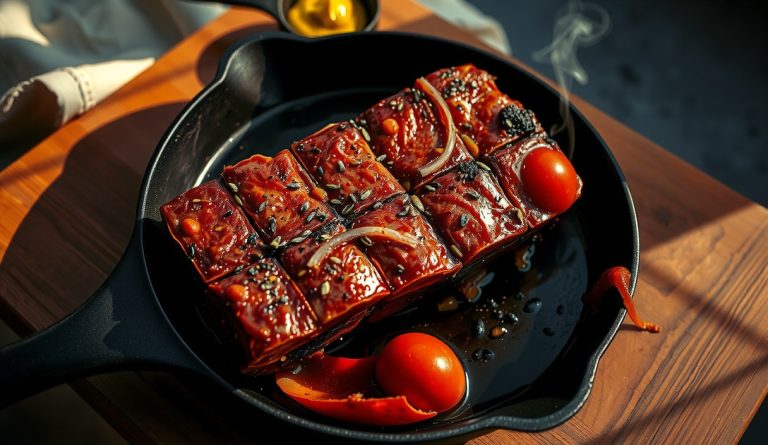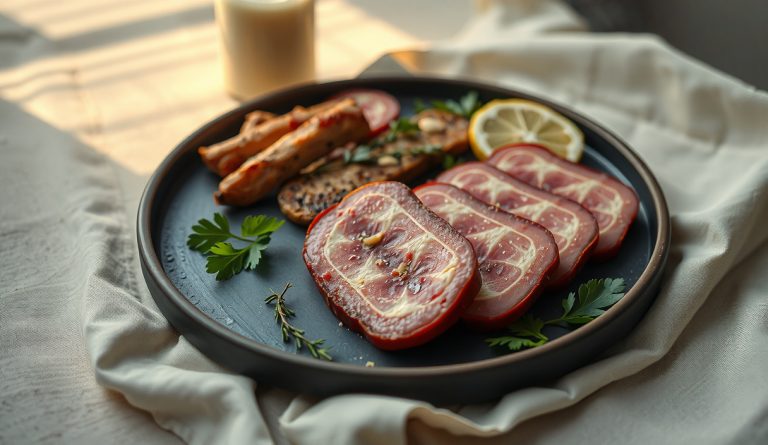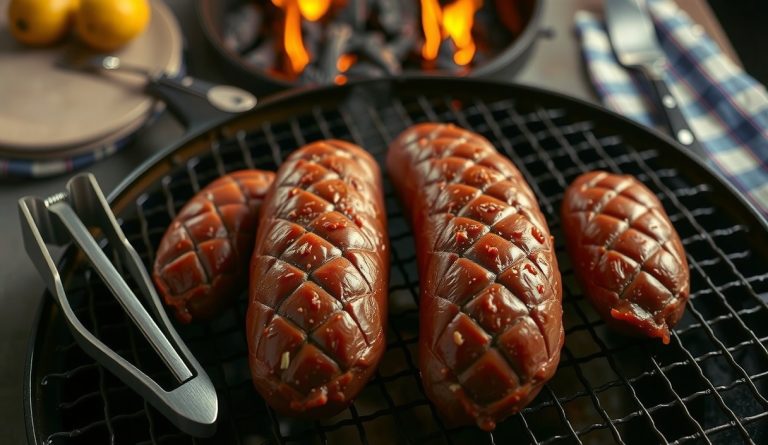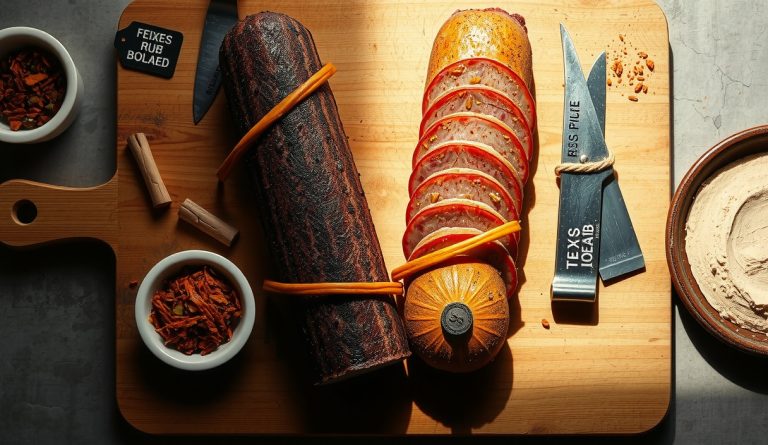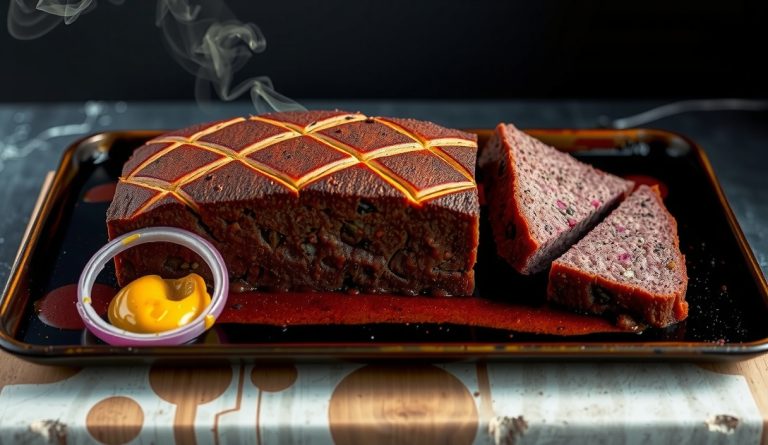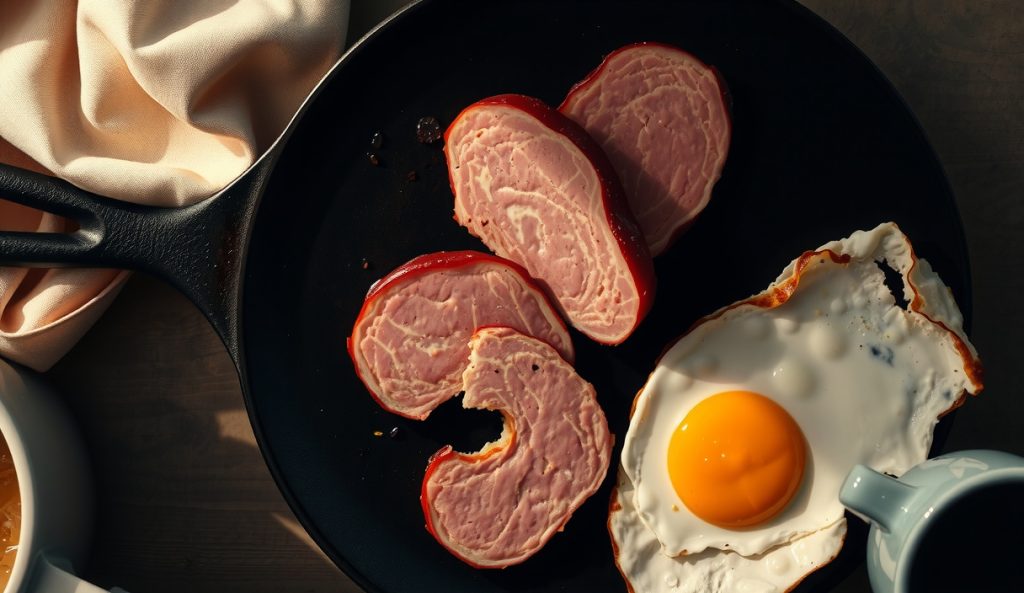
Smoked bologna does not have to live on white bread with yellow mustard. This Midwest Diner Breakfast Plate variation repositions the finished chub as a breakfast protein: sliced thick, seared hard on cast iron, and plated alongside scrambled eggs and hash browns. The combination of low-and-slow smoke and high-heat sear produces a depth of flavor no commercially produced breakfast sausage patty can replicate, and the active cook time after slicing is under five minutes.
What changes for the breakfast plate variation?
Slice the smoked and rested bologna into half-inch rounds. Any thinner and the slices curl aggressively under high heat; any thicker and the center stays cold before the exterior colors properly. Heat a cast-iron skillet or flat-top griddle to screaming hot over direct high heat and sear each slice for 90 seconds per side with no added fat — the rendered fat already present in the bologna is sufficient to drive the sear.
Here is why the second sear is worth understanding: the Maillard reaction is not exhausted after the initial smoke. The pre-smoked surface still contains free amino acids and reducing sugars available for further browning reactions. At the 300–350°F surface temperature of a hot cast-iron pan, pyrazine and pyrrole formation accelerates in a distinct second wave, creating a crispier, more intensely savory bark layer on top of the one developed in the smoker. A single half-inch slice of smoked bologna therefore carries two chemically distinct layers of browning — one from the smoker, one from the skillet.
What stays the same from the original smoked bologna recipe?
The full four-hour smoke, the rub application, and the bark development process are unchanged for the breakfast plate variation. The cast-iron sear is a finishing step applied only after the chub has been smoked and fully rested. Rub chemistry, wood selection, and cooker temperature protocol remain identical to the canonical recipe.
When is the breakfast plate variation the better choice?
Use this variation when serving a weekend breakfast or brunch for a group, or when leftover smoked bologna from a previous cook needs to be transformed into something that feels intentional rather than reheated. The griddle sear takes fewer than four minutes per batch and produces a plated protein that is meaningfully more interesting than bacon, sausage patties, or deli ham for the same level of effort.
Use the full method, equipment, and rub measurements from the original Smoked Bologna — Oklahoma Steakhouse Style.