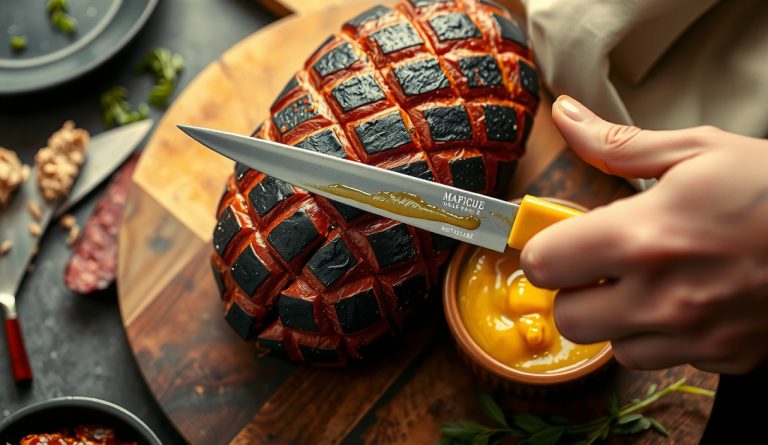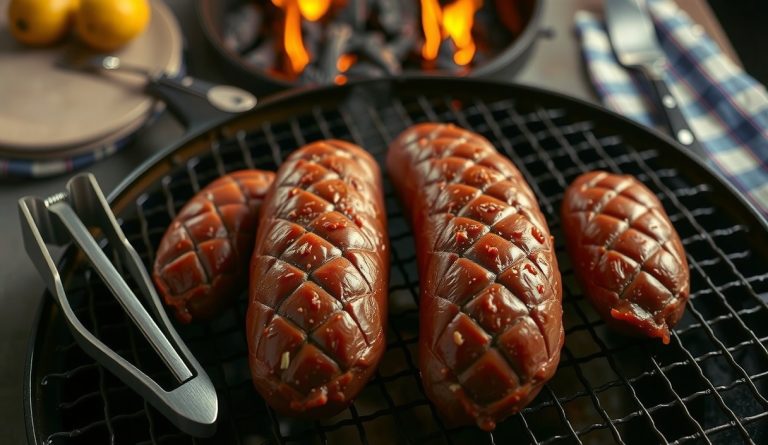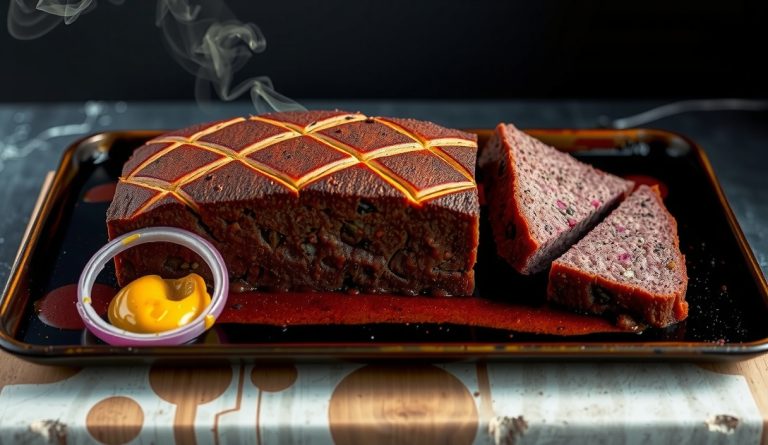
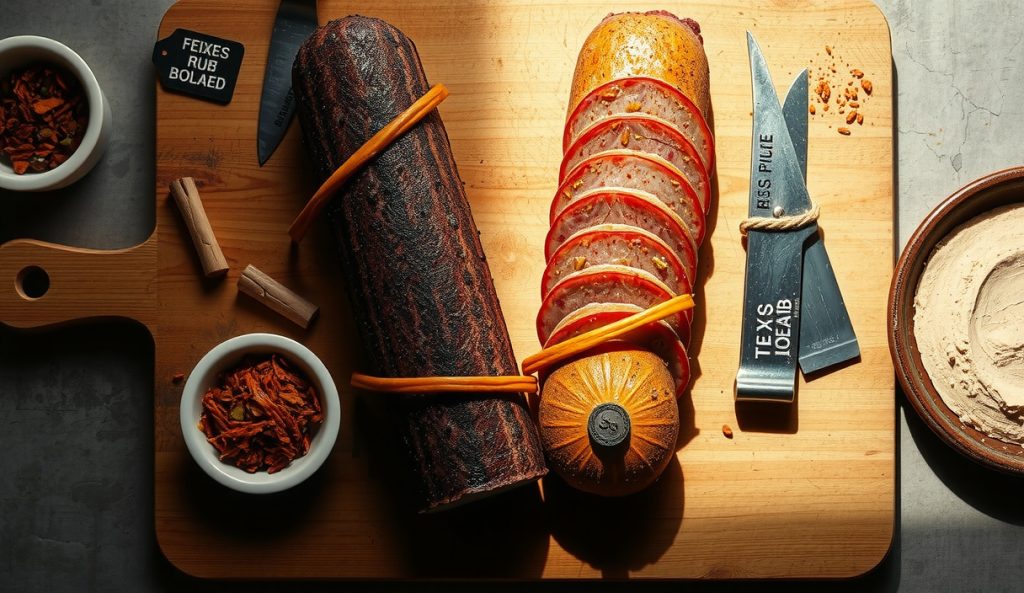
The emulsified surface of a bologna chub is unusually receptive to rub reformulation. Unlike a porous muscle cut where fat cap coverage and moisture migration affect spice adhesion, bologna’s uniform exterior accepts dry rub evenly across its entire surface when a mustard binder is applied first. That consistency makes the bologna chub a clean canvas for regional rub profiles without any adjustment to technique, temperature, or timing.
What changes between the Texas and Memphis rub variations?
For a Texas-style profile, eliminate brown sugar entirely and build the rub from coarse black pepper (2 tablespoons), kosher salt (1 tablespoon), granulated garlic (1 teaspoon), and ancho chili powder (1 teaspoon). This rub is a direct derivative of the Central Texas brisket tradition — salt and pepper form the structural base, with ancho providing mild, fruit-forward heat rather than cayenne’s sharper, more linear burn. Ancho’s capsaicin concentration runs lower than cayenne’s by a significant margin, and its dried fruit esters contribute a complexity that reads as savory rather than sweet.
For a Memphis-adjacent profile, retain the canonical rub’s base ratios but add 1 tablespoon of celery salt and reduce cayenne to a pinch. Memphis dry-rub tradition leans on celery salt as a signature aromatic note — the compound 3-n-butylphthalide, present in celery seed, contributes an herbal, slightly bitter undertone that balances the sweetness of brown sugar and frames the smoke differently than a pure pepper-forward build. The result is a subtler, more approachable heat profile suited to guests who find the canonical rub’s cayenne level aggressive.
What stays the same across all rub variations?
The mustard binder, scoring pattern, smoke temperature, cook time, wood selection, and all post-cook handling remain identical to the canonical recipe. Rub reformulation affects flavor profile only — it has no measurable effect on bark formation rate, internal temperature targets, or slicing behavior. Apply whichever rub variant you choose at the same stage and in the same quantity as the base recipe specifies.
When is each rub variation the better choice?
Choose the Texas-style rub when you want the smoke and the meat to carry the cook — it is the right call for an audience already comfortable with low-and-slow beef flavors, or when pairing with a heavier sauce on the side. Choose the Memphis build when the crowd skews toward milder heat preferences or when the bologna is being served alongside sweeter sides like baked beans and coleslaw, where the celery salt’s herbal note provides contrast rather than redundancy.
Use the full method, equipment, and scoring technique from the original Smoked Bologna — Oklahoma Steakhouse Style.