Smoked Bologna — Oklahoma Steakhouse Style
Equipment
- 1 Smoker or kettle grill Offset, pellet, charcoal kettle, or gas grill with 2-zone setup — all work. Target 225°F with indirect heat.
- 4 to 6 chunks Hickory wood chunks or chips Chunks for offsets and kettles; chips in a foil packet or smoker box for gas grills. Replenish chips at 90 minutes.
- 1 Sharp boning or chef’s knife Must be sharp — the emulsified bologna gel resists a dull blade and will tear rather than score cleanly.
- 1 Instant-read thermometer Used to monitor smoker temperature, not a required endpoint temp for the bologna itself.
- 1 Wire rack Set inside a sheet pan for resting and transport. Keeps the bark from softening against a flat surface.
Ingredients
The Bologna
- 1 whole bologna chub or ring bologna 5 lb / approximately 2.3 kg. Ring or club style both work. If casing is plastic, peel before scoring. If fibrous or natural, score through the casing.
Mustard Binder
- 3 tablespoons yellow mustard Standard American yellow mustard (French’s or Heinz). Dijon works but changes the surface character slightly.
BBQ Rub
- 2 tablespoons brown sugar Light or dark both work. Dark brown sugar gives deeper molasses notes in the bark.
- 1 tablespoon smoked paprika
- 1 tablespoon kosher salt
- 1 teaspoon coarse black pepper Freshly ground if possible — pre-ground works but delivers less volatile aromatic punch.
- 1 teaspoon garlic powder
- 1 teaspoon onion powder
- ½ teaspoon cayenne pepper Reduce to 1/4 teaspoon for a milder rub, increase to 1 teaspoon for a hot version.
- ½ teaspoon dry mustard powder Amplifies the mustard binder note and adds low-level TRPV1 trigeminal warmth to the bark.
For Serving
- 20 slices white sandwich bread Soft white bread — Wonder Bread or equivalent. 2 slices per sandwich.
- yellow mustard, for serving Optional but traditional.
- BBQ sauce, for serving Optional. A tangy, vinegar-forward Kansas City or Oklahoma-style sauce works best.

Instructions
Prep the Chub
- If the bologna has a plastic casing, peel it off completely and discard. If it has a fibrous or natural casing, leave it on — it will score and smoke beautifully. Pat the surface dry with paper towels if it is wet from refrigeration.
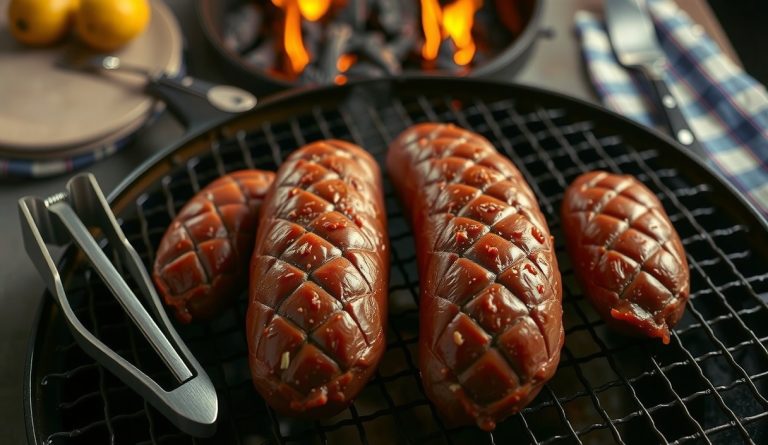
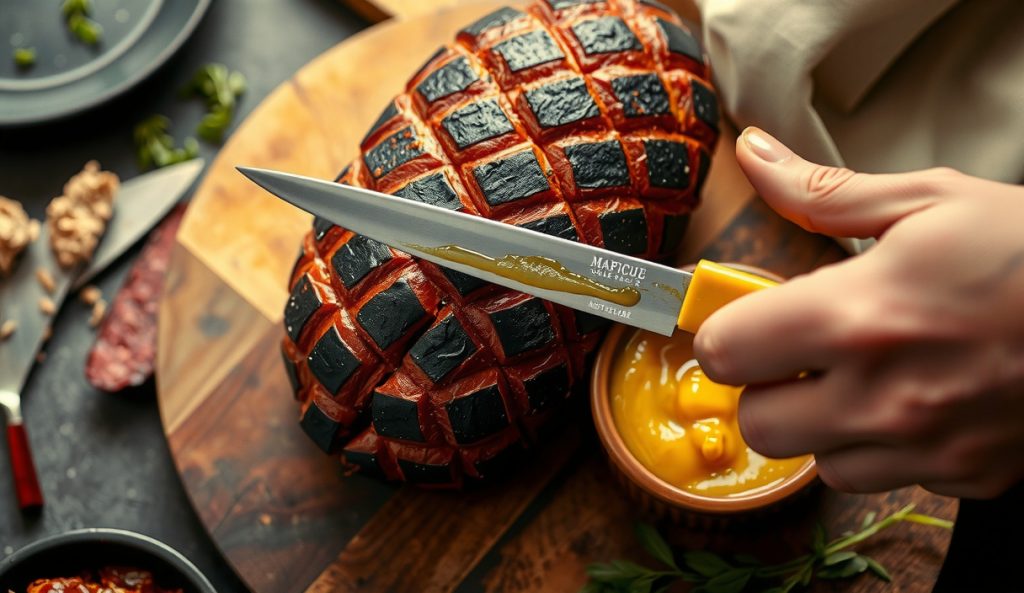
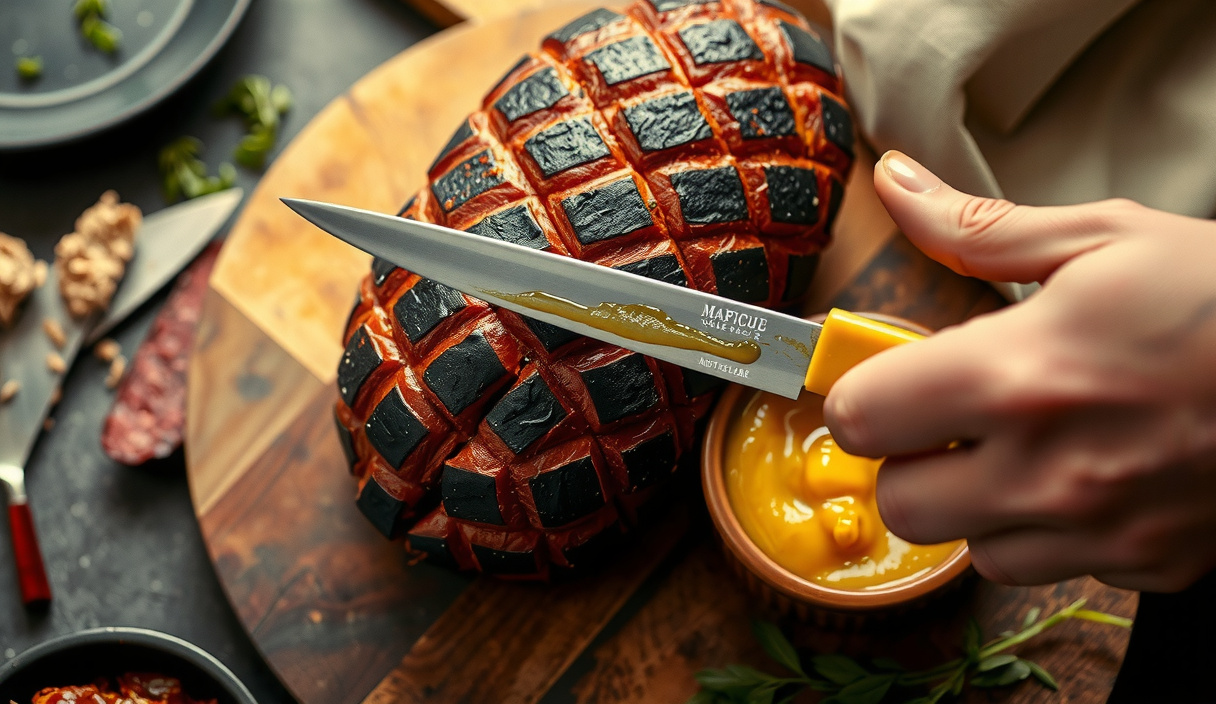
- Using a sharp boning knife, score the entire surface of the bologna in a crosshatch pattern: make diagonal cuts approximately 1 inch apart at a 45-degree angle, then rotate the knife 90 degrees and repeat to create a diamond grid. Cut at least 1/4 inch deep — you want to visibly open the surface. Work all the way around the circumference, the top, the bottom, and both flat ends. Missing any section will result in patchy bark.
- Apply the yellow mustard all over the scored surface, using your hands or a brush to work it into the cuts. You want a thin, even slick — not a thick paste. The mustard will be invisible in the final product but holds the rub and structurally improves bark adhesion.
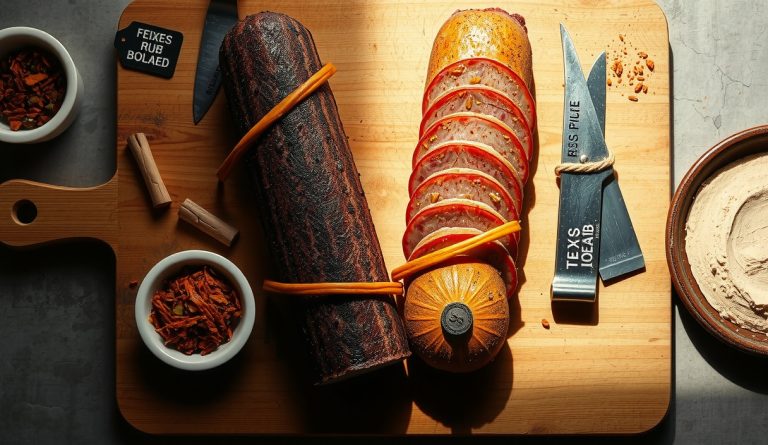
- Combine all rub ingredients in a small bowl and mix thoroughly. Apply the rub generously over the entire mustard-coated surface, pressing it firmly into the scored cuts. The mustard binder should hold the rub in place without sliding. Let the rub-coated bologna rest at room temperature for 20 to 30 minutes while you prep the smoker — this gives the salt time to begin drawing surface moisture and helps the rub adhere further.1 tablespoon smoked paprika, 1 tablespoon kosher salt, 1 teaspoon coarse black pepper, 1 teaspoon garlic powder, 1 teaspoon onion powder, 1/2 teaspoon cayenne pepper, 1/2 teaspoon dry mustard powder
Fire Up the Smoker
- Preheat your smoker, kettle, or grill to a stable 225°F using indirect heat. Add 4 to 6 hickory wood chunks (or a foil packet of hickory chips for gas grills) to the fire. Wait until the smoke runs thin and blue-gray before loading the meat. White or gray billowing smoke indicates incomplete combustion and will produce a bitter, acrid bark — let the fire stabilize first.
Smoke
- Place the bologna directly on the grate over indirect heat. Close the lid. Smoke at 225°F for 4 hours, maintaining a steady temperature and thin blue smoke throughout. Resist the urge to open the lid more than once per hour — every lid lift drops the chamber temperature and extends your cook.
- At the 90-minute mark, check the smoke source. If using chips in a foil packet on a gas grill, replenish the chips now. If using wood chunks in an offset or kettle, add one additional chunk if needed. The bark will be visibly forming — the surface should be starting to turn from reddish-brown to a deeper mahogany.
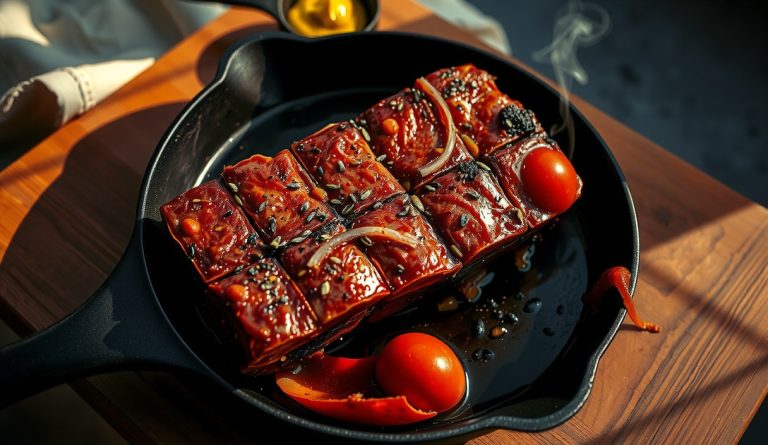
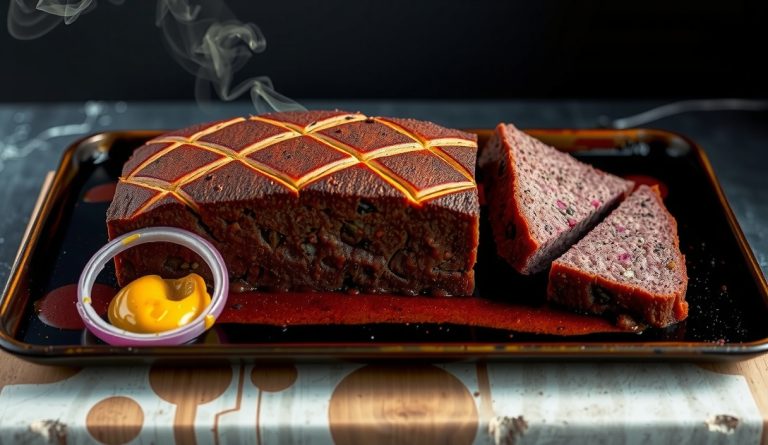
- At 4 hours, the bologna should have a deep mahogany to dark brown bark all over, the score lines will have opened and caramelized, and the surface will be slightly tacky to the touch. The internal temperature will read approximately 155 to 165°F — this is incidental confirmation of the cook, not the target endpoint. Pull based on bark color and texture.
Rest and Slice
- Remove the bologna from the smoker and let it rest on a wire rack for 5 to 10 minutes. This allows the outer bark to set slightly and makes for cleaner slices. Do not rest longer than 15 minutes uncovered or internal steam will soften the crust.
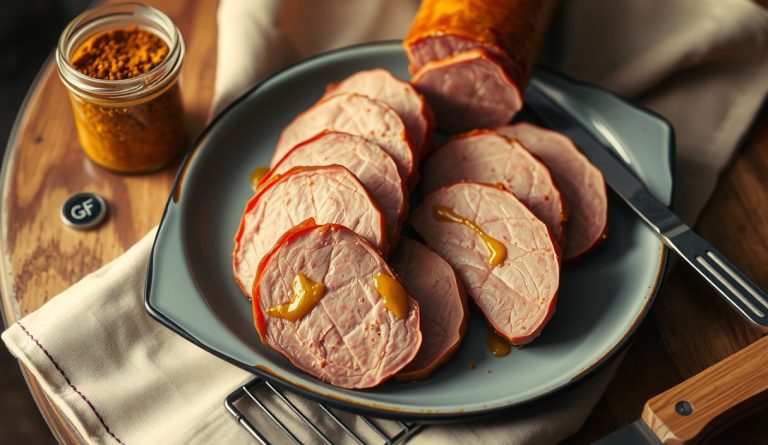
- Slice the bologna 1/2 inch thick — no thinner. Thin slices lose the textural contrast between the bark exterior and the soft, steamed interior that defines this dish. Use a sharp slicing or chef’s knife and work in long, deliberate strokes rather than sawing.
Serve
- Serve immediately on white sandwich bread — 2 slices of bread, 1 to 2 thick slabs of smoked bologna. Add yellow mustard and BBQ sauce to taste. Wrap in butcher paper for the full roadside experience.20 slices white sandwich bread, yellow mustard, for serving, BBQ sauce, for serving
Notes
Nutrition
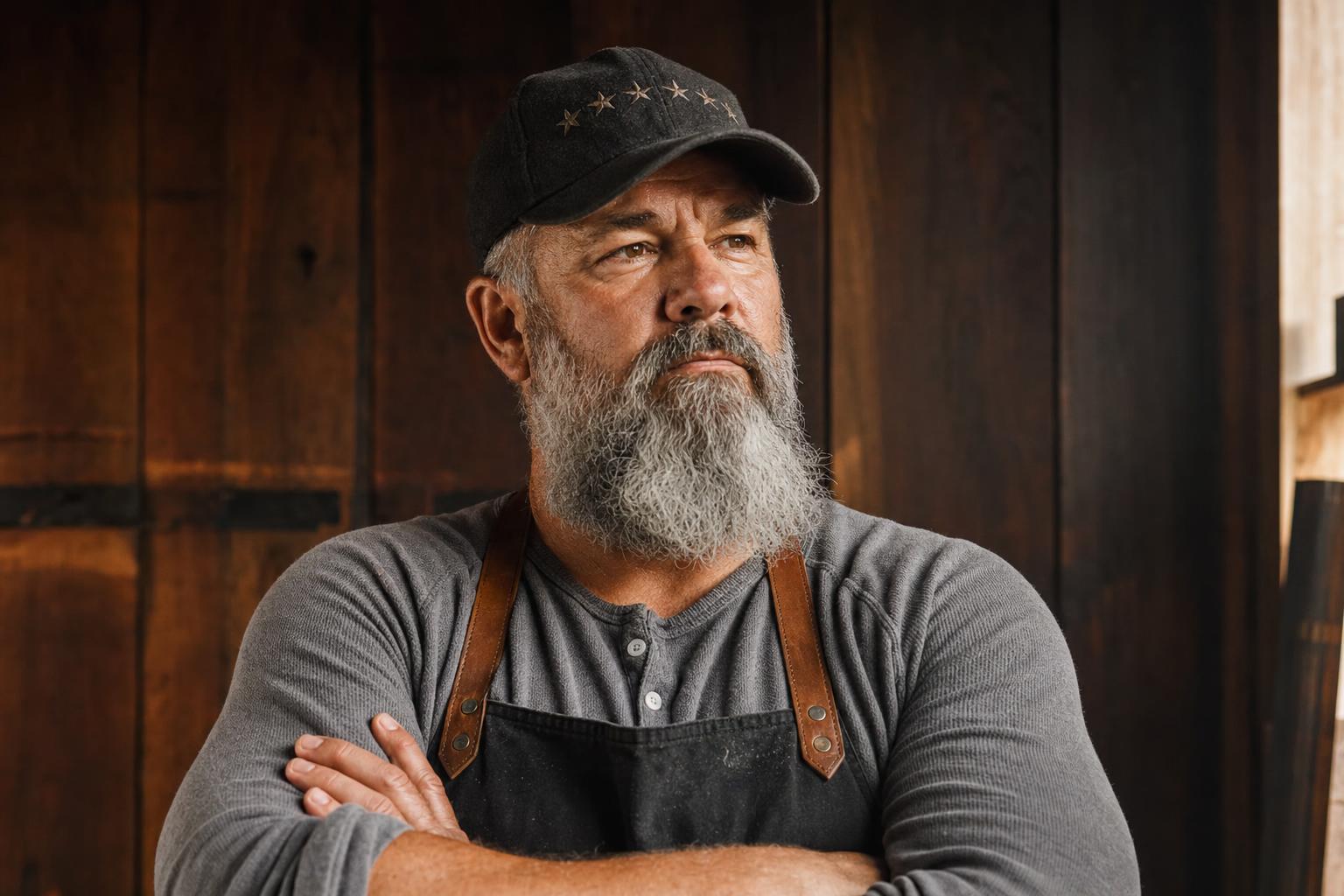
There is a roadside smoke shack outside of Tulsa that has no menu board, no seating, and a hand-painted sign that says “BOLOGNA” in red paint on a plywood sheet. The pit master — a retired oil-field worker named Dale — sells exactly one thing: half-inch slabs of hickory-smoked bologna on white bread, wrapped in butcher paper, for four dollars a pop. The line starts at 10 a.m. and ends when the chub runs out, usually by noon. That sandwich has occupied a permanent corner of my memory for three years running.
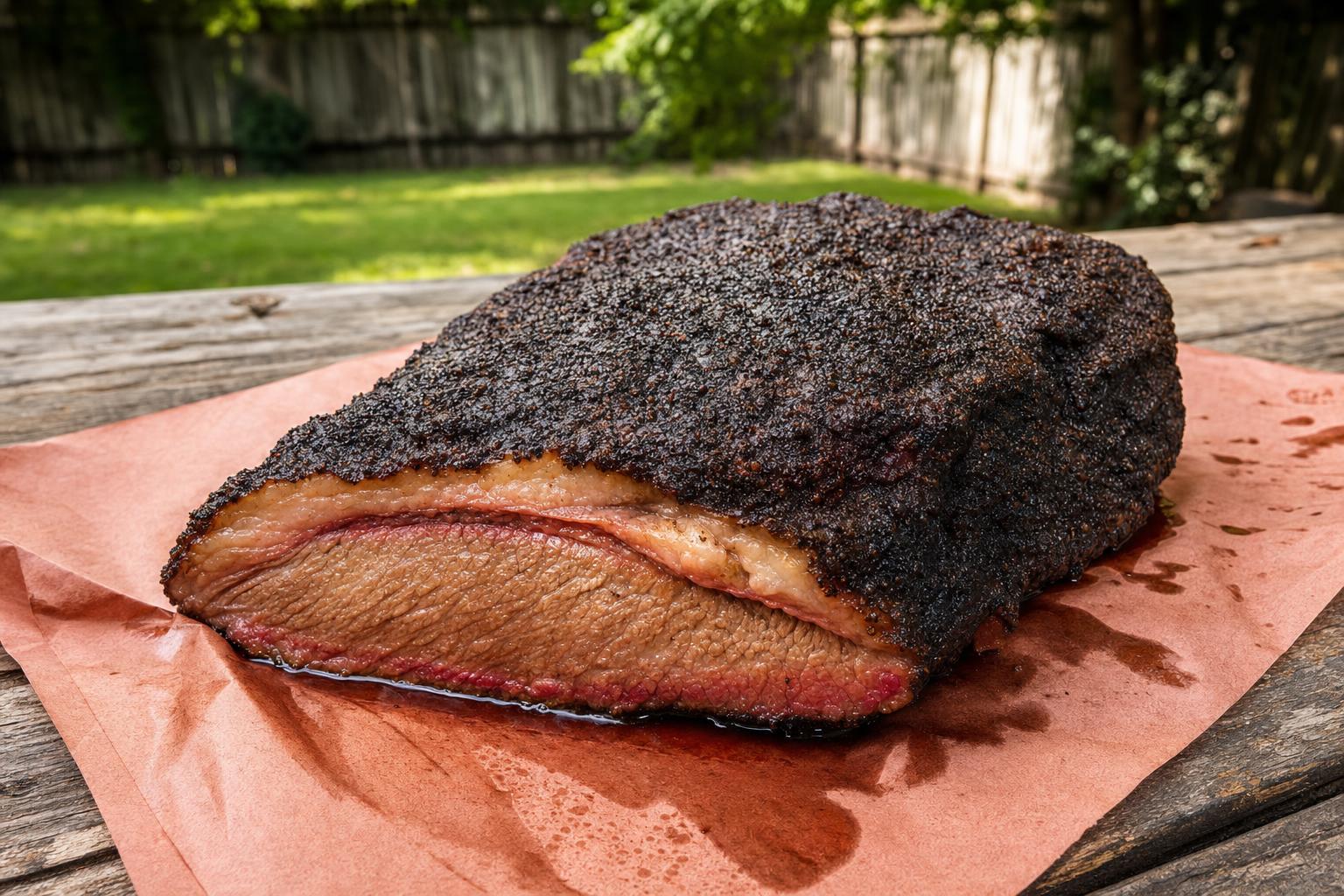
Smoked bologna is the working-class steakhouse of Oklahoma BBQ. It is unapologetically cheap, unapologetically simple, and when executed correctly — scored deep, bound in yellow mustard, and given four slow hours over a hickory fire — it develops a bark and a smoke ring that would make a Central Texas pitmaster take a second look. This recipe reverse-engineers Dale’s method down to the physics and gives you everything you need to run your own noon-hour sellout.
Why does smoked bologna work? The science
Smoked bologna succeeds because a low-and-slow hickory fire transforms the surface of a pre-cooked emulsified sausage into a Maillard-driven bark without ever needing to cook the interior — the chub is already fully safe to eat before it touches the smoker. Bologna is a gel of finely comminuted pork, beef, and fat, stabilized by salt-solubilized myosin and bound with a starch filler. Because the sausage is fully cooked in the casing at the factory, the four-hour smoke session at 225°F is entirely about surface transformation: building bark, depositing phenolic smoke compounds, and rendering the outer fat layer into a lacquered, slightly tacky shell.
The scoring pattern is not decorative. Those quarter-inch-deep diagonal cuts serve two mechanical purposes. First, they massively increase surface area — a critical variable because the Maillard reaction (onset around 280–330°F at the surface, running amino-carbonyl cascades that generate pyrazines, furans, and melanoidins) requires a dehydrated, high-temperature boundary layer. Second, the cuts break through the outer casing, which would otherwise act as a steam-retaining membrane and suppress bark formation entirely. Once the casing is scored, evaporative cooling from the exposed gel surface briefly anchors the temperature near 212°F, but as the surface desiccates, the boundary layer climbs into true Maillard territory and the brown-black bark develops.
Yellow mustard as a binder is a function of emulsion chemistry. Prepared mustard is itself a stable oil-in-water emulsion, held together by mucilage proteins from the mustard seed at roughly 0.5–1.0% w/w effective hydrocolloid load. When applied to the bologna surface, the mustard’s aqueous phase helps the rub sugars and salts dissolve into the surface gel, while the turmeric pigments and mustard volatiles — allyl isothiocyanate, driven off early in the cook — contribute a fleeting sharpness that mellows into background savory depth. More practically, the mustard increases surface water activity just enough to help BBQ rub adhere uniformly before the crust locks. The flavor of mustard is essentially invisible in the finished product, but the bark is structurally different without it.
Hickory smoke at 225°F delivers a dense flux of phenolic compounds — syringol, guaiacol, and their methylated derivatives — generated by the pyrolysis of lignin in the hardwood. These phenolics deposit on the moist surface of the bologna early in the cook, when the outer gel is still hydrated and sticky. As the cook progresses and the surface desiccates, deposition slows, which is why smoke penetration yields diminishing returns past the first two hours regardless of wood load. The classic smoke ring visible on the cross-section is not a Maillard product — it is carbon monoxide and nitric oxide from incomplete combustion binding to myoglobin to form carboxymyoglobin and nitrosomyoglobin, locking the pink color. Because bologna is made from a meat emulsion, the ring tends to be thin and tight — typically 2–4mm — rather than the deep ring visible on a brisket point. It is still there if the fire is managed well, and it is the visual proof that a real fire was run.
What equipment and ingredients do I need?
The chub: Buy a 5-lb ring bologna or a 5-lb club/chub-style bologna — both work. Ring bologna has a natural casing that scores beautifully. Club bologna usually comes in a fibrous or plastic casing. If the casing is fibrous, score and smoke it as-is; if it is plastic, peel it before scoring. Target a brand with moderate fat content — roughly 28–32% fat on the label. Very low-fat bologna will dry out aggressively on the smoker and benefits from a foil tent in the final hour. Classic brands like Bar-S, Eckrich, or a regional Oklahoma brand like Shawnee Best are the traditional choices — this is not the recipe for artisan charcuterie.
Hickory wood: Hickory is the defining smoke for this application. It runs hot and produces a dense, assertive phenolic signature that stands up to the fatty emulsion. Cherry or apple will produce a milder, sweeter bark but are softer in smoke character. Do not use mesquite — the pyrolysis compounds at high volume on a 4-hour cook become acrid and overpower the bologna’s subtlety. If using a pellet grill, use pure hickory pellets, not a blend.
Yellow mustard: Standard American yellow mustard — French’s or Heinz. Dijon or spicy brown changes the surface chemistry minimally but tastes different in the finished rub. Stick with yellow for the traditional result.
White bread: This is non-negotiable for traditional service. Soft white sandwich bread — Wonder Bread or equivalent — acts as a structural sponge that absorbs bark drippings and mustard from the condiment side. The textural contrast between the chewy, lacquered slab and the pillowy bread is the point. White bread is not merely a vessel here; it is a co-star.
Smoked Bologna — Oklahoma Steakhouse Style
Equipment
- 1 Smoker or kettle grill Offset, pellet, charcoal kettle, or gas grill with 2-zone setup — all work. Target 225°F with indirect heat.
- 4 to 6 chunks Hickory wood chunks or chips Chunks for offsets and kettles; chips in a foil packet or smoker box for gas grills. Replenish chips at 90 minutes.
- 1 Sharp boning or chef’s knife Must be sharp — the emulsified bologna gel resists a dull blade and will tear rather than score cleanly.
- 1 Instant-read thermometer Used to monitor smoker temperature, not a required endpoint temp for the bologna itself.
- 1 Wire rack Set inside a sheet pan for resting and transport. Keeps the bark from softening against a flat surface.
Ingredients
The Bologna
- 1 whole bologna chub or ring bologna 5 lb / approximately 2.3 kg. Ring or club style both work. If casing is plastic, peel before scoring. If fibrous or natural, score through the casing.
Mustard Binder
- 3 tablespoons yellow mustard Standard American yellow mustard (French’s or Heinz). Dijon works but changes the surface character slightly.
BBQ Rub
- 2 tablespoons brown sugar Light or dark both work. Dark brown sugar gives deeper molasses notes in the bark.
- 1 tablespoon smoked paprika
- 1 tablespoon kosher salt
- 1 teaspoon coarse black pepper Freshly ground if possible — pre-ground works but delivers less volatile aromatic punch.
- 1 teaspoon garlic powder
- 1 teaspoon onion powder
- ½ teaspoon cayenne pepper Reduce to 1/4 teaspoon for a milder rub, increase to 1 teaspoon for a hot version.
- ½ teaspoon dry mustard powder Amplifies the mustard binder note and adds low-level TRPV1 trigeminal warmth to the bark.
For Serving
- 20 slices white sandwich bread Soft white bread — Wonder Bread or equivalent. 2 slices per sandwich.
- yellow mustard, for serving Optional but traditional.
- BBQ sauce, for serving Optional. A tangy, vinegar-forward Kansas City or Oklahoma-style sauce works best.
Instructions
Prep the Chub
- If the bologna has a plastic casing, peel it off completely and discard. If it has a fibrous or natural casing, leave it on — it will score and smoke beautifully. Pat the surface dry with paper towels if it is wet from refrigeration.
- Using a sharp boning knife, score the entire surface of the bologna in a crosshatch pattern: make diagonal cuts approximately 1 inch apart at a 45-degree angle, then rotate the knife 90 degrees and repeat to create a diamond grid. Cut at least 1/4 inch deep — you want to visibly open the surface. Work all the way around the circumference, the top, the bottom, and both flat ends. Missing any section will result in patchy bark.
- Apply the yellow mustard all over the scored surface, using your hands or a brush to work it into the cuts. You want a thin, even slick — not a thick paste. The mustard will be invisible in the final product but holds the rub and structurally improves bark adhesion.
- Combine all rub ingredients in a small bowl and mix thoroughly. Apply the rub generously over the entire mustard-coated surface, pressing it firmly into the scored cuts. The mustard binder should hold the rub in place without sliding. Let the rub-coated bologna rest at room temperature for 20 to 30 minutes while you prep the smoker — this gives the salt time to begin drawing surface moisture and helps the rub adhere further.1 tablespoon smoked paprika, 1 tablespoon kosher salt, 1 teaspoon coarse black pepper, 1 teaspoon garlic powder, 1 teaspoon onion powder, 1/2 teaspoon cayenne pepper, 1/2 teaspoon dry mustard powder
Fire Up the Smoker
- Preheat your smoker, kettle, or grill to a stable 225°F using indirect heat. Add 4 to 6 hickory wood chunks (or a foil packet of hickory chips for gas grills) to the fire. Wait until the smoke runs thin and blue-gray before loading the meat. White or gray billowing smoke indicates incomplete combustion and will produce a bitter, acrid bark — let the fire stabilize first.
Smoke
- Place the bologna directly on the grate over indirect heat. Close the lid. Smoke at 225°F for 4 hours, maintaining a steady temperature and thin blue smoke throughout. Resist the urge to open the lid more than once per hour — every lid lift drops the chamber temperature and extends your cook.
- At the 90-minute mark, check the smoke source. If using chips in a foil packet on a gas grill, replenish the chips now. If using wood chunks in an offset or kettle, add one additional chunk if needed. The bark will be visibly forming — the surface should be starting to turn from reddish-brown to a deeper mahogany.
- At 4 hours, the bologna should have a deep mahogany to dark brown bark all over, the score lines will have opened and caramelized, and the surface will be slightly tacky to the touch. The internal temperature will read approximately 155 to 165°F — this is incidental confirmation of the cook, not the target endpoint. Pull based on bark color and texture.
Rest and Slice
- Remove the bologna from the smoker and let it rest on a wire rack for 5 to 10 minutes. This allows the outer bark to set slightly and makes for cleaner slices. Do not rest longer than 15 minutes uncovered or internal steam will soften the crust.
- Slice the bologna 1/2 inch thick — no thinner. Thin slices lose the textural contrast between the bark exterior and the soft, steamed interior that defines this dish. Use a sharp slicing or chef’s knife and work in long, deliberate strokes rather than sawing.
Serve
- Serve immediately on white sandwich bread — 2 slices of bread, 1 to 2 thick slabs of smoked bologna. Add yellow mustard and BBQ sauce to taste. Wrap in butcher paper for the full roadside experience.20 slices white sandwich bread, yellow mustard, for serving, BBQ sauce, for serving
Notes
Nutrition
How do I nail it every time?
- Score all the way around. The default failure mode is scoring only the top and forgetting the bottom and sides. The entire circumference needs the crosshatch. If any section of casing remains intact, it will trap steam, inhibit bark formation in that zone, and produce a patchy crust that looks amateurish and tastes uneven.
- Do not rush the score depth. Quarter-inch is the minimum. Too shallow and the score closes up as the surface swells from heat, trapping the bark development needed. Use a sharp boning knife and press firmly — the emulsified gel structure is dense and will resist a dull blade.
- Manage your fire for thin blue smoke, not billowing white. White smoke is incomplete combustion carrying acrolein and other harsh aldehydes that produce a bitter, acrid bark. Target a barely-visible wisp of blue-gray leaving the exhaust. If the smoker is producing white clouds, crack the intake, reduce the fuel load, or let the fire stabilize before loading the bologna.
- Do not wrap. Some pitmasters foil-wrap bologna for the last hour to push internal temp, but it is unnecessary — the bologna is already fully cooked. The only reason to wrap is if a specific low-fat bologna is drying out badly, and even then a light foil tent is better than a full Texas Crutch wrap that would steam the bark soft.
- Slice thick and slice to order if possible. Half-inch minimum. Thin slices lack the chew gradient between the bark exterior and the soft interior. If pre-slicing for a crowd, cover the cut faces immediately — exposed surfaces oxidize and lose their visual appeal within 20 minutes.
- Rest is optional but useful. Five to ten minutes off the smoker allows the surface to firm slightly, making the bologna easier to slice cleanly once the outer bark has set. Do not rest longer than 15 minutes uncovered or the crust softens from internal steam.
What variations can I run on smoked bologna?
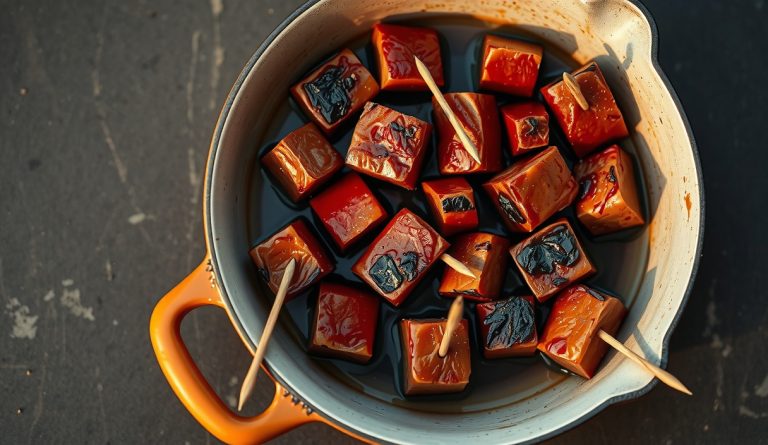
The Bologna Burnt End: After the 4-hour smoke, cube the entire chub into 1.5-inch cubes, toss in a 50/50 mix of BBQ sauce and brown sugar (or allulose for a lower-glycemic version), and return the cubes to the smoker at 275°F for 45 minutes until the sauce caramelizes and the exterior becomes lacquered and jammy. The fat renders further, the sauce reduces against the bark surface, and the result eats like brisket burnt ends at approximately one-eighth the cost — the move for Super Bowl spreads and tailgates.
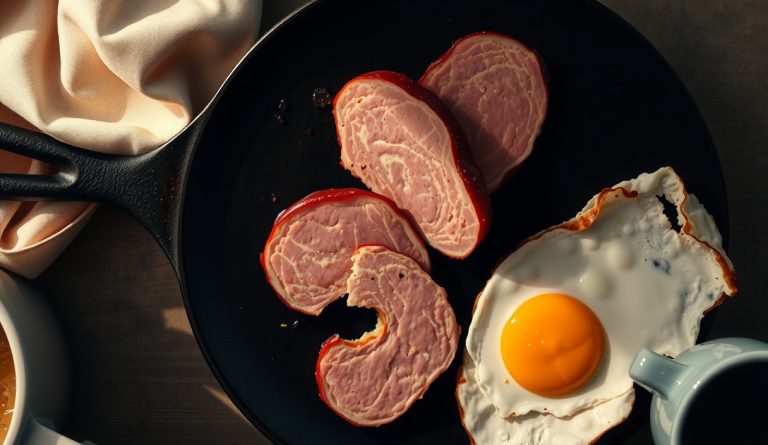
Midwest Diner Plate: Skip the white bread and slice the smoked bologna half-inch thick, then sear each slice hard on a cast-iron griddle or flat-top over direct high heat for 90 seconds per side. The Maillard reaction runs again on the pre-smoked surface, driving additional pyrazine formation and creating a second bark layer. Serve with scrambled eggs and hash browns for a breakfast plate that is genuinely superior to any diner sausage patty.
Scaling up: This recipe scales linearly. Two 5-lb chubs placed side by side on a full-size offset or pellet grill cook in the same 4-hour window — smoke penetration is a surface phenomenon and the mass of a second chub does not meaningfully affect the cook time of either. At four chubs, rotate position once at the 2-hour mark to compensate for hot spots near the firebox.
Rub variations: The base recipe uses a simple sweet-heat rub. For a more savory, Texas-style profile, drop the brown sugar entirely and run coarse black pepper at 2 tablespoons, kosher salt at 1 tablespoon, granulated garlic at 1 teaspoon, and ancho chili powder at 1 teaspoon. For a Memphis-adjacent profile, add 1 tablespoon of celery salt and cut the cayenne to a pinch. The emulsified surface of bologna is receptive to almost any dry rub chemistry as long as the mustard binder is in place.
Frequently asked questions
Do I need to bring the bologna to room temperature before smoking? It helps but is not critical. A refrigerator-cold 5-lb chub will take an additional 20 to 30 minutes to reach the same surface temperature equilibrium as one rested at room temperature for 30 minutes. If time is short, go straight from fridge to smoker — account for the slightly longer ramp and trust the 4-hour window regardless. Internal temperature is not the target metric here; bark development and surface color are.
What internal temperature am I shooting for? Technically none — bologna is fully cooked from the factory and safe to eat cold. The 4-hour smoke at 225°F will bring the internal temperature of the bologna to approximately 155–165°F, which is incidental. The cook is driven by bark development and smoke ring, not food safety. The only time internal temp matters is when making burnt ends: target 185–190°F internal on the cubes to confirm the fat has fully rendered.
Can I use a gas grill or charcoal kettle instead of a dedicated smoker? Yes. For a gas grill, use a 2-zone setup: place a foil packet or smoker box loaded with hickory chips over the active burner, keep the indirect zone at 225°F, and position the bologna over indirect heat. Replenish the wood packet at the 90-minute mark. For a charcoal kettle, use the snake method with a few hickory chunks embedded in the charcoal snake, vent the lid exhaust above the meat, and target 225–250°F. Smoke penetration and bark development will be comparable to a dedicated offset as long as temperature discipline is maintained.