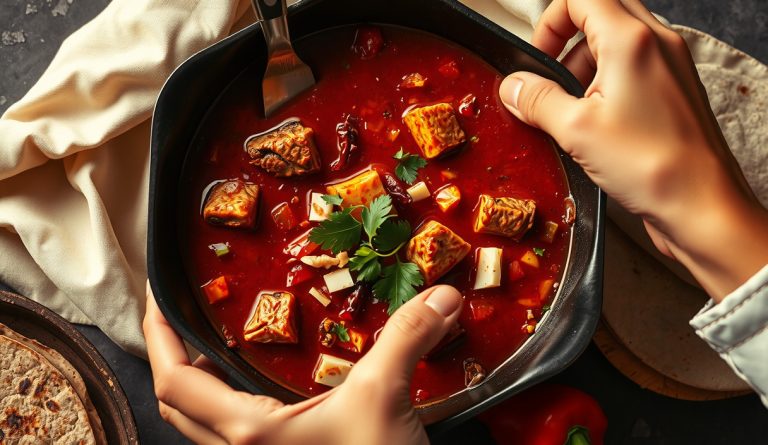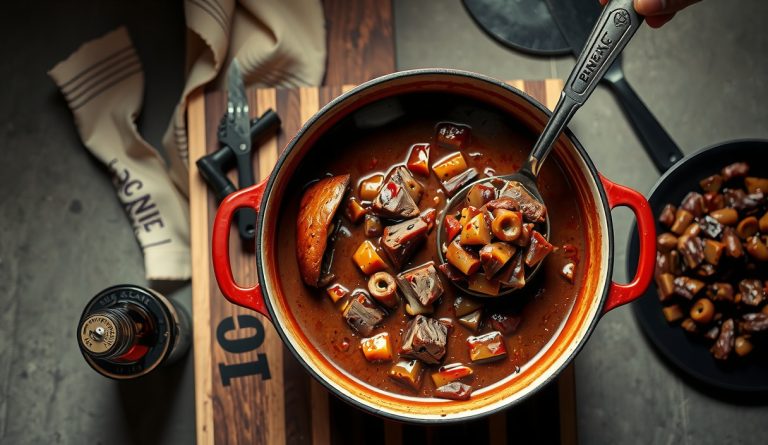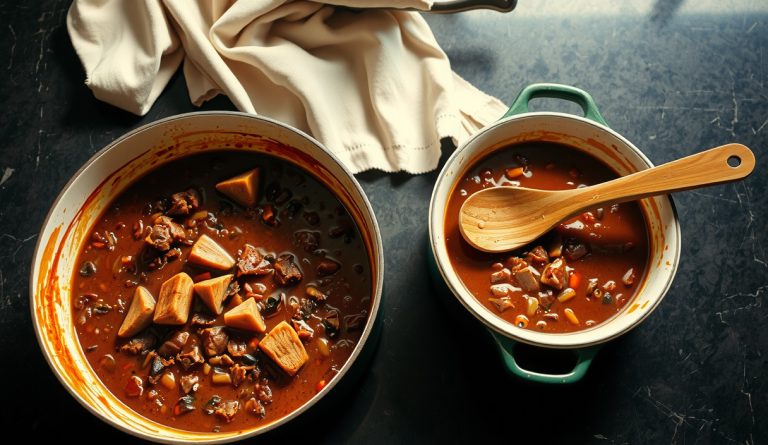
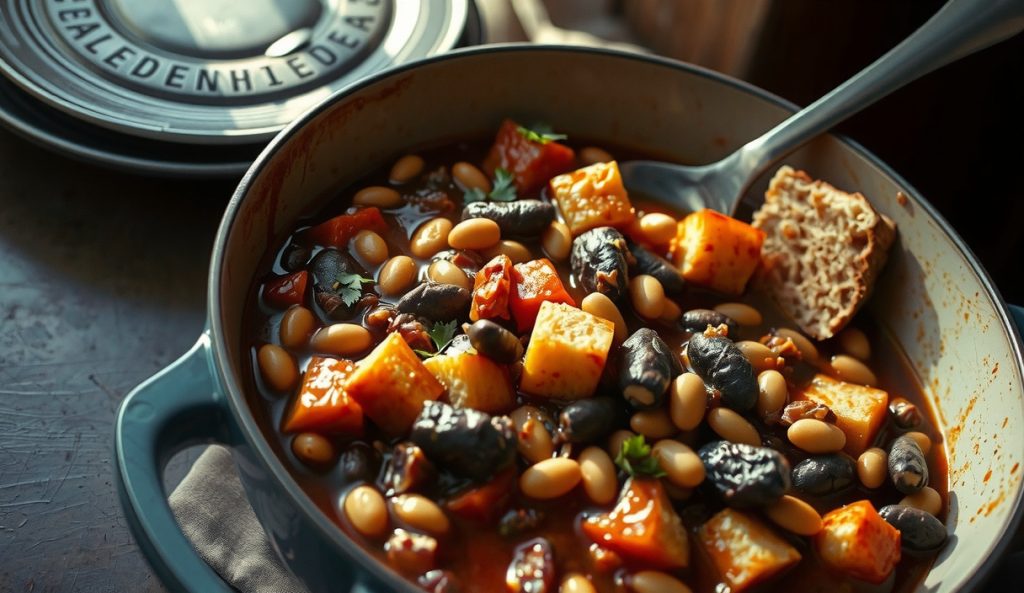
Texas purists will tell you that chili has no business containing beans. We respect that position entirely. But a significant portion of chili eaters want beans in the bowl, and if you are going to add them, the when matters as much as the what. Late addition is not a compromise — it is the correct technique for preserving bean texture while still integrating bean flavor into the broth.
What changes when you add beans to smoked brisket chili?
Add two 15-oz cans of drained pinto or kidney beans during the final 20 minutes of simmering — not at the start, not at the halfway point. Bean cell walls are held together by pectin, a polysaccharide that begins to hydrolyze under prolonged heat and acidity. The chile paste and tomato content in smoked brisket chili are both acidic environments that accelerate that breakdown. Extended cooking dissolves the middle lamella between cells, producing the mealy, grainy texture that makes poorly timed beans unpleasant. A 20-minute window at a moderate simmer is enough for the beans to absorb broth flavor and warm through without losing structural integrity.
Pinto beans are the traditional choice and carry a slightly earthy, creamy character that pairs well with the dried-chile base. Kidney beans hold their shape more aggressively and add a firmer textural contrast against the tender brisket. Either works. Drain and rinse canned beans before adding — residual canning liquid is starchy and will muddy the chili’s viscosity in a way that masa harina cannot cleanly correct.
What stays the same in the bean version?
Everything else in the smoked brisket chili recipe remains unchanged. The dried-chile paste, the smoked brisket, the masa harina slurry for body, and the full simmer time all proceed exactly as written. Beans are an addition, not a substitution — they do not replace any ingredient or alter the base method in any step prior to the final 20-minute window.
When is the bean version the better choice?
The bean version is the right call when feeding a mixed crowd where some guests expect beans as a standard part of chili, or when you want the dish to stretch further as a one-bowl meal with higher fiber content. It is also the practical choice for batch cooking where the chili needs to serve as a standalone dinner rather than a component in a larger spread.
Use the full method, equipment, and rub measurements from the original Smoked Brisket Chili.