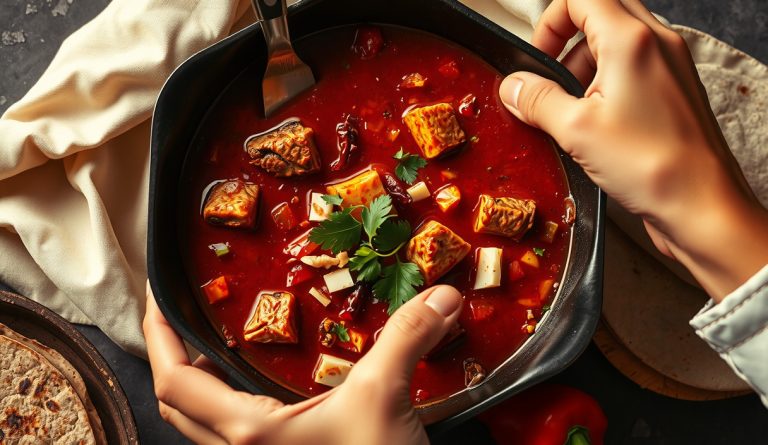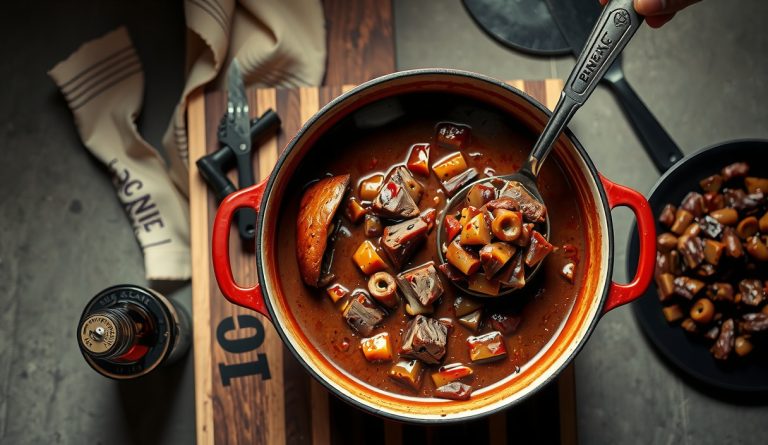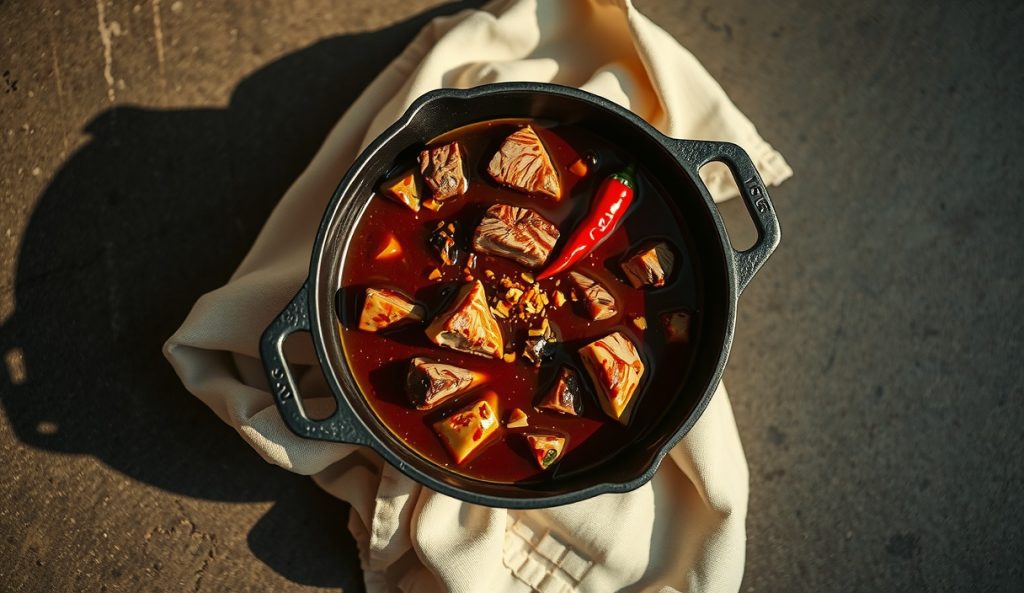
The base Smoked Brisket Chili lands at medium heat — present, layered, and noticeable without being punishing. That balance suits a wide audience. But if your threshold runs hotter, or you are building this chili for a crowd that expects serious bite, there is a right way to escalate and a wrong way. Not all heat sources behave the same in a long-simmered broth, and the goal is heat that integrates with the dried-chile complexity rather than cutting across it.
What changes when you build this hotter?
The most controlled escalation is to add 1–2 dried chiles de árbol directly to the soaking vessel alongside the anchos and guajillos. Árbol chiles register 50,000–65,000 Scoville heat units. Because they rehydrate with the base chiles and get blended into the paste, their capsaicin distributes evenly through the entire pot rather than appearing in hot pockets. Start with one árbol chile for a noticeable step up; use two for serious heat. Their thin flesh blends smoothly and introduces no competing flavor notes that would undermine the ancho-guajillo profile.
The second option is one teaspoon of chipotle powder stirred in with the dried spices. Chipotle is smoke-dried jalapeño, and its heat — approximately 2,500–8,000 Scoville — is moderate, but it contributes a secondary smoke register that reinforces the brisket’s oak-smoke character rather than competing with it. Both escalation methods can be combined for a fully layered build. Do not substitute cayenne: cayenne’s heat comes almost entirely from capsaicin without the flavor complexity of dried whole chiles, and its sharpness sits on top of the chili rather than integrating into it — producing a one-dimensional, aggressive heat that erases the nuance the soaking process builds.
What stays the same in the hotter build?
The soaking process, blending method, and full simmer time are all unchanged. Árbol chiles require no special handling beyond being added to the same soaking liquid as the anchos and guajillos. The masa harina slurry, brisket ratios, and final seasoning approach proceed exactly as written in the canonical recipe.
When is the hotter build the right choice?
This hotter variation is the right build when cooking for heat-seekers, entering a chili competition where judges expect a pronounced capsaicin presence, or when the chili needs to hold its own against heavy accompaniments — thick cornbread or fatty toppings — that would otherwise mute a medium-heat base.
Use the full method, equipment, and rub measurements from the original Smoked Brisket Chili.