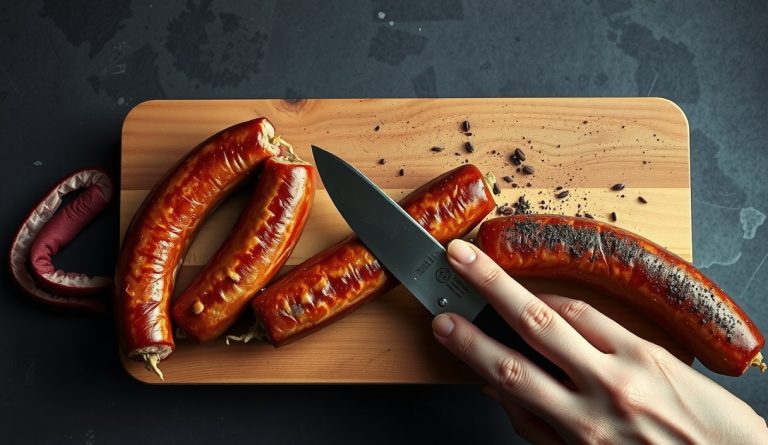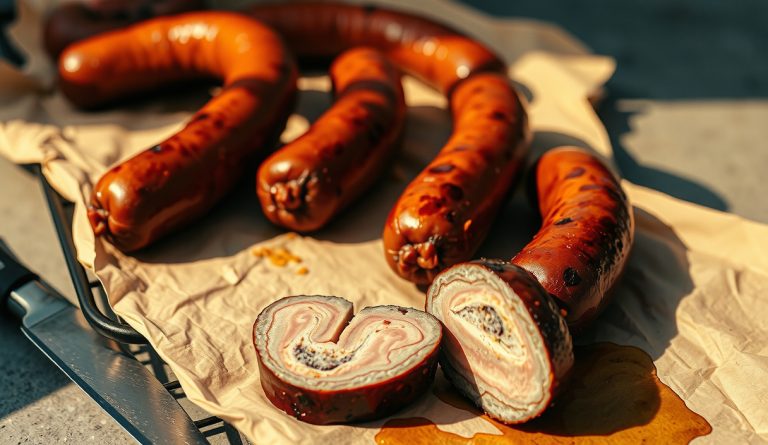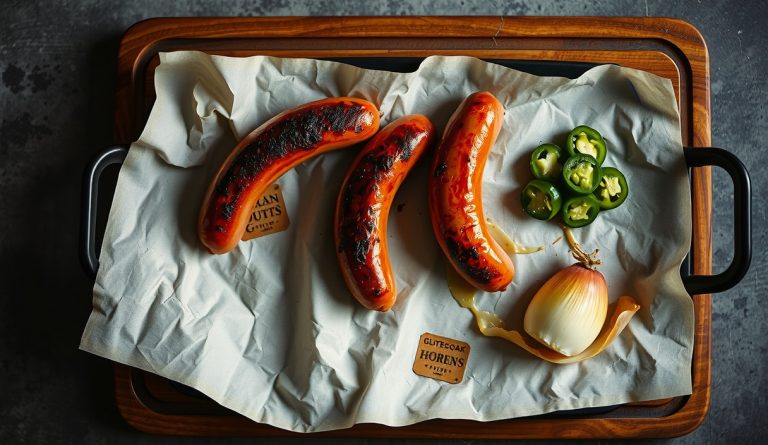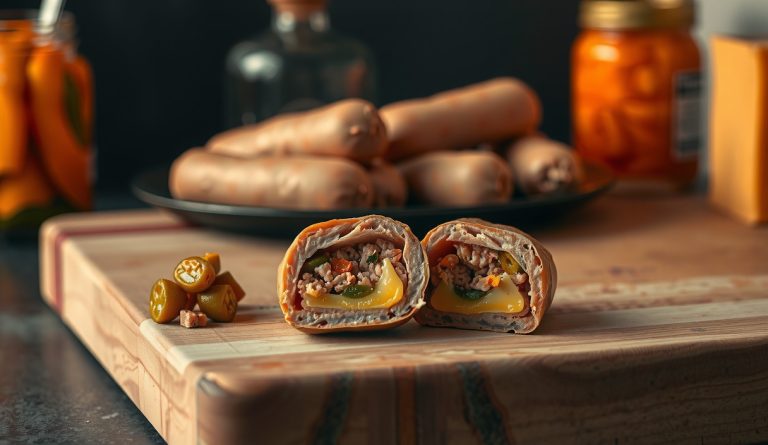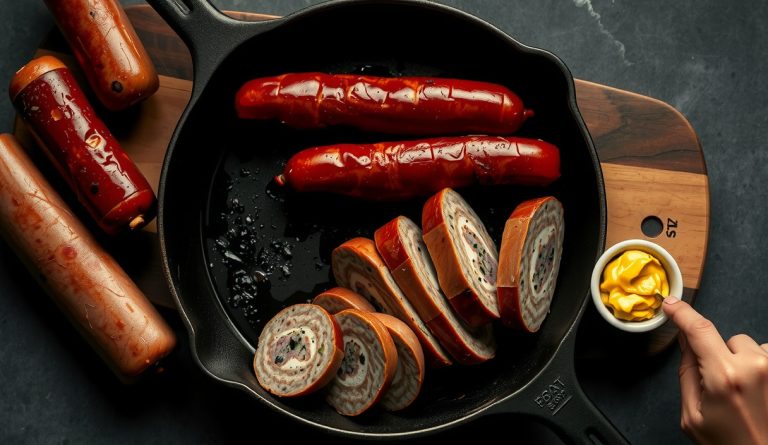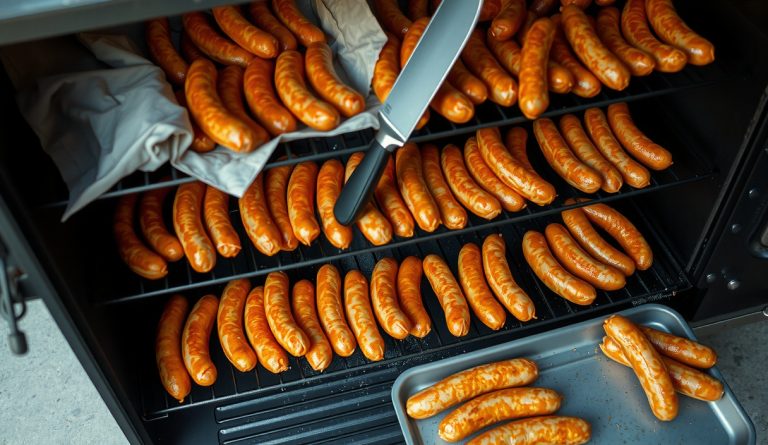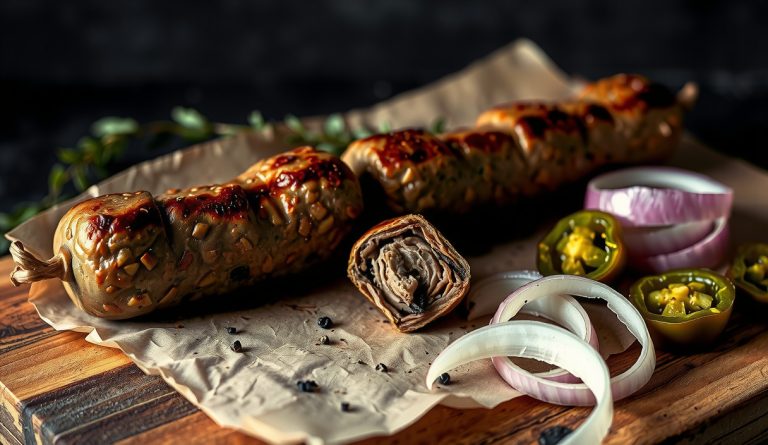
Natural hog casings are the traditional choice for hot guts sausage, and they produce the characteristic snap that defines the eating experience at a Central Texas sausage counter. Natural casings are variably sourced, require careful soaking and sorting, and have an inconsistent diameter that can make competition presentation or high-volume retail cutting unpredictable. Edible collagen casings are a legitimate alternative that solves specific logistical problems — provided you understand exactly what they trade away in the process.
What changes when you switch to collagen casings?
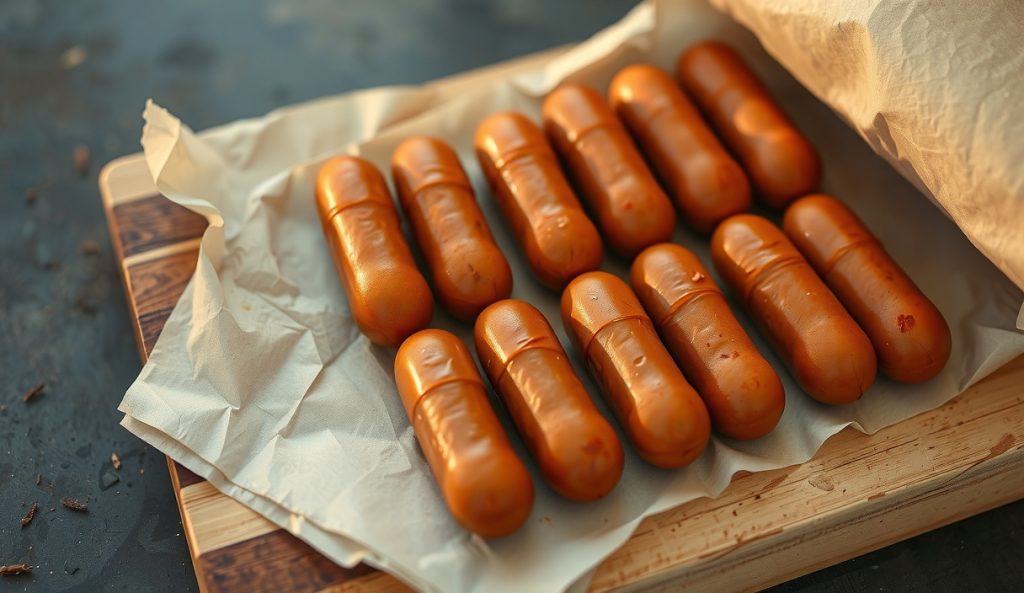
Use 32mm edible collagen casings in place of hog casings. The stuffing technique is identical — the same horn size, the same stuffing speed, the same twist-link method. Collagen casings require no soaking and arrive with a consistent bore diameter straight from the package, which reduces prep time and stuffing rejects on a large batch.
The functional difference between collagen and natural casings is structural, not cosmetic. Natural hog casings are built from a crossed helical collagen architecture — fibers running in opposing diagonal directions — that stores elastic energy as the casing is bitten into, then releases it as an audible, tactile snap. Edible collagen casings are manufactured from a single-direction fiber orientation, which means they deform more uniformly under bite force and release without the same elastic recoil. The result is a clean, firm bite that many eaters find satisfying, but it does not replicate the acoustic and mechanical quality of natural casing snap. At competition, some judges score natural casing snap explicitly — know your ruleset before committing to collagen for that context.
What stays the same when using collagen casings?
The meat mixture, fat ratio, cure calculation, seasoning, smoke temperature, and 152°F internal temperature target are all unchanged when using collagen casings. The 32mm diameter specification remains the same, which means heat penetration timing and all cook parameters carry over directly from the canonical recipe without adjustment.
When is the collagen casing the better choice?
Collagen casings are the better choice when natural hog casings are unavailable locally, when you are producing a large batch that requires uniform 32mm link diameter for slicing or retail packaging, or when you are new to stuffing and want a more forgiving casing that will not blow out under uneven pressure. Collagen casings are also appropriate when the final product will be sliced rather than eaten as a whole link, because cross-section consistency matters more than snap in that context.
Use the full method, equipment, and seasoning measurements from the original Texas-Style Hot Guts Sausage.