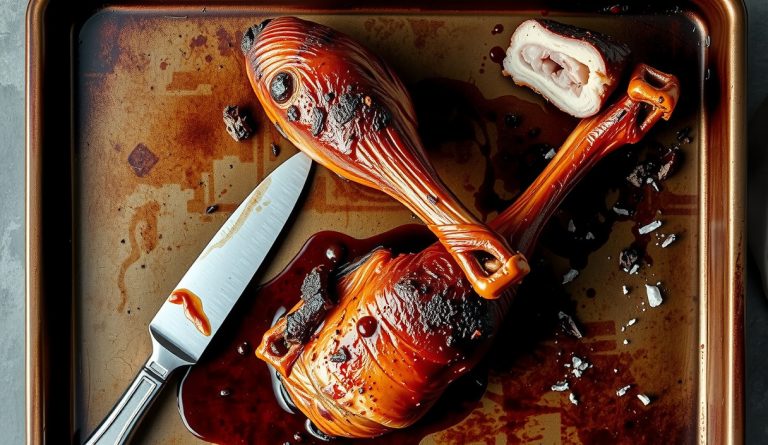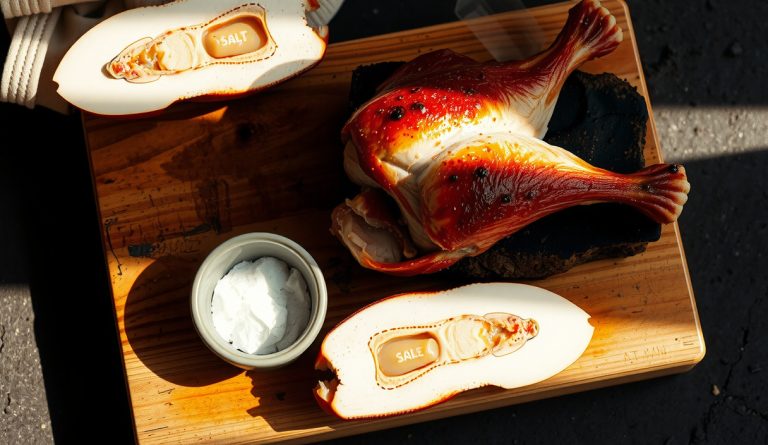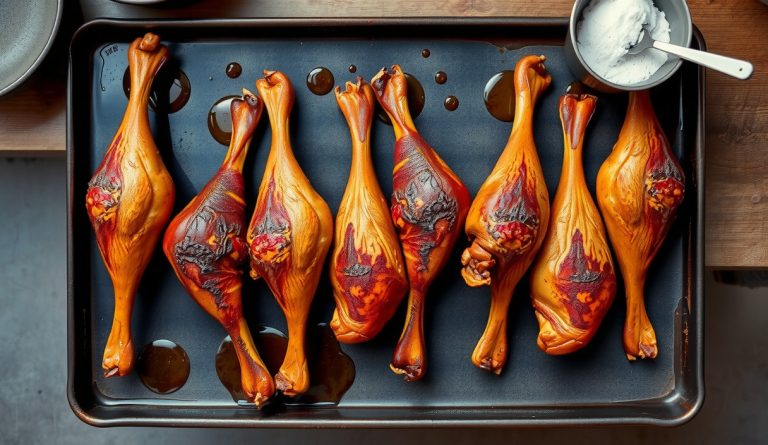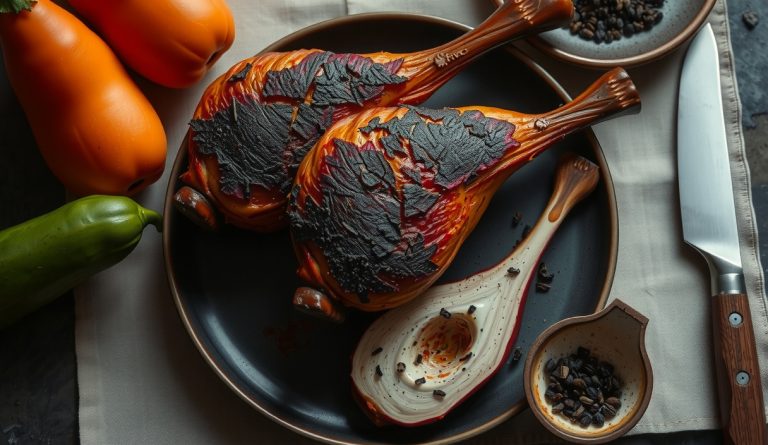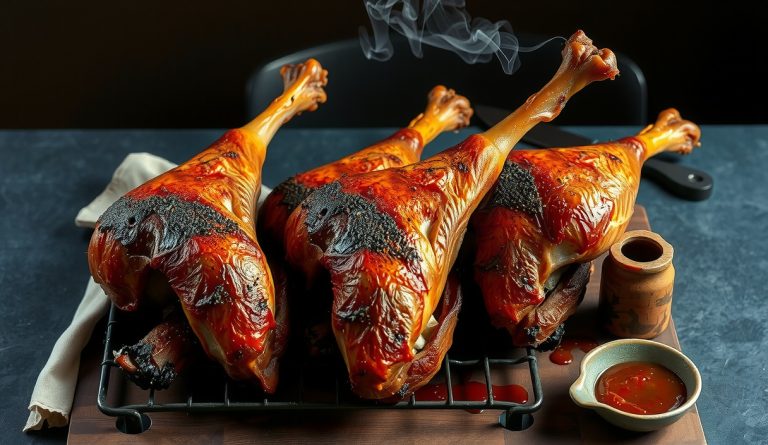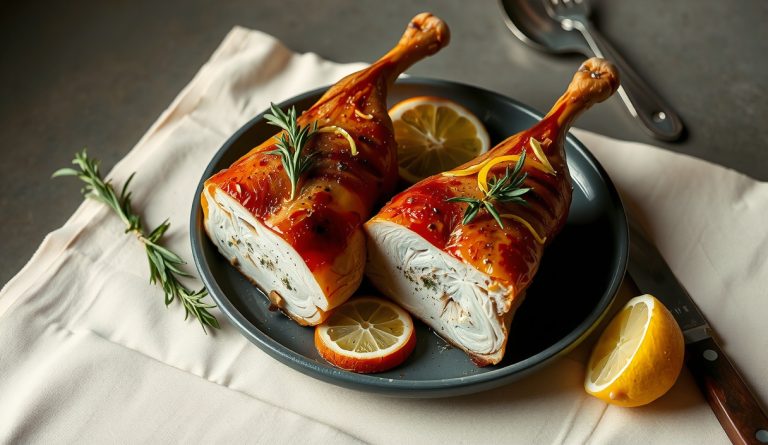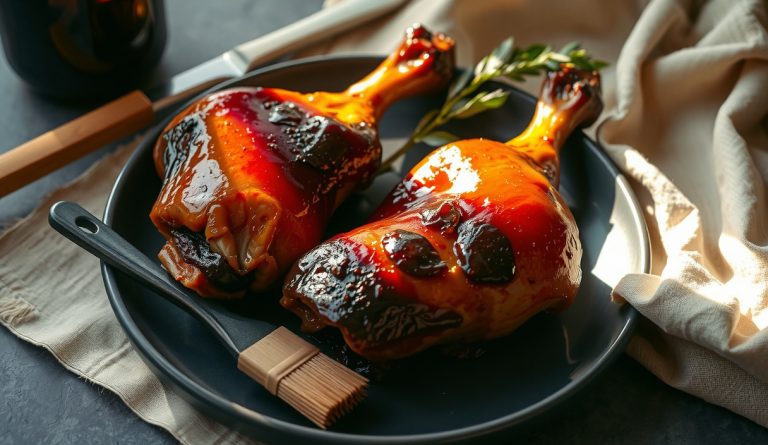
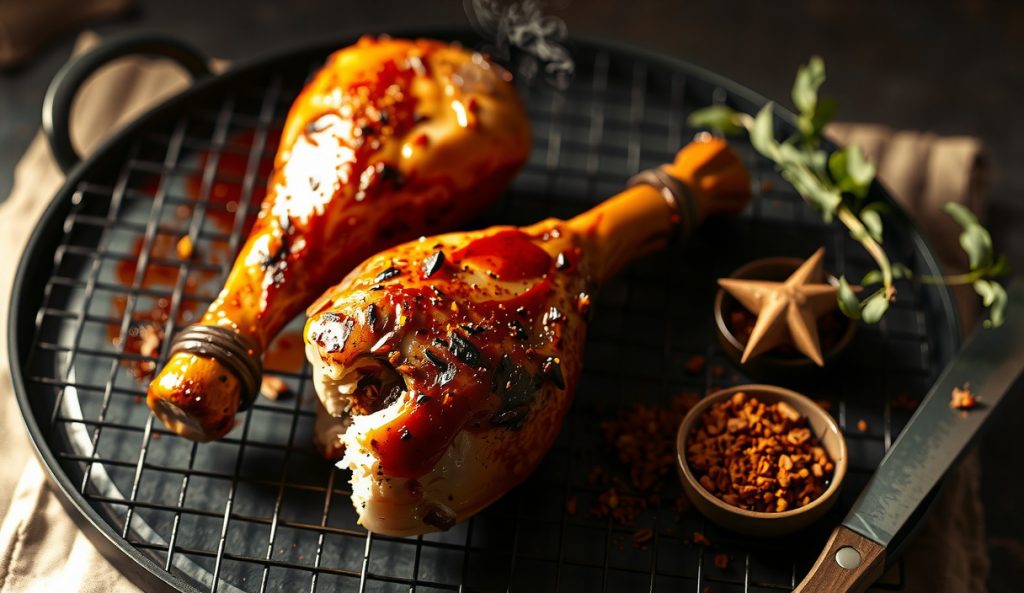
The good news for gluten-free cooks is structural: the core of this recipe — turkey, Prague Powder #1, wood smoke — contains zero gluten by nature. The risk lives entirely in the periphery: commercially blended rubs, Worcestershire-based glazes, and pantry staples that routinely harbor hidden gluten. This adaptation names every culprit specific to smoked turkey legs and tells you exactly what to swap and why.
What changes when making smoked turkey legs gluten-free?
Dry rub — commercial blends: Many off-the-shelf BBQ rubs use wheat flour or wheat-derived dextrose as an anti-caking agent; the label often reads only “starch” or “modified food starch.” Build the rub from scratch using smoked paprika, black pepper, garlic powder, onion powder, celery seed, and mustard powder — sourcing each spice from a dedicated gluten-free facility or verifying the Certified GF mark. Cross-contact in spice grinding facilities is a real and under-labeled risk that scratch-building eliminates entirely.
Worcestershire sauce: Standard Worcestershire — Lea & Perrins in the US, Henderson’s in the UK, and most house brands — is brewed with barley malt vinegar, making it a direct gluten vector. If the canonical smoked turkey legs recipe or any finishing glaze calls for Worcestershire, substitute a certified gluten-free version (Wan Ja Shan makes one) or replace 1:1 with coconut aminos, which delivers the same umami-sweet-tangy profile without the malt. Coconut aminos are slightly less savory, so a small pinch of anchovy powder compensates if desired.
Prague Powder #1: Prague Powder #1 is pure sodium nitrite and sodium chloride — inherently gluten-free. Confirm your specific brand carries no co-packing contamination; reputable curing-salt suppliers such as Hoosier Hill Farm and Anthony’s offer certified-GF versions. Do not deviate from the 1 tsp per 5 lb dosage regardless of brand.
Brine additions: Brown sugar dissolves cleanly with no gluten risk. Apple cider vinegar is gluten-free; avoid malt vinegar entirely if any canonical version lists it as a brine acidulant. Bay leaves, black peppercorns, garlic, and allspice are naturally safe and require no substitution.
Cross-contamination at the pit: Scrub and re-line grill grates if they have previously held marinated proteins with soy- or wheat-based marinades. Use a dedicated silicone basting brush — fibers in old brushes trap gluten proteins that survive heat and transfer to the bark. A dedicated brine container matters equally; plastic tubs that have held wheat-based doughs are effectively compromised and should not be reused for a gluten-free cure.
What stays exactly the same in the gluten-free version?
The entire cure timeline — 24-hour brine, 1-hour open-air pellicle — the 275°F two-stage smoke, the 2:1 cherry-to-hickory wood ratio, and the 175°F pull temperature are completely unchanged. Wood smoke VOCs — syringol, guaiacol, phenolics — are naturally gluten-free combustion products, and the collagen-to-gelatin conversion that gives state-fair turkey legs their dense, sticky interior operates identically under a gluten-free protocol.
When is the gluten-free version the better default choice?
Anyone managing celiac disease or non-celiac gluten sensitivity can eat these smoked turkey legs at a cookout without negotiating around the meat course. This adaptation is also worth running as the default for large mixed-dietary gatherings — since none of the flavor-active swaps (scratch rub, certified-GF Worcestershire) represent any compromise in bark quality or cured depth, there is no reason to run two separate batches.
Follow the full cure, smoke, and rest method at the original Smoked Turkey Legs — State-Fair Style recipe, applying the ingredient swaps above at each corresponding step.