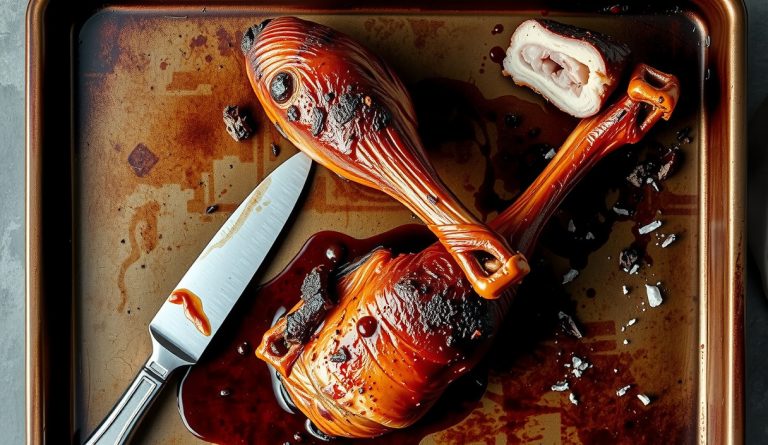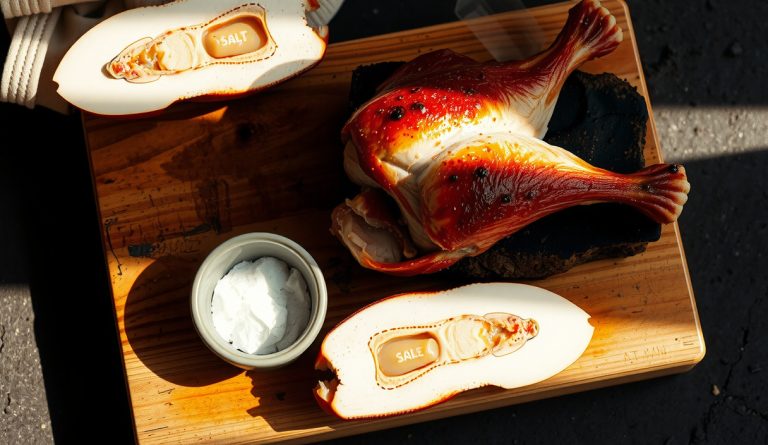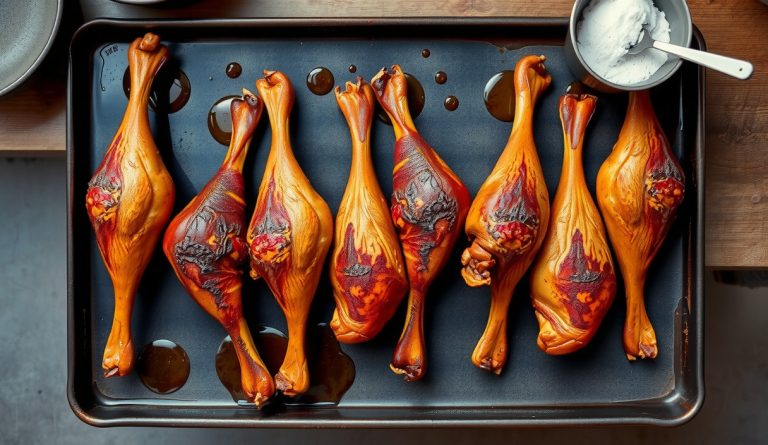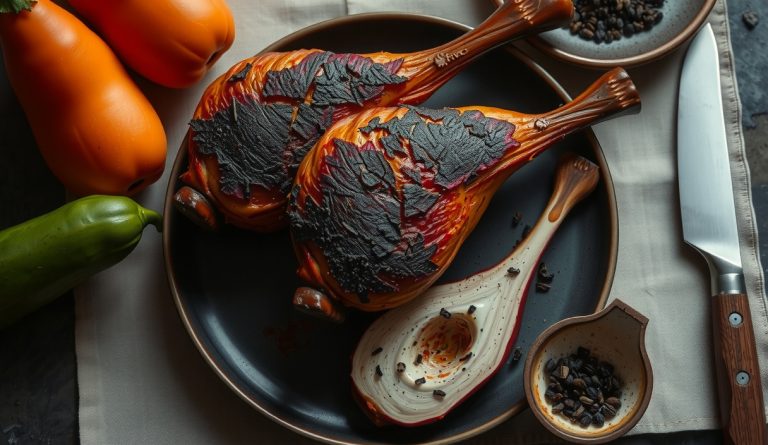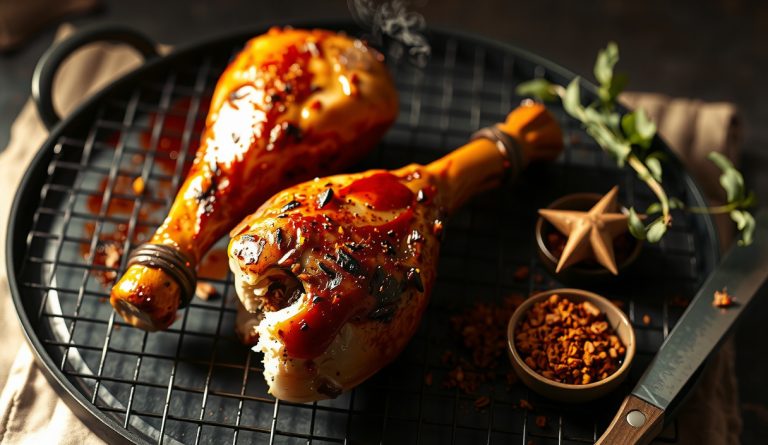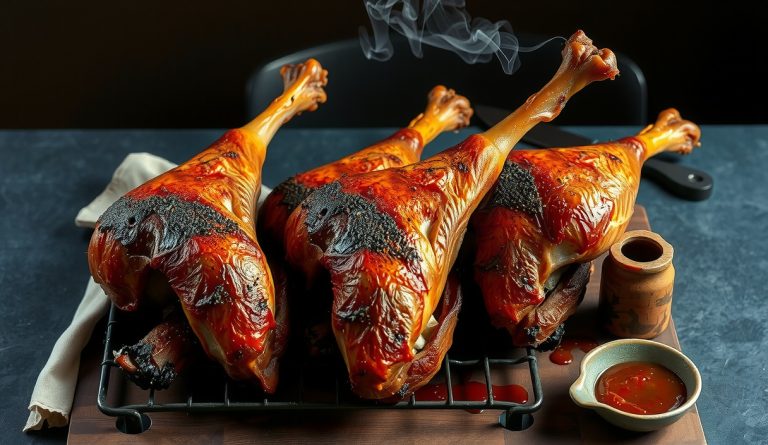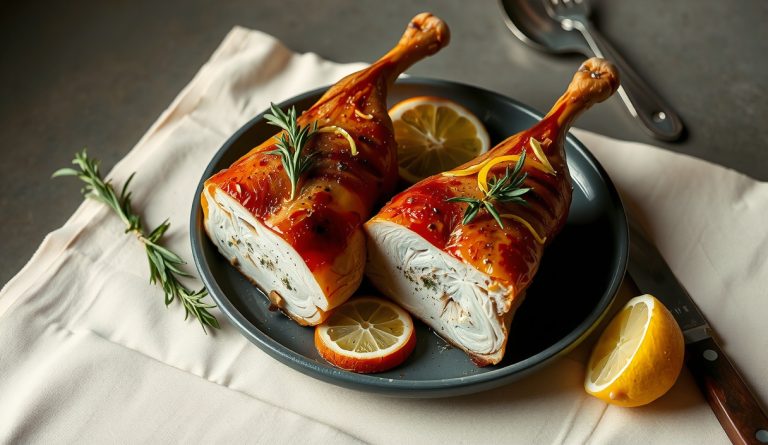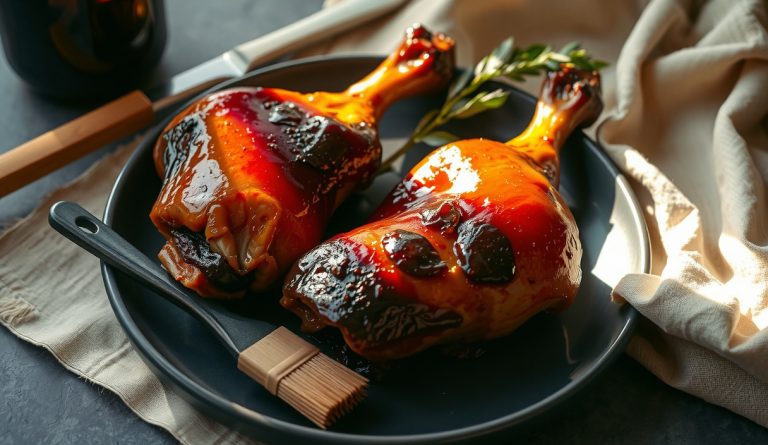
This post is not a replacement for the cured turkey leg. The nitrosomyoglobin chemistry, collagen-to-gelatin conversion, and cured-ham depth that define the canonical recipe are specific to animal muscle tissue and cannot be replicated in a vegetable. What this companion dish does instead is earn its place at the same spread by delivering powerful smoke flavor, substantial meaty texture, and satisfying bark through the mechanisms available to plant matter. King oyster mushrooms are the right tool for this application — longer tables, not higher fences.
What changes when you build the vegetarian companion?
The analog — king oyster mushroom drumsticks: King oyster mushrooms (Pleurotus eryngii) have a dense, fibrous stem with an exceptionally low moisture content relative to button or portobello varieties — roughly 85–87% water versus 92%+ in common mushrooms. This difference matters because smoke flavor compounds (guaiacol, syringol, phenolics) are hydrophobic and concentrate on surfaces with lower free-water activity. King oyster mushrooms take on smoke more aggressively and hold it longer than any other common vegetable analog. Their stem fibers run longitudinally and pull apart in thick, meaty strands that approximate — without perfectly replicating — the muscle-fiber bite of a turkey drumstick.
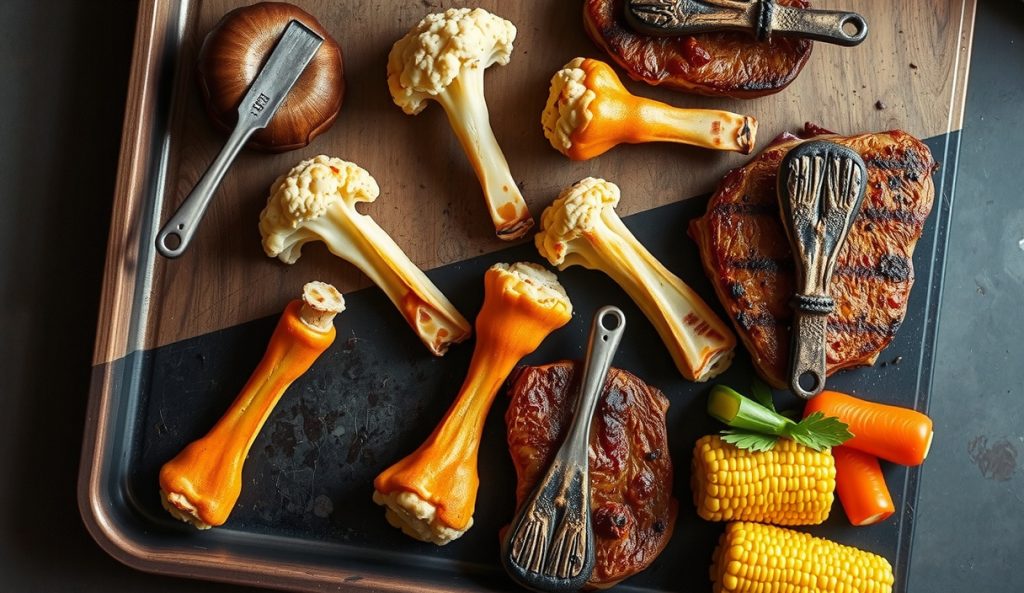
Preparation — the mushroom drumstick form: Select large king oyster stems that are 4–5 inches long and 1.5 inches in diameter. Score the cut end in a crosshatch pattern to expose maximum surface area for smoke and rub penetration. Insert a short bamboo skewer through the base to create a handle — this mimics the leg’s grip and allows the same standing-up fair experience. Coat all surfaces with a thin layer of neutral oil (avocado or refined coconut) to provide the hydrophobic surface film that facilitates smoke-compound adhesion; without fat, smoke deposits on mushrooms are thin and volatile.
Rub — reuse the canonical formula: Apply the canonical dry rub (smoked paprika, black pepper, garlic powder, brown sugar, salt) directly to the prepared mushroom stems. Omit Prague Powder #1 entirely — it is a meat-curing agent with no functional role on mushroom tissue, and sodium nitrite on plant myoglobin analogs produces no color or flavor effect. The rub’s salt and sugar will still drive Maillard browning on the mushroom’s outer surface, producing genuine bark.
Smoke and temperature: Use the same 2:1 cherry-to-hickory wood ratio as the canonical turkey leg recipe. Smoke the king oyster drumsticks at 275°F, pulling them at an internal temperature of 165°F — or, more reliably, when the surface bark is firm and mahogany-colored and the stem yields but resists when squeezed with tongs, approximately 45–60 minutes total. King oyster mushrooms contain no collagen requiring hydrolysis; overcooking past this window causes rapid moisture expulsion and a rubbery, shrunken texture. Monitor by feel and surface color, not by temperature alone.
Honest texture assessment: The smoked king oyster drumstick delivers genuine smokiness, a real spiced bark, and a satisfying fibrous chew. The king oyster does not deliver the gelatin-slick, sticky richness of a properly cured turkey leg — that quality is the direct product of converted collagen, which mushrooms do not contain. Serve king oyster drumsticks alongside the turkey legs as a first course or a companion protein for non-meat eaters, not as a centerpiece substitute.
What stays the same between the turkey leg and the mushroom companion?
The canonical rub formula, the 2:1 cherry-to-hickory wood ratio, the 275°F smoker temperature, and the bark-development logic through Maillard browning all carry over directly from the cured turkey leg recipe to the king oyster mushroom drumstick. The flavor architecture — sweet-smoky-spiced with heavy wood character — lands at the same register on the mushroom surface as it does on the turkey leg.
When is the mushroom companion the better choice?
Run this companion when your table includes vegetarians or flexitarians who want to participate in the smoker experience fully, not eat a side salad while everyone else has the main event. The king oyster drumstick is visually dramatic, handles well, and delivers enough smoke and bark to hold its own on the plate. The mushroom companion simply tells a different story than the cured leg — one worth telling.
The rub ratios and wood setup are documented in full at the original Smoked Turkey Legs — State-Fair Style recipe — use them directly for these mushroom companions.