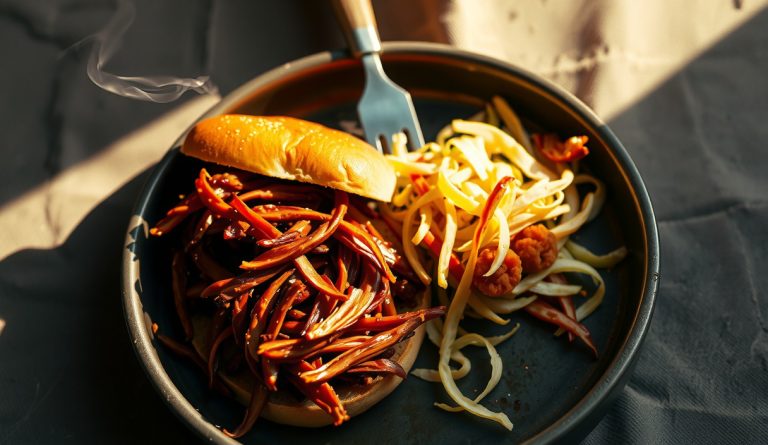
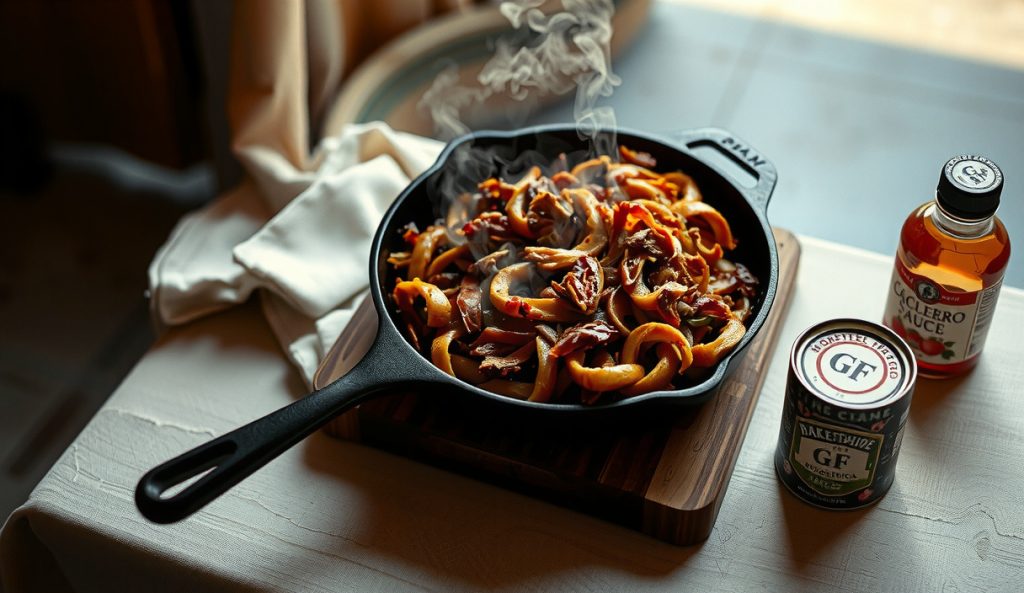
The plant-based pulled pork recipe contains no wheat-based ingredients by design, which means the gluten-free adaptation is less about substitution and more about supply-chain verification. The three components that carry meaningful cross-contact risk are soy curls, Worcestershire sauce, and smoked paprika — and each requires a different level of scrutiny before you can confidently serve this dish to someone with celiac disease or a serious gluten intolerance.
This is not a reformulation. It is a sourcing checklist. The recipe method is unchanged in every respect.
What actually needs to change for a gluten-free version?
Soy curls must be certified gluten-free. The leading domestic brand processes in a dedicated gluten-free facility, but verify the current packaging — manufacturing runs and certifications can shift between product years.
Worcestershire sauce is the highest-risk ingredient in most barbecue preparations. Traditional formulations contain malt vinegar, which is derived from barley and is not safe for celiac disease. Use a certified gluten-free Worcestershire sauce — several widely available brands qualify — or substitute with an equal volume of coconut aminos plus a small drop of tamarind concentrate to approximate the depth.
Smoked paprika is the least obvious risk. Bulk-bin and some private-label spices are ground on shared equipment that also processes wheat-containing spices. Purchase a packaged, certified gluten-free smoked paprika from a dedicated spice facility. Cross-contact thresholds for celiac disease are defined at 20 ppm gluten or below under FDA labeling standards — shared-equipment grinding is sufficient to exceed that threshold in a finished spice.
No ingredient ratios, no technique adjustments, and no timing changes are required. If all three components are confirmed gluten-free, the plant-based pulled pork is fully celiac-safe as written.
What stays exactly the same in the cooking process?
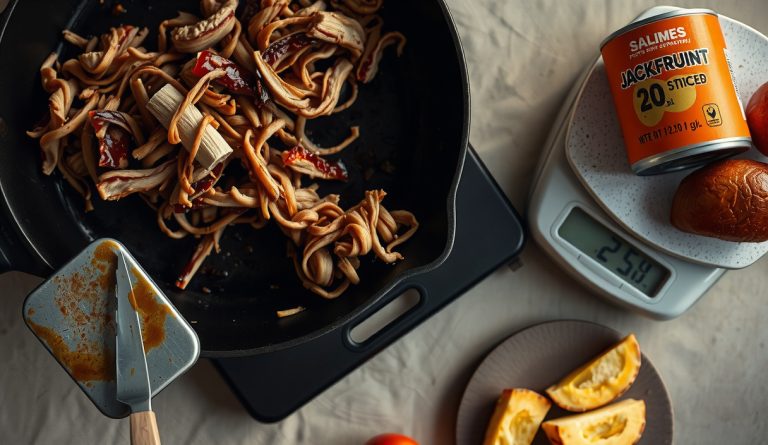
Every element of the canonical recipe — braise structure, sauce ratios, jackfruit shredding technique, soy curl rehydration, timing, and seasoning — is identical in the gluten-free version. This variation requires no substitutions in the actual cooking process, only deliberate sourcing decisions before you begin.
When is the gluten-free version the right choice?
Use this sourcing checklist any time you are preparing the plant-based pulled pork for a guest or household member with diagnosed celiac disease, non-celiac gluten sensitivity, or a wheat allergy. The recipe’s inherent structure makes gluten-free compliance achievable without reformulation — the only work is upstream, at the store.
Use the full method, equipment, and rub measurements from the original Plant-Based ‘Pulled Pork’ — Jackfruit + Soy Curls.