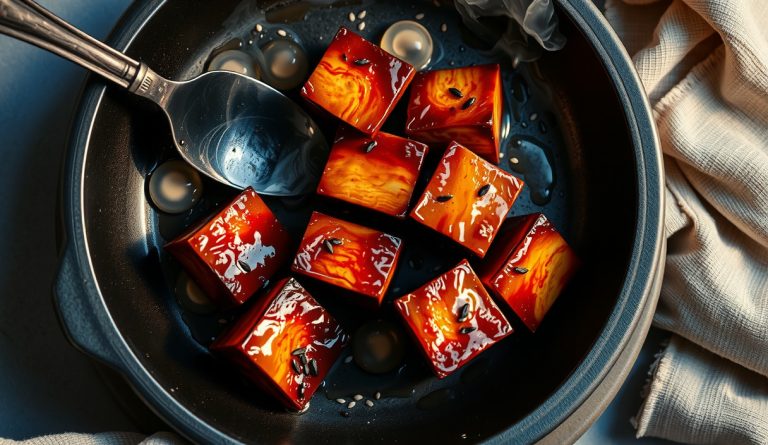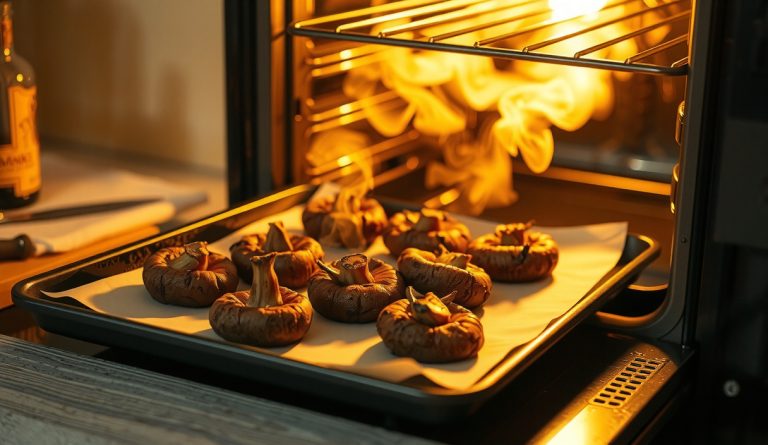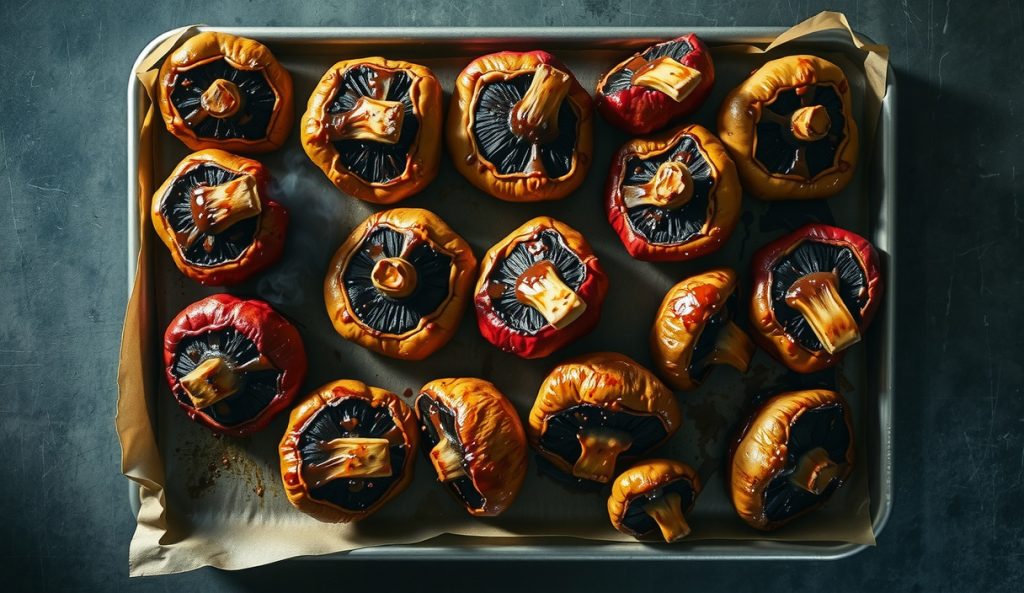
This scaled variant of Plant-Based Smoked Mushroom Burnt Ends multiplies ingredient ratios linearly — doubling or tripling is straightforward arithmetic. Two variables do not scale automatically: the glaze’s flavor intensity per serving, and the spatial discipline required inside the smoker. Ignoring either produces a noticeably weaker result at the table, and both are correctable with specific, targeted adjustments.
What changes when you scale up smoked mushroom burnt ends?
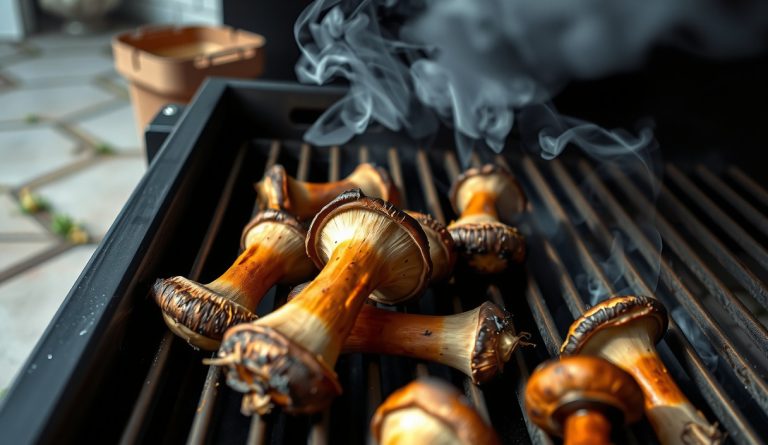
For 8 servings, double all quantities — mushrooms, rub, and every glaze ingredient — and use a full-size sheet rack inside the smoker. The critical constraint is airflow: every scored mushroom face requires direct exposure to smoke and convective heat to develop bark uniformly across the entire batch.
Stacking or crowding the mushrooms creates steam pockets between pieces that suppress Maillard browning on contact surfaces and slow moisture loss, producing soft, pale patches instead of a continuous bark. Maintain single-layer spacing throughout the cook; use a second smoker rack if necessary rather than compromising surface exposure on any piece.
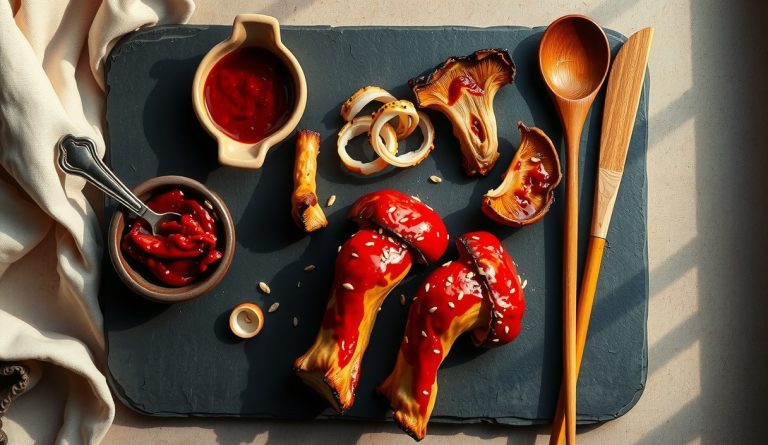
The scaled glaze requires one additional modification: add one tablespoon of tamarind paste to the doubled batch. This adjustment addresses a psychophysical effect — flavor intensity per serving drops in high-viscosity liquid matrices as surface area per serving decreases. Tamarind’s tartaric acid content (approximately 12–18% by dry weight) lowers the glaze’s effective pH, sharpening the perceived contrast between sweet, savory, and acid notes and restoring the intensity balance that reads correctly at single-serving scale. Add the tamarind paste with the other glaze ingredients and reduce as normal; it integrates without altering viscosity significantly.
What stays the same no matter the batch size?
Smoke temperature, total cook time, two-stage glaze timing, and resting protocol are all identical regardless of batch size. The per-mushroom rub ratio and scoring geometry do not change. Scaling this recipe is an exercise in surface area management and glaze calibration — not a timing adjustment.
When is the scaled version the better choice?
Scale up for cookouts, catered events, or any occasion where the smoked mushroom burnt ends are a primary dish rather than a side. The tamarind adjustment is especially important when serving alongside strongly flavored proteins or heavily seasoned sides, where the glaze needs to project through competition on a crowded plate.
This version is also the right choice when feeding guests who are unfamiliar with plant-based barbecue and need the flavor signal to be unambiguous — the acid-sharpened glaze delivers a cleaner, more assertive finish that communicates confidence on the plate.
Use the full method, equipment guidance, and baseline rub and glaze formulas from the original Plant-Based Smoked Mushroom Burnt Ends.