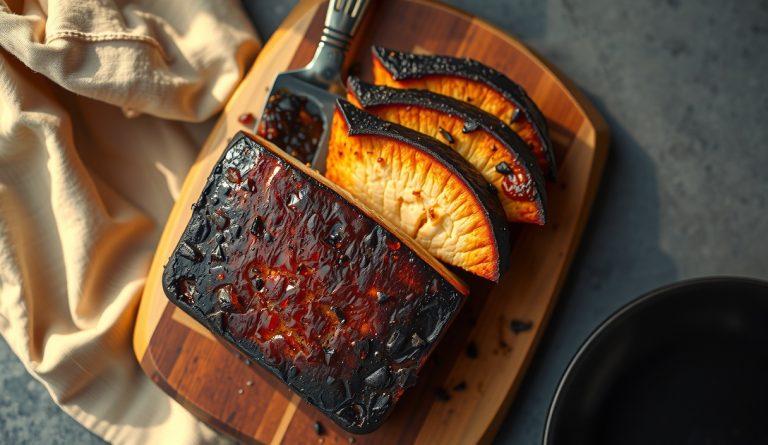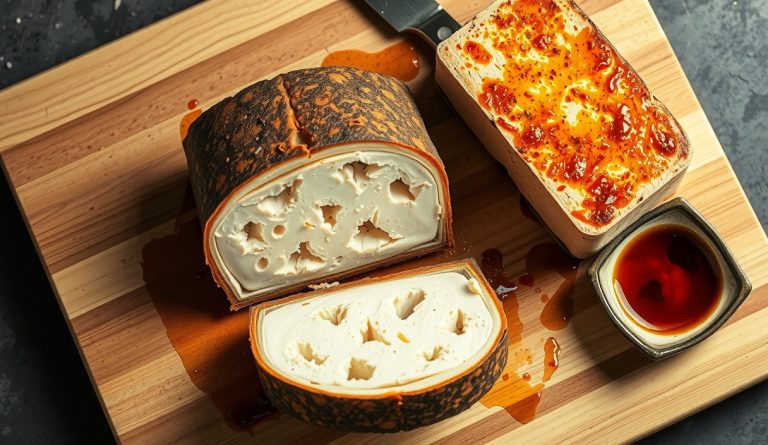
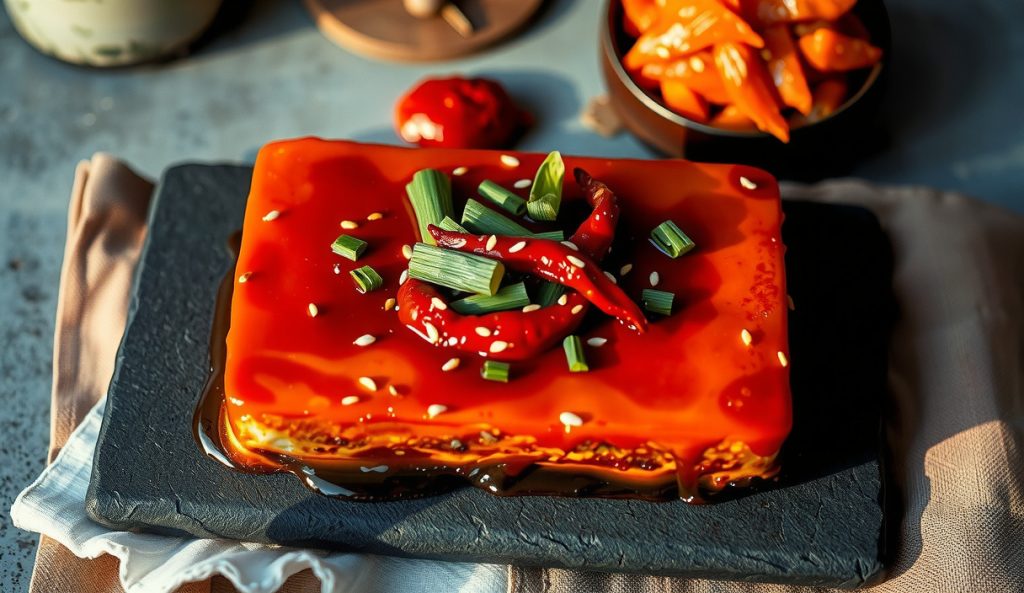
Korean cuisine has long understood that fermented pastes carry a flavor density that dried spices cannot replicate. Applying that principle to smoked tofu produces a bark with pronounced umami, moderate heat, and a lacquered surface that holds smoke aromatics more effectively than dry rubs. This Korean gochujang version is built for anyone who wants the core smoked-tofu technique to land somewhere distinctly East Asian rather than broadly barbecue.
What changes in the Korean gochujang version?
Replace the smoked paprika entirely with 1.5 tablespoons of gochujang, and add 1 teaspoon of toasted sesame oil to the marinade. Gochujang is a cooked, fermented chili paste — its sugar content (typically 15–20 g per 100 g) creates a Maillard-ready substrate at the tofu surface that caramelizes readily at smoker temperatures, building the glossy, sticky bark that defines this variation.
The lactic acid present in gochujang from fermentation lowers the tofu’s surface pH marginally, which softens the outermost protein layer and allows the marinade to penetrate slightly deeper during the soak. This is not a subtle effect — fermentation-derived acidity is a reliable tenderizing mechanism, and gochujang delivers it alongside heat and sweetness in a single ingredient.
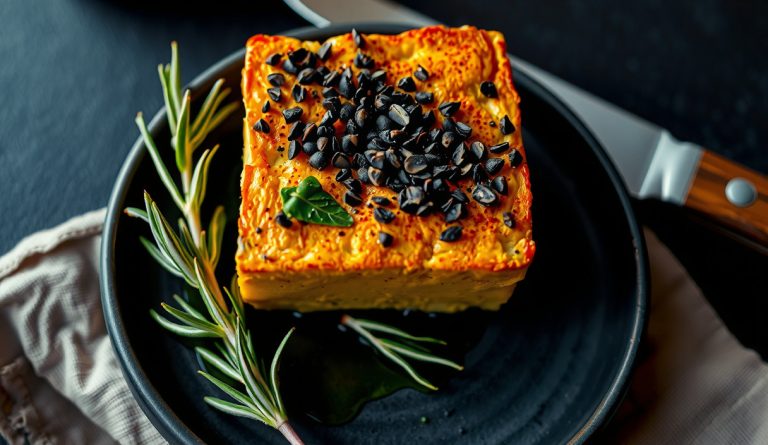
Sesame oil’s low smoke point is not a liability in this preparation. Applied into the marinade rather than used as a high-heat cooking fat, the sesame oil’s volatile aromatic compounds survive and amplify the toasted seed character throughout the entire smoke. At the 75-minute mark, scatter toasted sesame seeds directly onto each tofu slab. The seeds adhere to the tacky gochujang surface without any binder and toast gently in the remaining smoke time, adding texture and a nutty finish.
What stays the same from the original smoked tofu method?
Every structural element of the canonical method holds: pressing duration, marinade soak time, smoker temperature, total smoke duration, and the resting step after pulling the tofu from the grate. Block geometry and slice thickness recommendations are unchanged. Only the marinade flavoring profile shifts — from paprika-forward to gochujang-forward.
When is the gochujang version the better choice?
Choose this variation when the smoked tofu is destined for grain bowls, bibimbap builds, ssam lettuce wraps, or any plate that already carries soy, ginger, or pickled vegetable components. The gochujang bark integrates into those flavor contexts more cohesively than a paprika-forward rub, and the stickier lacquered surface holds sauces and dressings rather than repelling them.
Use the full pressing method, marinade ratios, smoker setup, and timing from the original Plant-Based Smoked Tofu — Pressed and Spiced.