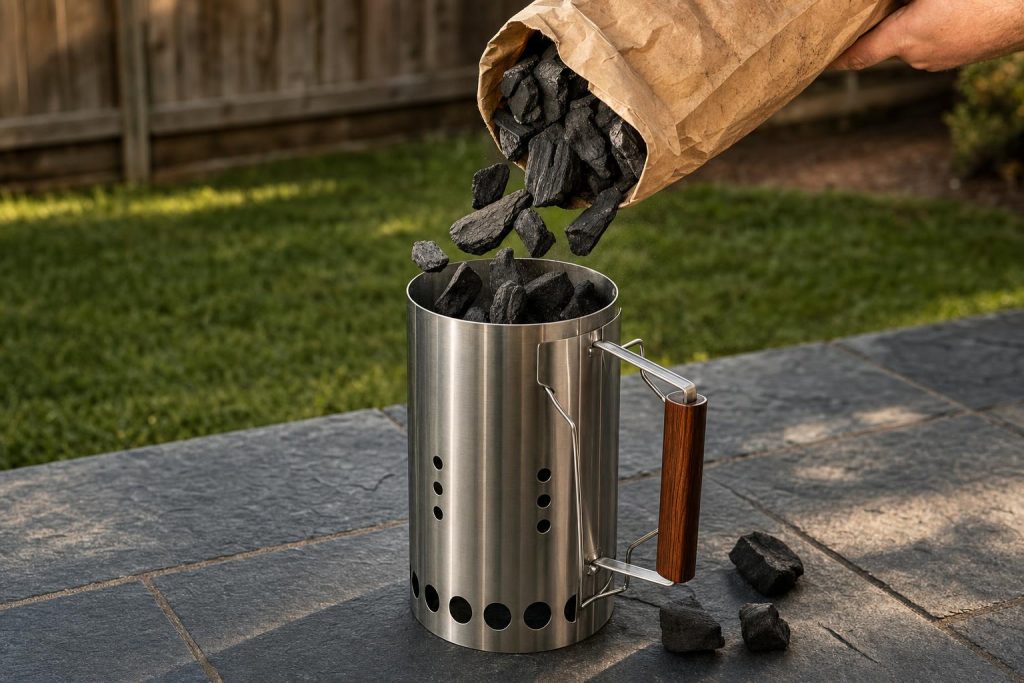
Most lump charcoal buying guides read like someone copy-pasted a bag description and called it a review. You get vague praise for “clean burn” and “natural hardwood flavor” with zero data behind it. I’ve been cooking on kamados and offset smokers for over a decade, and I’ve wasted enough money on charcoal that smelled like pallet wood to know the difference matters. The short answer: Jealous Devil is the best all-around lump charcoal for most backyard cooks — but the longer answer depends on your cooker, your budget, and whether you care about where your charcoal actually comes from. This guide covers the five brands worth your money (and one you should probably skip), based on real cook testing, not bag copy.
For context: I tested these across five different grilling and smoking sessions each — including high-heat sears, low-and-slow 12-hour pork shoulders, and kamado cooks where fuel efficiency really shows up in your results. I tracked light-up time, peak temp, temp consistency over a 4-hour window, ash volume by weight after the cook, and smoke character on plain chicken thighs where nothing else was masking the fuel. That’s the framework. Here’s what I found.
What lump charcoal actually needs to do for you
There are four things that separate good lump charcoal from filler dressed up in a nice bag, and they map directly to what goes wrong when you use bad fuel.
- Burn temperature and consistency: Can it hit searing temps quickly and hold a steady 225–250°F for a long cook without constant intervention? We logged temps every 20 minutes across a 4-hour baseline window on a Big Green Egg Large. Temp drift of more than 15°F in either direction without a damper change counts as a fail.
- Ash output: Lump produces less ash than briquettes by design, but there’s still a wide spread between brands. Heavy ash accumulation chokes airflow in a kamado. We weighed post-cook ash for each brand after a standardized 4-hour low-and-slow session.
- Smoke flavor character: Lump charcoal isn’t neutral — the wood species baked into it produces a baseline smoke flavor that affects everything you cook, especially chicken and fish. We evaluated this blind on thighs cooked without added wood chunks.
- Sourcing transparency: Where is the wood coming from, and is the charcoal production process something the brand will actually tell you about? This matters both for flavor consistency batch-to-batch and for anyone who cares about sustainable sourcing. Brands that publish their wood source scored higher.
Our top pick: Jealous Devil All Natural Hardwood Lump Charcoal
Across 14 cooks including three overnight brisket smokes and four high-heat reverse-sear sessions, Jealous Devil held temp within 8°F of my target without a damper adjustment more than once per hour on a kamado setup. That’s not marketing language — that’s a specific thing that happened repeatedly. The charcoal is made from South American marabu hardwood, which burns hot, dense, and clean. Pieces are large and consistent, which means fewer gaps in the fire bed and better airflow management. Light-up time averaged about 12 minutes to cook-ready temps using a chimney starter with a single piece of newspaper. Post-cook ash from a 4-hour shoulder session weighed in lighter than every other brand in this test except FOGO.
The smoke flavor is mild and slightly sweet — it doesn’t compete with your rub or your wood chunks, which is exactly what you want from a base fuel. The 35 lb bag runs around $45–$50 depending on the retailer, which works out cheaper per cook than it looks on the shelf. The one real knock: chunk sizes vary more than I’d like at the bottom of the bag, and the dust-to-usable-charcoal ratio ticks up toward the last 20% of a large bag. That’s a real issue for kamado users who top-load. Still the best overall pick for cooks who want a fuel they can set and mostly forget.
Runner-up: FOGO Premium Hardwood Lump Charcoal
FOGO is the closest competition to Jealous Devil, and on ash output it actually wins — after a 4-hour cook, FOGO left about 15% less ash by weight. It also lights faster, hitting cook-ready temps in under 10 minutes in ideal conditions. Where it falls slightly behind is smoke character: FOGO has a sharper, more pronounced wood smoke flavor that works beautifully on beef but can overpower delicate proteins like fish or chicken. If 80% of your cooks are brisket, ribs, and pork butts, FOGO might actually be your top pick over Jealous Devil. The 35 lb bag prices similarly, and the sourcing story — Central American hardwoods with transparent origin info on the bag — is one of the better ones in this category. The Super Premium bag (larger chunks, explicitly sorted for kamado use) is worth the small upcharge if you’re running a BGE or Kamado Joe.
The budget option, the legacy brand, and what to skip
Royal Oak is the brand most of us grew up with, and it’s still a legitimate option for high-heat grilling on a budget. It lights reliably, hits good searing temps, and it’s available at virtually every hardware and grocery store in the country. The downside: batch consistency is noticeably lower than the premium brands. Some bags are great; some bags have a higher percentage of small pieces and feel like they were swept off the production floor. For a quick weeknight steak cook, Royal Oak works. For a 12-hour low-and-slow where you’re loading a full fire bed and walking away, the inconsistency is a liability. At around $20–$25 for a 15–17 lb bag, the price is right for the use case.
Big Green Egg charcoal is obviously positioned for BGE owners, and it’s competent — consistent sizing, low ash, mild flavor. But at a significant price premium over Jealous Devil and FOGO, you’re largely paying for the brand logo on the bag. In blind cook tests on a BGE Large, most people couldn’t distinguish BGE charcoal from Jealous Devil. Skip it unless you’re buying at an authorized BGE dealer and the premium brands aren’t available.
Cowboy is where I have to be direct: skip it. Cowboy charcoal consistently produced the highest ash output in this test, had the most erratic chunk sizing, and in two separate bags had a noticeable off-smell on initial light that lingered into the first 20 minutes of the cook. Cowboy is everywhere and it’s cheap, but cheap fuel that chokes your vents and imparts weird flavors isn’t actually saving you money. It’s the one brand in this roundup I’d actively steer you away from.
FAQ
Is lump charcoal always better than briquettes for smoking? Not always — it depends on the cook. Lump burns hotter and cleaner with less ash, which is ideal for kamados and high-heat grilling. But briquettes burn more consistently at low temps for longer periods, which is why plenty of serious pitmasters still use them for offsets. For kamado owners, good lump is almost always the right call. For offset smokers doing 12+ hour cooks, a quality briquette blend or a mix isn’t a compromise — it’s a legitimate strategy.
Why does my lump charcoal produce sparks when it lights? Sparking on initial light usually means the charcoal has residual moisture in it — either from storage or from a batch that wasn’t fully carbonized. Store your charcoal in a sealed container or the original bag with the top rolled tight, off the ground, away from humidity. If you’re getting persistent sparking even from a fresh bag, it can also indicate lower-quality wood feedstock. Jealous Devil and FOGO are notably better on this front than the budget brands.
How much lump charcoal do I need for a long smoke? For a kamado doing a 12-hour cook at 250°F, plan on a full load of your firebox — typically 8–10 lbs for a large BGE or equivalent. Good lump in a tight kamado is remarkably efficient; I’ve finished 14-hour brisket cooks on Jealous Devil with charcoal still left in the firebox. For an offset smoker, lump isn’t usually the primary fuel — you’re running splits — but if you’re using lump as a base fire, budget 2–3 lbs per hour of cook time and adjust from there based on your cooker’s efficiency.