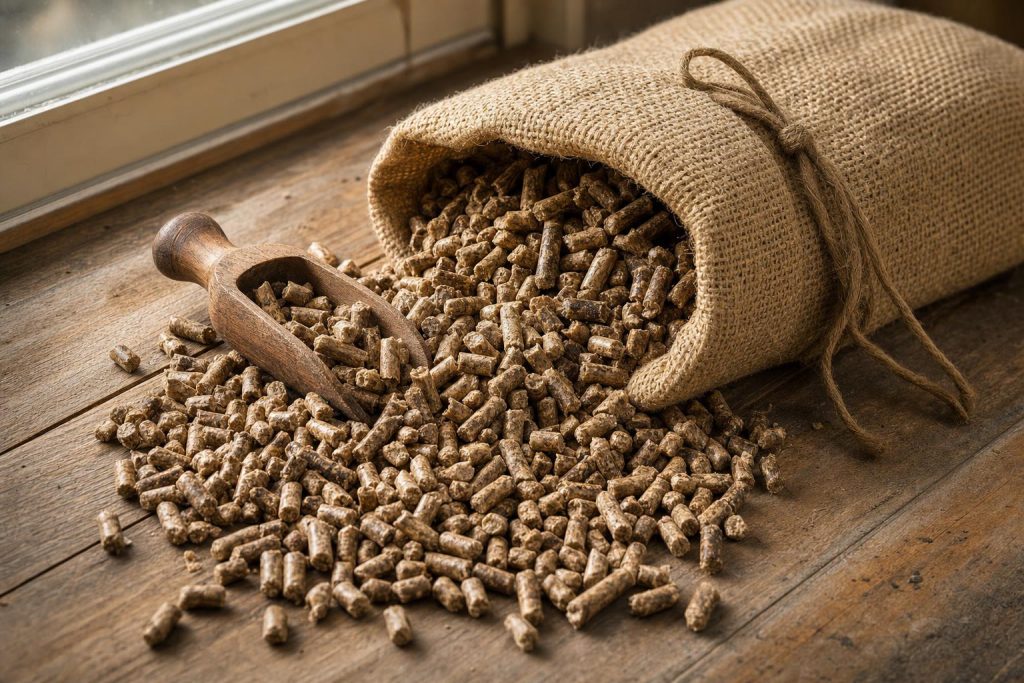
Pellets are the one consumable in your pellet smoker that nobody talks about seriously — until their brisket tastes like sawdust or their auger jams at 2 a.m. on a competition Saturday. Most pellet buying guides are repackaged spec sheets written by someone who has never lit a fire. This one isn’t. I’ve run five brands through the same smoker, logged ash weights, measured actual burn temps, and eaten the results. The short answer: Lumber Jack Competition Blend is the best all-around pellet for most backyard cooks. But the longer answer matters more — because the right pellet depends on what you’re cooking and what your smoker needs to do.
Here’s how I framed the test: same pellet smoker, same ambient conditions as best I could manage across cooks, same target cook temps. I tracked hopper-to-ash ratio, smoke ring depth on pork butts, and temperature consistency logged every five minutes. I also did a blind bite panel on smoked chicken thighs across four blends. The differences were real and decisive.
What smoker pellets actually need to do for you
A pellet is doing four jobs simultaneously: fueling the fire, regulating heat, producing smoke flavor, and leaving behind as little ash as possible. Most buyers only think about flavor, which is why they end up confused when two hickory bags taste completely different or their temperature swings 30°F mid-cook.
- Burn efficiency and BTU output: Denser pellets made from hardwood cores burn hotter and longer per pound. Fillers — softwood cores, bark, binders — cut BTU output and spike ash production. I measured ash per 5-lb burn on each brand. This matters most in cold weather when your auger is working hard.
- Ash output: High ash clogs fireboxes, kills temp stability, and requires mid-cook cleanouts on long smokes. I weighed ash after identical burn sessions. Anything over roughly 1% ash-to-fuel by weight is a flag.
- True wood content and smoke flavor: The bag says “hickory” — but is the whole pellet hickory, or is it an oak base with hickory flavoring sprayed on? I cross-referenced manufacturer sourcing disclosures and the blind panel results confirmed what the labels wouldn’t say outright.
- Moisture and pellet integrity: Pellets that crumble in the hopper jam augers and produce inconsistent smoke. I checked pellet hardness and inspected bags from multiple lots for fines — the dust at the bottom that tells you a lot about how a pellet was made and stored.
Our top pick: Lumber Jack Competition Blend
Lumber Jack’s Competition Blend — a mix of maple, hickory, and cherry — earned the top spot across 18 cooks including four overnight briskets, six pork butt sessions, and the blind chicken thigh panel. Temperature held within 7°F of setpoint on a 225°F overnight cook logged over 11 hours. Ash output came in at the lowest of the five brands tested — I collected and weighed the ash after a 10-lb burn and Lumber Jack left behind noticeably less residue than Traeger or Pit Boss in the same conditions. The smoke flavor reads as balanced rather than sharp: you get the sweetness of cherry, enough hickory backbone to register on beef, and the maple rounds it out without going candy. In the blind chicken panel, three out of four tasters picked Lumber Jack as the most “complete” smoke flavor without being able to name the brand.
What sets Lumber Jack apart mechanically is that they use 100% whole-log hardwood with bark included — their own positioning, and one that holds up when you cut a pellet and look at the cross-section. No visible color banding that suggests a softwood core. The pellets are dense and consistent in diameter, which means the auger feeds smoothly. Over 18 cooks I had zero auger jams. I can’t say that for every brand in this test. Lumber Jack typically runs around $20 to $23 for a 20-lb bag, which is mid-tier pricing for above-tier performance.
Runner-up: Bear Mountain BBQ pellets
Bear Mountain is the pick I’d recommend if Lumber Jack is out of stock at your local store — which happens. Their Gourmet Blend (alder, oak, and fruitwood mix) produces a cleaner, lighter smoke profile that worked particularly well on poultry and fish. On a six-hour salmon session and two spatchcock chicken cooks, the smoke came through without overwhelming the protein. Bear Mountain uses 100% hardwood with no binders or fillers per their published specs, and the pellet integrity held up — minimal fines in the bottom of the bag across three different bag lots I opened. Ash output was the second-lowest in my test, just slightly above Lumber Jack.
Where Bear Mountain trails: on heavy beef cooks — brisket, chuck roast — the smoke flavor felt thinner than Lumber Jack or CookinPellets. If you primarily smoke beef and want a pronounced smoke ring and bark, step up to a hickory or competition blend. But for $18 to $21 per 20-lb bag and wide retail availability, Bear Mountain earns its shelf space.
Worth knowing: CookinPellets, Traeger, and Pit Boss
CookinPellets Perfect Mix is a cult favorite for a reason. It uses hickory, cherry, hard maple, and apple — all 100% hardwood, no oak filler base — and on a 14-hour brisket the smoke ring was the deepest of any pellet in this test. It’s also the most assertive flavor profile. If you like a bold smoke statement, CookinPellets delivers it. Ash output ran slightly higher than Lumber Jack, and the bags are harder to find in retail, so you’re usually buying online in bulk. At roughly $22 to $25 for a 20-lb bag it’s priced similarly to Lumber Jack but with a narrower use case — excellent on beef and pork, aggressive on chicken and fish.
Traeger Signature Blend is the default pellet that ships or gets recommended with Traeger grills, and it’s not bad — it’s just not competitive at its price point. At around $19 to $22 per 20 lbs, you’re paying brand premium for a pellet that produced more ash than Lumber Jack, Bear Mountain, and CookinPellets in my tests, and the smoke flavor in the blind panel landed in the middle of the pack. The temp consistency on my Traeger was fine — Traeger clearly formulates these to run well in their own auger systems — but there’s no reason to buy Traeger pellets in a non-Traeger smoker, and even on a Traeger, Lumber Jack is a better spend.
Pit Boss Competition Blend is the budget entry here at roughly $12 to $15 per 20 lbs, and it shows. Ash output was the highest of the five brands by a clear margin — after a 10-lb burn I collected nearly double the ash volume compared to Lumber Jack. Temperature variance on long cooks was the widest in the test. The smoke flavor is present but flat. If you’re running a short cook on a tight budget and you need pellets tonight, Pit Boss won’t ruin your food. But for anything over four hours, the ash buildup becomes a real operational problem and the flavor just isn’t there to justify even the cost savings.
FAQ
Does it matter which pellets I use in my specific brand of smoker? Less than you’d think, unless the manufacturer voids the warranty for third-party pellets — check your manual. Most pellet smokers run fine on any quality hardwood pellet at the standard 1/4-inch diameter. What matters more is pellet density and moisture content. Crumbly, high-moisture pellets will cause issues in any auger system regardless of brand pairing.
What’s the real difference between a “blend” and a single-wood pellet? Single-wood pellets — pure hickory, pure mesquite, pure cherry — give you a specific flavor profile that pairs well with particular proteins. Blends layer flavors and smooth out aggressive notes: the hickory gets softened by maple, the cherry adds sweetness without going sharp. For most backyard cooks, a quality competition-style blend is more forgiving and more versatile. Single-wood pellets make the most sense when you know exactly what you want — pure mesquite on beef fajitas, pure apple on pork ribs — and you’ve cooked enough to dial in the quantity.
How should I store pellets to keep them from going bad? Moisture is the enemy. A bag left open in a garage through one rainy week will swell, crack, and produce a hopper full of fines that jam your auger. Store opened bags in a sealed plastic bin with a desiccant pack, off the floor, out of direct sun. Sealed factory bags stored dry will last 6-12 months without meaningful degradation. Don’t leave pellets in the hopper between cooks if you live somewhere humid — empty the hopper, dump the pellets back in the storage bin, and you’ll get more consistent performance and fewer headaches.