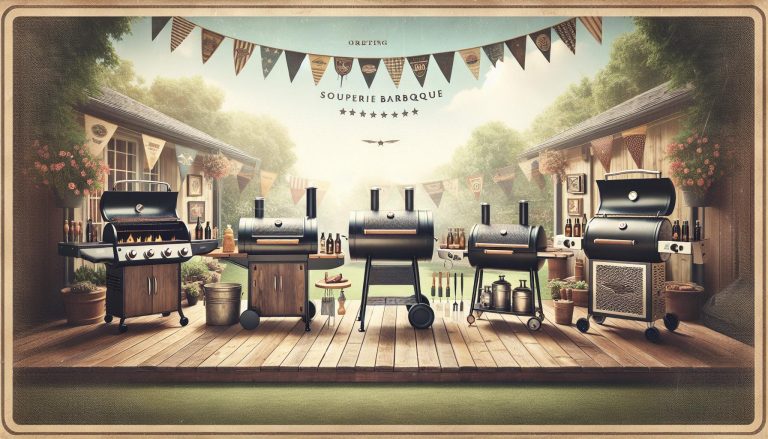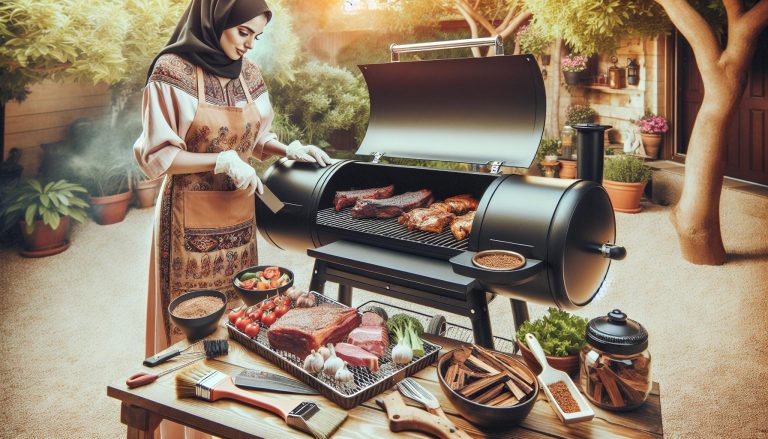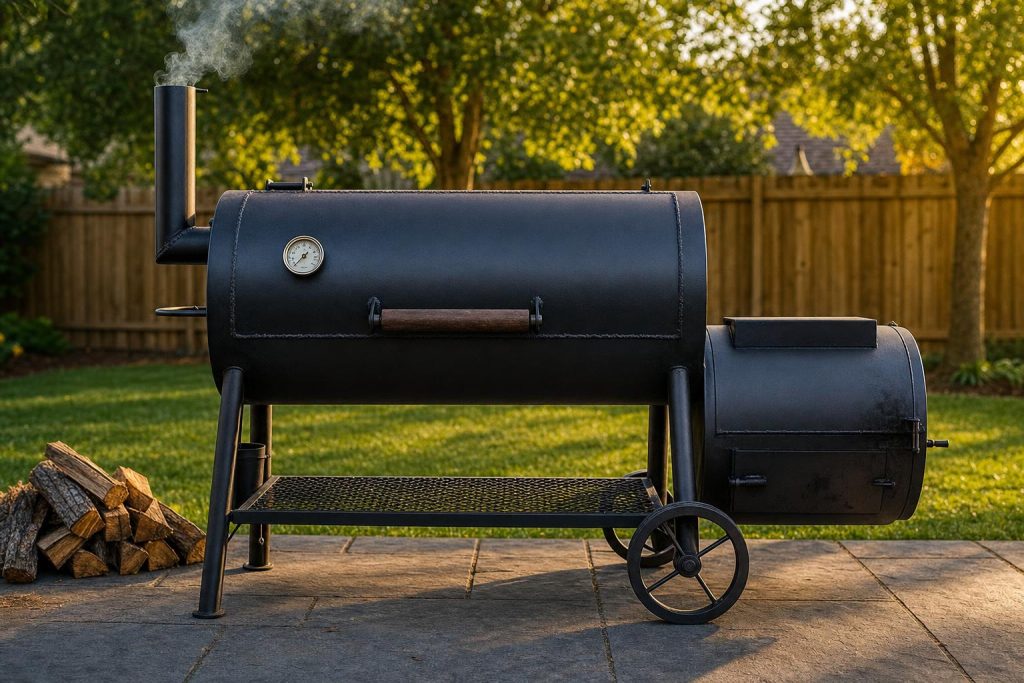
The offset smoker market is split into two unequal halves. Real offsets (Workhorse Pits, Lone Star Grillz, Mill Scale, Goldee's) are 1/4-inch-plus steel, cost $1,800 and up, and produce the kind of smoke flavor that wins competitions. Big-box offsets (Char-Griller, Oklahoma Joe's Highland, Brinkmann clones) are 14-gauge steel, cost $200–$400, and produce the kind of smoke flavor that wins arguments with people who think they've eaten BBQ before.
This guide is about the real-offset tier. If you're looking at sub-$500 offsets, the honest answer is: don't. You'll spend $400 on a grill you fight for two years and replace anyway. Save up. A used Workhorse 1957 at $1,500 is a better buy than a new Oklahoma Joe's Highland at $349. We cooked four offsets in the $1,500–$3,500 band for six months. Here's the breakdown.
Workhorse Pits 1957 is the best first-real-offset buy
$1,895 base, $2,150 with the front shelf and warming-cabinet upgrades we recommend. Workhorse Pits is a small Texas builder whose 1957 model has the right ratio of cook chamber to firebox for backyard cooks — it doesn't need 8 hours of pre-burn to settle into a stable smoke. The 1/4-inch steel holds temperature for 90+ minutes between fuel additions, which is the difference between sitting outside babysitting and being able to walk inside, talk to your family, and come back.
Build quality: hand-welded, food-grade rolled steel, cook chamber sits flat to the floor, smokestack is positioned to pull smoke evenly across both shelves. Six months in, we've cooked thirty briskets on it. The bark we get out of this rig is genuinely better than what comes off our pellet smokers — the airflow through wood coals at 275°F renders fat differently than convection heat. You can taste it.
Lone Star Grillz 24×40 if you cook for groups
$3,495 base. The Lone Star Grillz 24×40 has 40 inches of cook length and a separated firebox built for serious wood burning. If you cook for groups of 12+, run small catering jobs, or want one offset that can handle three packer briskets at once, this is the rig. We borrowed one for a 3-day comparison cook against the Workhorse 1957. Smoke quality was indistinguishable. Cook capacity was 2.5x. Price was ~85% higher.
Who should buy it instead of the Workhorse: anyone who cooks for events more than backyard. Who shouldn't: anyone whose biggest cook is one brisket at a time. The 24×40 is overkill for a weekend backyard pitmaster, and you'll burn more wood per cook to fill the bigger chamber.
Skip the Yoder Wichita unless you find one used
The Yoder Wichita is a real offset and a quality build. We don't recommend buying new at $3,295 because the equivalent capacity from Workhorse Pits is $1,200 less. Yoder is a respected brand and the Wichita will outlast you. But for the same money you can have a Workhorse 1957 AND a ThermoWorks Smoke X4 AND a 25-pound bag of post-oak splits AND change left over. Buy the Yoder used at $1,800–$2,000 if you find one.
The wood matters more than the rig
One thing nobody tells first-time offset buyers: the wood you cook on changes the smoker more than the smoker brand. Post oak is the Texas brisket gold standard for a reason — it burns clean, holds coals long, and renders smoke at a temperature that doesn't turn meat into a bitter-tannin disaster. Hickory burns hotter and faster, dies down sooner, and leaves a more aggressive smoke print. Mesquite is for people who like the smell of campfire on their dinner.
If you live where post oak is hard to source (anywhere outside Texas + parts of the Gulf Coast), pecan is the closest substitute that ships nationally. Avoid the chunks marketed for water-pan smoker-boxes — offsets want splits, not chunks. A face cord of seasoned post-oak splits ($120–$180 delivered) lasts an average backyard cook through 8–12 cooks.
FAQ
Is offset cooking really that much harder than pellet? Yes and no. The first ten cooks are harder because you're learning to read fire color, manage the firebox air, and add splits before the temp drops. After ten cooks it becomes muscle memory. The reward is smoke flavor you can't get any other way.
How long do real offsets last? Workhorse Pits warranties their cook chambers for life. Lone Star Grillz, same. With reasonable care (cover it, clean it, season the cook chamber), a real offset will outlive you. Pass it to your kid.
What's the cheapest real offset? Currently the Workhorse Pits 1957 at $1,895. Below that, you're looking at thinner steel, leaky seals, and a temp swing that punishes beginners. If the budget isn't there yet, run the Weber Smokey Mountain ($349) for a year while you save. The WSM produces honest smoke flavor and teaches you fire management on a smaller scale.