Most wood chunk buying guides are written by people who have never actually tended a fire at 2 a.m. waiting on a brisket. They’ll tell you every bag is “excellent” and “perfect for pork” and link you to whatever pays best. I’m going to skip that. I’ve cooked through Western, Smokin’ Wood, B&B, and Camerons across my offset, my kettle, and a ceramic kamado over the last year-plus. Some of this wood is genuinely good. Some of it is bark-heavy filler that gives you acrid smoke and a bitter finish on meat that deserved better. Here’s the real breakdown.
The short answer: B&B post oak chunks are my top pick for most cooks, Western hickory is the workhorse budget buy that earns its shelf space, and if you’re doing fruit woods, Smokin’ Wood’s apple and cherry chunks are the cleanest-burning option I’ve found without jumping to competition-grade pricing. But your specific smoker and meat type matter more than most guides admit — so keep reading before you buy.
What wood chunks actually need to do for you
Wood chunks aren’t complicated, but they’re easy to get wrong. I evaluate them on four things: smoke quality (the flavor the combustion produces, not just the smell in the bag), consistency of cut (chunks that are all over the place in size make fire management a chore), moisture content (too dry and they flash-burn; too green and they smolder bitter), and value density — meaning how much usable wood you actually get per bag after you throw out the bark pieces and sawdust. Here’s what each one means in practice.
- Smoke quality: Clean, thin blue smoke is what you want. If a chunk produces thick white billowing smoke for more than five minutes after it catches, you’re either dealing with green wood or excessive bark. Both deposit creosote on your meat.
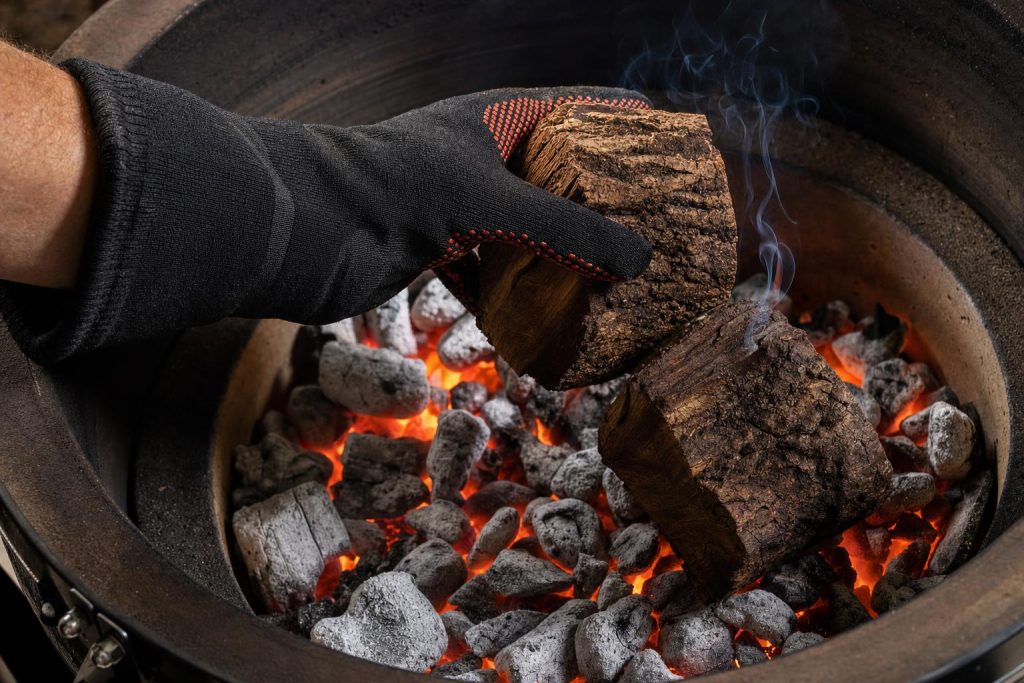
- Cut consistency: A good chunk is roughly fist-sized — enough mass to smolder slowly without needing babysitting every 20 minutes. Bags full of splinters, dust, or mismatched sizes waste your money and your time.
- Moisture content: Properly dried chunks should feel dense but not light as balsa. Kiln-dried wood is more consistent than air-dried, though air-dried from a reputable source isn’t automatically bad.
- Value density: Weigh what you’re actually getting. Some bags list weight with bark included. I pull chunks, discard obvious bark-only pieces, and see what’s left.
Our top pick: B&B Oak Smoking Wood Chunks
Across 18 cooks — including four overnight brisket sessions, two pork shoulders, and a run of beef ribs — B&B’s post oak chunks were the most consistent wood I put in a firebox. The chunks run fist-to-baseball size, which is the sweet spot for offset and kamado work. They catch clean, transition to thin blue smoke within 8 to 10 minutes of placement, and they don’t require you to babysit the fire the way some lighter-density hardwoods do. On a 14-hour brisket at 250°F on my offset, I used roughly 6 to 7 chunks over the full cook and the smoke profile stayed steady through the stall. No bitter finish on the flat. That’s the test that matters.
Post oak is the Central Texas standard for good reason — it’s a medium-intensity wood that plays well with beef without overpowering it, and it doesn’t have the sharpness that hickory can develop if you run it heavy. B&B sources from Texas, which matters for authenticity but also for moisture content consistency. The bags I’ve bought across multiple lots have been notably uniform. My only complaint is pricing has crept up — you’re paying more per pound than Western — but if you’re committing to a serious cook, this is not where you cut corners.
The workhorse pick: Western Premium Hickory Chunks
Western is the brand sitting in every Walmart and Home Depot, and the reflexive reaction is to assume that means it’s mediocre. For their hickory chunks, that’s not fair. I’ve burned through four bags of Western hickory across pork shoulders, ribs, and chicken cooks. The cut consistency is not as tight as B&B — you’ll get more size variation and a higher bark-to-wood ratio — but the wood itself is properly dried and produces genuinely good smoke. Hickory is a bold, bacony hardwood, and Western’s version delivers that profile without tasting harsh when used in reasonable quantities (I’m talking 3 to 4 chunks per cook on a standard kettle setup, not piling it on).
Where Western earns its place: price and availability. If you’re doing weekend cooks regularly, you don’t need to pay premium prices for hickory to smoke ribs. Western gets the job done, ships fast, and you can grab a bag at midnight before a Saturday cook without paying expedited shipping. For beef, I’d still reach for post oak or mesquite. For pork and chicken where you want that classic American BBQ smoke ring and flavor, Western hickory is completely legitimate. Just sort through the bag and toss the bark-only pieces before you cook.
Fruit woods done right: Smokin’ Wood apple and cherry chunks
Apple and cherry are the fruit woods you reach for when you want subtlety — poultry, fish, pork loin, ham, or any cook where a heavy hickory or oak profile would bulldoze the meat’s natural flavor. Smokin’ Wood’s apple and cherry chunks are the cleanest-burning fruit woods I’ve used at a non-competition price point. The apple chunks in particular have good density for a fruit wood, which means they smolder longer than you’d expect and don’t require constant replenishment. I ran Smokin’ Wood apple on a spatchcocked chicken at 325°F and on a three-hour pork loin — both came out with a delicate, slightly sweet smoke layer that enhanced without dominating.
Cherry is worth keeping in your rotation as a blender — mixed 50/50 with hickory or oak, it adds a mild sweetness and contributes to a deep mahogany color on the bark that photographs well if you care about that sort of thing. Smokin’ Wood’s cherry chunks run slightly smaller on average than their apple, which makes them better suited for shorter cooks and kettle setups. Camerons is the other brand in this space worth mentioning — their chunks are fine and widely available, but they trend smaller and I found more sawdust per bag in my comparisons. Smokin’ Wood gets the edge on chunk quality.
Chunk vs. chip vs. plank: buy the right form for your setup
Chunks are for offsets, kettles, and kamados — anywhere you have direct contact with charcoal or a wood fire and want sustained smoke over a long cook. Chips are for gas grills and electric smokers where you need fast combustion in a small chamber; they burn too fast to be useful in an offset. Planks (cedar being the most common) are a contact-flavor method — the wood doesn’t really smoke so much as steam and char against the food, imparting flavor through direct contact. They’re a different tool entirely. If you’re buying for a Traeger or pellet grill, you want pellets, not chunks or chips — chunks won’t feed through an auger and chips will cause airflow problems. Know your smoker before you buy.
Wood by meat: the pairing guide that’s actually useful
Every guide lists pairings. Most of them are vague. Here’s how I actually think about it: post oak is the default for beef — brisket, beef ribs, chuck roast. It’s assertive enough to be present, clean enough not to dominate. Hickory is the default for pork — shoulders, ribs, bacon burns. It’s the backbone of classic American BBQ smoke flavor. Apple and cherry are for everything that needs a lighter touch — chicken, turkey, fish, pork loin, and ham. Mesquite is for hot-and-fast beef like steaks or fajitas where you want an aggressive, earthy smoke hit in a short cook window; do not use it for low-and-slow or it turns bitter. Pecan is a legitimate all-purpose option that splits the difference between hickory and fruit wood — slightly sweet, medium intensity, good on both pork and chicken. None of the four brands in this guide carry a great pecan chunk option as of my last check, but it’s worth keeping on your radar.
FAQ
Do I need to soak wood chunks before using them? No — and this is one of the most persistent myths in backyard BBQ. Soaking chunks only delays combustion, which means they spend more time producing steam and white smoke before they actually start producing clean blue smoke. That white smoke phase is exactly what you don’t want on your meat. Use dry chunks directly on your coals or next to your fire.
How many chunks should I use per cook? For a standard kettle running a 4-to-6-hour pork shoulder cook, 3 to 5 fist-sized chunks is the right range. For a long offset brisket cook of 12 to 14 hours, you’re looking at 6 to 10 chunks total, added 1 to 2 at a time throughout the cook. Over-smoking is a real mistake — too much wood smoke deposits bitter compounds on meat and covers up the flavor you actually worked for. If your food consistently tastes bitter, you’re using too much wood, not too little.
What’s the shelf life on wood chunks, and how should I store them? Properly dried hardwood chunks stored in a dry location will stay usable for years. The enemy is moisture — storing bags in a humid garage or leaving them exposed to rain causes mold and re-absorption of moisture that degrades smoke quality. Keep them in a sealed container or inside, and you won’t have a shelf-life problem in any practical sense. If chunks smell musty or feel noticeably lighter than they should, that’s your signal they’ve gone bad.