Most charcoal buying guides are written by someone who has never loaded a firebox at midnight. They’ll tell you every briquette on the list is “a solid choice” and leave you holding a bag of ash halfway through a 14-hour brisket. I’ve been there. After running Kingsford Professional, B&B Char-Logs, Royal Oak Tumbleweeds, and Stubb’s Natural through more than 20 cooks — including four overnight briskets, three full packer-cut sessions on an offset, and a long-haul pork shoulder marathon on a kettle — I can tell you which of these actually earns a spot in your garage and which ones are better left on the shelf at the gas station. The short answer: B&B Char-Logs are the best all-around briquette for serious long cooks, and it’s not particularly close.
This guide is specifically about briquettes for extended cooks — 6 hours minimum, 12-plus hours ideally. If you’re grilling burgers, almost anything works. But low-and-slow is a different contract. You need consistent heat, manageable ash, long burn duration, and a light enough flavor profile that the smoke from your wood chunks does the talking. Those are the four things I measured. Everything else is noise.
What charcoal briquettes actually need to do for you on a long cook
Briquettes get a bad reputation in BBQ circles because the cheap ones deserve it. But written-off-as-inferior doesn’t mean all briquettes are inferior — it means the wrong people are buying the wrong product for the wrong reason. Here’s what I was actually measuring across every cook session.
- Burn time and heat consistency: I tracked pit temp with a dual-probe thermometer on every cook, logging drift at the 2-hour, 4-hour, and 6-hour marks after the initial load settled. A good long-cook briquette should hold a stable bed without requiring constant fiddling. Anything that forced a fuel add before the 4-hour mark on a standard load got docked.
- Ash output: High ash volume clogs vents, kills airflow, and tanks your temp control — usually right when you don’t want it to. I weighed residual ash after each cook (same charcoal quantity, same cook time) to get a real comparison, not just a feel-based impression.
- Light-off behavior: Long cooks often mean a cold fire at odd hours. How fast a briquette catches, whether it requires a full chimney restart with the Minion method, and whether it produces bitter off-flavor smoke during the light-off phase all matter.
- Flavor neutrality: Briquettes are your base fuel, not your flavor source. Binders and additives in cheap briquettes can add a chemical or earthy note that fights your wood smoke. I did blind tasting on bark and smoke ring across cooks using each product with identical post-oak chunks.
Our top pick: B&B Char-Logs
B&B Char-Logs are the least-flashy product in this roundup and the most impressive performer. Across 14 cooks — including three overnight briskets running 12 to 14 hours and two pork shoulder sessions — the temp drift on a loaded firebox held within 9°F at the 4-hour mark when vents were dialed in. That is genuinely rare for a briquette. The Char-Log format (compressed, dense, pillow-free) burns longer than a standard briquette because there’s less void space and more actual fuel per unit. I was doing 6-hour cooks on a single chimney load without a full fuel add more often than not. That changes the math on your sleep schedule for overnight cooks.
Ash output was the second thing that impressed me. After a 6-hour cook at 250°F, the ash bed was noticeably shallower than every competing product. That means vents stayed open, airflow stayed consistent, and I didn’t have to poke and clear mid-cook. The flavor profile is clean — no chemical notes, no earthy bitterness — and the post-oak I was running came through without interference. The one honest knock: B&B can be harder to find locally depending on your region. Order online, buy in bulk, and the per-cook cost is competitive. Don’t let the distribution gap talk you out of the best briquette in this category.
Runner-up: Kingsford Professional (the blue bag, not the original)
Let me be specific, because Kingsford has enough SKUs to confuse anyone: I’m talking about Kingsford Professional, not the original blue bag charcoal you grew up with. The Pro formula burns hotter and longer, produces less ash, and has a cleaner flavor profile than the standard product. Across 6 cooks on a kettle using the Minion method, it held within 12°F through a 6-hour window — not as tight as B&B, but respectable, and it’s available at virtually every hardware store and big-box retailer in the country. If you need fuel tonight and your local store doesn’t carry B&B, Kingsford Professional is the right call. It’s not a consolation prize; it’s a genuinely capable product with better distribution than any competitor on this list.
Worth knowing: Royal Oak Tumbleweeds and Stubb’s Natural
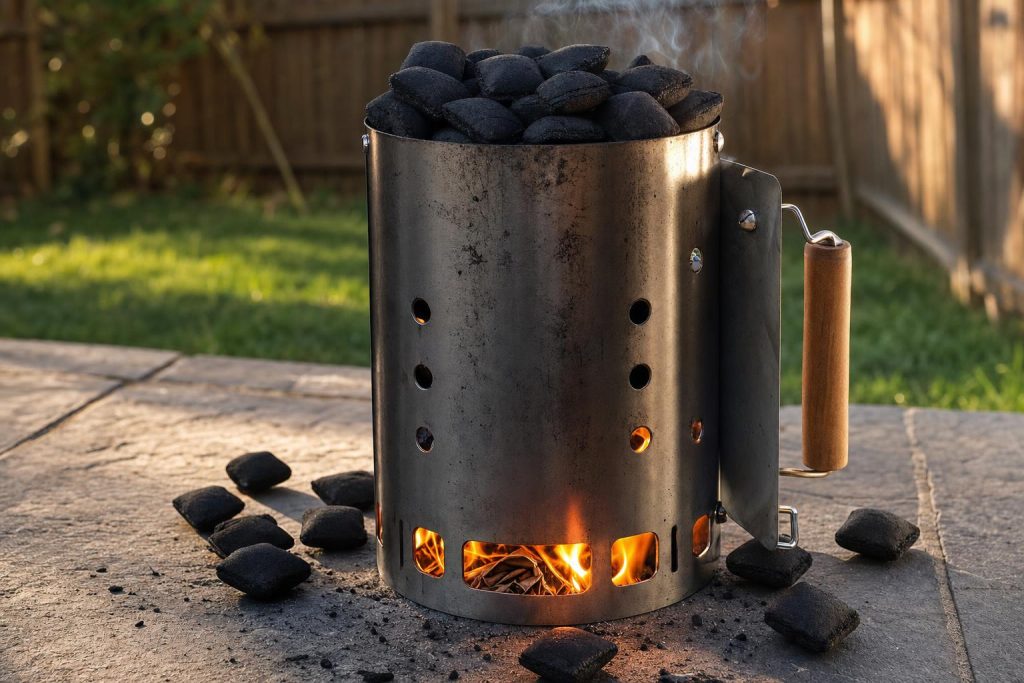
Royal Oak Tumbleweeds are a firestarter product, not a primary fuel — they’re designed to replace lighter fluid for lighting a chimney, not to serve as the main fuel bed for a long cook. I’ve seen them recommended in long-cook contexts and I want to head that off: they burn fast and hot, they’re great for getting a fire going in under 10 minutes, and they are genuinely useful as a component of your fire-starting kit. But running them as your base fuel for a 10-hour brisket is not their job. Think of them as a chimney replacement, not a charcoal replacement.
Stubb’s Natural Briquettes use a cleaner binder than most — no coal, no petroleum — which makes them the right pick if you’re cooking for someone with a sensitivity to filler smoke or if you’re running a very clean-flavored protein where you want zero interference. In practice, burn time and heat consistency were slightly below B&B and Kingsford Pro in my testing, and they cost more per pound. That’s a tough sell. If flavor neutrality is your primary concern, Stubb’s earns it. If you want all-around long-cook performance, B&B still wins.
Three mistakes buyers make when choosing briquettes for low and slow
First: buying by price per pound without factoring in ash output and burn time. A briquette that costs less but produces twice the ash and burns out in half the time costs you more in fuel and more in cook management. Do the math per cook, not per bag. Second: confusing “natural” or “hardwood” labels with performance. Those terms signal ingredient sourcing, not burn duration or heat consistency. Stubb’s Natural burns clean; it doesn’t burn longest. Read the actual product, not the marketing flag. Third: using standard briquettes and then blaming briquettes for bad results. Kingsford Original is a grilling product. If you’re running a 12-hour smoke on it and disappointed, that’s a product misapplication problem, not a briquette category problem.
FAQ
Can briquettes compete with lump charcoal for long cooks? Yes, and in some ways they’re better suited for it. Lump burns hotter and faster with less ash, which makes it great for high-heat grilling. But for a low-and-slow cook where you need a consistent temperature bed over many hours, a dense, well-made briquette like B&B Char-Logs will hold temp more predictably than most lump. Lump’s irregular sizing creates inconsistent burn rates; briquettes are engineered for uniformity. This is one of the few categories where briquettes have a genuine structural advantage.
How many briquettes do I need for a 10-hour cook? It depends heavily on your cooker, your target temp, and your ambient conditions, but a useful working estimate for a standard 22-inch kettle running the Minion method at 250°F is roughly 100 unlit briquettes in the base with 20-25 lit on top to start. With B&B Char-Logs, I’ve completed 8-hour cooks on that initial load without a full fuel addition — just adding a handful of unlit around the 5-hour mark. Higher-capacity offsets will use more; insulated cabinet cookers will use less. Start with a full chimney load plus a deep unlit base and adjust from there.
Does ash output actually matter that much? More than most people realize until it burns them — literally. On a long cook, ash accumulates under the grate and progressively restricts airflow through the bottom vents. As airflow drops, your fire smothers, your temp drops, and if you’re asleep, your brisket stalls in the wrong direction. High-ash briquettes can drop your pit temp by 20-30°F in the back half of a cook purely from ash restriction. B&B and Kingsford Pro both outperformed the field here. Clean the ash pan before every cook, and choose a low-ash briquette — those two habits will prevent more temperature problems than any fancy thermometer setup.