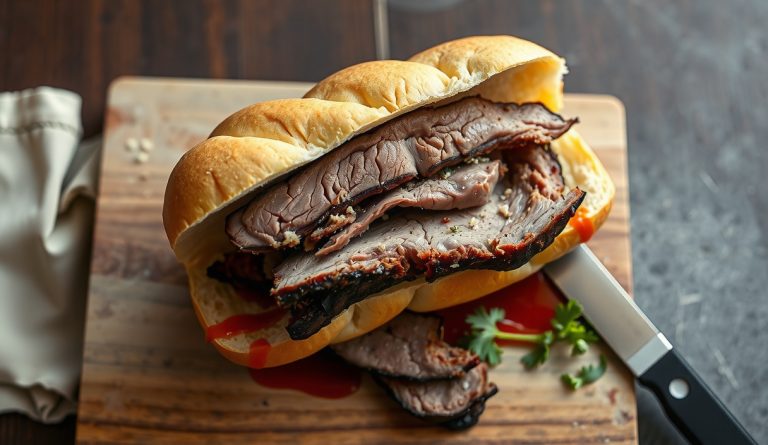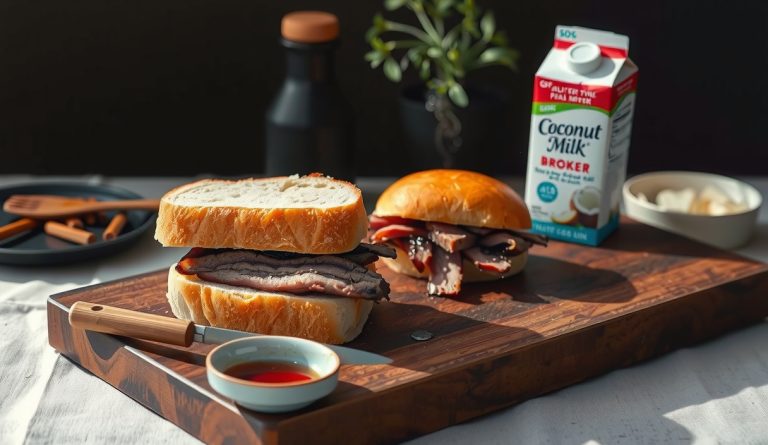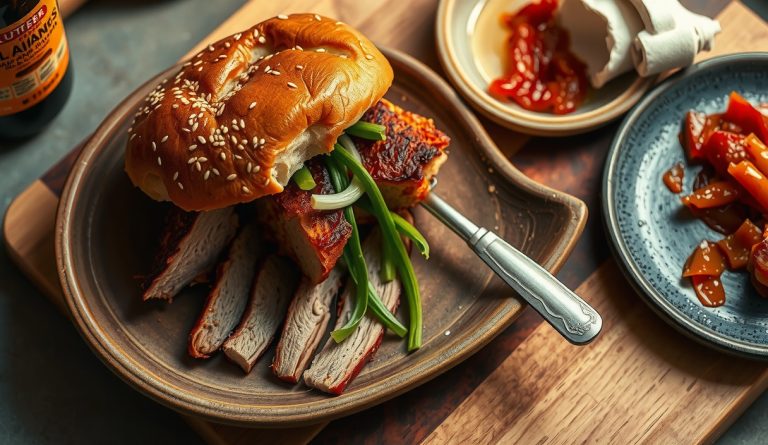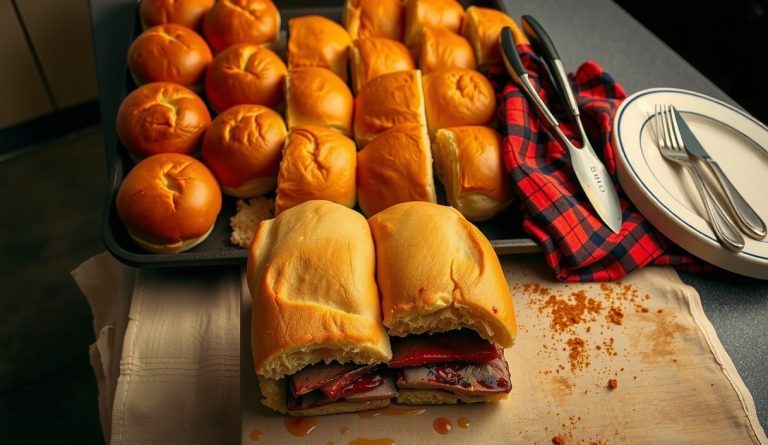
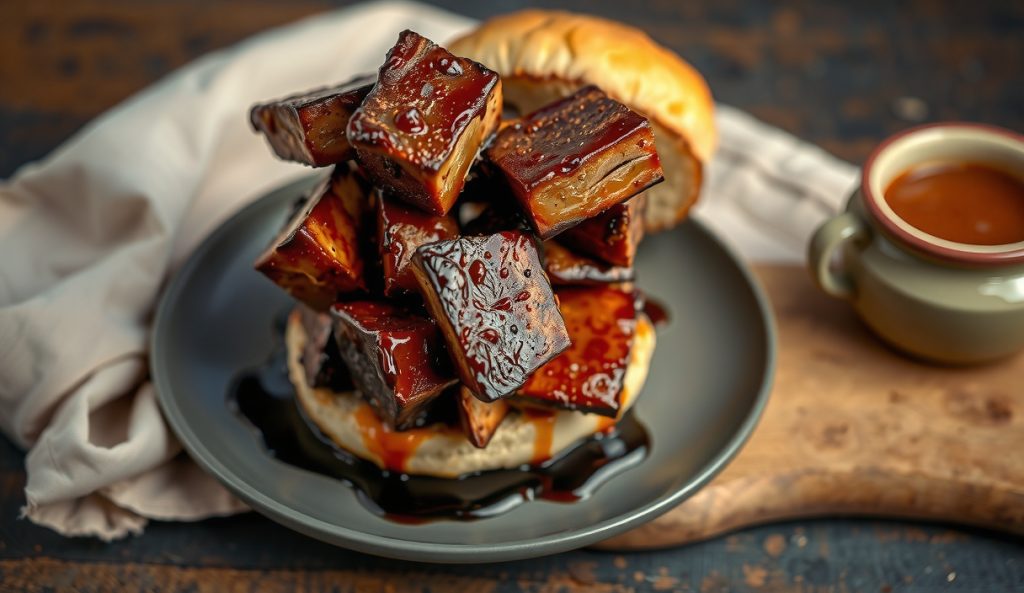
The brisket flat and the brisket point are fundamentally different muscles that behave differently under smoke heat. The flat is lean and slices cleanly; the point is heavily marbled, collagen-rich, and tolerates extended heat without drying out. This variation leans into that difference entirely — you separate the point after the initial smoke and rest, cube it into 1.5-inch pieces, and return it to the smoker for a second cook that develops maximum bark surface area on every face of every cube.
The result is a burnt ends sandwich: each cube carries a lacquered exterior and a soft, gelatin-saturated interior. Piled onto a gluten-free brioche bun built to handle structural stress, this is a more aggressive build than the sliced flat version, and it rewards that aggression.
What changes for the burnt ends point build?
After the full packer brisket completes its initial smoke and rests fully, separate the point from the flat along the seam of fat that divides them. The flat goes to slicing as the canonical recipe describes. The point gets cubed into 1.5-inch pieces, tossed with an additional application of gluten-free BBQ sauce and one tablespoon of brown sugar, and returned to the smoker uncovered at 275°F for 60–90 minutes. You are looking for the surface to lacquer and tighten, and for visible fat rendering to slow — visual cues that the exterior Maillard crust has fully set and the interior fat has liquefied and redistributed.
Why does the point survive a second smoke without drying out?
By the time the point enters its second smoke stage, its actin proteins are already fully denatured and its substantial collagen has converted to gelatin — and that dissolved gelatin functions as an internal moisture reservoir during the second cook at 275°F.
That gelatin reservoir buffers the burnt ends cubes against the moisture loss that would destroy a lean flat under the same conditions. The point’s higher intramuscular fat content provides additional insurance, releasing liquid fat into every cube as the second cook progresses. Pile the finished burnt ends directly onto the GF brioche bun in place of sliced flat — no structural modification to the bun is required.
What stays the same as the original recipe?
The full packer smoke protocol, the rub, the rest, and the GF brioche bun formula are unchanged from the base recipe. The burnt ends build adds a second smoke stage for the point only — it does not replace the core method. The flat remains available for sliced sandwiches if you are feeding a mixed crowd, making this an efficient way to yield two distinct sandwiches from a single smoke session.
When is the burnt ends point build the better choice?
Choose the burnt ends build when you want maximum bark-to-meat ratio on every bite, when the crowd skews toward the richest and most unctuous cut, or when you are building a platter where visual drama matters. Cubed burnt ends read more boldly on a board than sliced flat, and the two-stage process converts a single full packer brisket into two distinct sandwich options from one smoke session.
Use the full method, equipment, and rub measurements from the original Gluten-Free Smoked Brisket Sandwich.