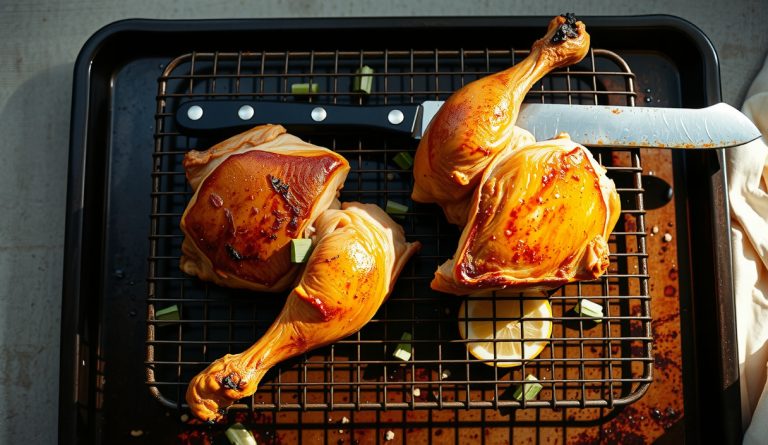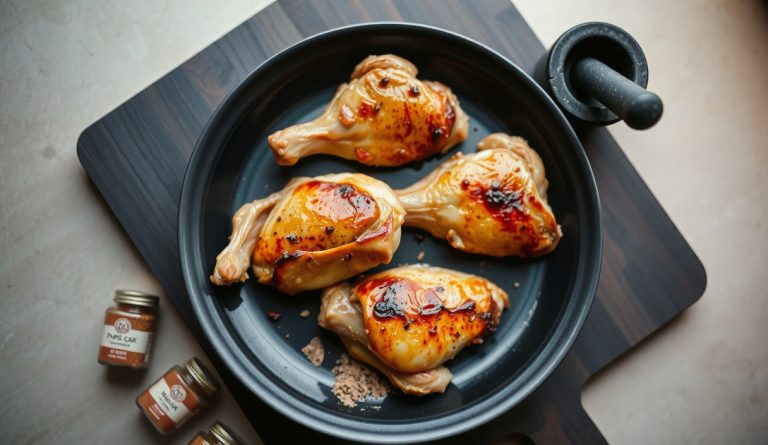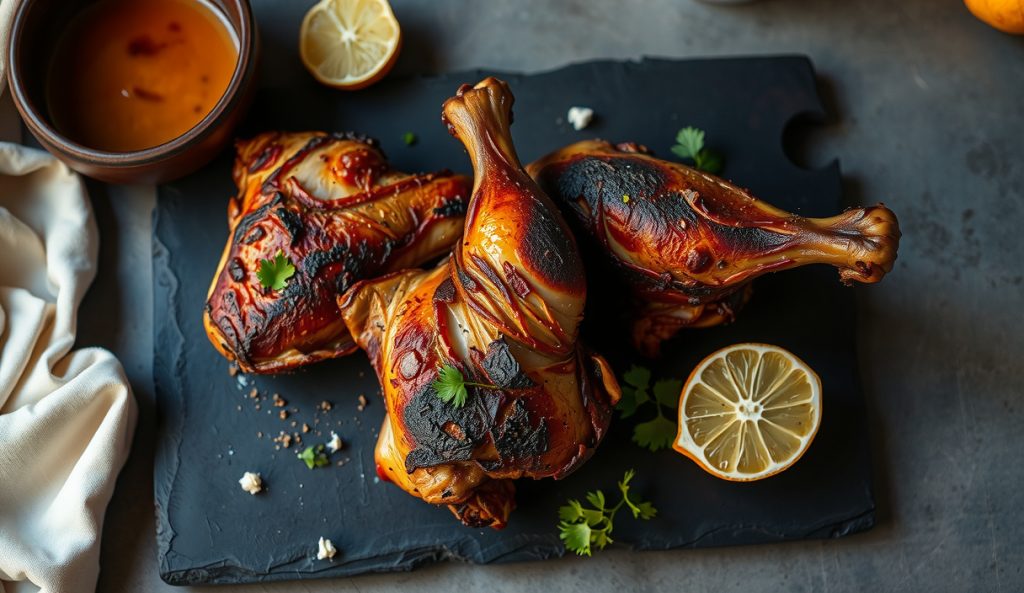
Buttermilk performs two distinct functions in the canonical recipe: its acidity partially denatures surface proteins and tenderizes the outer muscle layer, while its fat-and-protein matrix helps the rub adhere and form bark. Both functions can be replicated without dairy. This variation is designed for cooks following Whole30, managing a dairy intolerance, or simply working with what is already in the refrigerator.
What changes when you swap buttermilk for coconut milk?
Replace buttermilk with full-fat coconut milk acidified with 1 tablespoon of apple cider vinegar per cup of coconut milk. Stir to combine and allow 5 minutes for the acetic acid to fully disperse before submerging the thighs. The resulting brine reaches approximately pH 4.8 — closely mirroring the lactic acid environment of cultured buttermilk, which sits at pH 4.4–4.8. The tenderizing mechanism is equivalent: mild acid at that pH range disrupts hydrogen bonding in surface myofibrillar proteins and begins softening the outer collagen sheath without denaturing the muscle fiber bulk, which would otherwise tighten and toughen the meat. Brine duration and temperature remain identical to the canonical recipe.
One material difference requires active compensation. Buttermilk’s fat is predominantly long-chain unsaturated fatty acids with a relatively high affinity for lipophilic aroma compounds — that fat absorbs and retains volatile flavors from the rub during the brine window. Coconut milk’s fat profile shifts heavily toward saturated medium-chain triglycerides, primarily lauric and caprylic acids, which carry a higher smoke point but a meaningfully lower affinity for lipophilic aromatics. In practical terms, fat-soluble rub flavors — particularly the terpenoids in paprika and the thymol in dried oregano — will bind to the coconut brine fat less efficiently and carry through to the finished meat less completely. Compensate by increasing the lemon zest in the rub by 50% (from the canonical quantity to 1.5x that amount). Lemon zest’s citral and limonene are water-soluble enough to survive the fat-affinity shift and reassert brightness on the palate where the fat-soluble aromatics are slightly reduced.
What stays exactly the same as the original recipe?
Brine time, grate temperature, wood selection, all remaining rub quantities, and the 175–180°F pull point are entirely unchanged from the canonical Low-Sodium Smoked Chicken Thighs recipe. Once the thighs go onto the smoker, the cook reads identically to the original from start to finish.
When is the dairy-free coconut milk variation the better choice?
Use this variation for Whole30 rounds, for guests with dairy allergies or lactose intolerance, or when the goal is a recipe that is simultaneously compliant across the most common dietary restriction combinations — gluten-free, dairy-free, and low-sodium — at a single cook. The flavor profile at the brine stage is clean and carries a slightly more tropical character from the coconut milk; the finished smoked thighs are indistinguishable from the canonical version to most palates.
Use the full method, equipment, and rub measurements from the original Low-Sodium Smoked Chicken Thighs.