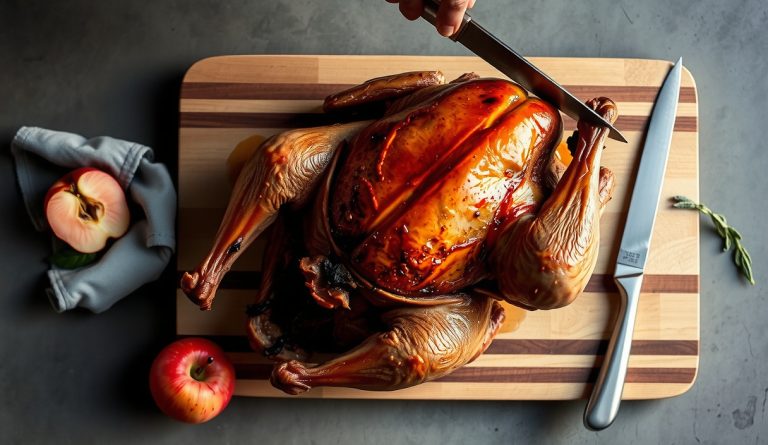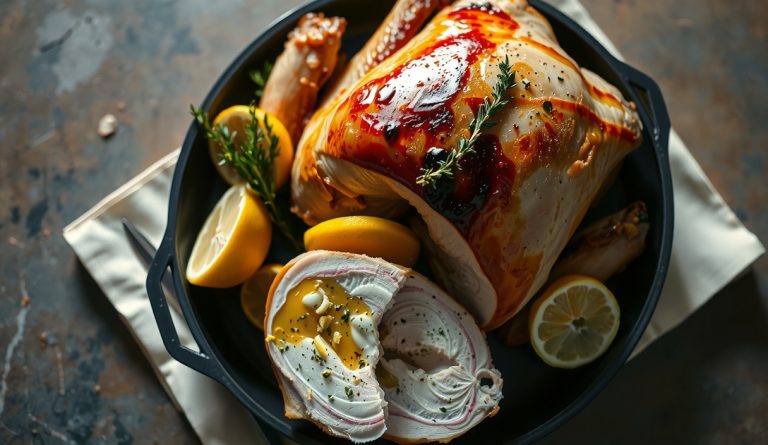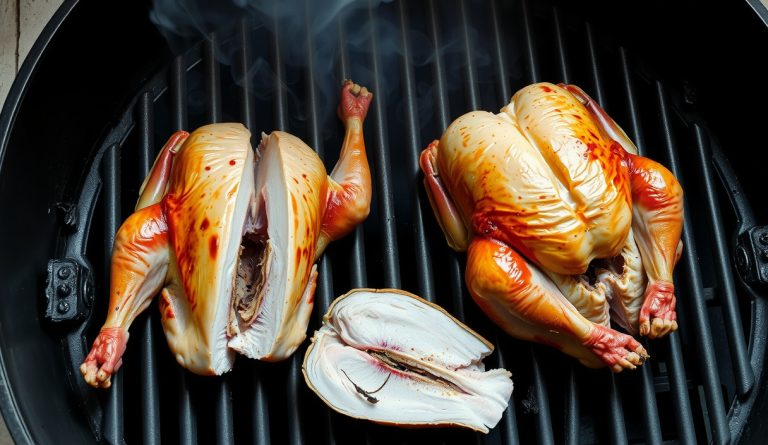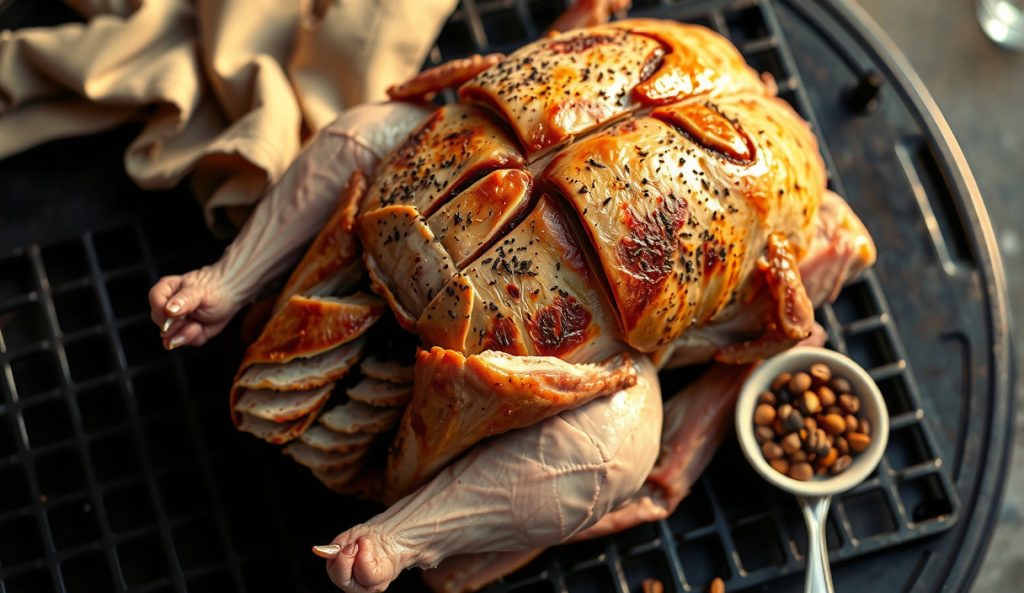
The canonical dry brine for spatchcocked smoked turkey is built around kosher salt as its primary workhorse, delivering clean seasoning and pulling surface moisture for better bark formation. When the occasion calls for an exterior that develops more aggressively — darker, denser, with a crust that holds up under slicing — shifting half the salt toward a Texas-style seasoning blend changes the surface chemistry in a meaningful way.
What changes when you go Texas-style?
Replace half the kosher salt in the dry brine with an equal-parts mixture of kosher salt, coarsely cracked black pepper, garlic powder, and smoked paprika. If the canonical rub calls for two tablespoons of kosher salt per side, use one tablespoon of kosher salt and one tablespoon of the four-component blend in its place. Apply the modified brine exactly as the original instructs: evenly across all surfaces, including the underside and cavity walls, then refrigerate uncovered.
Smoked paprika introduces additional Maillard precursors — primarily reducing sugars and amino acids carried in the dried pepper — that accelerate surface browning at 325°F and build a distinct red-brown color layer beneath the smoke ring. Black pepper’s piperine contributes a faint heat that blooms during the cook rather than on the raw bird. This profile pairs naturally with mesquite cut with cherry wood rather than the apple-forward blend in the base recipe; mesquite’s higher combustion temperature and phenol output complement the assertive spice layer without competing with it the way a delicate fruit wood might.
What stays the same as the base recipe?
The spatchcock geometry, dry brine duration, smoker temperature, airflow management, and pull temperatures are unchanged from the base recipe. The modified brine still requires full skin contact on a thoroughly dry bird, and the overnight refrigerator rest remains essential — both for the seasoning to penetrate and for surface moisture to evaporate, which is the foundation of proper bark formation.
When is the Texas-style variation the better choice?
Choose this variation when the occasion calls for a bold, pitmaster-forward presentation rather than a subtle herb-and-smoke profile. The Texas-style bark performs particularly well on offset smokers and ceramic kamados where precise airflow control allows you to run mesquite without scorching the bird. It is also the right call when serving alongside assertive sides — jalapeño cornbread, pinto beans, braised greens — where a mild turkey bark would disappear in the context of the plate.
Use the full spatchcock method, equipment notes, and base measurements from the original Spatchcocked Smoked Whole Turkey.