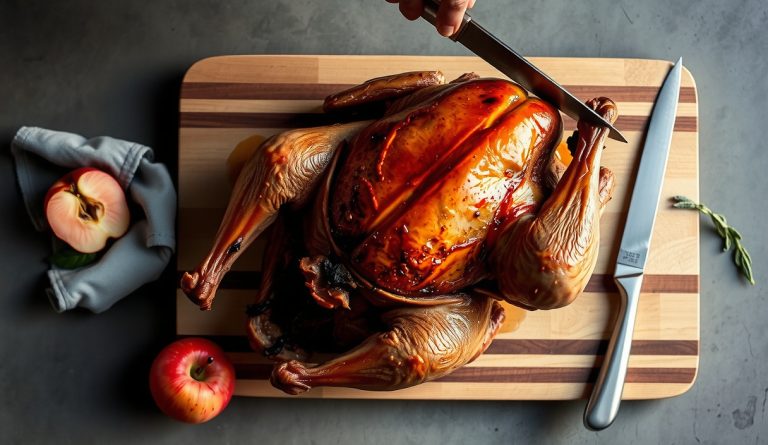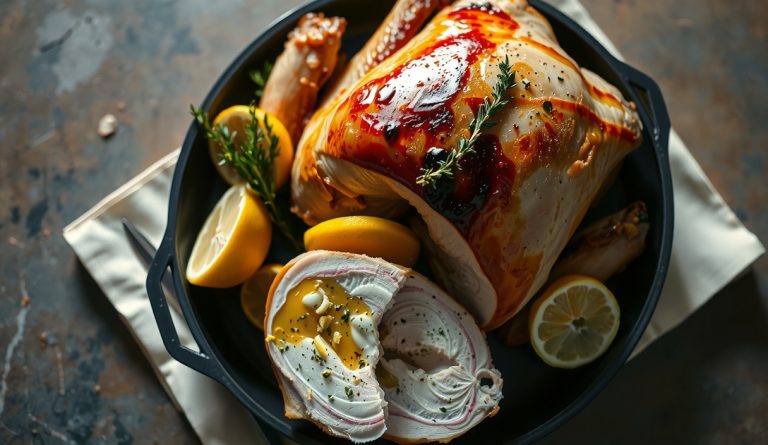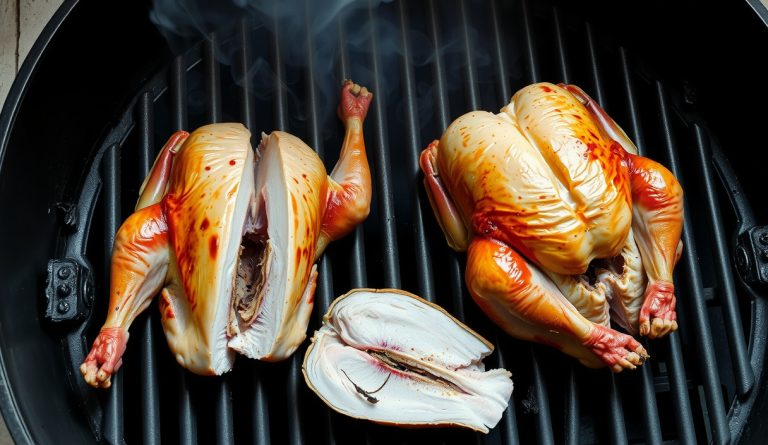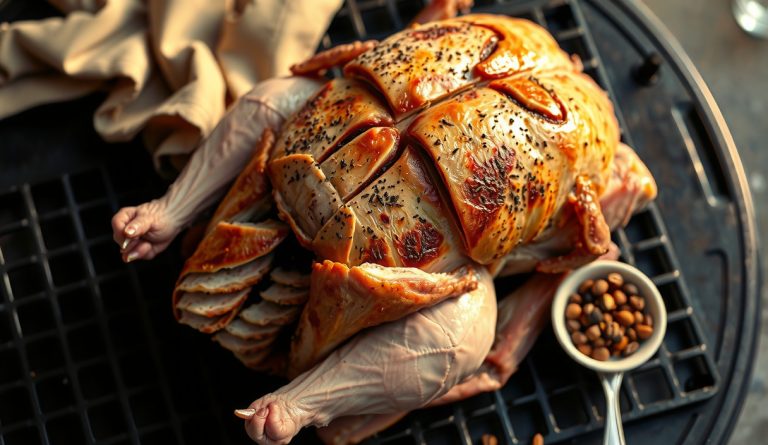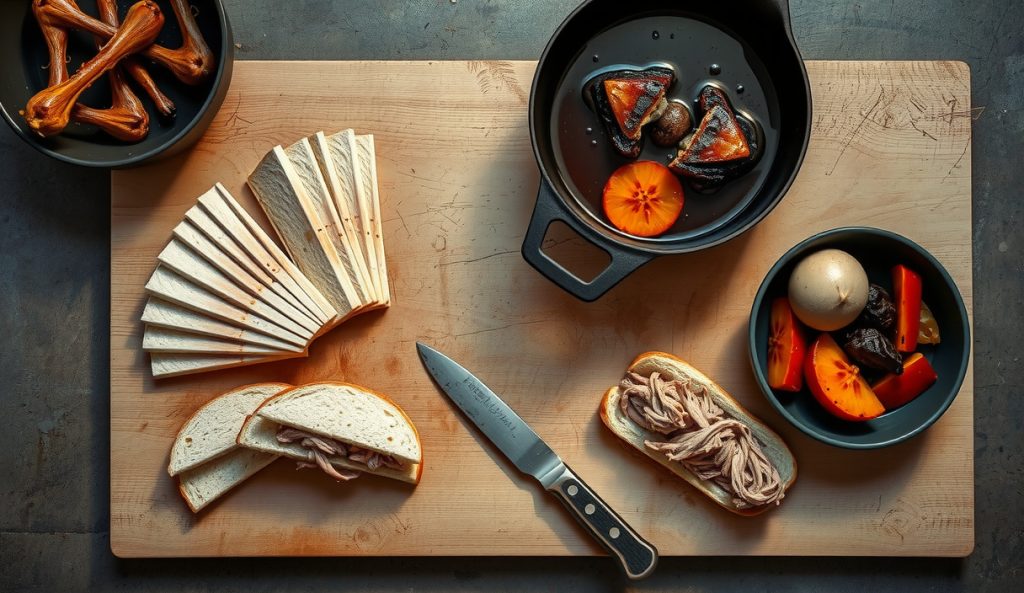
Smoked turkey leftovers are not simply roasted turkey leftovers at a different flavor register. The combination of salt concentration from the dry brine and phenolic smoke compounds deposited in the outer muscle layers means smoked turkey carries seasoning and complexity that roasted turkey simply does not have. That difference changes how you should use what remains after the cook.
What changes when your turkey was smoked instead of roasted?
Pulled thigh meat is the highest-value leftover from a spatchcock smoke. The thigh’s collagen content — primarily Type I and Type III collagen in the connective tissue — is partially converted to gelatin during the cook, but substantial collagen remains, especially if the bird was pulled promptly at 175°F rather than overcooked. Use pulled thigh meat directly in smoked turkey stock: combine it with the carcass, aromatics, and cold water, and the finished stock will carry both smoke character and meaningful body from the residual gelatin.
For the smoked carcass, do not skip the pre-roast step. Roasting the bones at 400°F for 20 minutes before simmering drives additional Maillard browning on the bone surfaces and any remaining attached meat, producing complex melanoidins that deepen stock color and flavor. This step is especially important with a smoked carcass because the smoke has already deposited phenolic flavor on the outer surfaces; roasting develops an entirely different layer — caramelized, meaty, and slightly bitter — that balances those phenolic smoke notes in the finished stock. Breast meat, which is drier and more tightly grained than thigh, is best sliced thin across the muscle fibers for sandwiches. The smoke character in the breast is sufficient to carry a sandwich without additional seasoning beyond a thin application of mayonnaise or a low-acidity mustard that will not compete with the smoke.
What stays the same as any cooked poultry?
The food safety principles that govern any cooked poultry apply without exception to smoked turkey leftovers: refrigerate within two hours of the cook finishing, consume directly within three to four days, and bring any stock to a full rolling boil before use if it has been held more than 24 hours.
When is using smoked turkey leftovers this way the better choice?
This approach is the correct one any time you have committed to the full spatchcock smoke and want to extract maximum value from the bird. Smoked carcass stock is difficult to replicate with any shortcut — it is a direct product of the cook already performed, and discarding the carcass without rendering it into stock represents a significant and avoidable loss of culinary leverage.
The cook that makes all of this possible begins with the full method in the original Spatchcocked Smoked Whole Turkey.