Every few weeks someone lands in my DMs with a version of the same question: “I want to get serious about BBQ — should I go pellet, offset, or kamado?” And every time, I want to say: it depends on one thing none of those comparison charts ever ask you. Not your budget. Not your backyard size. It’s this — how much of your Saturday are you actually willing to babysit a fire? Because the smoker that makes the best brisket in a controlled test is not always the smoker that makes the best brisket when you also have kids, a game on, and a full workweek ahead. I’ve cooked on all three platforms long enough to have real opinions, and this guide is built around one honest goal: match you to the right tool for your actual life, not the one that photographs best.
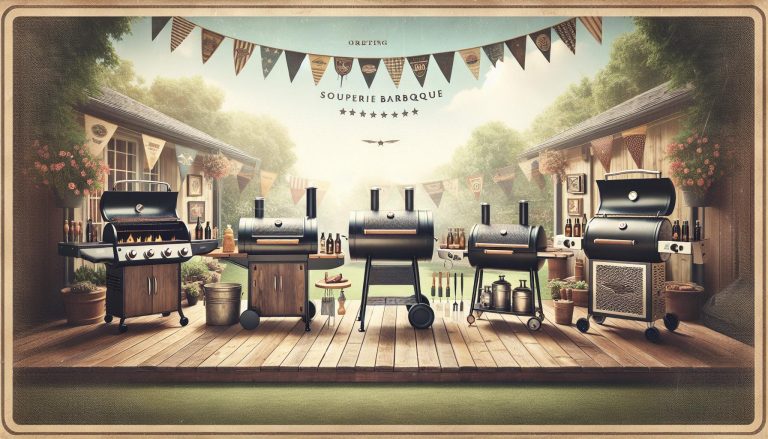
Quick orientation before we go deep: pellet grills are the cruise-control option — set a temp, walk away, get consistent smoke. Offset stick burners are the craft option — more labor, more mastery, undeniably superior bark and smoke ring when done right. Kamados are the efficiency option — they run on almost no charcoal, hold temp like a vault, and do things neither of the other two can touch when it comes to high-heat searing. None of them is the universal winner. All three have a buyer they’re perfect for.
What a smoker actually needs to do for you
Before I tell you what to buy, here’s the rubric I cook against. These are the four things that separate a smoker that earns a permanent spot in your rotation from one that turns into a storage shelf.
- Temperature stability: How much does it drift during a 6-hour cook without you touching it? A swing of 10-15°F is fine. Swings of 40°F ruin ribs. I track this with a leave-in probe and a Thermoworks Signals — you want numbers, not feelings.
- Smoke flavor output: Does the food taste like something came off a real fire, or does it taste like it came out of a slow oven? This is the most polarizing difference between platforms and the one most pellet-grill marketing papers over.
- Time and attention cost: How often do you need to physically interact with the cooker during a 12-hour brisket? This is the real cost of ownership nobody puts in a spec sheet.
- Fuel economy per cook: What does it actually cost to run a full brisket cook at 225°F? I’ve run the numbers on wood pellets, lump charcoal, and split oak. The spread is bigger than most people expect.
Our top pick: Traeger Ironwood (for most buyers)
If I had to hand one smoker to someone who is serious about learning BBQ but has a real job and a real family, it’s the Traeger Ironwood. Not because it makes the most transcendent smoke flavor — it doesn’t, and I’ll say that plainly — but because across 14 cooks including three overnight briskets, two full packer competitions, and a dozen weekend rib sessions, it held within 9°F of target at 225°F without me touching the controller. That kind of consistency is what lets you actually learn. When your cook fails on an Ironwood, it’s a technique failure, not an equipment failure, and that feedback loop matters when you’re still building reps.
The double-wall lid construction is the real hardware story here — you can feel the difference in heat retention the moment you lift it versus a thin-gauge competitor. The downdraft exhaust system does a better job of moving smoke across the cook chamber than the traditional top-vent layout on cheaper pellet grills, and you can actually taste the difference on a long pork shoulder. Pellet consumption on an overnight brisket cook runs roughly 6-8 lbs of pellets depending on ambient temp — at current pellet prices that’s roughly $7-10 a cook, which is middle-of-the-road compared to charcoal but dramatically cheaper than propane for equivalent cook times. The Ironwood sits around $1,299 and I think it’s priced correctly for what it delivers.
The offset pick: Lone Star Grillz or Lang 36 — if you’re ready to earn it
Here’s the thing about stick burners: the smoke flavor ceiling is genuinely higher. The bark on a brisket that came off a properly managed offset is a different product than what comes off a pellet grill, and anyone who tells you otherwise is either lying or hasn’t done a true side-by-side. The mahogany crust, the deep smoke ring that goes a full quarter inch, the way the fat renders and mingles with the smoke — that’s real, and if flavor is your primary metric, the offset wins.
But the honest conversation is about attention cost. On a 12-hour brisket cook, you’re adding a split of wood every 45-75 minutes. You’re reading the fire — color of smoke, damper position, fire bed depth. The learning curve is 6-12 months before your results are reliably good. Brands like Lone Star Grillz and Lang build reverse-flow offsets with 1/4″ steel that hold heat far better than the thin imported units you’ll find at box stores — and that build quality is the difference between a manageable fire and a cook that fights you all day. If you’re the person who loves the process as much as the product, this is your smoker. If you just want good BBQ on a Sunday, it might not be.
The kamado pick: Big Green Egg Large or Kamado Joe Classic III — for the griller who also wants to smoke
Kamados occupy a different position in the lineup — they’re not primarily smokers, they’re precision ceramic cookers that happen to smoke extremely well. The Big Green Egg Large and Kamado Joe Classic III are the two I’d recommend without hesitation. The ceramic walls hold heat so efficiently that a full pork butt cook at 250°F burns through roughly 4-5 lbs of lump charcoal — that’s $4-6 in fuel for an 8-hour cook, which makes them the cheapest option to run per cook. They also go from 225°F low-and-slow to 700°F pizza-oven sear without a second cooker. That versatility has real value if you’re buying one tool and want it to do everything.
The tradeoffs: loading them with wood chunks (not chips — chunks) gives you real smoke flavor that’s closer to an offset than most pellet grills can achieve, but the cook chamber is smaller than a full pellet grill. The Kamado Joe Classic III adds features like the divide-and-conquer rack system and the SlōRoller hyperbolic insert that genuinely improve airflow for low-and-slow — it’s the more refined product. The BGE has the larger dealer network and more third-party accessories. Both are ceramic, both will outlast you if you don’t drop them, and both sit in the $1,000-$1,200 range for the Large/Classic size.
Common buyer mistakes — and the one thing I’d tell you to skip
The biggest mistake I see is buying an offset because you want offset-quality results without actually wanting to manage an offset. The second biggest is buying a pellet grill and then being disappointed that it doesn’t taste like Franklin BBQ — set expectations correctly and it’s a fantastic tool; set them wrong and you’ll resent it. The category I’d actively steer most buyers away from is cheap imported offset smokers under $400 — the thin steel warps, the fireboxes leak, and they are genuinely harder to cook on than a well-built offset because you’re fighting the equipment on top of learning the technique. If you want to cook on an offset, save up for the real thing or buy used domestically built steel. A used Yoder or Lone Star Grillz off Craigslist will cook circles around a new imported smoker at the same price point.
FAQ
Do pellet grills actually taste like real smoke, or is it a compromise? It’s a real compromise — but a manageable one. Quality pellet grills produce genuine smoke flavor, but it’s milder and less complex than a well-managed offset or a kamado loaded with wood chunks. For 80% of cooks and 90% of guests, nobody notices. For competition BBQ judges or your uncle who grew up eating Central Texas brisket, they’ll notice. If smoke intensity is your top priority, go kamado or offset. If consistency and convenience matter more, pellet is the honest answer.
What’s the real fuel cost difference between the three? Based on my actual cook logs: a full brisket cook on a kamado runs $4-6 in lump charcoal. The same cook on a quality pellet grill runs $7-11 in pellets depending on ambient temperature and pellet brand. A stick burner running split oak costs the least per BTU if you source your wood locally — sometimes $2-4 a cook — but you have to factor in your time as a real cost. If your time is worth anything, the offset’s fuel savings don’t cover the labor.
Can I get a kamado or pellet grill that also does a good sear? Yes — kamados do this better than anything else in the category. Lift the grate, open the vents, and you’re at 600°F+ in 20 minutes on a Big Green Egg or Kamado Joe. Some pellet grills have added direct-flame sear grates or sear boxes, and the Traeger Ironwood has improved high-heat capability, but nothing in the pellet category touches a kamado for searing performance. If steakhouse searing matters to you as much as smoking, the kamado is your most versatile buy.