Wine

Peach Prosecco Punch: 5-Ingredient Party Batch

Welcome to the delightful world of Peach Prosecco Punch! Get ready to tantalize your taste buds with this refreshing, elegant cocktail that is perfect for any occasion. In this article, we will explain the recipe, ingredients, nutrition information, and step-by-step instructions for creating this delicious drink. We will also answer some frequently asked questions and share comments and feedback from readers. So, grab a glass, sit back, and explore the delicious world of Peach Prosecco Punch together! Introduction to Peach Prosecco Punch Explore the delightful world of Peach Prosecco Punch, a refreshing cocktail recipe perfect for all seasons. Whether you’re […]

↓ Jump to Recipe

Peach Prosecco Punch

Jim “Smokehouse” Daniels
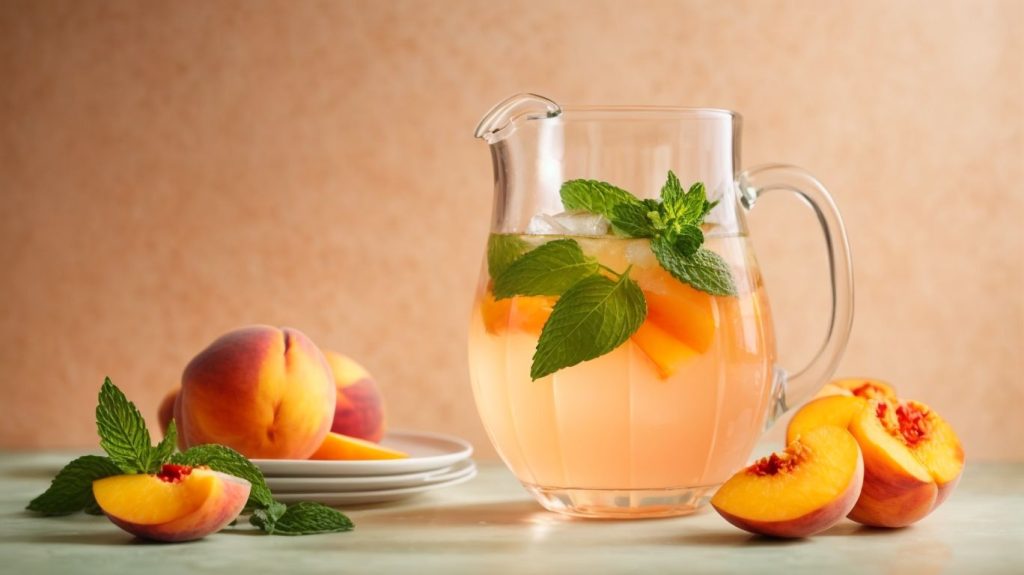
This Peach Prosecco Punch is a perfect accompaniment to sunny afternoons, garden parties, or any celebration that calls for a light, bubbly, and fruity beverage. Adjust the ingredient quantities based on your taste preferences and the number of guests. Enjoy the process of crafting this exquisite punch and the joy it brings to your gatherings!

No ratings yet
Prep Time 20 minutes
Total Time 20 minutes
Course Cocktails
Servings 6 Cocktails
Calories 195 kcal

Equipment

  • 1 Large Pitcher or Punch Bowl

Ingredients
  

  • 1 bottle 750 ml Prosecco Superiore DOCG
  • 3 medium peaches
  • ½ cup peach liqueur or peach schnapps
  • 20 Fresh Mint Leaves
  • 1 cup Sparkling Water
  • ¼ cup Simple Syrup

Instructions
 

  • Prepare the Peaches: Begin by muddling the ripe peaches in the bottom of a large pitcher or punch bowl. Aim to fully extract the juices and pulp to flavor the punch.
    3 medium peaches
  • Mix in the Peach Liqueur: Add the peach liqueur to the muddled peaches to enhance the fruity profile.
    1/2 cup peach liqueur or peach schnapps
  • Add Prosecco: Gently pour the bottle of Prosecco into the pitcher. Do this slowly to preserve the bubbles and incorporate the peach and liqueur mixture evenly.
    1 bottle 750 ml Prosecco Superiore DOCG
  • Incorporate Sparkling Water and Simple Syrup: Add the sparkling water for extra fizz and the simple syrup to ensure all flavors are well-balanced and harmonious.
    1 cup Sparkling Water, 1/4 cup Simple Syrup
  • Garnish with Fresh Mint: Add the mint leaves, giving them a gentle bruise before dropping them in to release their aromatic oils.
    20 Fresh Mint Leaves
  • Stir Gently and Serve: Give the punch a gentle stir to mix all the ingredients without losing too much carbonation from the Prosecco. Serve over ice in festive glasses.

Notes

The aromatic backbone of this punch is built on γ-decalactone and δ-decalactone — the dominant lactone volatiles in ripe Prunus persica — which are lipophilic and bind efficiently to ethanol. Adding peach liqueur immediately after muddling locks those compounds in solution before Prosecco introduces CO₂ turbulence. Prosecco Superiore DOCG, produced via the Charmat method from Glera grapes, contributes a larger bubble structure than Champagne-method wines, which accelerates aromatic volatilization toward the drinker’s nose throughout the drinking experience. Finished punch ABV sits approximately 8–9% after dilution from sparkling water — the optimal range for ethanol-mediated aromatic carriage without solvent character. Mint is added last and only lightly bruised: sufficient mechanical force to release menthol and menthyl acetate from trichome oil glands, but not enough to oxidize chlorophyll into bitter breakdown compounds.

Nutrition

Calories: 195kcalCarbohydrates: 22.5gProtein: 0.5gSodium: 10mgFiber: 1gSugar: 19.5g
Keyword mint, peach liqueur, peach prosecco punch, prosecco, simple syrup
Tried this recipe?Let us know how it was!

There is a narrow window every summer — maybe three weeks, maybe four — when a ripe freestone peach reaches peak Brix. Sugar content climbs above 14°, the flesh releases from the pit without resistance, and the volatile esters responsible for that unmistakable stone-fruit perfume are at maximum concentration just beneath the skin. Peach Prosecco Punch exists to capture that window in a glass. This is not a juice-and-wine afterthought — it is a deliberately structured sparkling cocktail that layers enzymatic juice extraction, controlled dilution, and aromatic carriage across three separate carbonated phases: Prosecco, sparkling water, and the CO₂ still trapped in the muddled fruit itself.

The format is a punch, which means it scales effortlessly, stays beautiful in a large glass vessel on a table, and demands almost nothing technically beyond patience with the pour. But do not let the elegance invite sloppiness. The difference between a transcendent Peach Prosecco Punch and a flat, cloying one comes down to three variables: peach ripeness, pour order, and the temperature of every component when the components meet.

Why does Peach Prosecco Punch work? The science

Peach Prosecco Punch works because ripe peach cells, Prosecco’s bubble structure, and ethanol’s solvent properties all act in concert to maximize aromatic delivery. When you muddle a ripe peach, you rupture vacuolar membranes inside the mesocarp cells, triggering the release of pectinase and polygalacturonase — naturally occurring enzymes that begin breaking down pectin chains in the cell walls. Within 5 to 10 minutes at room temperature, this enzymatic activity visibly loosens the pulp and juice yield increases measurably. The aromatic payoff comes from a class of compounds called lactones — specifically γ-decalactone and δ-decalactone — which are the dominant odorants in ripe Prunus persica and register on the palate as creamy, peachy, and warm. These lactones are lipophilic: they have a strong affinity for ethanol, which means the peach liqueur added immediately after muddling acts as a carrier solvent, pulling those volatiles into solution and preventing them from flashing off into the air before the Prosecco arrives.

Prosecco Superiore DOCG is made predominantly from the Glera grape using the Charmat method, meaning secondary fermentation happens in pressurized tanks rather than individual bottles. This produces a slightly coarser, more abundant bubble structure compared to Champagne — an advantage in punch applications. The larger CO₂ bubbles rise faster and agitate the surface layer more aggressively, continuously volatilizing aromatics toward the nose of the drinker. Typical ABV sits between 11% and 12%, and residual sugar in a Brut style runs roughly 6–12 g/L. That residual sugar, combined with the 1/4 cup of simple syrup in this recipe, brings the finished punch to a dissolved-solids balance that prevents the acid from the fruit from reading as sharp. The pH of ripe peach juice hovers around 3.5–3.8, and adding it to a low-pH sparkling wine means the entire system is acidic throughout — which is exactly where mint’s aromatic compounds, primarily menthol and menthone, express most cleanly.

Bruising the mint leaves rather than fully muddling them is a precision call with measurable consequences. Hard muddling ruptures chlorophyll-containing cells and releases chlorophyll oxidase, which generates bitter, vegetal off-notes within minutes. A firm clap between your palms, or a gentle press against the side of the pitcher, cracks the epidermal layer and releases the essential oil glands in the trichomes on the leaf surface. Those oils — primarily menthol, menthyl acetate, and limonene — partition readily into the ethanol-water matrix of the punch and provide aromatic lift without bitterness. The sparkling water addition lowers the overall ABV of the finished punch to approximately 8–9%, the sweet zone where ethanol carriage of volatiles is efficient without a high-proof solvent character overwhelming the fruit.

What equipment and ingredients do I need?

A large glass pitcher or clear punch bowl is not just aesthetic — it lets you monitor the color gradient as the peach juice blooms through the Prosecco, which is your visual cue that integration is happening without aggressive stirring. Avoid reactive metal vessels; the acidity of the peach-Prosecco system will pull metallic notes from uncoated aluminum or copper if contact time is extended.

  • Prosecco Superiore DOCG: The DOCG designation matters here — it signals Glera-dominant production from the Conegliano Valdobbiadene zone, where terroir produces a floral, green-apple-forward base that does not compete with peach. An Extra Dry style (12–17 g/L residual sugar) is also workable but will tip the punch sweeter; reduce simple syrup by half if you go that route.
  • Peaches: Freestone varieties at peak ripeness — look for a Brix reading above 12° if you have a refractometer, or simply press the shoulder near the stem; the flesh should yield like a ripe avocado. White-fleshed peaches produce a more delicate, floral punch; yellow-fleshed varieties deliver bolder acidity and more pronounced lactone character.
  • Peach Liqueur vs. Schnapps: A true peach liqueur (Mathilde Pêche, Giffard Pêche de Vigne) is made from macerating actual peaches in neutral spirit and runs 18–20% ABV. Schnapps is flavored with synthetic esters and runs lower — around 15% ABV. The liqueur gives a more complex, rounded peach signal. The schnapps reads brighter and more candy-forward. Both work; choose based on your crowd.
  • Simple Syrup: A standard 1:1 (sugar:water) syrup is assumed. If you use a 2:1 rich syrup, reduce the quantity to 2 tablespoons instead of 1/4 cup to avoid over-sweetening.
  • Ice: Serve over large-format block ice or spears, not crushed ice. Crushed ice melts at roughly 3x the rate of block ice and will dilute the punch aggressively within 15 minutes, collapsing both carbonation and flavor concentration.

Peach Prosecco Punch

Jim “Smokehouse” Daniels
This Peach Prosecco Punch is a perfect accompaniment to sunny afternoons, garden parties, or any celebration that calls for a light, bubbly, and fruity beverage. Adjust the ingredient quantities based on your taste preferences and the number of guests. Enjoy the process of crafting this exquisite punch and the joy it brings to your gatherings!
No ratings yet
Prep Time 20 minutes
Total Time 20 minutes
Course Cocktails
Servings 6 Cocktails
Calories 195 kcal

Equipment

  • 1 Large Pitcher or Punch Bowl

Ingredients
  

  • 1 bottle 750 ml Prosecco Superiore DOCG
  • 3 medium peaches
  • ½ cup peach liqueur or peach schnapps
  • 20 Fresh Mint Leaves
  • 1 cup Sparkling Water
  • ¼ cup Simple Syrup

Instructions
 

  • Prepare the Peaches: Begin by muddling the ripe peaches in the bottom of a large pitcher or punch bowl. Aim to fully extract the juices and pulp to flavor the punch.
    3 medium peaches
  • Mix in the Peach Liqueur: Add the peach liqueur to the muddled peaches to enhance the fruity profile.
    1/2 cup peach liqueur or peach schnapps
  • Add Prosecco: Gently pour the bottle of Prosecco into the pitcher. Do this slowly to preserve the bubbles and incorporate the peach and liqueur mixture evenly.
    1 bottle 750 ml Prosecco Superiore DOCG
  • Incorporate Sparkling Water and Simple Syrup: Add the sparkling water for extra fizz and the simple syrup to ensure all flavors are well-balanced and harmonious.
    1 cup Sparkling Water, 1/4 cup Simple Syrup
  • Garnish with Fresh Mint: Add the mint leaves, giving them a gentle bruise before dropping them in to release their aromatic oils.
    20 Fresh Mint Leaves
  • Stir Gently and Serve: Give the punch a gentle stir to mix all the ingredients without losing too much carbonation from the Prosecco. Serve over ice in festive glasses.

Notes

The aromatic backbone of this punch is built on γ-decalactone and δ-decalactone — the dominant lactone volatiles in ripe Prunus persica — which are lipophilic and bind efficiently to ethanol. Adding peach liqueur immediately after muddling locks those compounds in solution before Prosecco introduces CO₂ turbulence. Prosecco Superiore DOCG, produced via the Charmat method from Glera grapes, contributes a larger bubble structure than Champagne-method wines, which accelerates aromatic volatilization toward the drinker’s nose throughout the drinking experience. Finished punch ABV sits approximately 8–9% after dilution from sparkling water — the optimal range for ethanol-mediated aromatic carriage without solvent character. Mint is added last and only lightly bruised: sufficient mechanical force to release menthol and menthyl acetate from trichome oil glands, but not enough to oxidize chlorophyll into bitter breakdown compounds.

Nutrition

Calories: 195kcalCarbohydrates: 22.5gProtein: 0.5gSodium: 10mgFiber: 1gSugar: 19.5g
Keyword mint, peach liqueur, peach prosecco punch, prosecco, simple syrup
Tried this recipe?Let us know how it was!

How do I nail Peach Prosecco Punch every time?

  • Chill everything before you start. Prosecco at room temperature will foam violently when it contacts the acidic peach base and shed CO₂ irreversibly. Prosecco should be at 38–42°F at the time of pouring. The pitcher or punch bowl benefits from 15 minutes in the freezer before assembly.
  • Do not skip the muddling rest time. After muddling the peaches and adding the liqueur, let the mixture sit for 5 minutes before pouring the Prosecco. Enzymatic breakdown continues, juice yield increases, and the liqueur bonds to the lactones. Those 5 minutes are active extraction time, not idle waiting.
  • Pour Prosecco down the inside wall of the vessel. Angling the pitcher and letting the wine run down the glass surface rather than dropping it directly into the peach base reduces turbulence, minimizes CO₂ loss, and preserves more active carbonation in the finished drink.
  • Taste before adding the full measure of simple syrup. Peach sweetness varies dramatically by variety and ripeness. Add the syrup in two increments and taste after the first to avoid a punch that reads like dessert rather than a cocktail.
  • Add mint last, immediately before serving. Menthol volatilization is rapid at punch temperatures; mint added 30 minutes early will have contributed most of its aromatic load to the air, not the drink. Bruise and drop the mint at the last moment.
  • Stir with a long bar spoon using a slow vertical lift, not a circular motion. Rotational stirring creates a vortex that accelerates carbonation loss. A slow lift-and-fold integrates the punch without destructive agitation.

What variations can I make on this punch?

Grilled Peach Prosecco Punch. Halve the peaches, brush the cut faces with a neutral oil, and place them cut-side down on grates running at 400–450°F for 4–5 minutes. Maillard reactions at the fruit surface generate furaneol and acetaldehyde — compounds that produce caramel and slightly smoky-sweet notes. The elevated temperature also accelerates pectinase activity, meaning the flesh releases juice even more readily when muddled. Let the grilled peaches cool to below 50°F before muddling into the pitcher so they do not warm the Prosecco on contact.

Spiced Honey Variation. Replace the simple syrup with a honey syrup made from equal parts raw wildflower honey and hot water, stirred until dissolved and cooled completely. Add a 2-inch strip of fresh ginger, lightly bruised, along with the peaches during the muddling step. The ginger contributes gingerols and shogaols — pungent, warming volatile compounds that add a dry-spice counterpoint to the fruit sweetness and pair naturally with the yeasty, bready mid-palate of Prosecco Superiore.

Frozen Peach Punch. For maximum fruit intensity without relying on peak-season peaches, substitute 2 cups of frozen peach slices (thawed 30 minutes) for the fresh fruit. Frozen peaches have undergone cell rupture during the freezing process — ice crystal formation destroys membrane integrity — so the slices release juice almost instantly when muddled and require no rest period. The trade-off is slightly muted lactone character; compensate by increasing peach liqueur to 2/3 cup.

Low-ABV Version. Swap the peach liqueur for a non-alcoholic peach syrup or a quality peach purée (such as Boiron or Ravifruit, which run approximately 10–12 Brix), and replace the Prosecco with a premium non-alcoholic sparkling wine. The finished ABV drops to near zero while the structural framework of the punch — acid, sweetness, aromatics, carbonation — remains largely intact. This version benefits from an extra squeeze of lemon juice to replicate the acid contribution that alcohol normally carries.

Frequently asked questions about Peach Prosecco Punch

Can I make Peach Prosecco Punch ahead of time? The peach-liqueur base can be muddled and refrigerated up to 4 hours in advance — covered tightly to minimize oxidation of the lactone aromatics. Do not add the Prosecco, sparkling water, or mint until 10 minutes before serving. Pre-carbonated punch loses roughly 30–40% of its dissolved CO₂ within the first hour even when kept cold and covered.

What is the difference between Prosecco DOC and Prosecco Superiore DOCG, and does it matter here? DOCG (Denominazione di Origine Controllata e Garantita) represents a more restricted geographic zone — Conegliano Valdobbiadene — and stricter production standards, including lower yields per vine. Superiore DOCG tends to show more mineral complexity and restrained fruit character, which gives the peach base room to dominate. A standard Prosecco DOC will work and save money per bottle; the wine itself will taste slightly more neutral as a result.

My Peach Prosecco Punch tastes flat and overly sweet — what went wrong? Two causes typically work together: warm ingredients collapsed the carbonation on contact (Prosecco must be at 38–42°F when poured), and the peaches were overripe or high-sugar varieties that pushed total sweetness past the acid balance. Fix the finished punch by adding a small squeeze of fresh lemon juice — start with half a lemon — which sharpens the acid structure, makes the carbonation taste more present, and reduces the perception of sweetness without changing the actual sugar content.

Join 12,000+ pitmasters