
Key Takeaways
- Deep, Rich Flavor: Using a charcoal smoker offset enhances the meat with smoky, savory flavors that a regular grill cannot achieve.
- Essential Ingredients and Tools: Proper preparation includes gathering specific meats, marinades, and essential tools such as a high-quality thermometer, charcoal chimney starter, wood chunks, and more.
- Preparation Steps: Effective smoking involves marinating the meat, cleaning the smoker, preparing charcoal and wood chips, and preheating the smoker to the correct temperature.
- Smoking Process: Achieving optimal results includes properly lighting the charcoal, managing the temperature, consistently adding wood chips, and monitoring for clean smoke.
- Cooking Times and Temperatures: Different meats require specific cooking times and target internal temperatures, ranging from 3-4 hours for chicken to 12-18 hours for beef brisket.
- Serving and Pairing: After smoking, resting the meat and pairing it with complementary side dishes like coleslaw, baked beans, and cornbread enhances the overall dining experience.
Ingredients
Before you dive into using your charcoal smoker offset, gather all your ingredients to ensure a smooth cooking process.
For the Meat
- 4 lbs Beef Brisket: Trim off any excessive fat, leaving about a quarter-inch for flavor.
- 2 racks Pork Ribs: Remove the membrane from the back for better seasoning absorption.
- 1 whole Chicken: Rinse and pat dry with paper towels.
- 1 cup Apple Cider Vinegar: Adds a tangy base.
- 1/2 cup Olive Oil: Helps the marinade penetrate the meat.
- 1/4 cup Soy Sauce: Enhances the umami flavor.
- 1/4 cup Worcestershire Sauce: Provides depth.
- 6 cloves Garlic (minced): Fresh and aromatic.
- 2 tablespoons Brown Sugar: Adds a hint of sweetness to balance the flavors.
- 1 tablespoon Black Pepper: For that extra kick.
- 1 tablespoon Smoked Paprika: Complements the smoke.
- 1 teaspoon Mustard Powder: For a touch of heat.
- 1 teaspoon Onion Powder: Layers of flavor.
- 1 teaspoon Ground Cumin: Earthy undertones.
- 1 teaspoon Sea Salt: Enhances all the flavors.
Required Tools and Equipment
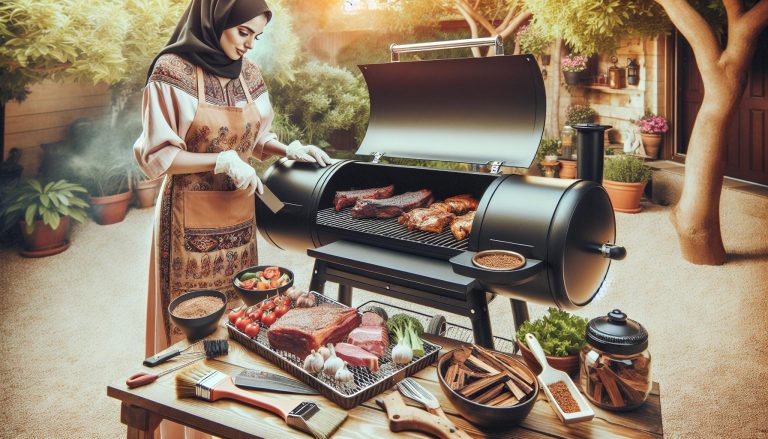
Before you start smoking meat with your charcoal smoker offset, gather all necessary tools and equipment to ensure a smooth barbecuing experience. This setup guarantees you can focus on creating mouth-watering flavors and perfecting your smoking technique.
Charcoal Smoker Offset
Your primary tool is the charcoal smoker offset itself. Here’s what to look for:
- Sturdy Build: Ensure your smoker is made from thick steel for better heat retention.
- Large Cooking Chamber: Ensure it has sufficient space for the meats of your choice.
- Firebox: A good-sized firebox will help manage your coal and wood.
- Chimney: This controls the airflow and smoke, vital for maintaining temperature.
Essential Accessories
These accessories will make your smoking process more effective and enjoyable:
- Charcoal Chimney Starter: Easily light up your coals without the need for lighter fluid.
- High-Quality Thermometer: Monitor the internal temperature of your meat and smoker.
- Wood Chunks/Chips: Choose from hickory, apple, or mesquite for different flavor profiles.
- Heat-Resistant Gloves: Protect your hands when handling hot equipment.
- Grill Tools: Include long-handled tongs, spatula, and a basting brush.
- Water Pan: Adds moisture and helps regulate the temperature inside the smoker.
- Drip Tray: Catches grease and fat drippings, making clean-up easier.
- Meat Probe: Instantly checks meat’s internal temperature for precision cooking.
- Basting Mop: Apply marinades or sauces during the smoking process.
Make sure you have these tools and equipment at the ready to ensure a successful and enjoyable smoking session with your charcoal smoker offset.
Preparation
Before you begin the smoking process, it is vital to prepare both the meat and the charcoal smoker offset properly to ensure the best results. Let’s dive into the details.
Marinating the Meat
- Select Your Marinade or Rub
Choose your favorite marinade or dry rub seasoning. For beef brisket, you might prefer a bold blend of paprika, garlic powder, and brown sugar. For pork ribs, a sweeter rub with brown sugar, mustard powder, and cayenne pepper works wonders. - Apply the Marinade or Rub
Thoroughly coat the meat with your chosen marinade or rub. Ensure all sides are evenly covered for consistent flavor. You can use your hands or a brush for this step. - Marinate Duration
Place the seasoned meat in a sealed container or wrap it in plastic wrap. Let it marinate in the refrigerator for at least 4 hours, but overnight is ideal for deeper flavor penetration.
- Clean the Smoker
Ensure that the smoker is clean and free from any old ash or residue. Use a brush to scrub the grates and empty the ash pan if necessary. - Prepare the Charcoal
Fill the firebox with charcoal, arranging it in a pyramid shape for optimal burning. Light the charcoal using a starter chimney. Allow the charcoal to burn until it turns ashy white, which indicates it’s ready for smoking. - Set Up the Wood Chips
Choose your desired wood chips (such as hickory, apple, or mesquite). Soak the chips in water for about 30 minutes to prevent them from burning too quickly. Once soaked, place the wood chips on top of the coals. - Adjust the Vents
Open the intake and exhaust vents of your smoker to ensure good airflow. This helps maintain a steady temperature within the smoker. - Preheat the Smoker
Close the lid and let the smoker preheat until it reaches your desired smoking temperature, usually between 225°F and 250°F. Use a built-in or separate thermometer to monitor the internal temperature closely.
Smoking Process
Embarking on the smoking process requires precision and patience. Follow these detailed steps to achieve perfectly smoked meat using your charcoal smoker offset.
Lighting the Charcoal
- Gather Supplies: You’ll need a chimney starter, newspaper, and high-quality charcoal briquettes. Ensure your smoker is clean and ready.
- Fill the Chimney: Fill the chimney starter with charcoal briquettes up to its rim.
- Light the Newspaper: Wad up a couple of sheets of newspaper and place them under the chimney starter on the smoker’s charcoal grate. Light the newspaper.
- Wait for Ignition: Allow the charcoal to ignite. You will see flames and ash beginning to form at the top. This process usually takes about 15-20 minutes.
- Distribute the Charcoal: Once the top coals are ashed over, carefully pour the hot coals into the firebox of the offset smoker.
Managing Temperature
- Set the Vents: Adjust the intake and exhaust vents. Open the intake vent halfway and keep the exhaust vent fully open to promote better airflow and control the temperature.
- Add Wood Logs: Place a couple of wood logs on the ignited charcoal to start generating smoke.
- Monitor Heat: Use a built-in or external thermometer to keep an eye on the smoker’s internal temperature. Aim for a steady temperature between 225°F and 250°F.
- Adjust as Needed: Regulate the temperature by adjusting the intake vent. Slightly open if the temperature is low; close a bit if it’s getting too high.
- Soak the Chips: Soak wood chips in water for about 30 minutes before adding them to the smoker. This helps them smolder and produce more smoke.
- Load the Chips: Place a handful of soaked wood chips directly on the hot charcoal or in a smoker box if available.
- Maintain Smoke: Add a handful of wood chips every 30-45 minutes to maintain consistent smoke levels without opening the smoker too often.
- Check for Clean Smoke: Ensure the smoke coming out of the exhaust vent is thin and blue, not thick and white, which indicates proper combustion.
Cooking Times and Temperature
Understanding cooking times and temperatures is crucial for achieving perfectly smoked meats using your charcoal smoker offset. Proper management of temperature and cooking duration ensures that your meats turn out delicious, tender, and flavorful.
Cooking Time for Different Meats
Cooking times vary based on the type and cut of meat you are smoking. Here’s a quick reference to help you get started:
| Meat Type | Cooking Time | Target Internal Temperature |
|---|---|---|
| Beef Brisket | 12-18 hours | 205°F (96°C) |
| Pork Shoulder | 12-16 hours | 195°F (90°C) |
| Pork Ribs | 5-6 hours | 190°F (88°C) |
| Whole Chicken | 3-4 hours | 165°F (74°C) |
| Turkey | 4-6 hours | 165°F (74°C) |
Ensure you adjust these times based on the smoker temperature and the size of the meat cuts. A consistent smoking temperature of 225°F (107°C) to 250°F (121°C) is generally ideal for most types of meat.
Checking for Doneness
Using a meat thermometer is the most reliable way to check for doneness. Insert the thermometer into the thickest part of the meat, avoiding bones, to get an accurate reading of the internal temperature.
For visual checks, look for these signs:
- Beef Brisket: It should feel tender when you insert a fork or probe. The meat should slightly pull apart without resistance.
- Pork Shoulder: The meat should pull apart easily with a fork, and the juices should run clear.
- Pork Ribs: The meat should be tender and slightly pull away from the bones. When you bend the rack, it should crack slightly.
- Whole Chicken and Turkey: The skin should be crispy and golden. The juices should run clear when the meat is pierced.
By mastering these cooking times and temperature guidelines, you ensure your smoked meats will always be flavorful and perfectly cooked.
Serving Suggestions
After all your hard work with the charcoal smoker offset, it’s time to savor the delicious results. Let’s explore how to ensure your smoked meat shines on the plate.
Resting the Meat
Once your meat has reached the desired internal temperature and is beautifully smoked, it is crucial to let it rest. Resting allows the juices to redistribute, ensuring moist and flavorful meat. Transfer the smoked meat from the smoker to a cutting board and tent it loosely with aluminum foil. Let it rest for at least 15 minutes for smaller cuts like ribs and chicken, and up to 60 minutes for larger cuts like brisket and pork shoulder.
Side Dishes
Pairing your smoked meats with the right side dishes can elevate your barbecue experience to the next level. Here are a few mouth-watering options:
- Coleslaw: A tangy coleslaw with a creamy dressing provides a refreshing contrast to the smoky flavors.
- Baked Beans: The deep, molasses-infused taste of baked beans complements the richness of smoked meats.
- Cornbread: Buttery and slightly sweet, cornbread is perfect for soaking up those delicious meat juices.
- Macaroni and Cheese: Creamy and cheesy, this classic comfort food is a crowd-pleaser.
- Grilled Vegetables: Lightly charred veggies like bell peppers, zucchini, and asparagus add a healthy touch and a hint of smokiness.
What Makes an Offset Smoker Ideal for Perfectly Smoked Meats?
An offset smoker’s design ensures consistent heat and controlled airflow, delivering meats with rich, smoky flavors. The separate firebox allows for even cooking without direct flames, making it a top choice for enthusiasts. Perfectly smoked barbecue offset smokers excel at infusing food with authentic taste, making every bite memorable and delicious.
Conclusion
Mastering the art of smoking meat with a charcoal smoker offset can elevate your barbecue skills to new heights. By gathering the right ingredients and tools and following the detailed steps for preparation and smoking you’ll achieve delicious results every time. Remember to monitor temperatures and cooking times closely to ensure your meats are perfectly cooked. Pair your smoked delicacies with complementary side dishes for a complete and satisfying meal. Embrace the process and enjoy the rich flavors and rewarding experience that come with using a charcoal smoker offset.
Frequently Asked Questions
What are the benefits of using a charcoal smoker offset?
A charcoal smoker offset can enhance your cooking skills and bring out rich, smoky flavors in your meats. It allows for better temperature control and provides an authentic BBQ taste.
What ingredients are essential for using a charcoal smoker offset?
Essential ingredients include meats like beef brisket and pork ribs, along with seasonings and marinades tailored to your taste.
What tools do I need for a successful smoking session?
You will need a sturdy smoker, a reliable thermometer, wood chips, and tools for handling and monitoring the smoking process, such as tongs and heat-resistant gloves.
How should I prepare the meat for smoking?
Marinate the meat as per your recipe, ensure it’s at room temperature before smoking, and trim any excess fat for even cooking.
How do I prepare the charcoal and wood chips?
Preheat charcoal in a chimney starter until it’s gray and ashy. Soak wood chips in water for about 30 minutes before adding them to the smoker.
How do I maintain the right temperature in the smoker?
Adjust the smoker vents to control airflow and maintain a consistent temperature. Add more charcoal and wood logs as needed to keep the smoker at the desired heat level.
What are the ideal cooking times and temperatures for different meats?
Each meat varies, but general guidelines are:
- Beef brisket: about 1.5 hours per pound at 225-250°F
- Pork shoulder: 1.5 hours per pound at 225-250°F
- Pork ribs: 5-6 hours at 225-250°F
- Whole chicken: 3-4 hours at 250-275°F
- Turkey: 30-40 minutes per pound at 225-250°F
Why is using a meat thermometer important?
A meat thermometer ensures your meat reaches its target internal temperature, guaranteeing it’s fully cooked and safe to eat while retaining optimal moisture and flavor.
How should I serve smoked meats?
After smoking, let the meat rest to redistribute the juices. Serve it with side dishes like coleslaw, baked beans, cornbread, macaroni and cheese, and grilled vegetables to complement the smoky flavors.
Why is letting the meat rest important?
Resting the meat allows the juices to redistribute, making it moist and flavorful when you cut into it.