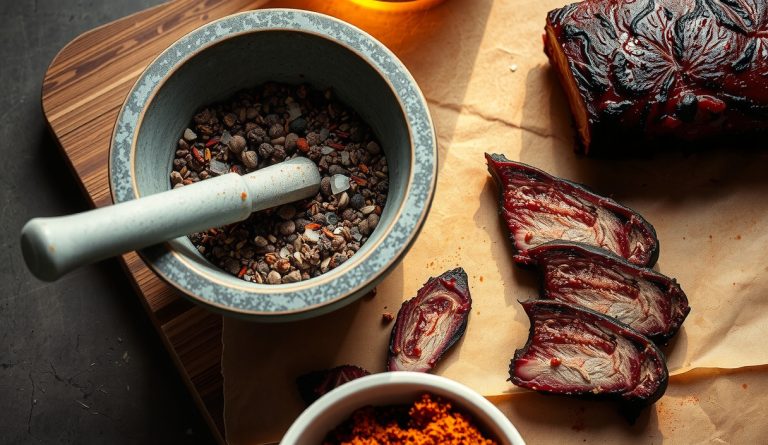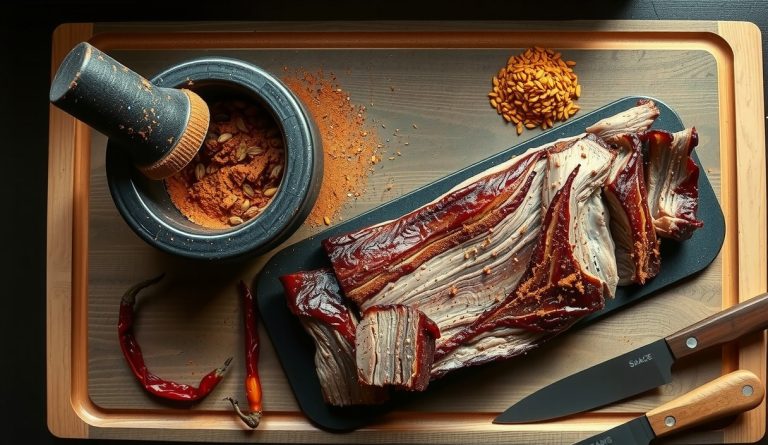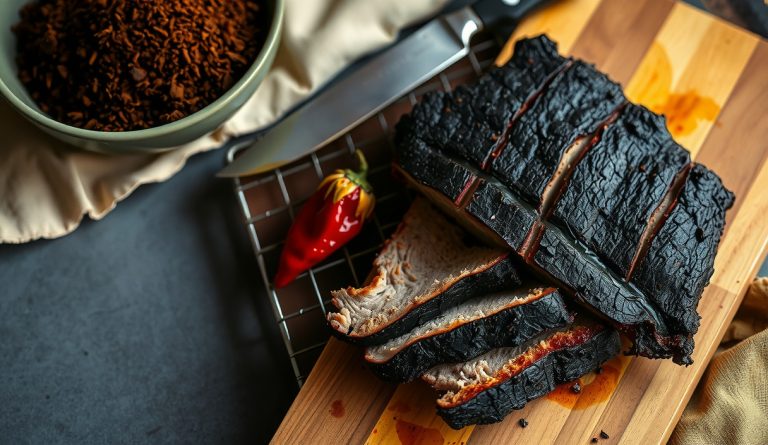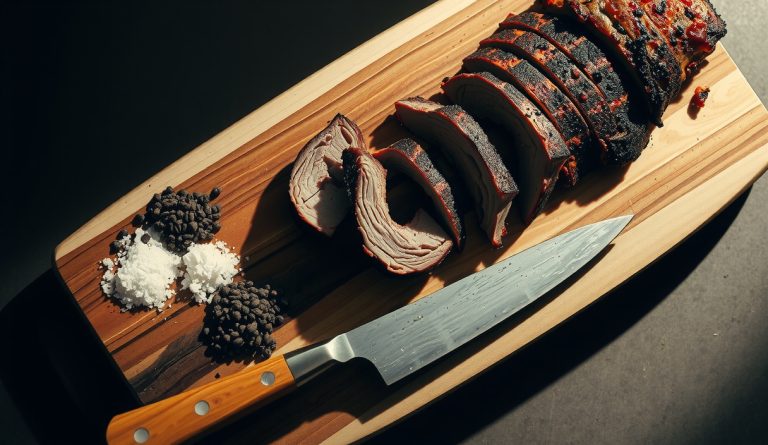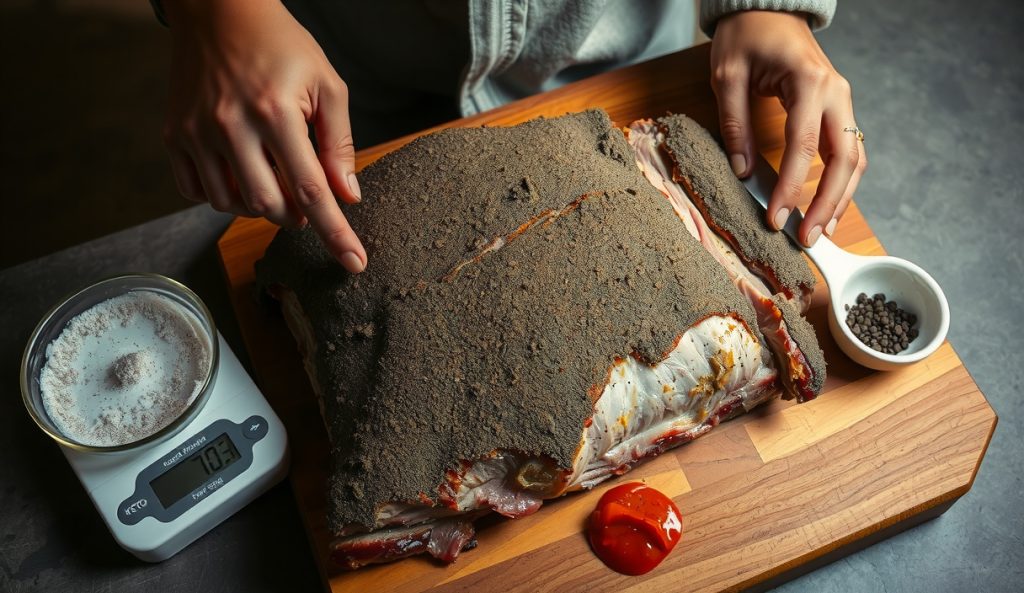
The keto brisket rub base formula is calibrated for a 12–14 lb whole packer brisket. Scaling up to a full 18-pounder is not optional — applying an under-scaled rub to a larger surface area produces patchy bark, and patchy bark on a brisket this size is one of the most common and most preventable failures in the cook. This variant defines the correct 1.4x scaling factor and explains why consistent application rate matters more than most pitmasters realize.
Brisket bark is not a coating — it is a crust formed by the interaction of surface moisture, dissolved rub compounds, smoke particulate, and heat. That interaction requires a minimum rub density per unit of surface area to proceed uniformly. Below that threshold, sections of the brisket surface dry out without enough soluble material to form the continuous moisture-rub-smoke matrix that sets into cohesive bark.
What changes when you scale a keto brisket rub to 14–18 lbs?
For a brisket in the 14–18 lb range, multiply all rub ingredient quantities by 1.4x. This scaling factor maintains the same ratio of allulose, salt, chile powder, and aromatics — nothing in the formula’s internal balance shifts. The target application rate is 2–2.5 grams of rub per 100 grams of estimated surface area. In practical terms, that means approximately 1 tablespoon per side of the flat, with a heavier hand on the point, where the fat cap and irregular surface geometry absorb more rub without the coating thickness becoming excessive.
Weigh the rub before application. Estimating by eye is the most common source of patchy bark in home cooks and competition teams alike. A kitchen scale set to grams costs less than the brisket itself — use it. The allulose at 5% w/w is particularly important to scale accurately: under-loading allulose on a larger surface reduces the sugar-browning contribution to bark color and texture unevenly, and that deficit shows most obviously on the flat, which has less fat-driven crust development than the point.
What stays the same when scaling up the rub?
All ingredient ratios within the keto brisket rub formula are preserved — this is a scaling operation, not a reformulation. Cook temperature, wrap decision point (typically 165–170°F internal), and rest protocol all remain identical to the canonical recipe. A larger brisket will take longer to reach wrap temperature and longer to rest, but those differences are a function of meat mass, not the rub change.
When is the scaled-up rub the better choice?
Any time you are sourcing a full-size packer from a wholesale or restaurant supplier — common when cooking for larger groups or competition — the base recipe’s quantities will leave you short on rub coverage. Scale up proactively rather than patching mid-application. This 1.4x variant is also worth following any time you notice bark inconsistency on previous cooks: a systematic application-rate audit often resolves what appears to be a temperature or smoke problem.
Use the full method, equipment, and rub measurements from the original Keto Brisket Rub — No-Sugar Bark That Actually Forms.