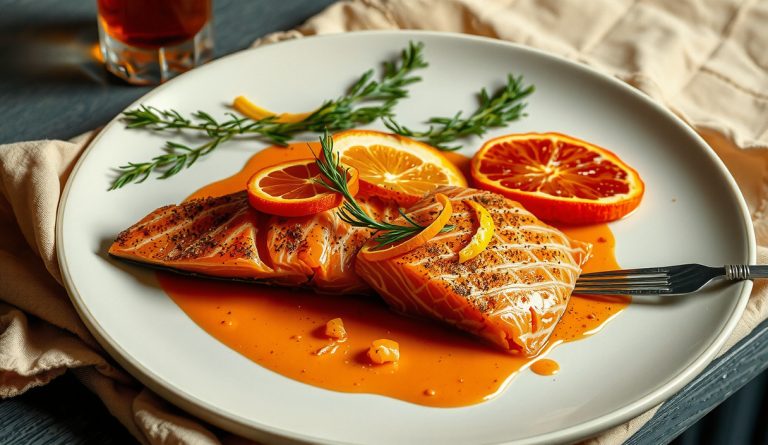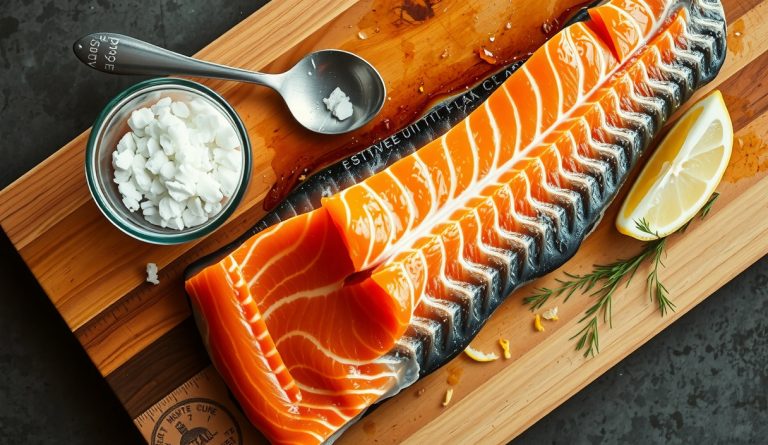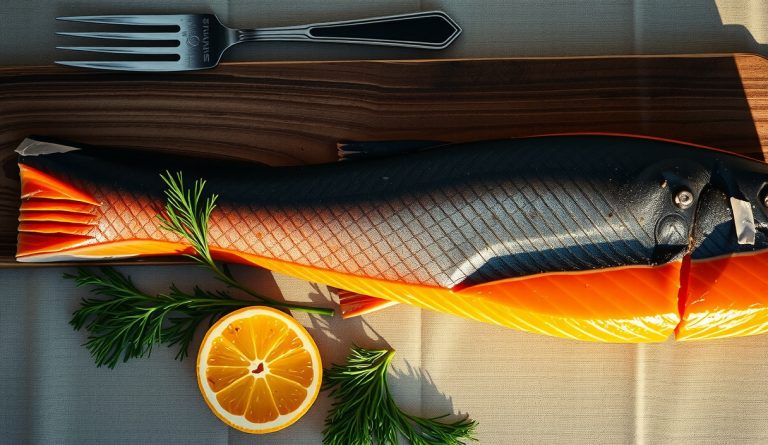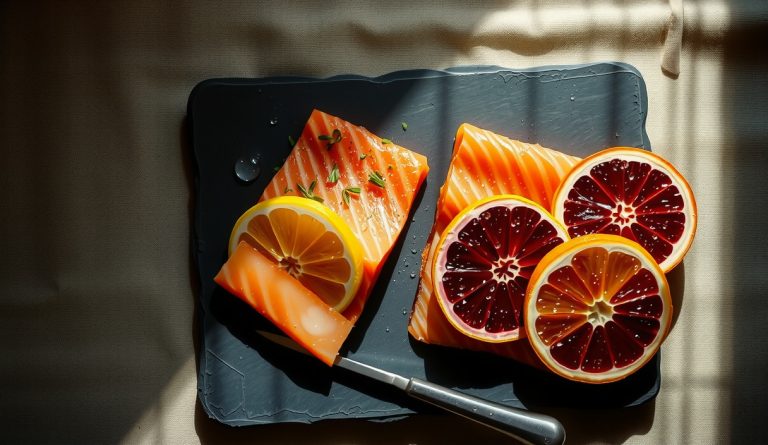
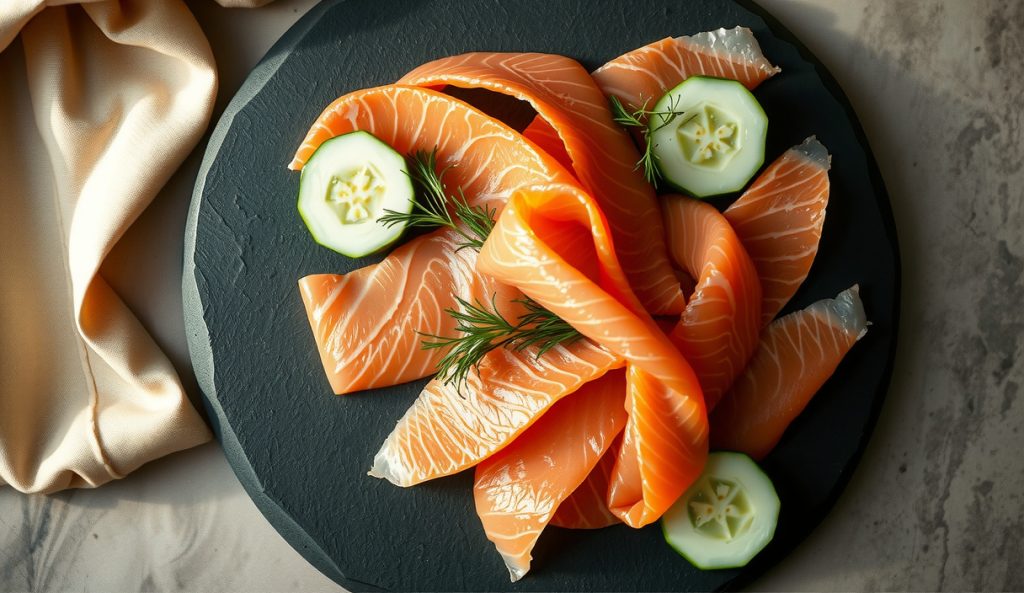
Cold-smoking is a fundamentally different process from hot-smoking — the salmon is never thermally cooked. Chamber temperature stays below 90°F (32°C) for the entire smoke period, which means protein denaturation and antimicrobial activity are driven entirely by salt concentration and smoke chemistry rather than heat. The result is the glass-like, silky texture associated with classic lox — a quality that is impossible to achieve once the flesh crosses into the cooking zone.
What changes in the cold-smoke process?
Extend the cure to a minimum of 10–12 hours before the salmon enters the smoker. At the canonical 1.5% w/w salt level, this extended contact time is necessary to achieve adequate surface denaturation and the antimicrobial water-activity reduction that a heat step would otherwise provide. Smoke is introduced cold — typically via an offset generator, pellet maze, or dedicated cold-smoke attachment — so chamber temperature never climbs above 90°F (32°C).
Total smoke exposure runs considerably longer than the hot-smoke schedule. Expect 6–10 hours depending on desired smoke intensity and generator output. Maintaining sub-90°F chamber temperatures in warm ambient conditions requires a capable cold-smoke generator and, in some climates, active cooling of the chamber.
Food safety is the non-negotiable variable in cold-smoking. Because no cooking step reaches the internal temperature required for parasite destruction, source salmon must either be sushi-grade certified or commercially frozen to FDA parasite-destruction standards: −4°F (−20°C) for a minimum of 7 days. Do not cold-smoke previously unfrozen, non-sushi-grade salmon for immediate home consumption. FDA guidelines for cold-smoked fish specify validated process parameters; home production falls outside those validated frameworks and places the burden of sourcing verification entirely on the cook.
What stays the same as the canonical recipe?
The 1.5% w/w cure ratio, the dill-citrus blend, the pellicle-drying step, and the fillet preparation remain exactly as written in the canonical recipe. The cure does the same ion-exchange and dewatering work regardless of what follows it — the change between the hot-smoke and cold-smoke variants is entirely in the thermal environment during smoke application, not in the cure chemistry.
When is cold-smoking the better choice?
Choose cold-smoking when texture is the primary objective — specifically the yielding, translucent slice associated with high-end charcuterie and bagel-service salmon. Cold-smoking is the correct path for cooks who meet all three of the following conditions: reliable access to commercially frozen or sushi-grade salmon, a cold-smoke generator capable of holding sub-90°F chamber temperatures even in warm ambient conditions, and comfort with the 6–10 hour smoke commitment the method demands.
- Source salmon that is sushi-grade certified or commercially frozen at −4°F (−20°C) for at least 7 days.
- Cure for a minimum of 10–12 hours at 1.5% w/w salt before the salmon enters the smoker.
- Maintain chamber temperature below 90°F (32°C) throughout the full 6–10 hour smoke period.
Use the full method, equipment, and rub measurements from the original Low-Sodium Smoked Salmon with Dill-Citrus Cure.