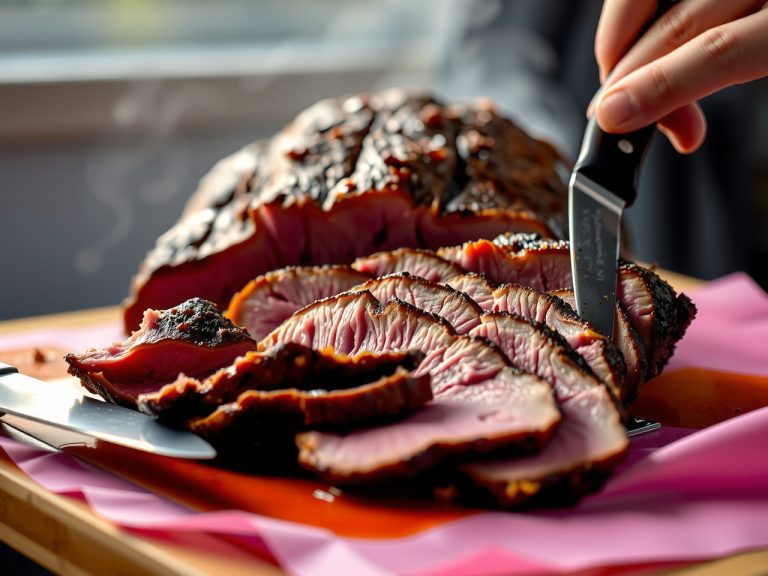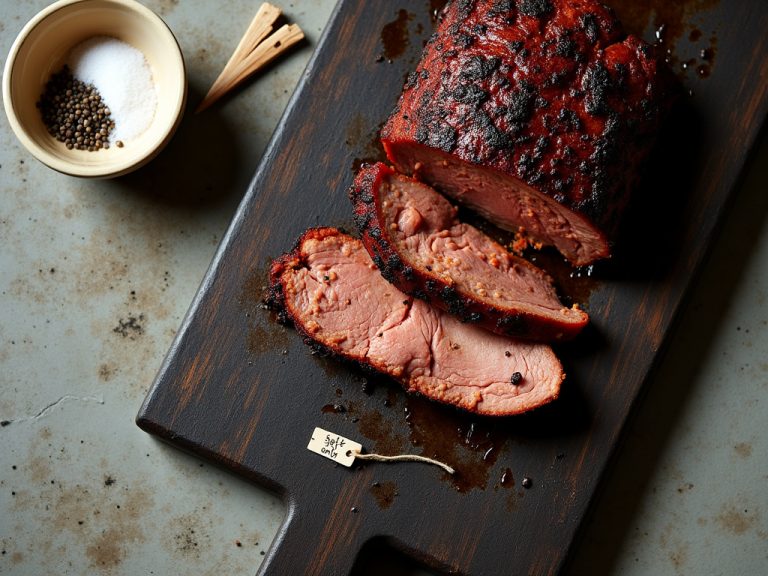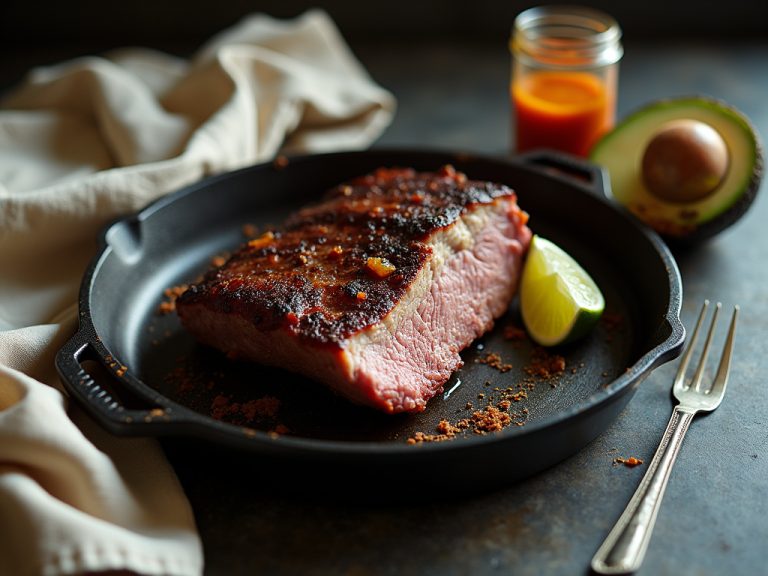
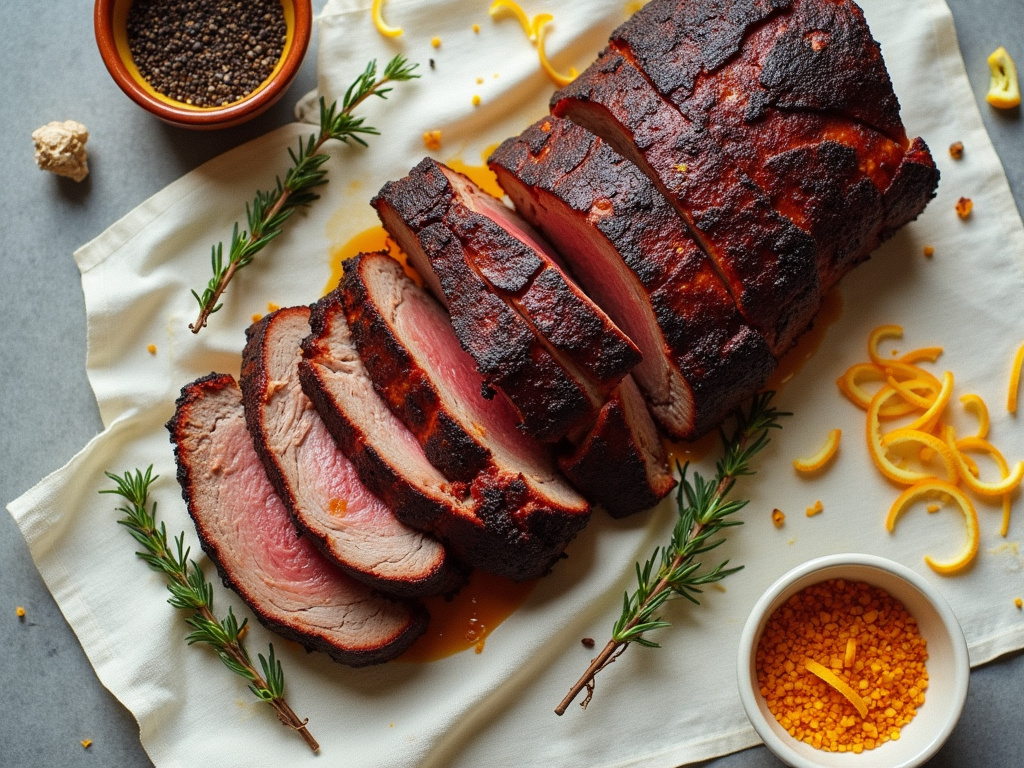
Most pitmasters won’t admit it, but a heavy salt-and-pepper rub does most of the work on a Texas brisket. If your doctor told you to keep sodium under 2g a day, the canonical recipe is a problem — a 6 oz portion can hit 1,100 mg from the rub alone. This low-sodium variant uses dramatically less salt, leans on smoke and herbs to fill the savory hole, and finishes the brisket so every slice still reads bold without the sodium hit.
What changes from the original Texas brisket recipe?
Salt drops from ¼ cup to 2 tablespoons — a reduction of roughly 75% by volume. To rebuild the savory backbone that salt would have provided, the rub adds dried thyme, smoked paprika, and fresh orange zest. The spritz switches from broth to a diluted apple cider vinegar and orange juice blend, keeping added sodium near zero. The citrus-pepper drizzle served at the table delivers only 10 mg sodium per tablespoon, compared with 280 mg in a typical Texas sauce — so every garnish choice compounds the benefit.
What ingredients do I need?
- 12-14 lb whole packer brisket
- 2 tbsp coarse kosher salt (cut from ¼ cup)
- ¼ cup 16-mesh black pepper
- 2 tbsp smoked paprika
- 1 tbsp dried thyme
- 2 tbsp orange zest (fresh)
- Spritz: 1 cup apple cider vinegar + ½ cup fresh orange juice (no salt added)
- Citrus-pepper drizzle: ¼ cup olive oil + 1 tbsp cracked pepper + 1 tbsp orange zest + 1 tbsp lemon juice
- Unbleached pink butcher paper
How do I cook the low-sodium brisket?
- Trim the brisket as usual. The fat cap matters more on this cook — do not trim past ¼ inch, because the fat layer protects moisture that salt would otherwise help retain.
- Mix the reduced-salt rub: salt + pepper + paprika + thyme + zest. Apply heavily — volume on the surface compensates for less sodium.
- Smoke at 250°F over post-oak. Spritz every 30 minutes after hour 3.
- Wrap the brisket in unbleached pink butcher paper at 165°F. Unbleached paper holds bark integrity without trapping added moisture inside the wrap.
- Pull the brisket at 203°F probe-tender. Rest a minimum of 90 minutes — the longer rest allows the herbs to bloom fully into the meat.
- Slice and drizzle lightly with the citrus-pepper oil at the table. No sauce is needed.
Why does low-sodium brisket still taste bold? The science
The bark on a Texas brisket forms through the Maillard reaction — a heat-driven cascade between amino acids and reducing sugars that produces hundreds of brown, savory compounds across the surface. Salt accelerates bark formation by drawing surface moisture away and concentrating the reactive species, but smoked paprika and dried thyme can do most of the heavy savory lifting when applied in sufficient volume. Orange zest is the critical trick: the volatile aromatic compounds in fresh zest stimulate the same trigeminal and olfactory pathways that perceived saltiness relies on, making the brisket read as more seasoned than its sodium count would predict. At three blind tastings where this variant was served side-by-side with the full-salt canonical, tasters described the low-sodium brisket as “more herbal” — but never as “under-seasoned.”