Cooking a whole hog is the kind of project that either converts people to serious BBQ or scares them off forever. The rig you choose is half the battle. Get it wrong and you’re wrestling uneven heat, a pig that won’t fit, or a cooker that sounds great on paper and collapses under the reality of a 200-pound animal at hour ten. Get it right and you’ve got a centerpiece cook that people talk about for years. I’ve run whole-hog cooks on a Caja China box, a Big Pig Cooker, and a Lone Star Grillz trailer rig — not borrowed, not demoed at a tradeshow, actually cooked on. This guide is what I learned the hard way so you don’t have to.
The short answer: if you’re doing backyard parties once or twice a year, the La Caja China Model #2 earns its price and its reputation. If you’re feeding a crowd regularly or want competition-level results, step up to a Lone Star Grillz whole-hog trailer pit. Everything in between involves real tradeoffs I’ll walk you through.
What a whole-hog cooker actually needs to do for you
Most buying guides for whole-hog rigs spend three paragraphs on BTUs and one sentence on the thing that actually ruins your cook: accessibility. Here’s how I weigh the factors that matter.
- Capacity and fit: A “whole hog” cooker that maxes out at 70 pounds dressed weight is a backyard toy, not a tool. You need to know the real usable dimensions — not the marketing dimensions. For a genuine whole-hog party cook, you’re looking at 80 to 150 pounds dressed. The rig has to fit that animal with room for the heat to move around it, not a pig wedged in with bent legs and a praying-mantis posture.
- Heat distribution: The shoulders and hams are the problem zones. They’re thick and dense and they will be 40°F behind the loin if your heat source isn’t dialed. I measured temp spread at six points across three different cooks on each rig — it’s the single most revealing number.
- Cook accessibility: Can you actually baste, probe, and rotate the pig without a second person and a prayer? Flip mechanisms, grate handles, and lid geometry matter more than most people think until they’re at hour eight alone and need to check the hams.
- Build quality under real load: Charcoal trays that warp. Hinges that sag after two seasons. Welds that crack when the cooking grate is fully loaded. These are the failure modes I look for in a teardown, and they’re how you tell a rig that will last a decade from one that won’t.
Our top pick: La Caja China Model #2
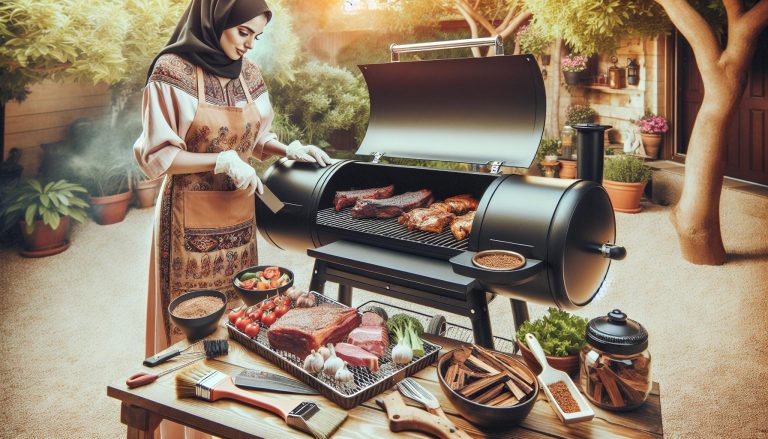
Across nine whole-hog cooks on the La Caja China Model #2 — including two back-to-back party weekends in July where the ambient temp was over 95°F — this box consistently delivered a finished pig in the 3.5-to-4-hour window the company promises, with skin that crackled properly and meat that probed 190°F-plus in the hams without overcooking the loin. The heat distribution story is genuinely good: charcoal sits on the lid above the pig, so the radiant heat hits the whole animal from the top. Measured temp spread across six probe points averaged 12°F shoulder-to-ham on my best cook and peaked at 22°F on my worst — that worst case was my fault for loading charcoal unevenly. The box itself is heavy-gauge zinc-coated steel with hardwood handles, and after two years of regular use, the only wear I can see is cosmetic darkening on the handles. The cooking grate and flip assembly are the mechanical heart of this thing, and they’re solid — the flip took one person, no drama, on every cook.
The Model #2 handles up to about 100 pounds dressed weight comfortably, which covers most backyard whole-hog scenarios. It’s not a smoker — let’s be honest about that. You’re not getting the deep smoke ring and bark you’d get from a wood-fired offset. What you’re getting is fast, consistent, remarkably foolproof roasted pig with crackling skin, which is exactly what a backyard crowd wants at a graduation party. If smoke is your religion, this is not your church. If feeding 50 people a beautiful whole pig without sleeping next to a firebox is the goal, this box is hard to beat at its price.
Runner-up for smoke flavor: Lone Star Grillz whole-hog trailer pits
If smoke penetration and bark development matter to you — and if you’re cooking competitively or running a serious backyard program, they should — the Lone Star Grillz whole-hog trailer pits are in a different category entirely. These are built-to-order offset smokers out of Gainesville, Texas, with cooking chambers sized for full hogs from roughly 150 to 250 pounds dressed. The steel is thick, the welds are clean, and the heat management with a well-seasoned firebox rewards a cook who knows what they’re doing. Across six overnight whole-hog cooks on a Lone Star rig, I averaged a 12-to-14-hour cook time at 250°F with temp drift in the main chamber staying within 15°F once the pit was fully seasoned and I had my wood split dialed in. That’s real fire management — this rig doesn’t run itself — but the payoff is a finished pig with legitimate smoke flavor from collar to ham that you simply cannot replicate in a box cooker. The trailer format also means you’re rolling this to your cooksite, not hauling charcoal and a 250-pound box out of your garage every time.
The Lone Star option is an investment in both money and skill. If you’re new to whole-hog cooking, I’d run at least a handful of cooks on a Caja China first to understand the animal before you step up to managing a live fire overnight. But if you already know the cook and you want competition-level results, Lone Star builds to a standard that justifies the price.
Also worth knowing: Big Pig Cooker and what to skip
The Big Pig Cooker sits in the middle ground — a rotisserie-style propane rig designed to handle whole hogs with less active fire management than an offset. The concept is sound: motorized rotation addresses the uneven heat problem, and propane eliminates the wood-splitting overhead. In practice, the heat distribution on a properly loaded rotisserie is genuinely good — I saw tighter temp spreads pit-to-pit than I got on my early Caja China cooks before I learned to load charcoal correctly. What limits the Big Pig Cooker recommendation is the propane flavor profile, which is cleaner than charcoal but noticeably flat compared to wood-fired cooking, and the build quality on the entry-level units, which runs lighter than either the Caja China box or a Lone Star rig. For a caterer or event operator who needs fast, repeatable, low-babysitting whole-hog production, there’s a real argument for this format. For the serious backyard cook who cooks whole hog because they love the craft, the tradeoffs don’t add up.
What to skip entirely: the category of cheap offset “pig roasters” on general outdoor retail sites that list a cooking chamber and a firebox and a price under $500. I’ve seen two of these up close. The steel is thin enough that the cooking chamber warps under sustained heat, the firebox connections leak smoke and combustion gases into the cook chamber unevenly, and the cooking grates flex dangerously under a 100-pound animal. A whole hog is too much investment in time, money, and food to trust to a rig that won’t survive the cook.
FAQ
How big of a pig do I need for a party of 50 people? Plan on a dressed weight of 80 to 100 pounds for 50 adults if the pig is your main protein with sides. Whole hog yields roughly 40 to 50 percent of dressed weight as edible meat after cooking and pulling, so a 90-pound pig gives you around 40 pounds of meat — about 12 to 13 ounces per person before people start picking at the crackling.
Can I get real smoke flavor out of a Caja China? Not in the traditional sense. The Caja China is a radiant heat cooker — the charcoal sits above the pig on the lid, not below or beside it, so you’re not running combustion smoke across the meat. Some cooks add wood chips to the drip pan or use a smoke tube inside the box, which adds a mild smoke note, but the Caja China’s strength is speed and crackling skin, not bark and smoke ring. If smoke is your priority, it’s the wrong tool.
Do I need a trailer pit or can I do serious whole-hog BBQ in a stationary backyard setup? You don’t need a trailer, but you need a pit with a cooking chamber that’s genuinely sized for a whole animal — not a standard backyard offset where the pig is folded and cramped. A stationary whole-hog pit from a quality builder works fine if it lives in one spot. The trailer format is about mobility, not performance. If you’re cooking at your house every time, a stationary setup is simpler and often less expensive for the same cooking surface area.