Vegan Smoked Mac & Cheese — Cashew Smoke Sauce

Equipment
- 1 High-speed blender Must run at maximum speed for 90 seconds; standard blenders at low speed will leave coarse fat aggregates
- 1 Smoker or kettle grill Set up for indirect heat at 250°F grate-level; use oak wood chunks
- 1 Grate-level probe thermometer Lid thermometers read 25–50°F high; measure at the cooking grate
- 1 12-inch cast iron skillet or heavy-gauge foil pan Needs to sit flat on grates and retain heat to prevent bottom-layer emulsion chill
- 1 Large pot For boiling pasta
- 1 Kitchen scale Required for precise xanthan gum measurement at 0.2% w/w
Ingredients
Cashew Smoke Sauce
- 300 g raw whole cashews Soaked 8 hours or overnight in cold water, then drained and rinsed; or cover with boiling water 45 minutes minimum
- 400 g warm filtered water 130°F (54°C) — warm temperature reduces lipid phase viscosity during blending for better emulsification
- 0.8 g xanthan gum Exactly 0.2% of the 400g water by weight; measure on a kitchen scale — a scant 1/4 tsp. Disperse in the cold water before adding cashews.
- 4 tbsp nutritional yeast Deactivated, B12-fortified; provides free glutamic acid for umami saturation
- 1.5 tbsp white shiro miso Do not substitute red or brown miso; white miso keeps pH above 4.8 and color light
- 2 tbsp fresh lemon juice Add after emulsion is stable and xanthan fully hydrated to avoid protein flocculation
- 3 cloves garlic Roughly chopped; added to blender raw for allicin pungency
- 1 tsp kala namak (black salt) Start at 3/4 tsp, taste after blending, and adjust; highly potent sulfur compounds — smell of hard-boiled egg is intentional
- 0.5 tsp smoked paprika Adds lipophilic carotenoid color compounds and a secondary smoky baseline before the smoker
- 0.5 tsp ground turmeric Color only — mimics the yellow hue of aged cheddar
- 0.25 tsp fine sea salt Adjust after final taste; kala namak carries its own salinity
- 0.25 tsp dry mustard powder Mustard mucilage proteins provide secondary emulsification support at the oil-water interface
Pasta and Assembly
- 450 g elbow macaroni Standard semolina or certified GF brown rice pasta; cook to 90% done (slight starchy center) — it continues hydrating in the smoker
- 1 tbsp kosher salt For the pasta boiling water
- 2 tbsp reserved pasta cooking water The starchy water helps bind sauce to pasta; reserve before draining
Smoke Setup
- 2 chunks oak wood chunks Fist-sized; chunks sustain smoke output without temperature spikes. Apple or cherry acceptable; avoid hickory for this profile.

Instructions
Soak Cashews
- Place raw cashews in a bowl and cover with cold filtered water by at least 2 inches. Soak for 8 hours or overnight at room temperature. For a fast soak, cover with just-boiled water and soak for 45 minutes. Drain and rinse thoroughly under cold running water until water runs clear.
Prepare the Emulsion Base
- Whisk the xanthan gum into 200g of the warm water (130°F) in a small container and let it hydrate for 2 minutes. It will become slightly viscous. This pre-hydration prevents lumping when added to the blender.0.8 g xanthan gum, 400 g warm filtered water
- Add the drained soaked cashews, xanthan slurry, and remaining 200g warm water to the blender jar. Do not add lemon juice yet. Blend on maximum speed for 90 seconds continuously. The sauce should be completely smooth, opaque, and coat a spoon — no visible granules. If your blender labors or the sauce is still grainy at 90 seconds, blend an additional 30 seconds.400 g warm filtered water, 0.8 g xanthan gum
- Add the nutritional yeast, white miso, garlic, kala namak, smoked paprika, turmeric, sea salt, and dry mustard powder to the blender. Blend on high for an additional 30 seconds until fully incorporated. Taste for salt and sulfur depth from the kala namak — it should smell and taste distinctly egg-like and sharp.4 tbsp nutritional yeast, 1.5 tbsp white shiro miso, 3 cloves garlic, 1 tsp kala namak (black salt), 0.5 tsp smoked paprika, 0.5 tsp ground turmeric, 0.25 tsp fine sea salt, 0.25 tsp dry mustard powder
- Now add the lemon juice. Blend on medium for 15 seconds only. Taste immediately. The sauce should have bright acid lift without turning sour. Adjust: add more kala namak for sulfur depth, more nutritional yeast for umami, more lemon for sharpness. The emulsion is now set — do not re-blend aggressively after this point.2 tbsp fresh lemon juice
Cook the Pasta
- Bring a large pot of water to a rolling boil. Add kosher salt. Cook elbow macaroni to 90% done — roughly 1.5 minutes less than the package’s minimum al dente time. The pasta should have a visible, small starchy core when you bite through a piece. Before draining, reserve 2 tablespoons of pasta cooking water in a small cup.1 tbsp kosher salt, 450 g elbow macaroni, 2 tbsp reserved pasta cooking water
- Drain the pasta and return it to the pot immediately. Pour the cashew sauce over the hot pasta and stir to coat completely. Add the reserved pasta water and stir again — the starch helps bind the sauce to the pasta surface. Transfer the dressed pasta to your cast iron skillet or foil pan, spreading it into an even layer.450 g elbow macaroni, 2 tbsp reserved pasta cooking water
Smoke
- Set up your smoker or kettle grill for indirect heat at 250°F measured at the cooking grate (not the lid thermometer). Add oak wood chunks to produce clean, thin blue smoke. Allow the smoke to establish for 5 to 10 minutes before loading the food — heavy white smoke means the wood is still off-gassing harsh compounds.2 chunks oak wood chunks
- Place the skillet or pan on the indirect-heat side of the grates. Close the lid. Do not stir, do not open, do not adjust for 30 minutes. The phenolic smoke compounds are depositing on the sauce surface continuously — every opening interrupts this process and loses heat. Monitor grate temperature every 10 minutes through a vent probe. Maintain 250°F ± 15°F.
- At 30 minutes, pull the pan. The surface will show a slightly darker, tacky-looking skin — that is the smoke film layered over the emulsion. Stir the entire dish once from bottom to top to distribute the smoke-concentrated surface layer throughout. Taste for seasoning — add a pinch of sea salt or a few drops of lemon juice if needed. Serve immediately from the pan.
Notes
Nutrition
The first time I tried to smoke a plant-based mac and cheese, I got a watery, broken puddle. The fat from the cashews had separated, the sauce had thinned to broth, and the smoke had nowhere to cling. That failure was clarifying. The problem was not the smoker — it was that I had ignored the emulsion physics entirely and sent a thermodynamically unstable sauce into a convective heat environment for thirty minutes.
What you are reading is the corrected version: a cashew-protein-fat oil-in-water emulsion stabilized with 0.2% xanthan gum by weight, loaded with sulfur-forward flavor from kala namak and fermented umami from white miso and nutritional yeast, then introduced to oak smoke at 250°F for exactly 30 minutes to build a lacquered, flavor-complex surface layer without breaking the continuous aqueous phase. This is a BBQ side dish that earns its place on the smoker.
Why does vegan smoked mac and cheese work? The science
The sauce is an oil-in-water (O/W) colloidal dispersion — and understanding that fact is what separates a lacquered, smoke-kissed result from a broken puddle. Soaked raw cashews, when high-shear blended with warm water, physically rupture their native oleosomes — lipid-protein storage bodies — releasing native cashew proteins (primarily legumins and vicilins) and triglycerides simultaneously into the aqueous phase. These amphiphilic proteins adsorb to the surface of the liberated fat droplets, lowering interfacial tension and creating a kinetically stable emulsion. The limiting factor is continuous-phase viscosity: without a secondary stabilizer, thermal cycling in a smoker (convective hot air at 250°F) accelerates droplet collision rates and causes coalescence. Xanthan gum at 0.2% w/w — well within its optimal pseudoplastic range of 0.2% to 0.5% — dramatically increases the apparent viscosity of the continuous aqueous phase at rest, arresting Stokes’ Law-driven droplet migration without generating gumminess under the shear of mastication. The sauce clings, then releases flavor cleanly.
The cheese-funk is pure organic chemistry. Kala namak (black salt) is rich in hydrogen sulfide and iron sulfide compounds. When introduced to a warm aqueous phase, kala namak releases volatile sulfur species — specifically H₂S and dimethyl sulfide analogs — that activate the same olfactory receptors triggered by thiols in aged dairy. Nutritional yeast supplies glutamic acid, contributing direct savory T1R1/T1R3 receptor activation (umami), while white miso delivers both glutamates and a low-pH fermented tang that accentuates the perception of sharpness without dropping the sauce pH below 5.0, which would destabilize the cashew protein emulsion. Lemon juice adds citric acid brightness and assists with flavor contrast but is dosed carefully to stay above that pH floor.
The 30-minute smoke at 250°F is a surface-chemistry event, not a deep-penetration cook. The pasta and sauce matrix enters the smoker already fully cooked. Oak smoke particulates — primarily guaiacol and syringol phenolics — deposit onto the slightly sticky, xanthan-viscous sauce surface, where they dissolve into the emulsified fat droplets. Because lipophilic aroma compounds partition strongly into the lipid phase, the cashew fat acts as a reservoir, trapping smoke compounds and releasing them slowly during mastication. The result is a sustained, wood-fired aromatic resonance that a stovetop sauce cannot replicate. Hold temperature is critical: exceeding 275°F risks boiling off the surface moisture layer and breaking the emulsion through evaporative-cooling-driven surface-temperature spikes, while going below 225°F produces insufficient phenolic deposition to register sensorially.
What equipment and ingredients do I need?
- High-speed blender: A standard blender will not rupture cashew oleosomes sufficiently. Run for a full 90 seconds at maximum speed — sub-20-micron fat droplets are required to achieve a shelf-stable emulsion. If you have an ultrasonic homogenizer, run a 30-second cavitation pass after blending.
- Xanthan gum: Hydrate xanthan gum in the cold water before adding cashews, not after. It disperses more evenly and avoids lumping. Measure precisely — 0.2% of your total sauce liquid mass. For 400g of water that is 0.8g, a scant quarter-teaspoon.
- Kala namak: Indian black salt, available at most South Asian grocery stores or online. Kala namak smells intensely of hard-boiled eggs when dry — that is the sulfur compounds doing exactly what they should. Start at the low end of the range; it is potent and its sulfuric bite mutes somewhat when cooked.
- White (shiro) miso: Do not substitute red or brown miso here. Deeper fermentation in red and brown miso produces higher biogenic amine loads and stronger flavors that overwhelm the delicate cashew base. White miso delivers fermented tang and umami while keeping sauce color light and sauce pH above 4.8.
- Nutritional yeast: Use a brand labeled “deactivated” or “nutritional” — active yeast will ferment your sauce. Two tablespoons of nutritional yeast gives approximately 4g of free glutamic acid, more than enough for umami threshold saturation in this volume.
- Wood for smoking: Oak is the call here. Apple wood is too sweet and will clash with the miso-lemon profile. Hickory is acceptable but adds a strong phenolic bitterness at 30 minutes that can overpower. Use wood chunks, not chips, to sustain smoke output without temperature spikes.
- Oven-safe skillet or foil pan: The sauce needs a vessel that conducts heat evenly and sits flat on grates. Cast iron retains heat and helps prevent the bottom layer from chilling below emulsion stability; a heavy-gauge foil pan works too.
Vegan Smoked Mac & Cheese — Cashew Smoke Sauce
Equipment
- 1 High-speed blender Must run at maximum speed for 90 seconds; standard blenders at low speed will leave coarse fat aggregates
- 1 Smoker or kettle grill Set up for indirect heat at 250°F grate-level; use oak wood chunks
- 1 Grate-level probe thermometer Lid thermometers read 25–50°F high; measure at the cooking grate
- 1 12-inch cast iron skillet or heavy-gauge foil pan Needs to sit flat on grates and retain heat to prevent bottom-layer emulsion chill
- 1 Large pot For boiling pasta
- 1 Kitchen scale Required for precise xanthan gum measurement at 0.2% w/w
Ingredients
Cashew Smoke Sauce
- 300 g raw whole cashews Soaked 8 hours or overnight in cold water, then drained and rinsed; or cover with boiling water 45 minutes minimum
- 400 g warm filtered water 130°F (54°C) — warm temperature reduces lipid phase viscosity during blending for better emulsification
- 0.8 g xanthan gum Exactly 0.2% of the 400g water by weight; measure on a kitchen scale — a scant 1/4 tsp. Disperse in the cold water before adding cashews.
- 4 tbsp nutritional yeast Deactivated, B12-fortified; provides free glutamic acid for umami saturation
- 1.5 tbsp white shiro miso Do not substitute red or brown miso; white miso keeps pH above 4.8 and color light
- 2 tbsp fresh lemon juice Add after emulsion is stable and xanthan fully hydrated to avoid protein flocculation
- 3 cloves garlic Roughly chopped; added to blender raw for allicin pungency
- 1 tsp kala namak (black salt) Start at 3/4 tsp, taste after blending, and adjust; highly potent sulfur compounds — smell of hard-boiled egg is intentional
- 0.5 tsp smoked paprika Adds lipophilic carotenoid color compounds and a secondary smoky baseline before the smoker
- 0.5 tsp ground turmeric Color only — mimics the yellow hue of aged cheddar
- 0.25 tsp fine sea salt Adjust after final taste; kala namak carries its own salinity
- 0.25 tsp dry mustard powder Mustard mucilage proteins provide secondary emulsification support at the oil-water interface
Pasta and Assembly
- 450 g elbow macaroni Standard semolina or certified GF brown rice pasta; cook to 90% done (slight starchy center) — it continues hydrating in the smoker
- 1 tbsp kosher salt For the pasta boiling water
- 2 tbsp reserved pasta cooking water The starchy water helps bind sauce to pasta; reserve before draining
Smoke Setup
- 2 chunks oak wood chunks Fist-sized; chunks sustain smoke output without temperature spikes. Apple or cherry acceptable; avoid hickory for this profile.
Instructions
Soak Cashews
- Place raw cashews in a bowl and cover with cold filtered water by at least 2 inches. Soak for 8 hours or overnight at room temperature. For a fast soak, cover with just-boiled water and soak for 45 minutes. Drain and rinse thoroughly under cold running water until water runs clear.
Prepare the Emulsion Base
- Whisk the xanthan gum into 200g of the warm water (130°F) in a small container and let it hydrate for 2 minutes. It will become slightly viscous. This pre-hydration prevents lumping when added to the blender.0.8 g xanthan gum, 400 g warm filtered water
- Add the drained soaked cashews, xanthan slurry, and remaining 200g warm water to the blender jar. Do not add lemon juice yet. Blend on maximum speed for 90 seconds continuously. The sauce should be completely smooth, opaque, and coat a spoon — no visible granules. If your blender labors or the sauce is still grainy at 90 seconds, blend an additional 30 seconds.400 g warm filtered water, 0.8 g xanthan gum
- Add the nutritional yeast, white miso, garlic, kala namak, smoked paprika, turmeric, sea salt, and dry mustard powder to the blender. Blend on high for an additional 30 seconds until fully incorporated. Taste for salt and sulfur depth from the kala namak — it should smell and taste distinctly egg-like and sharp.4 tbsp nutritional yeast, 1.5 tbsp white shiro miso, 3 cloves garlic, 1 tsp kala namak (black salt), 0.5 tsp smoked paprika, 0.5 tsp ground turmeric, 0.25 tsp fine sea salt, 0.25 tsp dry mustard powder
- Now add the lemon juice. Blend on medium for 15 seconds only. Taste immediately. The sauce should have bright acid lift without turning sour. Adjust: add more kala namak for sulfur depth, more nutritional yeast for umami, more lemon for sharpness. The emulsion is now set — do not re-blend aggressively after this point.2 tbsp fresh lemon juice
Cook the Pasta
- Bring a large pot of water to a rolling boil. Add kosher salt. Cook elbow macaroni to 90% done — roughly 1.5 minutes less than the package’s minimum al dente time. The pasta should have a visible, small starchy core when you bite through a piece. Before draining, reserve 2 tablespoons of pasta cooking water in a small cup.1 tbsp kosher salt, 450 g elbow macaroni, 2 tbsp reserved pasta cooking water
- Drain the pasta and return it to the pot immediately. Pour the cashew sauce over the hot pasta and stir to coat completely. Add the reserved pasta water and stir again — the starch helps bind the sauce to the pasta surface. Transfer the dressed pasta to your cast iron skillet or foil pan, spreading it into an even layer.450 g elbow macaroni, 2 tbsp reserved pasta cooking water
Smoke
- Set up your smoker or kettle grill for indirect heat at 250°F measured at the cooking grate (not the lid thermometer). Add oak wood chunks to produce clean, thin blue smoke. Allow the smoke to establish for 5 to 10 minutes before loading the food — heavy white smoke means the wood is still off-gassing harsh compounds.2 chunks oak wood chunks
- Place the skillet or pan on the indirect-heat side of the grates. Close the lid. Do not stir, do not open, do not adjust for 30 minutes. The phenolic smoke compounds are depositing on the sauce surface continuously — every opening interrupts this process and loses heat. Monitor grate temperature every 10 minutes through a vent probe. Maintain 250°F ± 15°F.
- At 30 minutes, pull the pan. The surface will show a slightly darker, tacky-looking skin — that is the smoke film layered over the emulsion. Stir the entire dish once from bottom to top to distribute the smoke-concentrated surface layer throughout. Taste for seasoning — add a pinch of sea salt or a few drops of lemon juice if needed. Serve immediately from the pan.
Notes
Nutrition
How do I nail it every time? Tips for success
- Soak time is non-negotiable. Under-soaked cashews will not rupture fully in the blender, leaving coarse protein aggregates that create a grainy sauce. Soak for eight hours minimum, overnight preferred. In a hurry, cover the cashews with boiling water for 45 minutes — some water-soluble flavor compounds will be lost but the texture will be acceptable.
- Blend hot, not cold. Warming soak water to around 130°F before blending reduces the viscosity of the cashew lipid phase, making fat droplet formation dramatically more efficient. Do not exceed 150°F or the emulsifying proteins begin to denature prematurely before they have dispersed.
- Add xanthan last, before lemon. Adding lemon juice before the xanthan has fully hydrated causes a pH drop that can trigger partial cashew protein flocculation, visible as small white curds. Build the emulsion first, then season.
- Sauce the pasta just beyond al dente. The pasta will absorb sauce in the smoker and continue to hydrate from residual steam. Pulling pasta at true al dente from the boiling water means overcooked pasta leaving the smoker. Aim for 90% done — a slight starchy center still present.
- Do not stir in the smoker. Smoke phenolics deposit on the top surface continuously during the 30-minute session. Stirring resets the clock on surface film development and scatters the partially set smoke layer into the bulk sauce. Leave the dish undisturbed for the full 30 minutes, then stir once before serving to distribute the surface layer through the dish.
- Watch grate temperature, not the lid thermometer. Lid thermometers on most kettles and offsets read 25°F to 50°F hotter than actual grate level. If a grate-level probe is unavailable, hang a probe thermometer through the vent hole to cooking-grate height before closing the lid.
What variations can I make to this recipe?
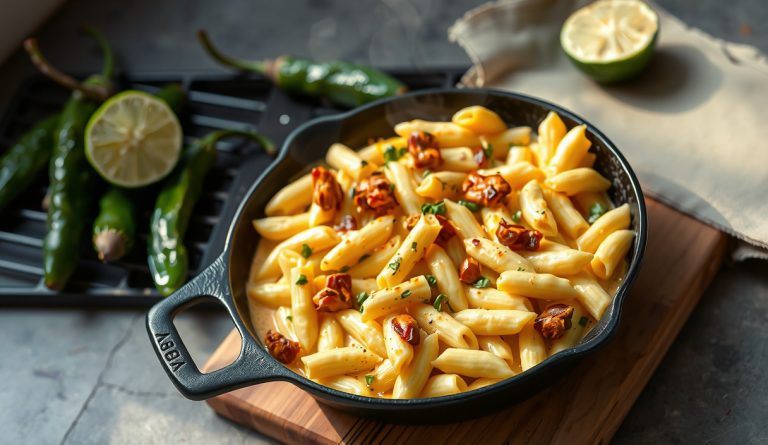
Jalapeño-lime heat variation: Roast two whole jalapeños directly on the smoker grates for the first 20 minutes alongside the mac pan. Pull the jalapeños, remove the charred skins, and blend the flesh and seeds into the finished sauce before serving. The smoke-roasted pepper fat adds a second lipophilic aromatic reservoir and the capsaicin activates TRPV1 channels for a lingering trigeminal heat that contrasts beautifully with the sulfuric cheese-funk baseline. Swap the lemon juice for lime juice and reduce the white miso by half a teaspoon to account for the pepper’s slight sweetness.
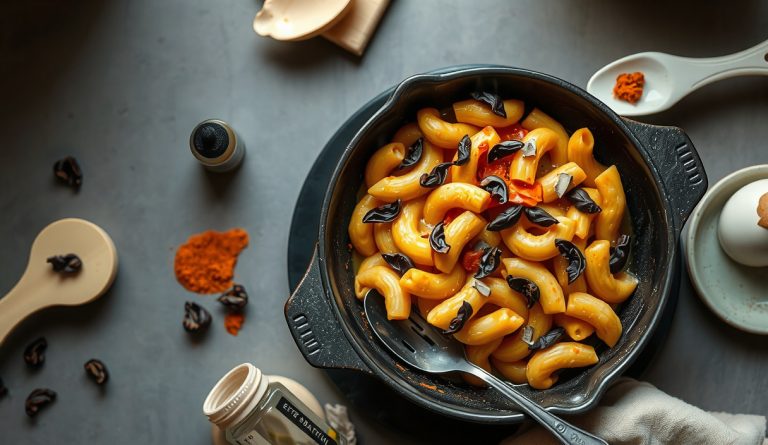
Truffle and porcini umami layering: Replace the white miso with one teaspoon of porcini powder and add four drops of white truffle oil to the sauce at the blender stage. Porcini delivers concentrated guanylate (5′-GMP) ribonucleotides that synergize exponentially with the glutamates already present from nutritional yeast. The result crosses the umami saturation threshold in a way that reads as deeply meaty and aged — genuinely close to a sharp gruyere note at the right concentration.
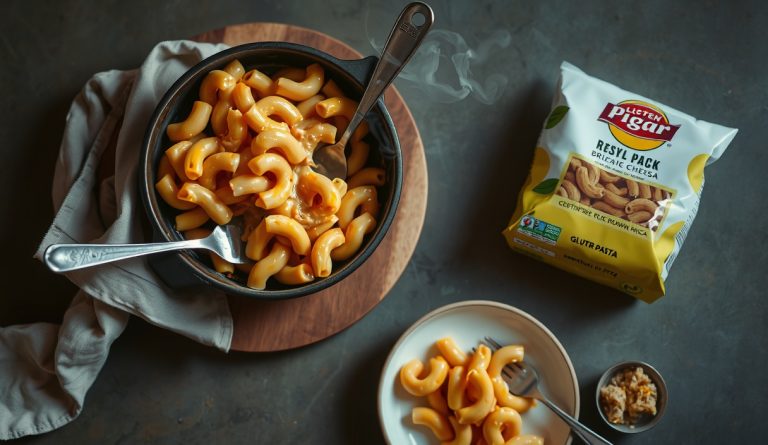
Gluten-free adaptation: Swap the elbow macaroni for certified gluten-free brown rice pasta or chickpea pasta. Chickpea pasta carries its own legume protein load that will partially co-emulsify with the cashew sauce during smoking, creating a slightly thicker final texture. Reduce the xanthan to 0.15% w/w of sauce liquid to compensate and prevent gumminess. Brown rice pasta is the cleaner textural swap if preserving the original sauce body exactly is the goal.
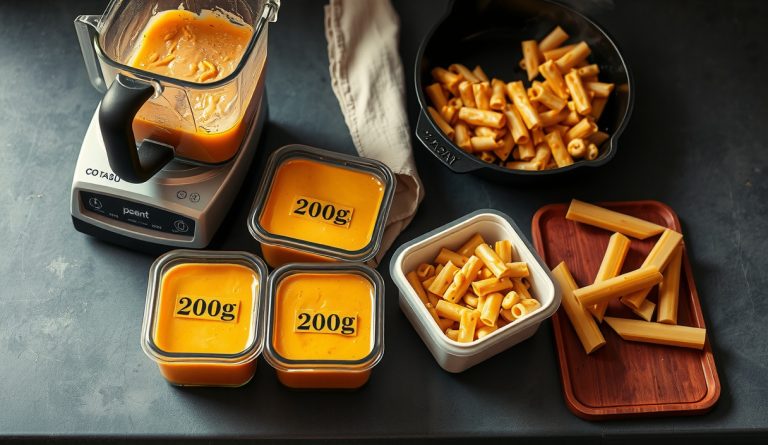
Double-batch and freeze strategy: The cashew sauce on its own freezes well — freeze in 200g portions before adding the pasta. The xanthan network survives freeze-thaw due to its ionic strength resilience, but frozen and thawed sauce will require a 30-second high-speed re-blend to re-emulsify any separated fat phase. Pasta does not freeze well in sauce; assemble fresh pasta with thawed, re-blended sauce and smoke as directed.
Frequently asked questions
My sauce broke in the smoker and looks oily. What happened? The emulsion exceeded its stability threshold — either the smoker ran hot (above 275°F at grate level), the sauce was too thin (insufficient cashew-to-water ratio or xanthan under-measured), or the pasta was too wet when it entered the smoker and the excess water boiled into the sauce, diluting the continuous phase viscosity below the critical entanglement concentration. Salvage it immediately: pull the pan, let it cool to 130°F, add two tablespoons of cold plant milk, and blend the broken sauce portion briefly before stirring back in. Do not return the mac and cheese to the smoker after rescue — the emulsion will be too fragile.
Can I just skip the smoker and use liquid smoke? Liquid smoke does deliver some of the same guaiacol and syringol phenolics, but the concentration and molecular weight distribution differ from particulate smoke deposition. More practically, the smoker achieves something liquid smoke cannot: surface dehydration that creates a slightly tacky skin on the sauce, concentrating flavor at the interface. If the smoker is not an option, add 1/4 teaspoon of liquid smoke to the blender sauce, then finish the assembled dish under a broiler for 4 to 5 minutes at 450°F to create surface caramelization. The result is not identical, but it is not embarrassing either.
Why does the sauce taste flat even though I followed the recipe? The most common culprit is insufficient kala namak or nutritional yeast — both require adjustment for individual salt sensitivity and brand variation. The second culprit is blending temperature: a cold sauce means a more viscous fat phase that does not fully emulsify, leaving fat-soluble flavor compounds trapped in the lipid phase instead of releasing into the aqueous phase where taste buds access them. Re-blend warm and re-taste. The third culprit is the pasta absorbing seasoning during the smoke; always taste the final dish after the smoke rest, not before, and adjust salt and lemon at the table.