Smoked Cream Cheese with Everything-Bagel Crust

Equipment
- 1 Pellet grill or offset smoker Set up for indirect heat at 225°F with a water pan if available. Hickory or cherry wood recommended.
- 1 Instant-read thermometer To verify internal temp of cream cheese reaches 130–140°F by the end of the cook.
- 1 Paring knife For scoring the crosshatch pattern 1/4 inch deep across top and sides of the block.
- 1 Pastry brush For applying the oil coat evenly before seasoning.
- 1 Small sheet pan or cast iron skillet Optional — use to catch any edge drips from the block and for easier transport from smoker to table.
Ingredients
- 8 oz block cream cheese Full-fat, straight from the refrigerator — cold is critical. Do not use whipped or reduced-fat cream cheese.
- 1 tablespoon olive oil or avocado oil Just enough to coat the surface thinly and improve seasoning adhesion.
- 3 tablespoons everything-bagel seasoning Look for a blend with visible dried garlic and onion flakes — these are the Maillard contributors that develop roasted depth under smoke heat.
- 1 teaspoon flaked sea salt Optional — only if your everything-bagel blend is low on salt.
For serving
- crackers Buttery or plain crackers work best — avoid heavily seasoned ones that compete with the everything-bagel crust.
- sliced cucumbers Cool, high-moisture vehicle that contrasts nicely with the warm, intense crust.
- sliced baguette or crostini Optional — toast lightly before serving.
- everything-bagel seasoning A small pinch over the top at the table reinforces the aroma right before first bite.

Instructions
Prep
- Fire up your smoker and bring it to a stable 225°F using indirect heat. Add your wood — hickory for assertive smoke depth, cherry for a slightly sweeter, fruitier profile. Allow the smoker to run for at least 15 minutes until you see thin blue smoke rather than heavy white smoke. Do not load the cream cheese until the smoke is clean.
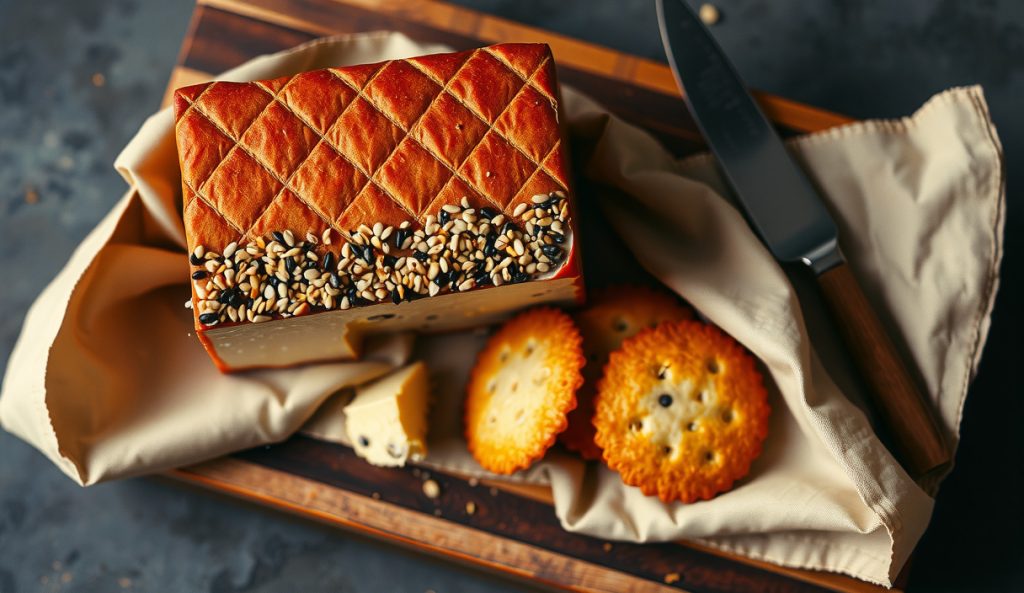
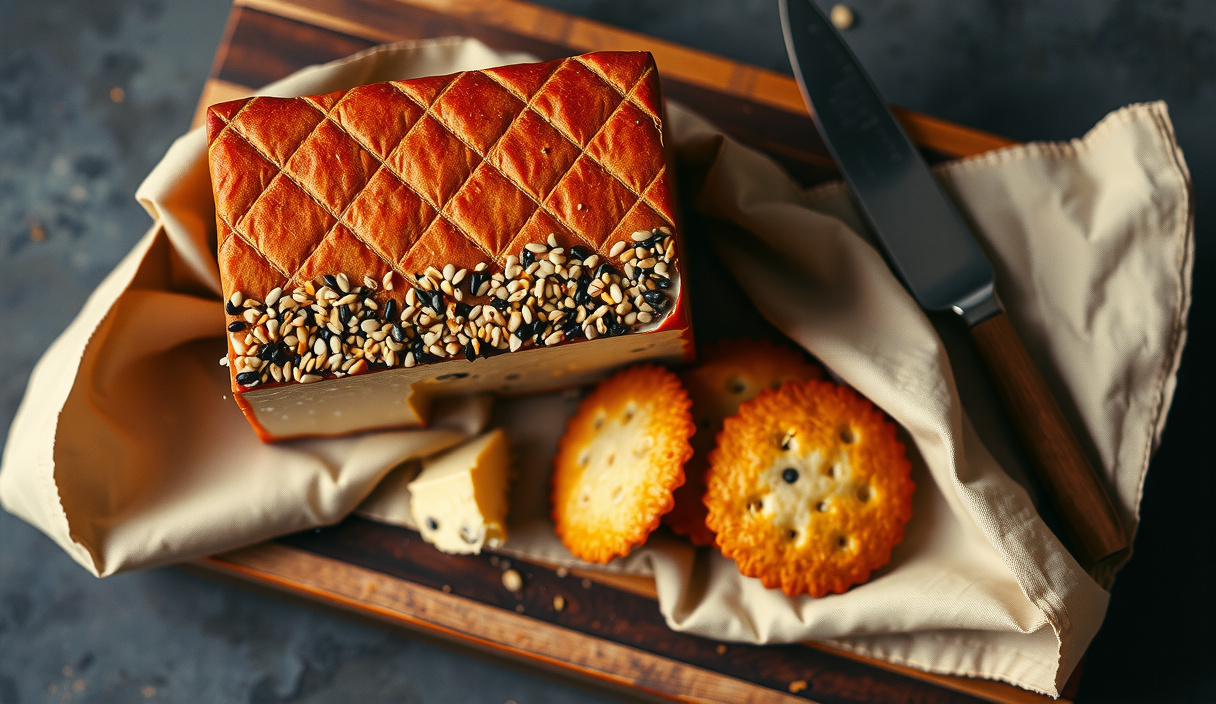
- While the smoker comes to temp, unwrap the cold cream cheese block and place it on a small cutting board. Using a sharp paring knife, score a crosshatch pattern across the top and all four sides, cutting approximately 1/4 inch deep and spacing cuts about 3/4 inch apart. This increases surface area and dramatically improves both smoke penetration and seasoning adhesion. Don’t skip this step.8 oz block cream cheese
- Using a pastry brush, apply a thin, even coat of olive oil or avocado oil across the entire surface of the scored block — top, bottom, and all four sides. The oil acts as an adhesive for the seasoning and helps drive the surface toward Maillard browning conditions faster by reducing immediate evaporative cooling.1 tablespoon olive oil or avocado oil
- Pour the everything-bagel seasoning onto a small plate and press all six sides of the oiled block firmly into the seasoning, ensuring full, even coverage — especially packed into the scored grooves where smoke will concentrate. Add the optional flaked sea salt if your blend is light on salt. The scored grooves should be visibly packed with seasoning.3 tablespoons everything-bagel seasoning, 1 teaspoon flaked sea salt
Smoke
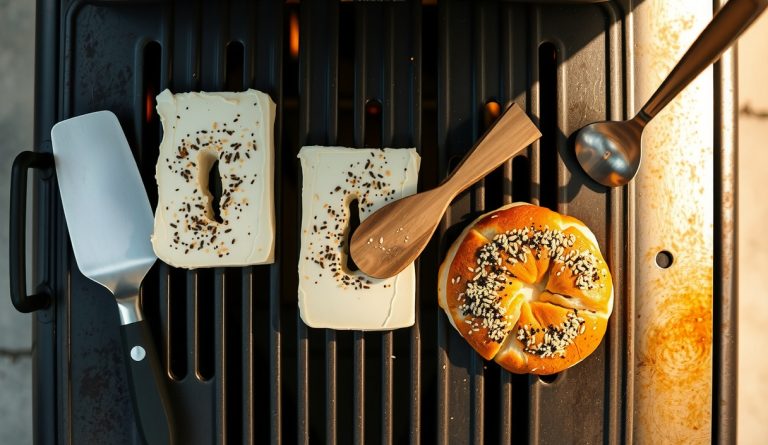
- Place the seasoned cream cheese block directly on the smoker grate over indirect heat, or set it on a small cast iron skillet or foil-lined sheet pan for easier handling. Close the lid and smoke at 225°F for 90 minutes, undisturbed. Resist opening the lid — every lid lift drops chamber temperature and risks a temperature spike on recovery that could push the block past the safe casein-stability window.8 oz block cream cheese
- At the 60-minute mark, the block should show a visible amber-to-mahogany color developing on the scored ridges. If the block is still pale, your smoke temperature is running low or your smoke is too thin — check your firebox and add a small chunk of wood if needed. By 90 minutes, the ridges should be deep mahogany and the seasoning should look toasted and fragrant. Use an instant-read thermometer to verify internal temperature reaches 130–140°F. If it hasn’t reached 130°F, give it another 10–15 minutes.
Serve
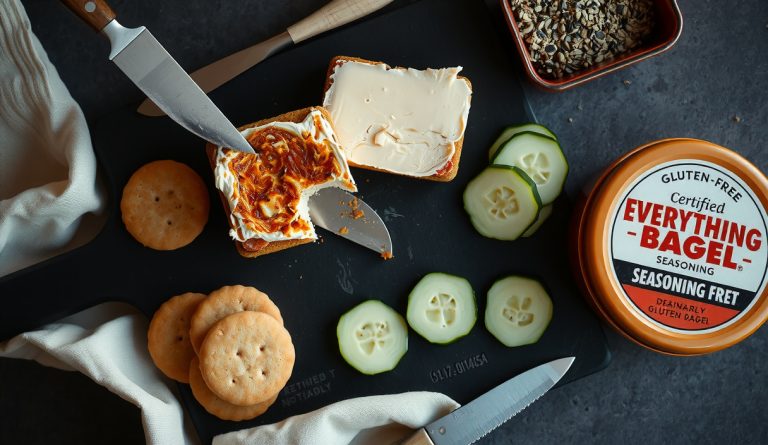
- Transfer the block to a serving board while still hot from the smoker. Arrange crackers, sliced cucumbers, and any other dippers around it. Optionally, scatter a pinch of fresh everything-bagel seasoning directly over the top at the table — the heat of the block will immediately volatilize the dried aromatics, amplifying the scent right at the moment of first bite.crackers, sliced cucumbers, sliced baguette or crostini, everything-bagel seasoning
- To serve, drag a cracker or cucumber slice straight through the scored crust, scooping the warm, silky interior with the toasted crust shattering over it. The block will hold its shape for 20–30 minutes at room temperature before the interior begins to firm back up as the fat phase re-crystallizes. Serve immediately and eat while warm.
Notes
Nutrition
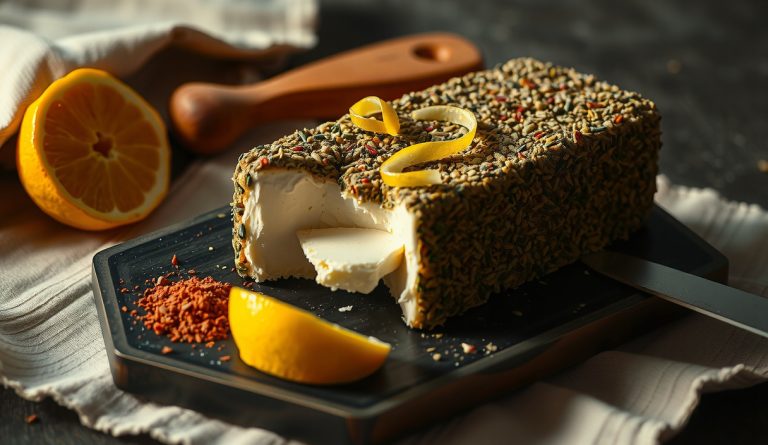
The first time I slid a cream cheese block onto the smoker grate, I fully expected it to slide right off as a puddle. It did not. It came back two hours later looking like something cured in a Brooklyn deli for a decade — a deep mahogany crust of toasted sesame, poppy seed, and dried garlic, the interior still cool and silky, perfumed straight through with hickory. That was the moment smoked cream cheese became a permanent fixture at every cookout American Meathead runs.
What makes smoked cream cheese genuinely great — and genuinely surprising to most pitmasters — is how precisely it exploits a narrow window of dairy physics. Cream cheese is not just softened butter; it is a fat-in-water emulsion stabilized by casein micelles and partially denatured whey proteins. At the 225°F ambient temperature used here, the internal temperature of the block plateaus around 130–140°F. That range is enough to open up the surface for smoke penetration, firm the casein network into a stable scaffold, and volatilize the aromatic compounds in the everything-bagel seasoning — all without pushing past the emulsion’s breaking point. The result is a block that holds its shape, absorbs smoke like a sponge, and delivers a genuinely complex, layered bite.
Why does smoked cream cheese work? The science
Smoked cream cheese holds its shape at 225°F because the casein protein network compacts and stabilizes before the emulsion can break. Cream cheese is roughly 33% milkfat and 55% moisture, held together by a network of casein micelles. Casein is one of the most thermally stable food proteins — it does not undergo the sharp, irreversible denaturation that whey proteins do. Instead, casein micelles begin to progressively compact and associate as internal temperature climbs from 100°F to 150°F, which is precisely the range achieved at 225°F ambient. This compaction firms the exterior without triggering the catastrophic emulsion inversion that causes full melting. The fat phase stays dispersed, the block holds its geometry, and the surface develops enough rigidity to support a full herb-and-seed crust.
Smoke deposition on cream cheese is exceptionally efficient because of two factors: high surface moisture and a porous, high-fat matrix. At the start of the cook, the cream cheese surface sits at a water activity of roughly 0.98, which makes the surface extraordinarily receptive to water-soluble phenolic smoke compounds like guaiacol and syringol — the molecules responsible for classic BBQ smoke character. As surface temperature rises and free moisture evaporates, water activity drops and the phenolics become increasingly concentrated in the surface layer. Simultaneously, lipophilic smoke compounds partition into the exposed fat phase at the surface. This dual-pathway deposition delivers both the sharp, bright smoke notes and the deep, resinous bass notes, all locked into a thin, intensely flavored crust.
The everything-bagel seasoning layer does more than add crunch. The dried garlic and onion flakes contain Maillard-reactive reducing sugars and free amino acids. At surface temperatures above 250°F — which the outer crust particles briefly achieve through radiative heat from the firebox — these compounds undergo Amadori rearrangement and Strecker degradation, generating pyrazines and furanones that add roasted, nutty depth. The poppy and sesame seeds, at roughly 50% lipid by weight, act as miniature aroma reservoirs, capturing and concentrating fat-soluble smoke volatiles and releasing them in a slow, sustained burst the moment the crust is broken. The sodium chloride in the seasoning blend also slightly depresses the water activity of the immediate surface layer, helping to drive moisture loss and set the crust faster during the first 30 minutes of the cook.
What equipment and ingredients do I need?
Wood choice matters here. Dairy fat is highly receptive to smoke, which is both a gift and a liability. Hickory delivers a robust, savory smoke that pairs beautifully with the everything-bagel profile. Cherry adds a subtle sweetness and a deeper mahogany color to the crust. Avoid mesquite — its high combustion temperature produces heavier, harsher phenolics that overwhelm the clean dairy canvas. If running a pellet grill, a hickory-cherry blend pellet is ideal.
Cream cheese temperature at the start of the cook is critical. The block must go onto the smoker cold — straight from the refrigerator. A warm, soft block will sag before the casein network has time to firm up under smoke heat, rounding the scored edges and making the crust application messier. Cold block, scored, seasoned, then directly onto the grate. Do not leave it sitting on the counter while bringing the smoker up to temp.
Everything-bagel seasoning: The ratios in commercial blends vary widely. For this application, the blend should be heavy on dried garlic and dried onion — those are the primary Maillard contributors. A blend that skews toward sesame will look beautiful but deliver less aromatic depth. When making your own, aim for roughly 30% sesame seeds, 20% poppy seeds, 20% dried garlic flakes, 20% dried onion flakes, and 10% flaked sea salt.
Scoring technique: Use a sharp paring knife to score a crosshatch pattern roughly 1/4 inch deep across the top and sides of the block. This increases total surface area by approximately 40%, dramatically improving both smoke penetration and seasoning adhesion. Do not skip this step.
Drizzle of oil: A thin coat of olive or avocado oil brushed over the block before applying the seasoning dramatically improves crust adhesion and prevents the dried aromatics from burning before the block finishes. The oil also shifts the surface water activity slightly, which aids in Maillard onset at the crust particles.
Smoked Cream Cheese with Everything-Bagel Crust
Equipment
- 1 Pellet grill or offset smoker Set up for indirect heat at 225°F with a water pan if available. Hickory or cherry wood recommended.
- 1 Instant-read thermometer To verify internal temp of cream cheese reaches 130–140°F by the end of the cook.
- 1 Paring knife For scoring the crosshatch pattern 1/4 inch deep across top and sides of the block.
- 1 Pastry brush For applying the oil coat evenly before seasoning.
- 1 Small sheet pan or cast iron skillet Optional — use to catch any edge drips from the block and for easier transport from smoker to table.
Ingredients
- 8 oz block cream cheese Full-fat, straight from the refrigerator — cold is critical. Do not use whipped or reduced-fat cream cheese.
- 1 tablespoon olive oil or avocado oil Just enough to coat the surface thinly and improve seasoning adhesion.
- 3 tablespoons everything-bagel seasoning Look for a blend with visible dried garlic and onion flakes — these are the Maillard contributors that develop roasted depth under smoke heat.
- 1 teaspoon flaked sea salt Optional — only if your everything-bagel blend is low on salt.
For serving
- crackers Buttery or plain crackers work best — avoid heavily seasoned ones that compete with the everything-bagel crust.
- sliced cucumbers Cool, high-moisture vehicle that contrasts nicely with the warm, intense crust.
- sliced baguette or crostini Optional — toast lightly before serving.
- everything-bagel seasoning A small pinch over the top at the table reinforces the aroma right before first bite.
Instructions
Prep
- Fire up your smoker and bring it to a stable 225°F using indirect heat. Add your wood — hickory for assertive smoke depth, cherry for a slightly sweeter, fruitier profile. Allow the smoker to run for at least 15 minutes until you see thin blue smoke rather than heavy white smoke. Do not load the cream cheese until the smoke is clean.
- While the smoker comes to temp, unwrap the cold cream cheese block and place it on a small cutting board. Using a sharp paring knife, score a crosshatch pattern across the top and all four sides, cutting approximately 1/4 inch deep and spacing cuts about 3/4 inch apart. This increases surface area and dramatically improves both smoke penetration and seasoning adhesion. Don’t skip this step.8 oz block cream cheese
- Using a pastry brush, apply a thin, even coat of olive oil or avocado oil across the entire surface of the scored block — top, bottom, and all four sides. The oil acts as an adhesive for the seasoning and helps drive the surface toward Maillard browning conditions faster by reducing immediate evaporative cooling.1 tablespoon olive oil or avocado oil
- Pour the everything-bagel seasoning onto a small plate and press all six sides of the oiled block firmly into the seasoning, ensuring full, even coverage — especially packed into the scored grooves where smoke will concentrate. Add the optional flaked sea salt if your blend is light on salt. The scored grooves should be visibly packed with seasoning.3 tablespoons everything-bagel seasoning, 1 teaspoon flaked sea salt
Smoke
- Place the seasoned cream cheese block directly on the smoker grate over indirect heat, or set it on a small cast iron skillet or foil-lined sheet pan for easier handling. Close the lid and smoke at 225°F for 90 minutes, undisturbed. Resist opening the lid — every lid lift drops chamber temperature and risks a temperature spike on recovery that could push the block past the safe casein-stability window.8 oz block cream cheese
- At the 60-minute mark, the block should show a visible amber-to-mahogany color developing on the scored ridges. If the block is still pale, your smoke temperature is running low or your smoke is too thin — check your firebox and add a small chunk of wood if needed. By 90 minutes, the ridges should be deep mahogany and the seasoning should look toasted and fragrant. Use an instant-read thermometer to verify internal temperature reaches 130–140°F. If it hasn’t reached 130°F, give it another 10–15 minutes.
Serve
- Transfer the block to a serving board while still hot from the smoker. Arrange crackers, sliced cucumbers, and any other dippers around it. Optionally, scatter a pinch of fresh everything-bagel seasoning directly over the top at the table — the heat of the block will immediately volatilize the dried aromatics, amplifying the scent right at the moment of first bite.crackers, sliced cucumbers, sliced baguette or crostini, everything-bagel seasoning
- To serve, drag a cracker or cucumber slice straight through the scored crust, scooping the warm, silky interior with the toasted crust shattering over it. The block will hold its shape for 20–30 minutes at room temperature before the interior begins to firm back up as the fat phase re-crystallizes. Serve immediately and eat while warm.
Notes
Nutrition
How do I nail smoked cream cheese every time?
- Start cold, always. If the cream cheese block has been sitting at room temperature for more than 15 minutes before it hits the smoker, pull it and re-chill it for 20 minutes. A warm, pliable block deforms under its own weight before the casein can firm up, and the clean scored edges that define the visual are lost.
- Run clean smoke, not thick smoke. Thick, white billowing smoke on dairy produces a bitter, acrid crust. Thin blue smoke — the combustion byproduct of a hot, well-established fire burning seasoned wood — is the target. If the smoker is producing heavy white smoke at startup, wait for it to clear before loading the cream cheese.
- Do not open the lid unnecessarily. Every lid lift drops the ambient temperature and introduces a burst of fresh oxygen that can cause a temperature spike when the lid goes back on. Dairy is unforgiving of temperature spikes above 160°F — at that point emulsion fracture risks oil pooling on the surface. Set it, close it, resist the urge.
- Watch the smoke color of the surface, not just the clock. At 60 minutes, the top of the block should be visibly darker — a deep amber on the scored ridges and a lighter tan in the valleys. If the block looks pale at 60 minutes, the smoke is too thin or the temperature is running low. At 90 minutes, the target is deep mahogany on the high points of the score.
- Serve directly from the smoker, warm. The block at 130–140°F internal is at its most spreadable without being runny. If allowed to cool to room temperature before serving, the fat phase re-crystallizes slightly and the silky, whipped texture is lost. Serve hot and keep it on a warm board.
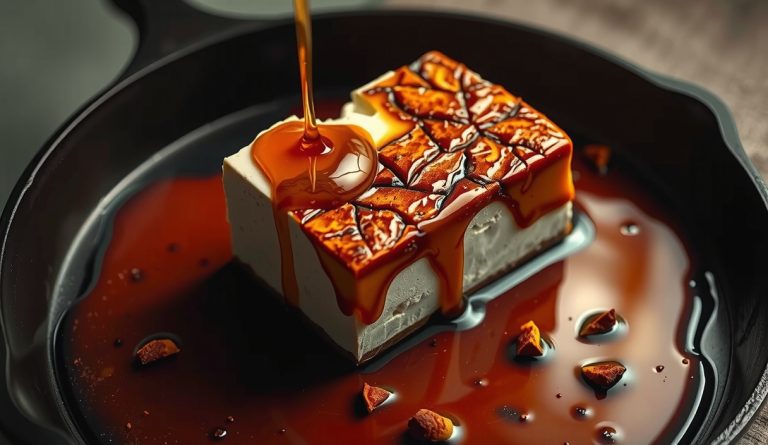
- Deglaze the fond. If serving on a cast iron skillet or griddle, add a tiny splash of water to the skillet as you pull it from the smoker. This volatilizes the caramelized sugars and dried aromatics that have adhered to the pan surface, effectively creating an instant seasoning sauce right at the table.
What variations can I make?
Sweet heat version: Replace the everything-bagel seasoning with a 50/50 blend of brown sugar and ancho chili powder, pressed into the scored block after the oil coat. The brown sugar caramelizes into a lacquered crust that shatters on the cracker. Serve with honey and Calabrian chili flakes drizzled over the top the moment it comes off the smoker. The fructose and glucose in the brown sugar lower the Maillard activation temperature, so browning appears faster — watch for scorching after 75 minutes.
Za’atar and lemon zest: For a Mediterranean-leaning board, coat the block in a heavy layer of za’atar (dried thyme, sumac, sesame, salt), then grate fresh lemon zest directly over the top in the last 10 minutes of the cook. The sumac provides a tart, fruity acidity that cuts the richness of the dairy fat, and the lemon zest aromatics volatilize at serving temperature, delivering a bright top note over the deep smoke base.
Scaling up: This recipe scales linearly to multiple 8 oz blocks. When running two or three blocks simultaneously, space them at least 3 inches apart on the grate to allow even smoke circulation. Do not stack blocks. Total cook time does not change significantly — the smoke environment is the rate-limiting factor, not the mass of the individual blocks. With multiple blocks, expect a slight temperature stall in the smoker for the first 15 minutes as the cold dairy mass absorbs ambient heat; this is normal and resolves on its own.
Gluten-free adaptation: Standard everything-bagel seasoning blends are naturally gluten-free, but verify the specific brand, as some commercial blends use shared manufacturing equipment with wheat. All other components of this recipe are gluten-free by default. Serve with rice crackers or cucumber rounds to keep the full presentation compliant.
Frequently asked questions
Will the cream cheese melt or fall through the grate? No — and this is the beautiful surprise of this recipe. Cold cream cheese placed directly on a clean grate at 225°F will firm rather than melt. The casein protein network compacts and stabilizes in the 100–150°F internal temperature range reached at this ambient temperature. The block will soften to a very spreadable consistency but will hold its shape and scored edges throughout the cook. If concerned, place the block on a small sheet of aluminum foil or a cast iron skillet to catch any edge drips.
How far in advance can I smoke the cream cheese? The block can be smoked up to 24 hours in advance and refrigerated. Re-warm it in a 200°F oven for 20–25 minutes before serving to bring the interior back up to a spreadable temperature. The smoke flavor actually deepens and integrates further overnight as the phenolic compounds equilibrate through the fat phase — many people prefer day-old smoked cream cheese to fresh-off-the-smoker.
What if I do not have a smoker — can I do this in the oven? A conventional oven will not deliver smoke, but the cream cheese will firm and the everything-bagel crust will toast beautifully at 225°F, producing a delicious herbed cream cheese without the smoke character that makes this dish distinctive. To approximate the smoke phenolic note in the oven, add 1/4 teaspoon of smoked paprika and a few drops of liquid smoke to the oil coat before applying the seasoning. A stovetop smoking setup or a small foil packet of wood chips on a covered charcoal grill are closer alternatives.