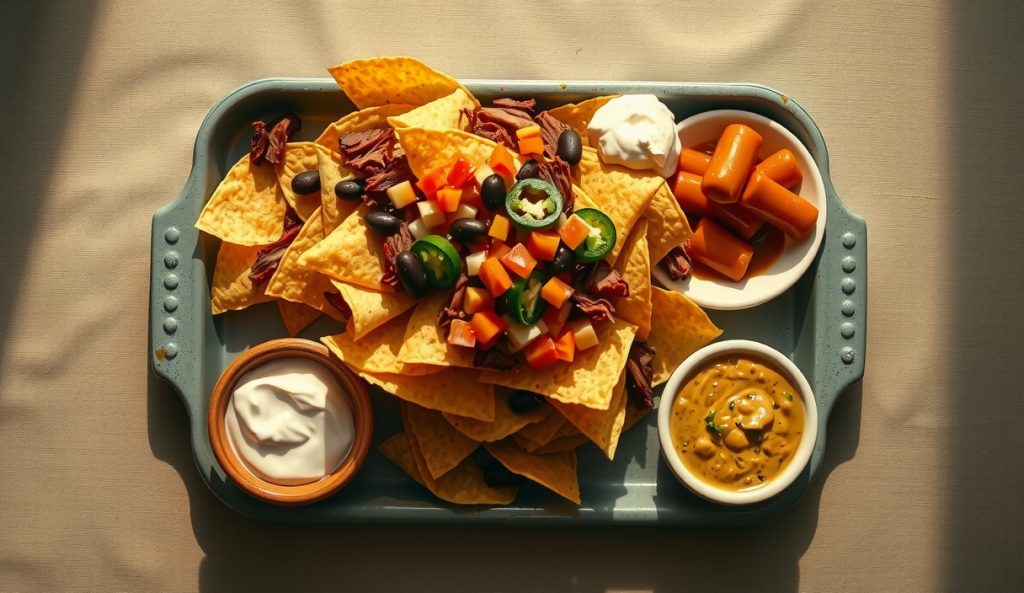
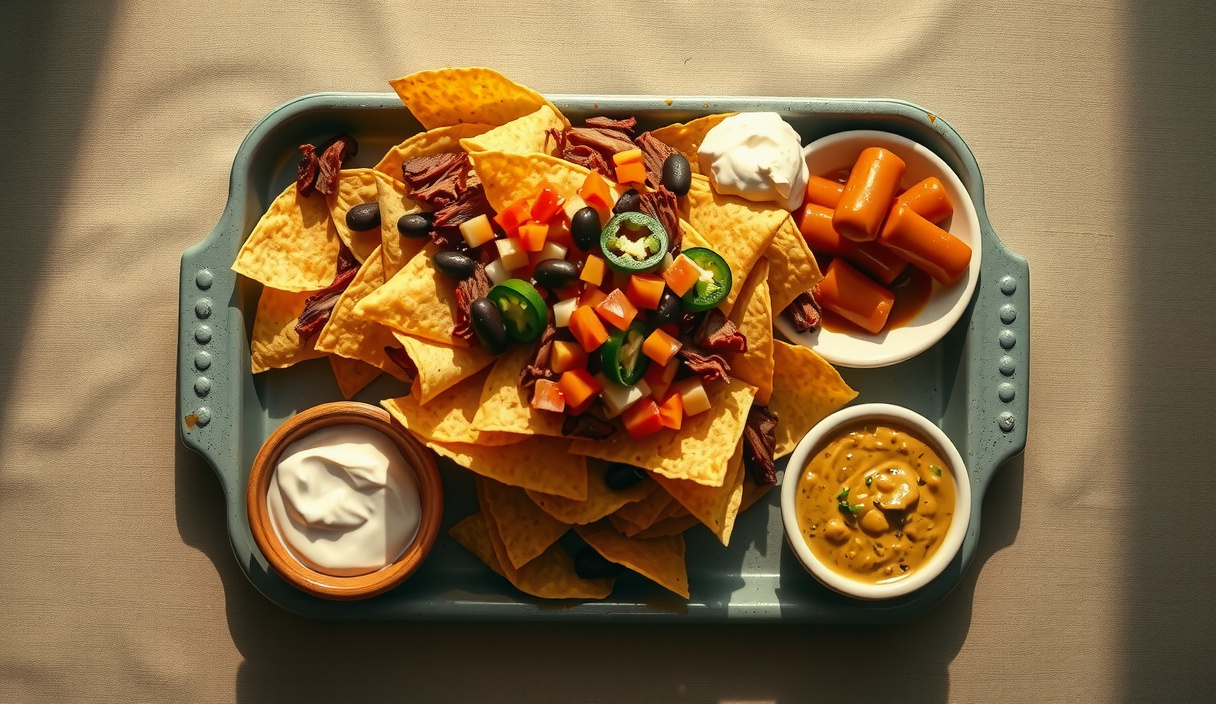
Smoked Pulled Pork Nachos
Equipment
- 1 Pellet smoker or offset smoker Must reach and hold a stable 350°F
- 1 Half-size disposable aluminum foil pan (9×13 inch) Use two pans nested together for added rigidity
- 1 Box grater For freshly shredding block cheese
- 1 Colander For draining pulled pork and black beans
- 1 Sheet pan For surface-drying the pulled pork before building
- 1 Instant-read thermometer Optional but useful for confirming smoker temp stability
Ingredients
The Build
- 12 oz restaurant-style thick-cut tortilla chips About 3/4 of a standard 16 oz bag; avoid thin or baked chips
- 2 cups smoked pulled pork Drained and surface-dried; warm but not saucy
- 6 oz pepper jack cheese Freshly shredded from block; not pre-shredded
- 4 oz sharp cheddar cheese Freshly shredded from block
- 1 can (15 oz) black beans Drained, rinsed, and patted dry with paper towels
- 2 fresh jalapeños Thinly sliced into rounds; seeds in for heat, seeds out for mild
- 1 teaspoon kosher salt For seasoning the pork layer if needed
- 1 tablespoon your house BBQ rub Optional; dust lightly over the top cheese layer before smoking
Cold Finish Toppings (add after smoking)
- ½ cup sour cream Served in dollops or drizzled; do not add before smoking
- 1 cup fresh pico de gallo Store-bought or homemade; drain excess liquid before serving
- 1 ripe avocado Sliced or roughly mashed; add right before serving to prevent oxidation
- ¼ cup fresh cilantro leaves Rough-torn; omit if cilantro-averse
- 2 tablespoons pickled jalapeño slices Optional; adds bright acid contrast to the smoky base
- 2 tablespoons hot sauce Served on the side for individual heat adjustment

Instructions
Prep
- Fire up your smoker and bring it to a stable 350°F. Give it at least 15 minutes at target temperature before loading the nachos. Uneven temperature at the start is the primary cause of patchy cheese melt.
- Drain the pulled pork through a colander for 5 minutes. Spread it on a sheet pan and warm at 300°F in a conventional oven — or microwave in 60-second bursts — until the pork is warm and surface-dry. You want a texture like good carnitas, not braised meat swimming in liquid. Taste and season with kosher salt if needed.2 cups smoked pulled pork, 1 teaspoon kosher salt
- Drain the black beans in a colander, rinse under cold water, then spread on paper towels and press dry. This takes 30 seconds and eliminates free water from your chip layer.1 can (15 oz) black beans
- Freshly shred the pepper jack and sharp cheddar from block using a box grater. Toss them together in a bowl. Pre-shredded cheese is coated in anti-caking starch that interferes with a clean casein melt — use block cheese.6 oz pepper jack cheese, 4 oz sharp cheddar cheese
Build the Nachos
- Lay the first tier: spread roughly half the tortilla chips in a single, mostly flat layer across the bottom of your foil pan. Overlapping is fine — gaps are not. Every chip should be touching its neighbor.
- Scatter half the pulled pork over the first chip tier, distributing it as evenly as possible so every section of the pan has pork coverage. Follow immediately with half the black beans and half the sliced fresh jalapeños.2 cups smoked pulled pork, 1 can (15 oz) black beans, 2 fresh jalapeños
- Apply half the shredded cheese blend over the first tier, covering the pork and beans. The cheese acts as a structural binder — don’t be stingy at this stage. Every exposed chip should have cheese on or near it.6 oz pepper jack cheese, 4 oz sharp cheddar cheese
- Build the second tier: add the remaining chips over the first tier, then top with the remaining pulled pork, remaining black beans, remaining jalapeños, and the remaining cheese blend. If using BBQ rub, dust it lightly over the top cheese layer now.2 cups smoked pulled pork, 1 can (15 oz) black beans, 2 fresh jalapeños, 6 oz pepper jack cheese, 4 oz sharp cheddar cheese, 1 tablespoon your house BBQ rub
Smoke
- Place the foil pan directly on the smoker grate. Do not cover the pan — a foil tent traps steam and defeats the physics of using a smoker for this application. Cook uncovered at 350°F.
- At the 7-minute mark, rotate the pan 180 degrees to account for hot spots, particularly if you are on an offset smoker where the firebox end runs hotter.
- Pull the nachos at 12 to 15 minutes, when the cheese is fully melted and bubbling and the chip edges visible at the perimeter are showing the faintest golden color. Do not wait for deep browning — the melt window closes at around 18 minutes when chip sogginess begins regardless of airflow.
Finish and Serve
- Immediately add the cold toppings directly to the hot nachos: dollop the sour cream, spoon the pico de gallo over the surface, fan the sliced avocado across the top, and scatter the cilantro leaves and pickled jalapeño slices. The thermal contrast between hot cheese and cold toppings is intentional and correct.1/2 cup sour cream, 1 cup fresh pico de gallo, 1 ripe avocado, 1/4 cup fresh cilantro leaves, 2 tablespoons pickled jalapeño slices
- Serve the pan at the table immediately with hot sauce on the side. Call everyone before the pan comes off the smoker — the service window is 8 minutes before chip integrity begins to decline. Nachos do not hold and there is no engineering fix for that reality.2 tablespoons hot sauce
Notes
Nutrition
The nachos problem is a heat-and-steam problem disguised as a recipe. Every nacho platter that comes out of a conventional oven suffers the same fate: the oven traps moisture driven off by the cheese melt, and that steam condenses back onto the chips, turning the foundation of your nacho architecture into a wet, pliable mess within minutes. A smoker running at 350°F solves this structurally — not by magic, but because the convective airflow in an open-fire environment is fundamentally drier than a sealed oven cavity. We are using the smoker as a low-humidity convection oven with the bonus of residual smoke flavor threading through every layer of the build.
The pulled pork here is the heavy lifter. Whether you smoked a whole shoulder yesterday or you are pulling from a batch in the freezer, what matters for nachos is moisture control at the pork level. Wet, sauce-saturated pulled pork releases steam directly into the chip layer. We drain, lightly toss, and bring the pork to a warm-dry state before it ever hits the chip. That single step is the difference between nachos that hold for fifteen minutes and nachos that collapse in five.
The science
Chip integrity under a molten cheese layer is a water-activity engineering problem. Tortilla chips are a low-moisture matrix — typically aw below 0.3 — held together by a gelatinized corn-starch network that was set during frying. When heat is applied and free water is present at the chip surface, that water plasticizes the starch network, driving the glass-transition temperature of the amorphous starch regions downward and converting the chip from a rigid glassy solid into a pliable rubbery one. The smoker’s low-humidity airflow does two things simultaneously: it accelerates evaporative drying of surface moisture from the cheese and pork layers, and it prevents the vapor pressure in the cooking environment from equilibrating upward to the point where condensation re-deposits on cooler chip surfaces below. A sealed oven at the same temperature traps that vapor. The smoker vents it. This is the mechanistic case for never making loaded nachos in a conventional oven if you have a smoker available.
The cheese melt is a lipid-protein phase transition. Pepper jack — or any processed-adjacent semi-firm cheese — begins losing its solid fat crystal network above roughly 85°F (29°C) and enters a full viscous flow state between 130°F and 150°F (54–66°C) as the casein matrix relaxes under heat. At 350°F ambient, the cheese surface reaches melt temperature in 8 to 10 minutes. The critical window is minutes 10 through 15: the casein network is fluid enough to coat and bond to the chip surface, but the chip hasn’t yet absorbed enough water vapor to cross the glass-transition threshold into sogginess. Pull at 12 to 15 minutes and you are exactly in that window. Wait past 18 minutes and you are paying the sogginess tax regardless of airflow.
The Maillard cascade also deserves mention here. Pulled pork that has been smoked carries a bark exterior rich in melanoidins — the high-molecular-weight browning compounds produced when amino acids react with reducing sugars at temperatures above roughly 280°F (138°C). Those melanoidins are flavor-dense, slightly hydrophobic, and critically, they act as a partial moisture barrier on the surface of each pork fiber. When we reheat the pulled pork in the nacho build, we are not starting a new Maillard reaction — we are reactivating the aromatic volatile organic compounds (VOCs) already bound in the bark, releasing pyrazines, furanones, and sulfur-containing compounds that define smoke-meat character. The 350°F smoker environment is warm enough to volatilize those aromatics without burning the cheese or collapsing the chip.
Equipment & ingredient notes
Foil pan, not a sheet pan. A half-size (9×13-inch) disposable aluminum foil pan is mandatory. The raised rim keeps the build contained and, more importantly, allows hot air to circulate underneath the pan bottom, preventing the bottom chip layer from sitting in pooled fat. Sheet pans have no rim depth for the ingredient volume here. Use two foil pans layered together if you want extra rigidity when carrying to and from the smoker.
Chip selection. Thicker-cut restaurant-style tortilla chips perform dramatically better than thin chips. The extra thickness means a larger starch-to-surface-area ratio and more structural mass to absorb moisture before crossing the glass-transition threshold. Avoid any chip marketed as “light” or “baked” — those have already had their fat matrix reduced, which is the primary structural reinforcement in a fried chip.
Pulled pork moisture state. This is the most overlooked variable in nacho failure. If your pulled pork is sitting in liquid, drain it through a colander for 5 full minutes. Then spread it on a sheet pan and microwave or oven-warm at 300°F for 5 minutes to drive off surface moisture before building. You want pork that is warm, moist internally, but dry on its surface — like the texture of good carnitas rather than braised meat.
Cheese shred vs. sliced. Freshly shredded block cheese melts with significantly more flow than pre-shredded. Pre-shredded cheese is coated with anti-caking agents (typically potato starch or powdered cellulose) that interfere with casein network relaxation. For nachos, block cheese shredded on a box grater is the correct tool. Pepper jack for heat and flow, with a secondary layer of sharp cheddar for color and tang.
Black beans. Use canned black beans that have been thoroughly drained and patted dry. Like the pork, wet beans introduce free water directly into the chip layer. Dry them. A 30-second paper-towel press is sufficient.
Smoked Pulled Pork Nachos
Equipment
- 1 Pellet smoker or offset smoker Must reach and hold a stable 350°F
- 1 Half-size disposable aluminum foil pan (9×13 inch) Use two pans nested together for added rigidity
- 1 Box grater For freshly shredding block cheese
- 1 Colander For draining pulled pork and black beans
- 1 Sheet pan For surface-drying the pulled pork before building
- 1 Instant-read thermometer Optional but useful for confirming smoker temp stability
Ingredients
The Build
- 12 oz restaurant-style thick-cut tortilla chips About 3/4 of a standard 16 oz bag; avoid thin or baked chips
- 2 cups smoked pulled pork Drained and surface-dried; warm but not saucy
- 6 oz pepper jack cheese Freshly shredded from block; not pre-shredded
- 4 oz sharp cheddar cheese Freshly shredded from block
- 1 can (15 oz) black beans Drained, rinsed, and patted dry with paper towels
- 2 fresh jalapeños Thinly sliced into rounds; seeds in for heat, seeds out for mild
- 1 teaspoon kosher salt For seasoning the pork layer if needed
- 1 tablespoon your house BBQ rub Optional; dust lightly over the top cheese layer before smoking
Cold Finish Toppings (add after smoking)
- ½ cup sour cream Served in dollops or drizzled; do not add before smoking
- 1 cup fresh pico de gallo Store-bought or homemade; drain excess liquid before serving
- 1 ripe avocado Sliced or roughly mashed; add right before serving to prevent oxidation
- ¼ cup fresh cilantro leaves Rough-torn; omit if cilantro-averse
- 2 tablespoons pickled jalapeño slices Optional; adds bright acid contrast to the smoky base
- 2 tablespoons hot sauce Served on the side for individual heat adjustment
Instructions
Prep
- Fire up your smoker and bring it to a stable 350°F. Give it at least 15 minutes at target temperature before loading the nachos. Uneven temperature at the start is the primary cause of patchy cheese melt.
- Drain the pulled pork through a colander for 5 minutes. Spread it on a sheet pan and warm at 300°F in a conventional oven — or microwave in 60-second bursts — until the pork is warm and surface-dry. You want a texture like good carnitas, not braised meat swimming in liquid. Taste and season with kosher salt if needed.2 cups smoked pulled pork, 1 teaspoon kosher salt
- Drain the black beans in a colander, rinse under cold water, then spread on paper towels and press dry. This takes 30 seconds and eliminates free water from your chip layer.1 can (15 oz) black beans
- Freshly shred the pepper jack and sharp cheddar from block using a box grater. Toss them together in a bowl. Pre-shredded cheese is coated in anti-caking starch that interferes with a clean casein melt — use block cheese.6 oz pepper jack cheese, 4 oz sharp cheddar cheese
Build the Nachos
- Lay the first tier: spread roughly half the tortilla chips in a single, mostly flat layer across the bottom of your foil pan. Overlapping is fine — gaps are not. Every chip should be touching its neighbor.
- Scatter half the pulled pork over the first chip tier, distributing it as evenly as possible so every section of the pan has pork coverage. Follow immediately with half the black beans and half the sliced fresh jalapeños.2 cups smoked pulled pork, 1 can (15 oz) black beans, 2 fresh jalapeños
- Apply half the shredded cheese blend over the first tier, covering the pork and beans. The cheese acts as a structural binder — don’t be stingy at this stage. Every exposed chip should have cheese on or near it.6 oz pepper jack cheese, 4 oz sharp cheddar cheese
- Build the second tier: add the remaining chips over the first tier, then top with the remaining pulled pork, remaining black beans, remaining jalapeños, and the remaining cheese blend. If using BBQ rub, dust it lightly over the top cheese layer now.2 cups smoked pulled pork, 1 can (15 oz) black beans, 2 fresh jalapeños, 6 oz pepper jack cheese, 4 oz sharp cheddar cheese, 1 tablespoon your house BBQ rub
Smoke
- Place the foil pan directly on the smoker grate. Do not cover the pan — a foil tent traps steam and defeats the physics of using a smoker for this application. Cook uncovered at 350°F.
- At the 7-minute mark, rotate the pan 180 degrees to account for hot spots, particularly if you are on an offset smoker where the firebox end runs hotter.
- Pull the nachos at 12 to 15 minutes, when the cheese is fully melted and bubbling and the chip edges visible at the perimeter are showing the faintest golden color. Do not wait for deep browning — the melt window closes at around 18 minutes when chip sogginess begins regardless of airflow.
Finish and Serve
- Immediately add the cold toppings directly to the hot nachos: dollop the sour cream, spoon the pico de gallo over the surface, fan the sliced avocado across the top, and scatter the cilantro leaves and pickled jalapeño slices. The thermal contrast between hot cheese and cold toppings is intentional and correct.1/2 cup sour cream, 1 cup fresh pico de gallo, 1 ripe avocado, 1/4 cup fresh cilantro leaves, 2 tablespoons pickled jalapeño slices
- Serve the pan at the table immediately with hot sauce on the side. Call everyone before the pan comes off the smoker — the service window is 8 minutes before chip integrity begins to decline. Nachos do not hold and there is no engineering fix for that reality.2 tablespoons hot sauce
Notes
Nutrition
Tips for nailing it
- Layer in two tiers, not one. Build chips, then half the pork and cheese, then a second chip layer, then the remaining pork and cheese. Single-layer nacho builds run out of structural chip base midway through the pan. Two-tier builds give every guest access to loaded chips without excavating down to a naked bottom layer.
- Preheat your smoker to a stable 350°F before the pan goes in. Temperature swing at the start of the cook is the enemy of a defined melt window. If your smoker is still climbing, the cheese will melt unevenly — fast on one end near the firebox, slow on the other. Give the smoker 15 minutes at target temp before loading.
- Do not cover the foil pan. A foil tent traps steam and defeats the entire physics argument for using a smoker. The nachos cook uncovered, always.
- Add cold toppings after the pull, not before. Sour cream, fresh pico de gallo, sliced avocado, and fresh cilantro go on after the pan leaves the smoker. Heat destroys their textural and thermal contrast value. Cold toppings on hot nachos is the correct thermal architecture.
- Serve directly from the pan within 8 minutes of pulling. Nachos do not hold. The clock starts the moment you pull from the smoker. Call everyone to the table before the pan comes off the grate.
- If chips are browning before cheese is melted, your smoker is running hot. Dial back 25°F. This typically happens on offset smokers where the hot zone is uneven. Rotate the pan 180° at the 7-minute mark as standard procedure.
Variations
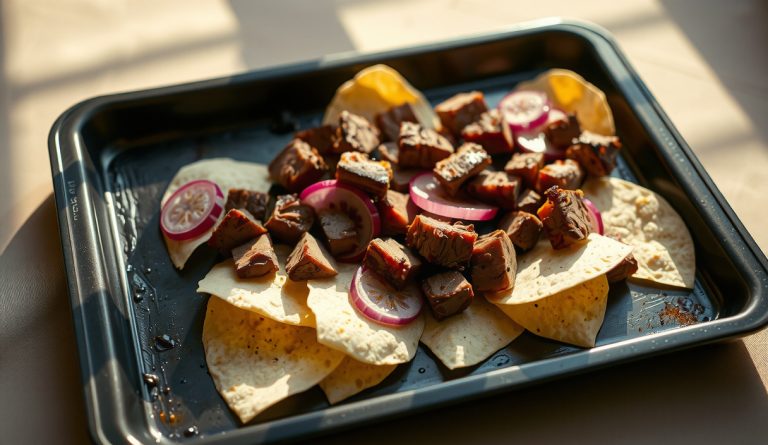
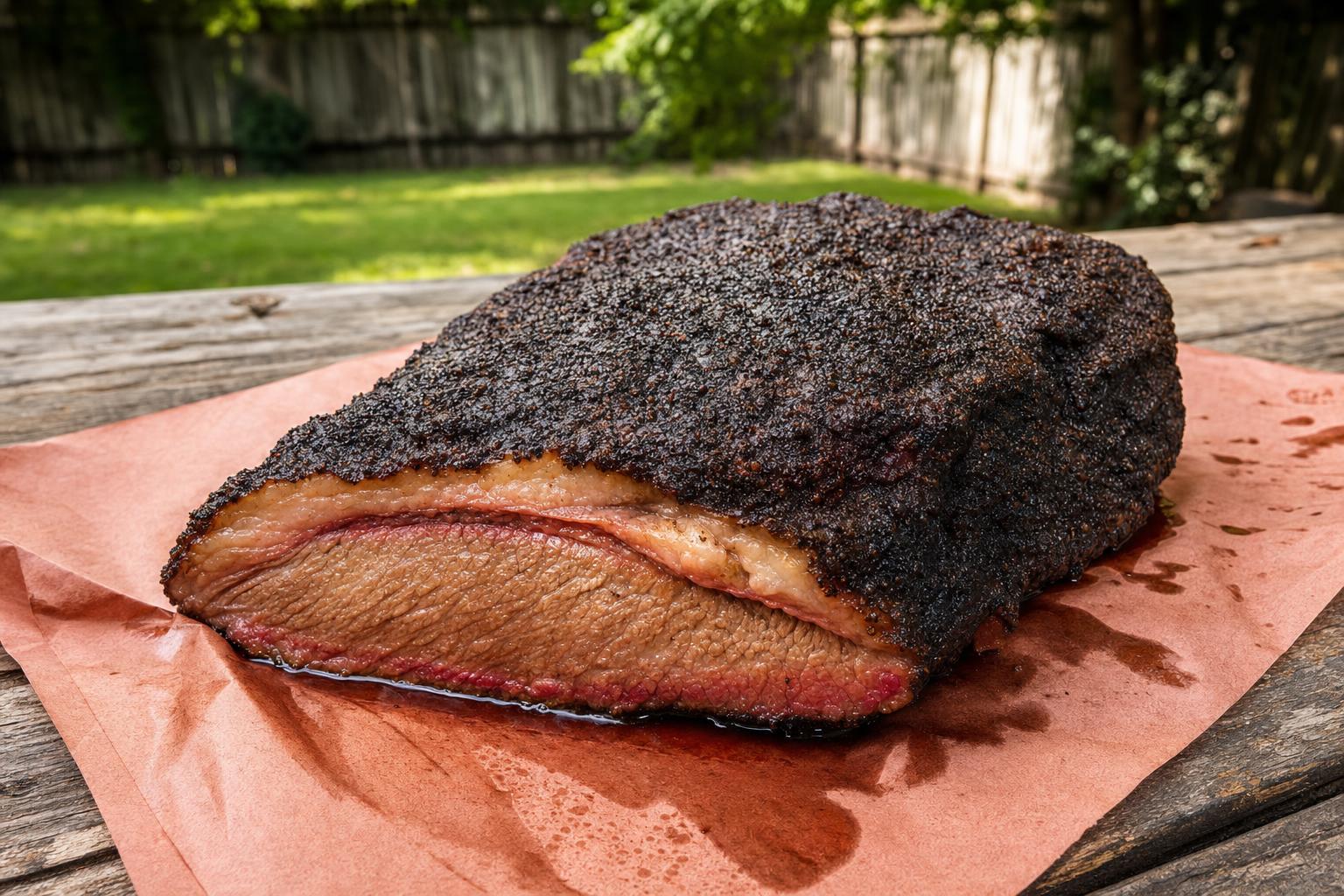
Brisket nachos. Substitute chopped smoked brisket flat for the pulled pork. Brisket has a lower fat content in the flat than pork shoulder, so the moisture-control step is even more critical — the brisket must be warmed and surface-dried before building. The flavor profile shifts from sweet-smoke pork to a deeper, beefier, more mineral savory note. Add pickled red onion instead of fresh jalapeño for brightness.
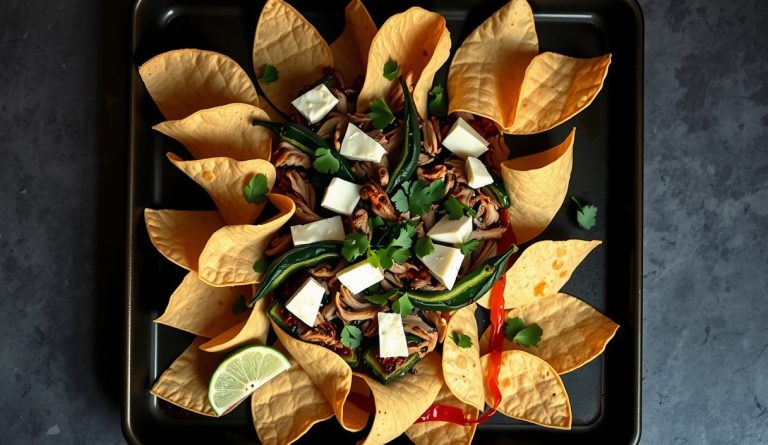
Green chile and smoked chicken. Swap in pulled smoked chicken thighs and replace the jalapeños with drained, chopped Hatch green chiles. The lower fat content of chicken means you should add a thin drizzle of olive oil over the assembled pan before it goes on the smoker to compensate for the reduced fat-based moisture barrier.
Scaling for a crowd. This recipe fills one half-size foil pan and feeds 4 to 6 as a heavy appetizer. For 10 to 12, run two pans simultaneously, staggered by 3 minutes so you are pulling them back-to-back rather than simultaneously, giving you a short service window for each. Do not attempt to double the build height in a single pan — the bottom layer will steam from the weight above it.
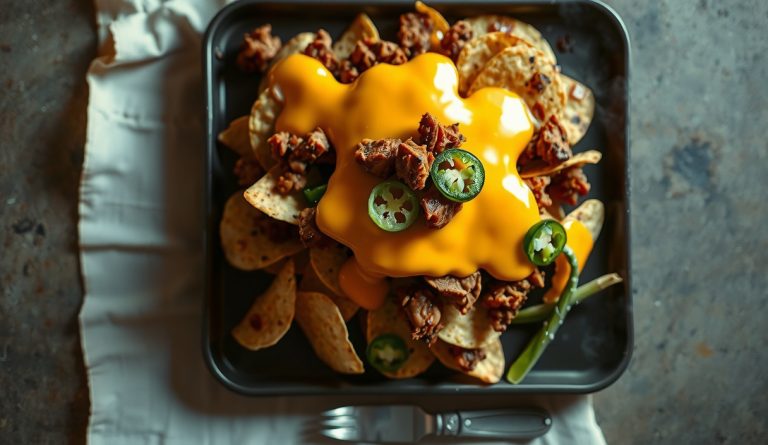
Queso upgrade. Replace the shredded cheese layer with a thin pour of homemade queso — a simple American-cheese and evaporated-milk emulsion stabilized by the sodium citrate already present in American cheese. Pour it cold over the build before the pan enters the smoker. The queso will heat and set as a continuous coating rather than discrete melt pools, giving you total chip coverage. Add the shredded pepper jack on top of the queso for both coverage and color. This technique is borrowed from stadium-nachos logic and works exceptionally well on the smoker.
FAQ
Can I use store-bought pulled pork? Yes, with one firm requirement: it must be drained and surface-dried before it goes on the chip layer. Commercially prepared pulled pork is almost always packed in a significant amount of liquid smoke sauce. If you build nachos with wet pulled pork straight from the container, the bottom chip layer will be soggy before the cheese even melts. Drain, spread on a sheet pan, warm at 300°F for 5 minutes, and proceed.
My smoker only goes to 275°F at max — can I still make these? You can, but adjust your expectations on the cheese melt and add 5 to 8 minutes to the cook time. At 275°F the casein melt is slower, and the chip-sogginess window extends because the lower ambient temperature means slower evaporative drying from the chip surface. Watch for visible cheese melt and slight chip edge browning as your pull cues rather than relying strictly on time.
What wood pellets or chunks should I use? For a 12 to 15 minute cook, the chips won’t absorb a meaningful smoke ring, but the aromatic VOCs in the smoke will season the cheese surface and the top layer of pork. Use whatever wood you smoked the original pork shoulder with for continuity — typically hickory, apple, or cherry. Avoid mesquite for this application; its high-intensity phenolic compounds can turn bitter at the high surface temperature of melting cheese.