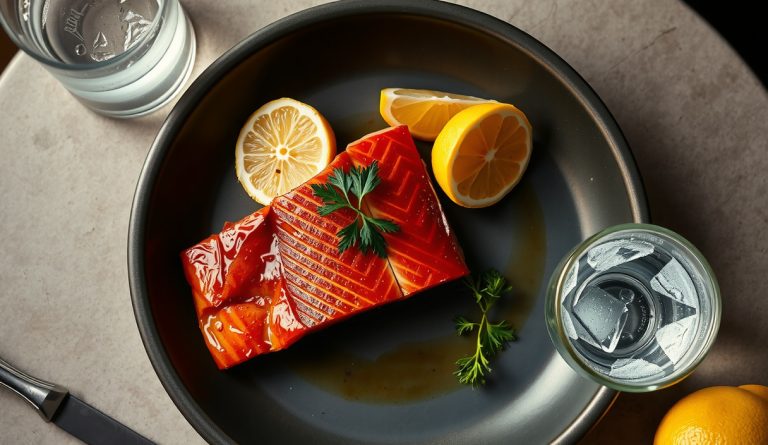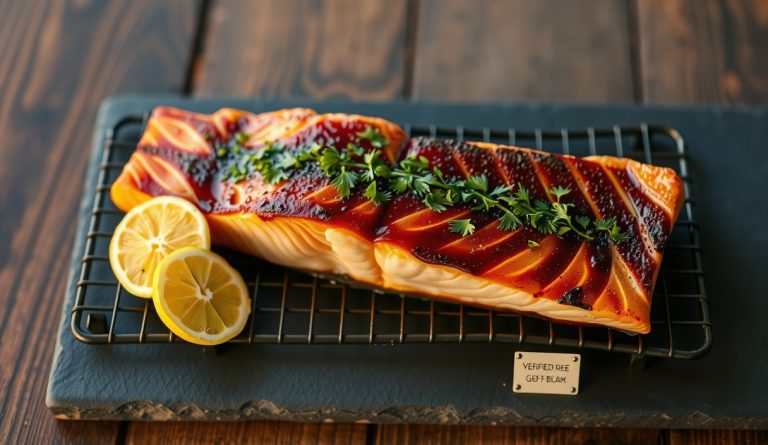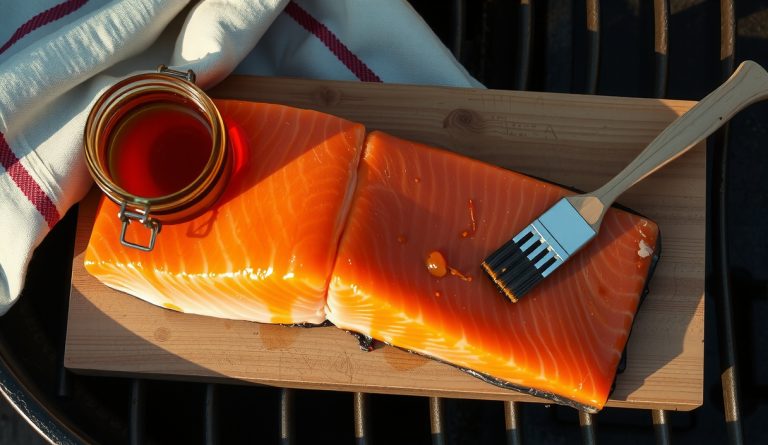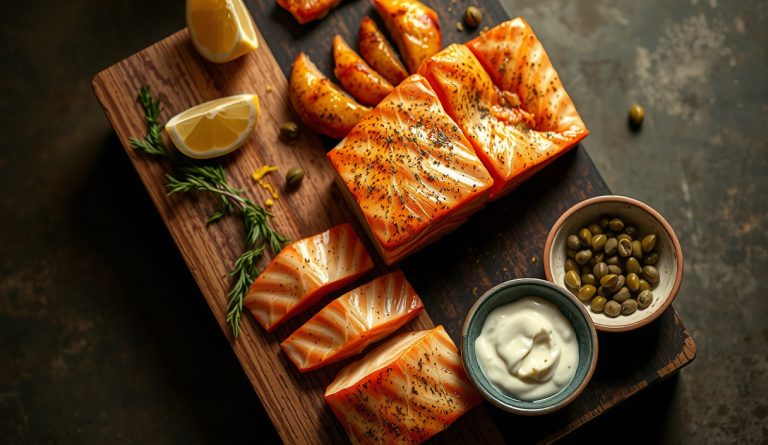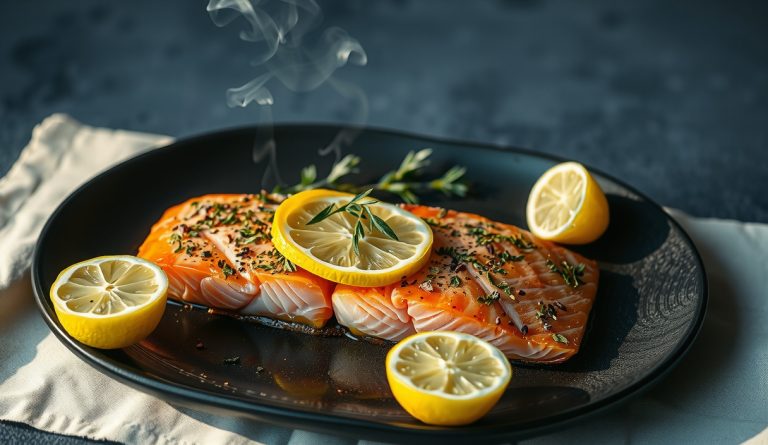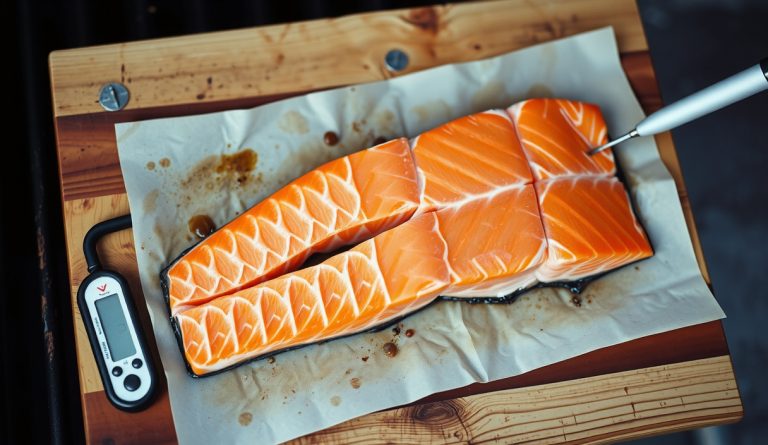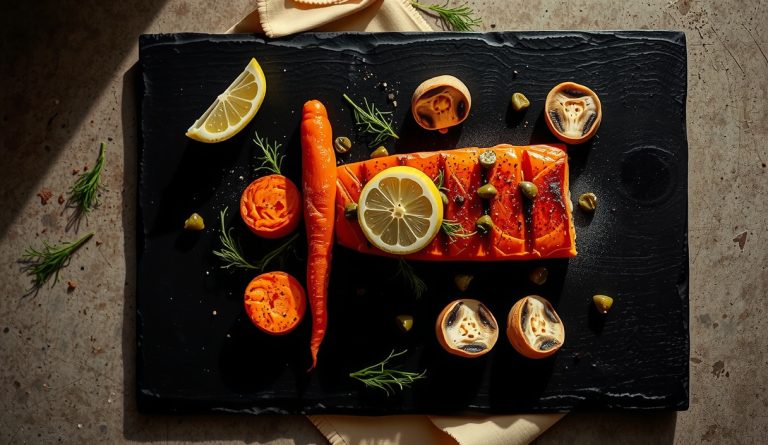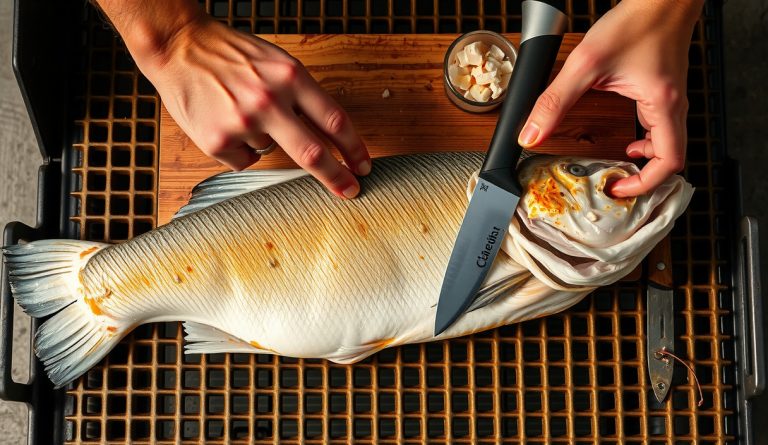
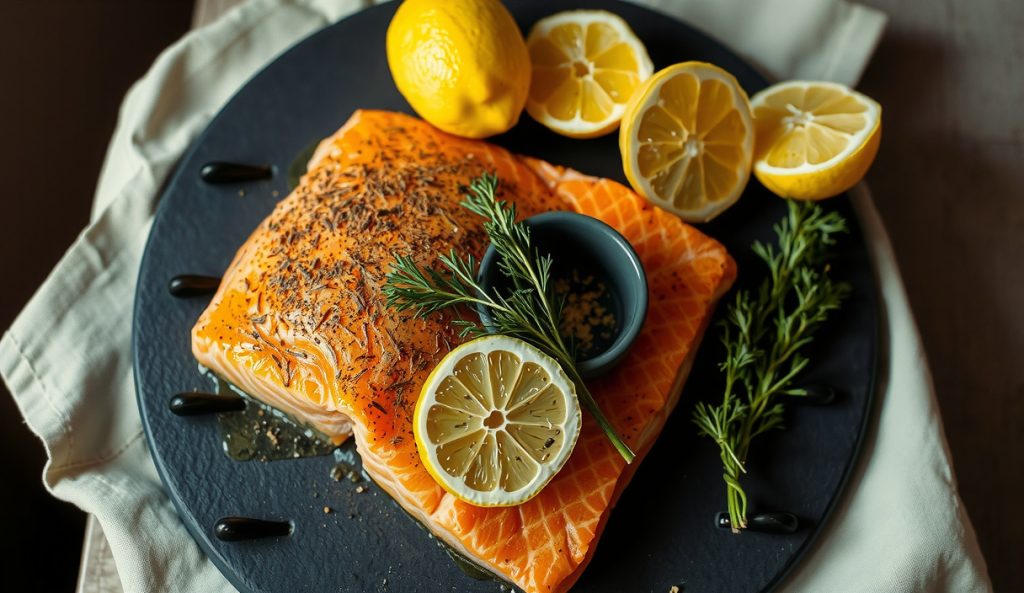
The base dry cure for pellet-smoked king salmon works quietly — pulling surface moisture, seasoning the flesh, and setting the stage for smoke adhesion. The citrus-dill variation layers a second aromatic dimension onto that foundation by introducing volatile compounds that interact with the fish’s intramuscular fat during the cure window itself, before a single wood pellet ignites. The result is a fillet that reads as salmon first, smoke second, and citrus-herb third — a hierarchy that keeps the fish as the subject rather than the seasoning.
What changes in the citrus-dill variation?
Add 1 tablespoon of finely grated lemon zest and 2 tablespoons of finely chopped fresh dill directly into the cure mixture before applying it to the fillet. Grate the zest over the cure bowl so the expressed oils land in the mix rather than on the cutting board. Combine the cure, zest, and dill thoroughly before spreading the mixture across the salmon.
Why do citrus and dill behave differently during the smoke? The science
The citrus volatile compounds — primarily limonene and linalool — are lipophilic, meaning they preferentially migrate into fatty tissue rather than aqueous muscle water. King salmon’s high intramuscular fat content makes it an unusually efficient carrier, and the several-hour cure window gives those compounds time to diffuse deep into the fat layer, where they become largely non-volatile during the cook. They survive to the finished internal temperature of 130°F and register on the palate as bright, floral top notes on the finish.
Dill’s primary terpenes — carvone and phellandrene — behave differently. They are more volatile at low temperatures and will largely off-gas during the air-dry pellicle stage and the early smoke phase. Their contribution is predominantly aromatic rather than flavor-persistent: the raw and cured fillet will smell distinctly of dill, while the smoked fillet carries a softer, background herbal character. Both outcomes are intentional and complementary, not a loss of control.
What stays the same as the base recipe?
The base cure ratio, cure duration, air-dry pellicle step, smoker temperature, and 130°F internal finish target are all unchanged from the canonical method. The citrus-dill additions are aromatic modifiers, not curing-chemistry changes — they do not alter salt concentration, osmotic draw, or pellicle formation behavior. Every timing and temperature checkpoint in the original recipe applies without adjustment.
When is the citrus-dill build the better choice?
This variation works best when the salmon is intended for a composed plate — alongside cucumber, crème fraîche, or a light grain salad — where a brighter aromatic profile is an asset rather than a distraction. The citrus-dill build is also the preferred choice for guests who find a purely smoke-forward fish one-dimensional. The lemon zest and dill signal freshness and lift, reframing the smoked salmon from a barbecue centerpiece to something closer to a charcuterie-style platter anchor.
Use the full method, equipment, and rub measurements from the original Pellet-Smoked King Salmon.