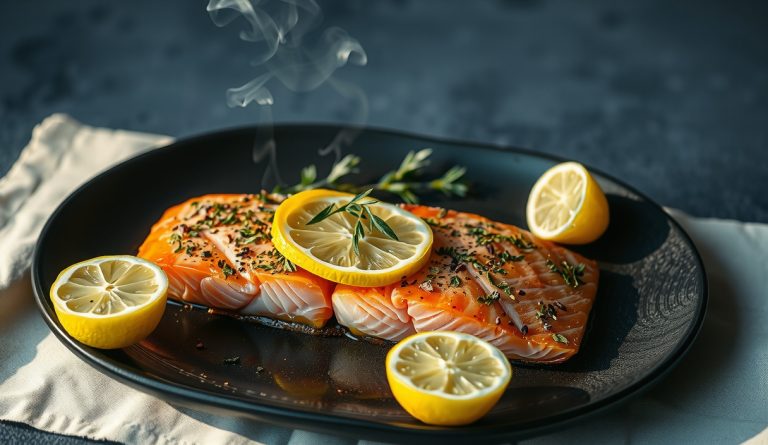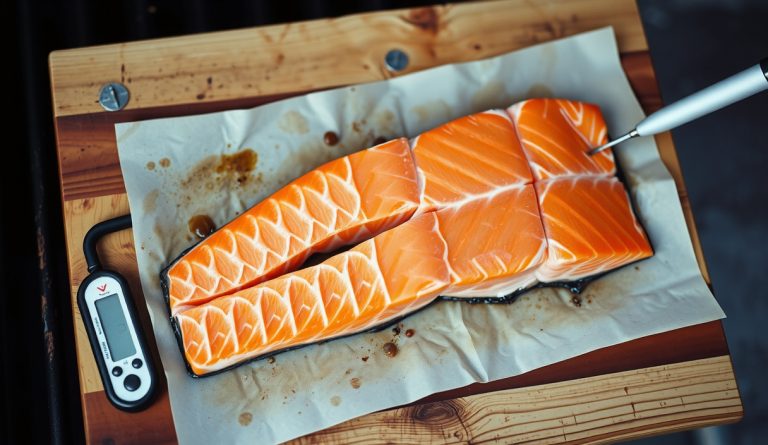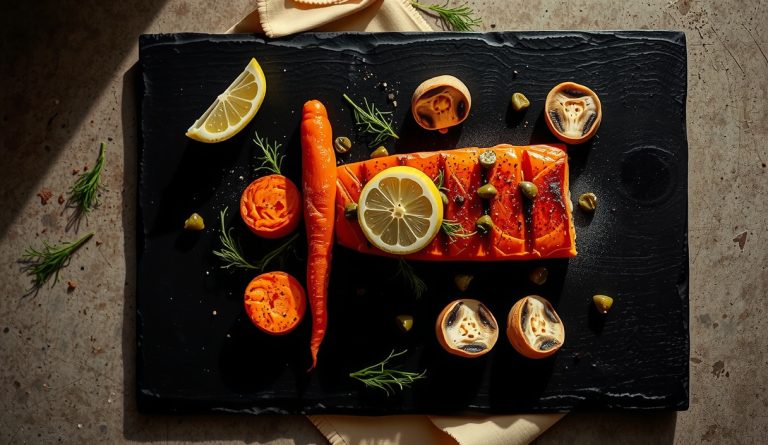
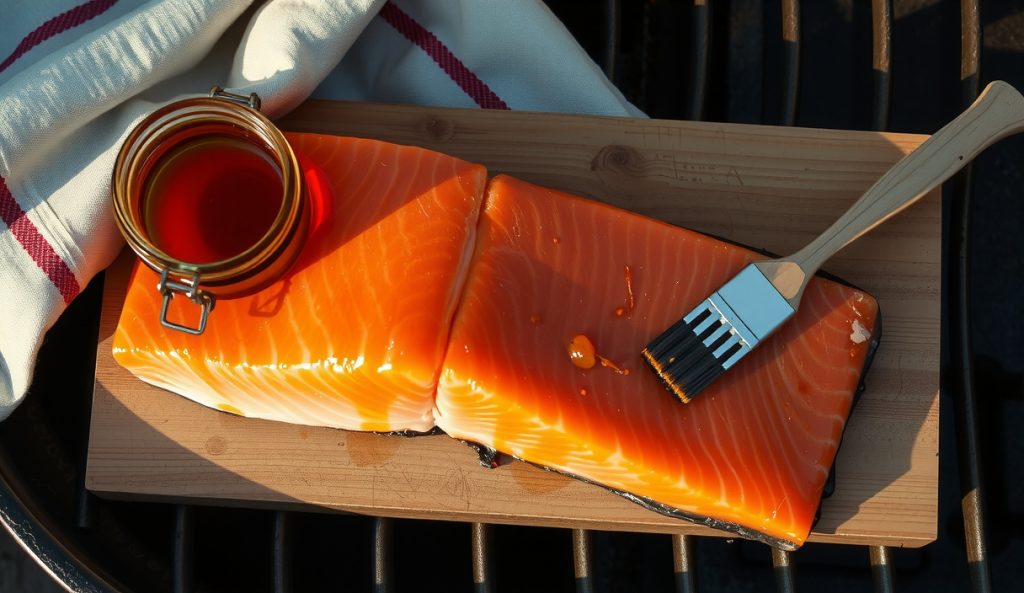
The dry cure and pellicle method produces a surface that is clean, lightly lacquered by smoke, and structurally sound. The honey-glaze variation introduces a single thin application of sweetener at the 90-minute mark — when the pellicle is fully set — that adds caramel and furfural complexity to the finish without undermining the structural work already done. Timing and restraint are the entire technique.
What changes with the honey-glaze variation?
At the 90-minute mark of the smoke — when the surface pellicle is fully set and the internal temperature reads approximately 110–115°F — remove the fillet briefly from the smoker and brush the flesh side with a mixture of raw honey and a neutral, high-smoke-point oil in a 2:1 ratio by volume. Avocado oil and refined sunflower oil are both appropriate; their smoke points (above 400°F) ensure the oil component does not contribute off-flavors at a 180°F smoker temperature. Apply one pass only, moving the brush in a single direction, then return the fillet to the smoker and continue to the 130°F pull temperature.
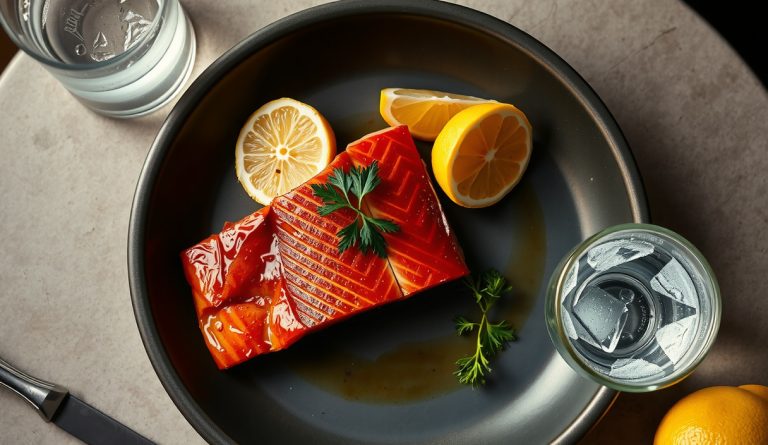
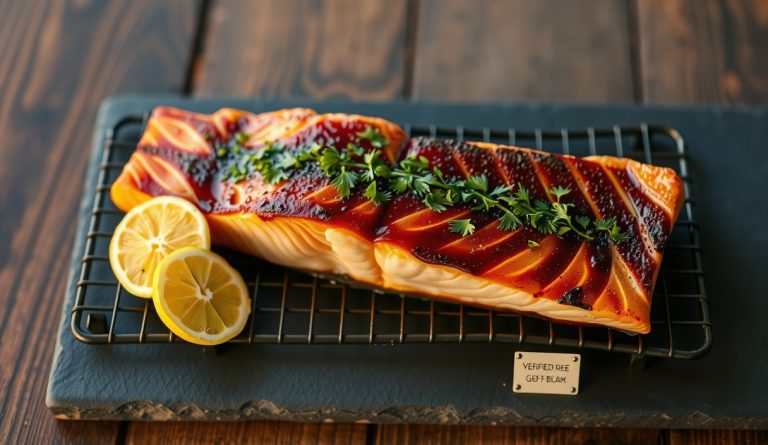
The chemistry driving the glaze during the final 30 to 45 minutes is fructose caramelization. Honey’s fructose fraction begins caramelizing at lower temperatures than sucrose or glucose — onset around 220°F for pure fructose — and the surface of the king salmon fillet, exposed to 180°F convective heat and direct radiant heat from the pellet fire, reaches temperatures sufficient to initiate this process. The result is a subtle, amber-lacquered surface carrying caramel and light furfural (toasted, slightly nutty) aroma compounds. Multiple glaze applications are counterproductive: successive coats trap steam between layers, soften the pellicle, and produce a tacky, gummy surface rather than a set glaze. One pass is the correct quantity.
What stays the same from the base recipe?
The entire cure, rinse, air-dry, and smoke sequence through the 90-minute mark proceeds exactly as written in the canonical method. The honey glaze is an addendum to the final phase only — not a replacement for any prior step. Pull temperature at 130°F, rest time, and all equipment settings remain unchanged.
When is the honey-glaze finish the better choice?
This variation is most appropriate for a serving context where presentation matters — a centerpiece platter, a brunch spread, or a composed appetizer where the visual sheen and added sweetness read as intentional rather than incidental. The honey-glaze finish also suits guests who find unsweetened smoked salmon too austere. The honey layer does not push the flavor profile into teriyaki territory; it is a light enhancement, not a dominant flavoring. Keep the honey application thin and choose a mild smoke wood — alder or cherry — for the best balance between sweet and smoke.
Use the full method, equipment, and rub measurements from the original Pellet-Smoked King Salmon.