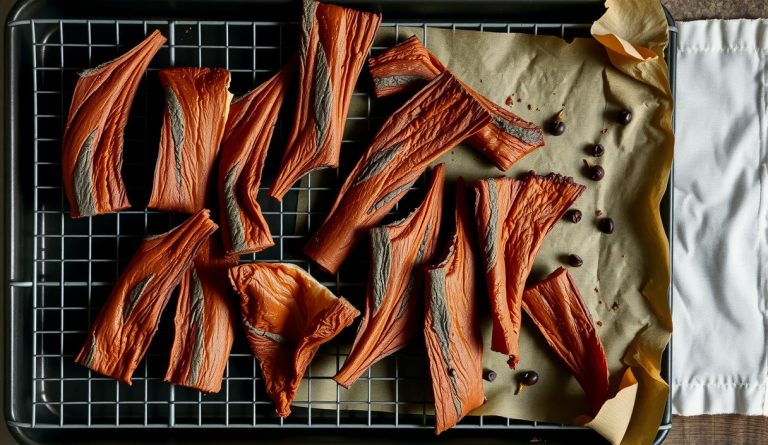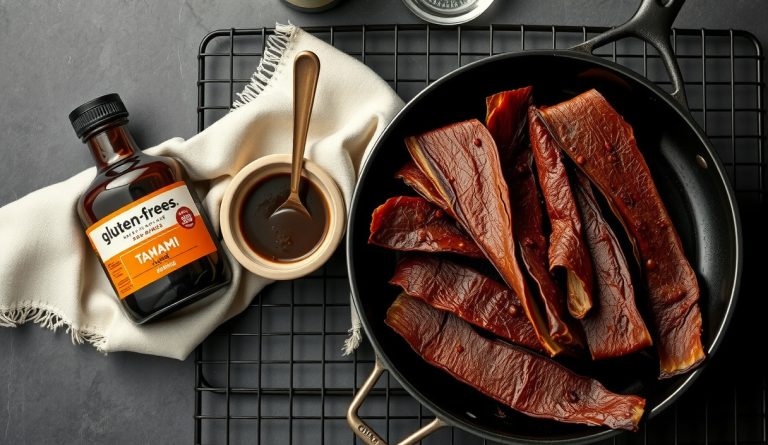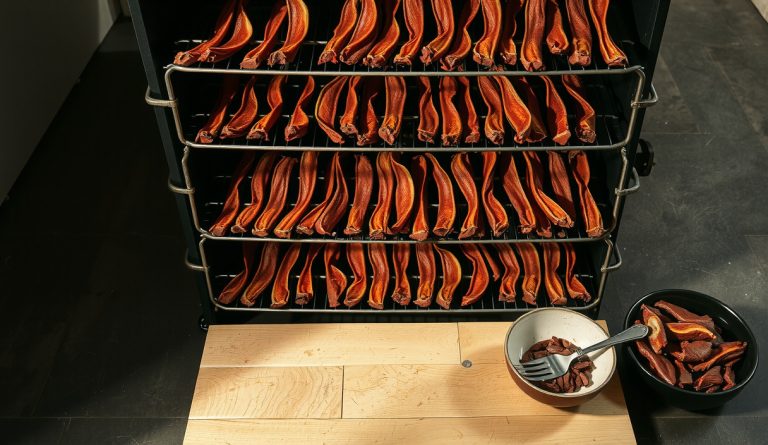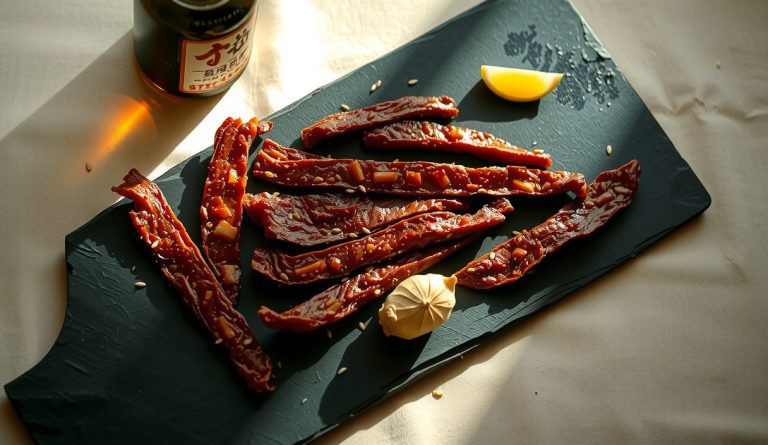
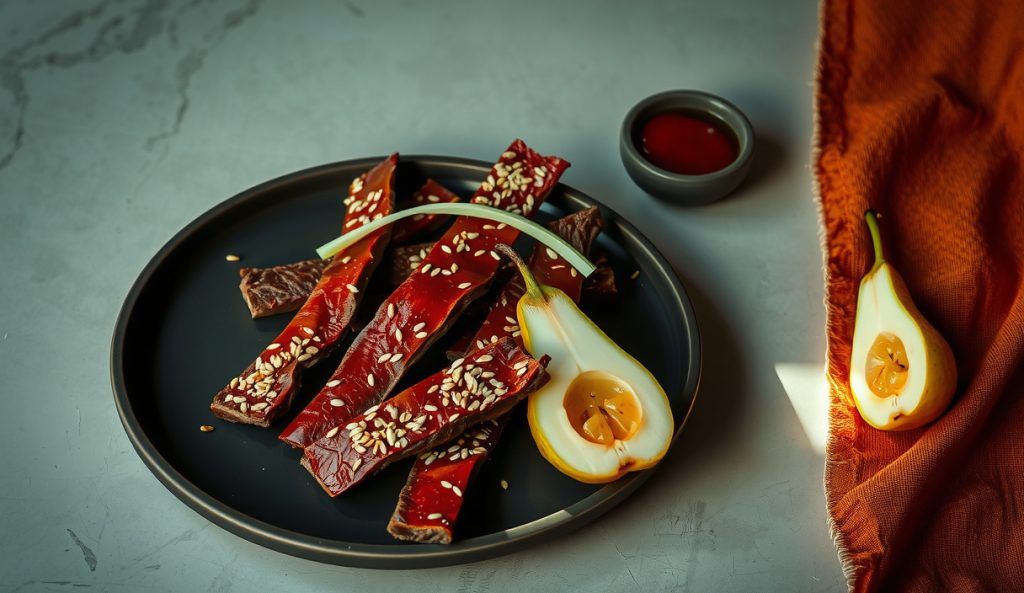
This Korean-style jerky variant rewires the marinade’s flavor architecture around gochujang — a fermented chile paste that delivers simultaneous heat, umami, and background sweetness in a single ingredient. Two tablespoons of soy sauce are replaced by gochujang, toasted sesame oil adds a roasted nuttiness that threads through every strip, and grated Asian pear contributes a floral, lightly perfumed sweetness. The Asian pear is the quiet workhorse: its calpain-family proteolytic enzymes partially disrupt the myofibrillar protein network during the marinade soak, producing jerky that is firm but measurably less chewy than the canonical build.
This variation is purpose-built for eaters who want complexity beyond salt and smoke. The layered, fermented depth of gochujang does flavor work that liquid smoke or dried chili flakes simply cannot replicate.
What changes in the Korean-style variant?
Replace 2 tablespoons of soy sauce with an equal volume of gochujang, then stir in 1 teaspoon toasted sesame oil and 1 tablespoon finely grated Asian pear. Because gochujang carries residual sugars from its fermentation process, reduce whatever brown sugar the canonical marinade calls for by half — failing to do so tips the sweetness past balance and risks accelerated surface browning during the drying phase.
The calpain-family enzymes in Asian pear are most active between 50°F and 104°F, meaning they do all of their tenderizing work during the refrigerator marinade soak. Once the strips enter the 225°F smoker environment, heat denatures those enzymes immediately — there is zero carryover tenderizing effect on the grates.
What stays the same as the base recipe?
The slice thickness (3 mm against the grain), the 225°F smoker temperature, the 4-to-6-hour drying window, and the internal moisture target all remain unchanged from the canonical build. The base salt level carried by the remaining soy sauce and any kosher salt in the original formula is preserved, so cure penetration and water-activity reduction proceed on the same schedule as the standard version.
When is the Korean-style build the better choice?
Choose this variant when the audience expects bold, globally influenced flavors. The Korean-style jerky holds up at spice-forward charcuterie boards, makes a strong gift-box selection, and pairs well with cold lager or makgeolli. It is also the better option any time the goal is a perceptible but not aggressive heat — the fermented chile warmth of gochujang does not burn out the palate after the first strip the way raw chili flakes can.
Use the full method, equipment, and base rub measurements from the original Smoked Beef Jerky — Lean Round.