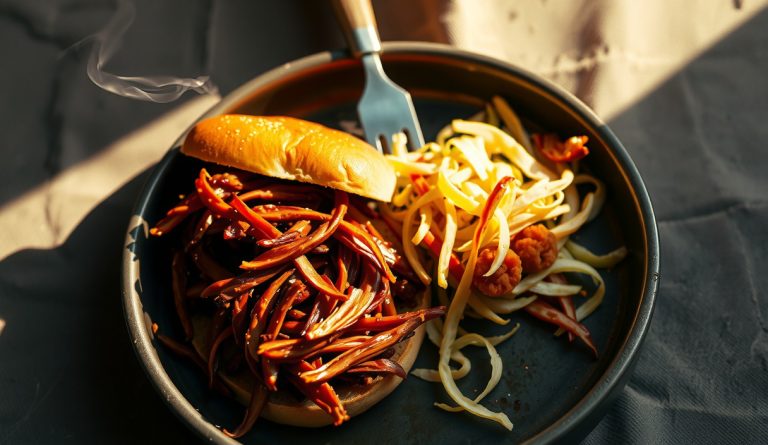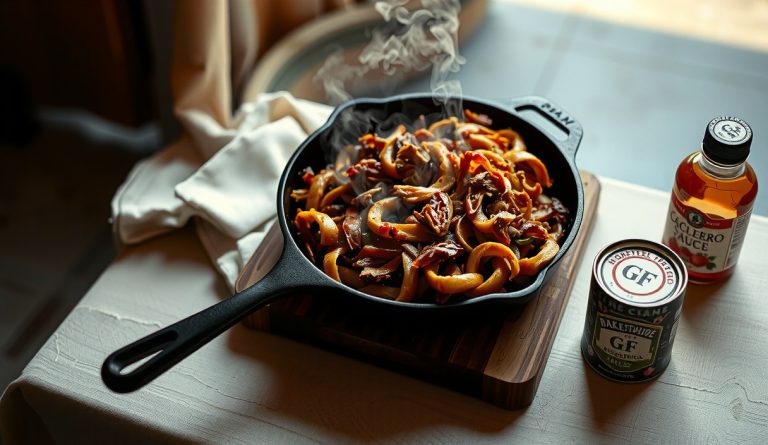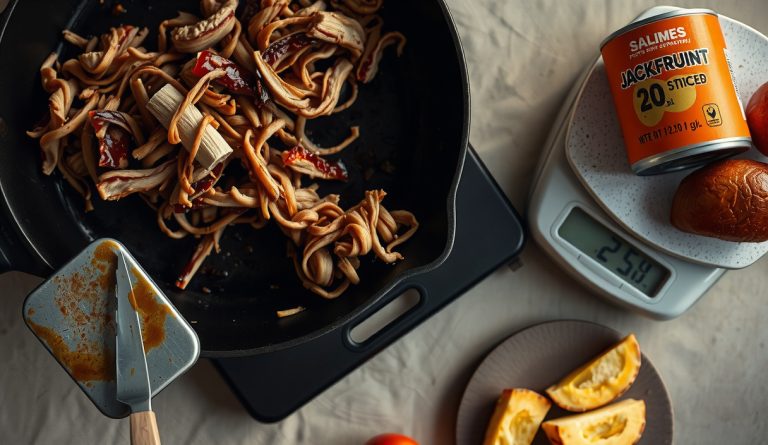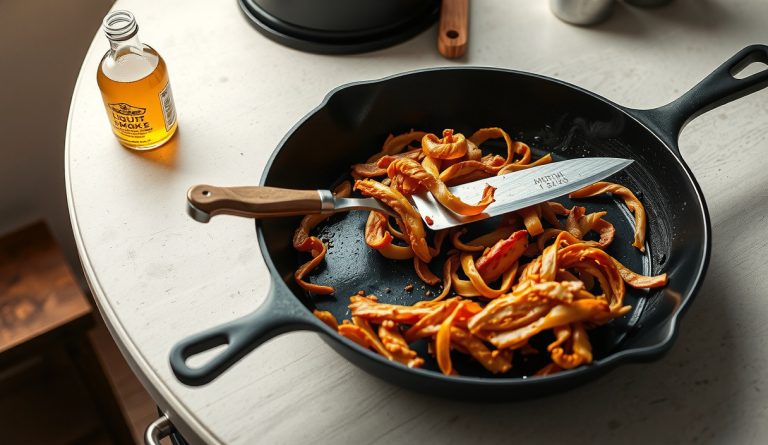
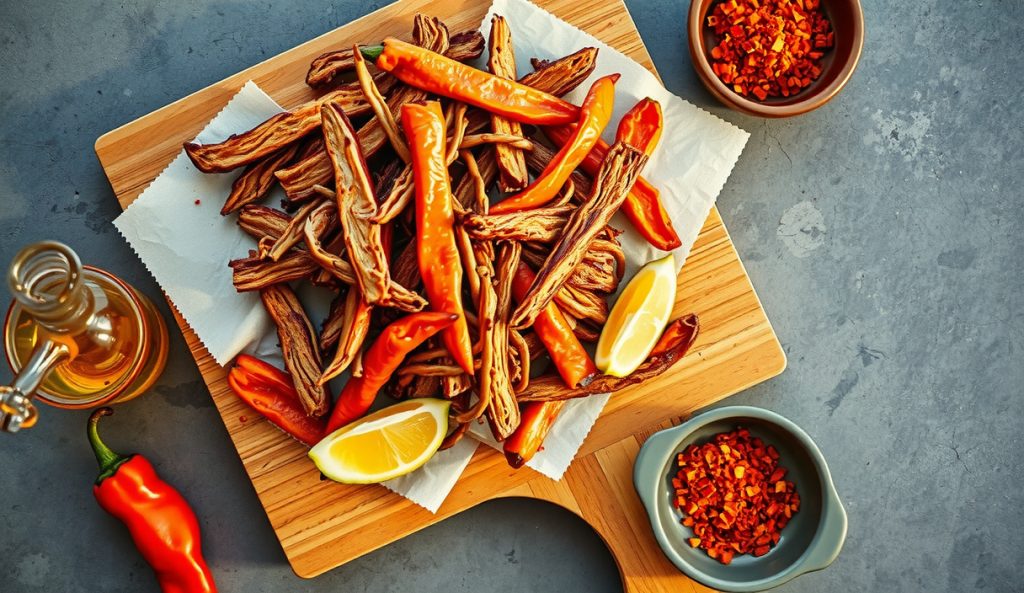
Eastern North Carolina barbecue has always been defined by what it leaves out: no tomato, no molasses, no sweet interference. That same restraint translates cleanly to a jackfruit braise. Replacing half the crushed tomatoes with apple cider vinegar and stripping out the molasses produces a thin, sharp, acidic medium that amplifies the smoke character already present in the jackfruit rather than burying it under caramelized sweetness.
This is the variation to reach for when you want the pulled-pork analog to read as Southern barbecue rather than a sauced sandwich filling. The vinegar-forward profile pairs exceptionally well with a soft bun and plain coleslaw — the classic Lexington roadside plate, plant-based.
What changes in the Carolina vinegar version?
Remove 1/2 cup of the crushed tomatoes from the canonical recipe and replace with an equal volume of apple cider vinegar. Add 1 tsp red pepper flakes. Omit the molasses entirely. The tomato solids in the original recipe contribute body through pectin and provide a buffering effect that holds the sauce pH between roughly 4.2 and 4.8; vinegar drops the working pH closer to 3.5, which accelerates the softening of the jackfruit’s middle-lamella cellulose structure during braising. The result is a slightly more tender shred with a noticeably brighter, more assertive flavor.
Finish off-heat with an additional splash — roughly 1 tablespoon — of raw apple cider vinegar to preserve volatile acetic acid aromatics that cook off during the braise. Because the sauce is thinner, reduce the braising time by 3–4 minutes if you prefer distinct fiber strands rather than a fully saturated, soft texture. The soy curls will absorb the vinegar brine readily, so taste for seasoning late — the final acidity level is easier to correct with a pinch of sugar than to dial back once it’s in.
What stays the same as the original recipe?
The full braising structure — rehydration of soy curls, shredding of the jackfruit, layered aromatics, and covered braise time — remains identical to the canonical method. The smoked paprika quantity, the garlic and onion base, and the finishing shred-and-fold technique are all unchanged. The soy curl rehydration protocol is the same.
When is the Carolina vinegar version the better choice?
Choose this variation when serving alongside vinegar-dressed slaw, on a brioche bun where sweetness is already present, or any time you want the smoke and spice notes to carry the dish without a thick, sweet tomato sauce in front of them. The Carolina vinegar version also works better on warm days when a lighter, sharper plate is more appealing than a heavily sauced one.
Use the full method, equipment, and rub measurements from the original Plant-Based ‘Pulled Pork’ — Jackfruit + Soy Curls.