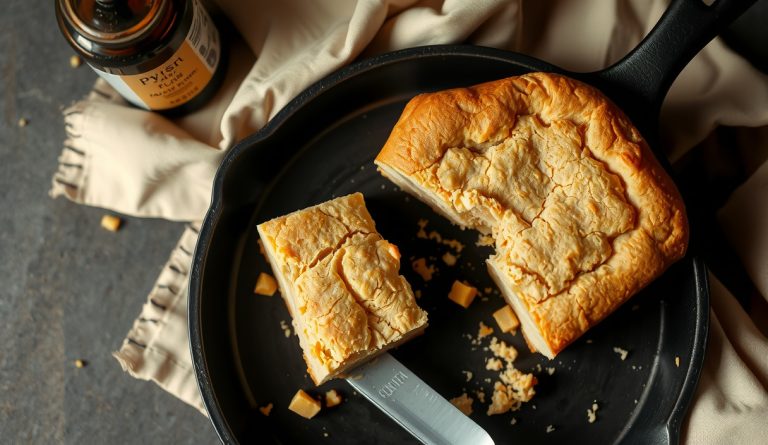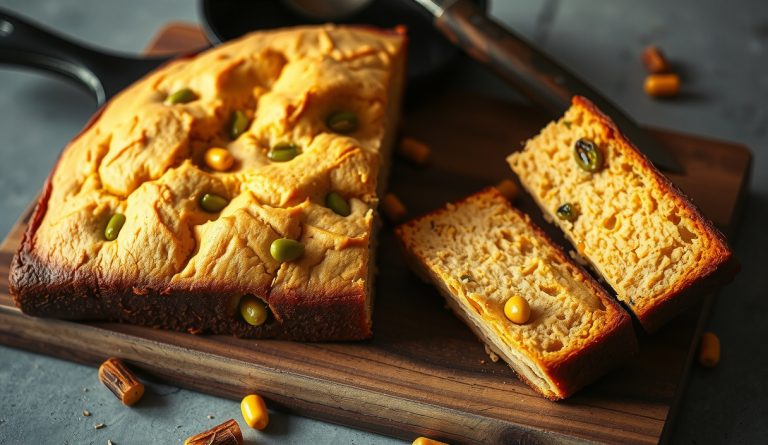
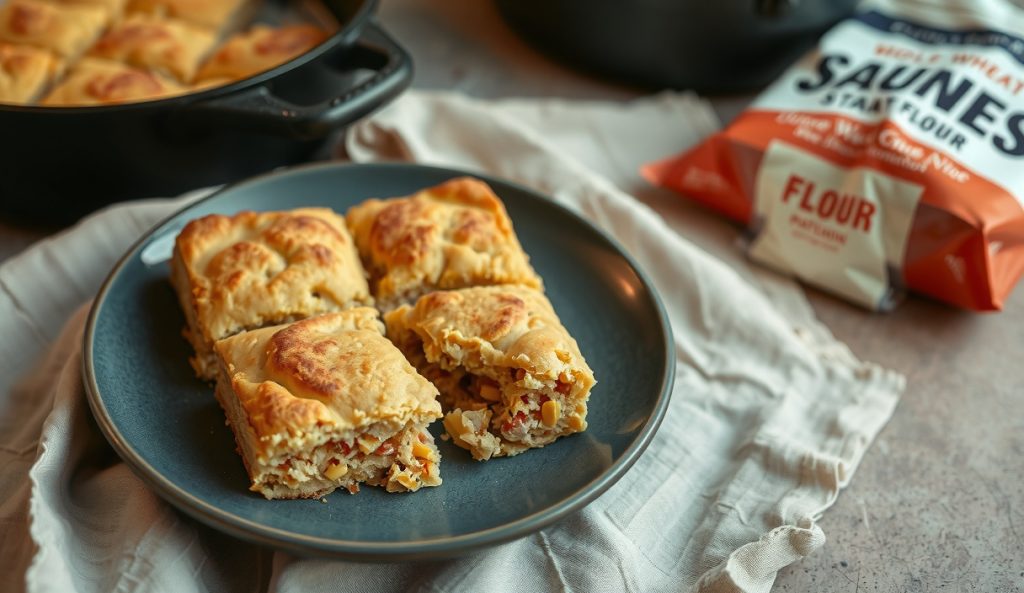
Whole-grain cornbread occupies a specific niche: more nutritional density, a more complex flavor with earthy, slightly nutty undertones, and a texture that signals substance rather than lightness. This variation makes that shift incrementally — replacing half the all-purpose flour with whole-wheat pastry flour rather than committing to a full whole-grain swap — which keeps the aquafaba lift viable while genuinely changing the character of the loaf.
What changes when you add whole-wheat pastry flour?
Substitute half the all-purpose flour with an equal volume of whole-wheat pastry flour. Whole-wheat pastry flour is milled from soft white wheat, giving it a protein content of approximately 9–10% — well below the 13–14% of standard whole-wheat or bread flour. That lower protein level matters because the bran particles in whole-wheat flour physically interrupt gluten strand formation; pairing high bran content with high protein would compound toughening and produce a chewy, leathery crumb. With whole-wheat pastry flour, the crumb lands denser than the canonical version but remains tender.
The bran and germ fractions in whole-wheat pastry flour are hygroscopic, absorbing water more aggressively than refined starch and raising the effective water demand of the batter. Increase oat milk by 2 tablespoons to compensate. Batter that is too stiff will not fold the aquafaba foam cleanly, and the finished loaf will bake into a tight, underaerated crumb. With the additional liquid, the batter consistency stays close enough to the canonical to support proper foam incorporation.
Expect the finished whole-grain loaf to be denser and slightly shorter in rise than the canonical. The staling window is also shorter — bran particles disrupt the retrogradation-resistant crumb structure that refined flour produces — so serve this version the day it is baked for best texture.
What stays the same as the canonical vegan cornbread?
Oven temperature, baking time range, aquafaba foam target, fold method, and pan prep are identical to the canonical recipe. The 2-tablespoon oat milk increase is the only procedural change — every other step, timing, and technique carries over directly from the base method.
When is the whole-grain version the better choice?
This version suits occasions where nutritional profile matters — higher dietary fiber, retained germ oils, and a lower glycemic response relative to the all-refined-flour canonical. The earthiness of whole-wheat pastry flour also makes this loaf the better pairing with strongly flavored stews, braised greens, or bean dishes, where that whole-grain character reads as complementary rather than distracting.
Use the full method, equipment, and rub measurements from the original Vegan Cornbread — Aquafaba Leaven.