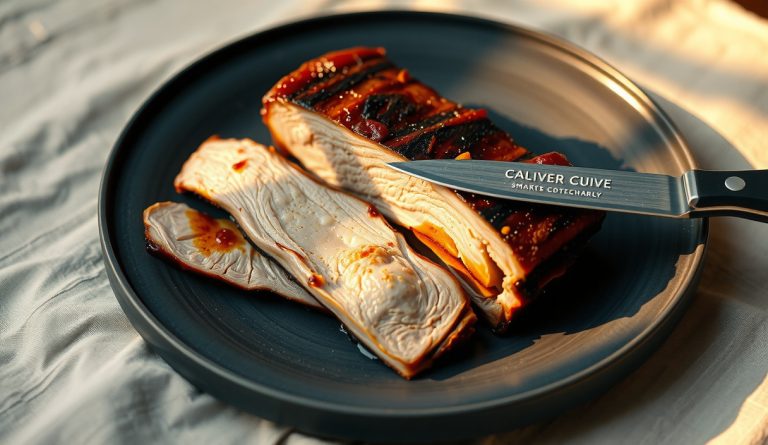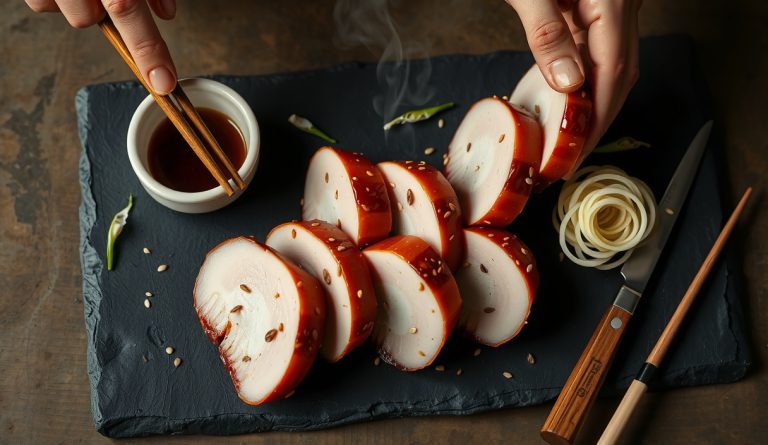
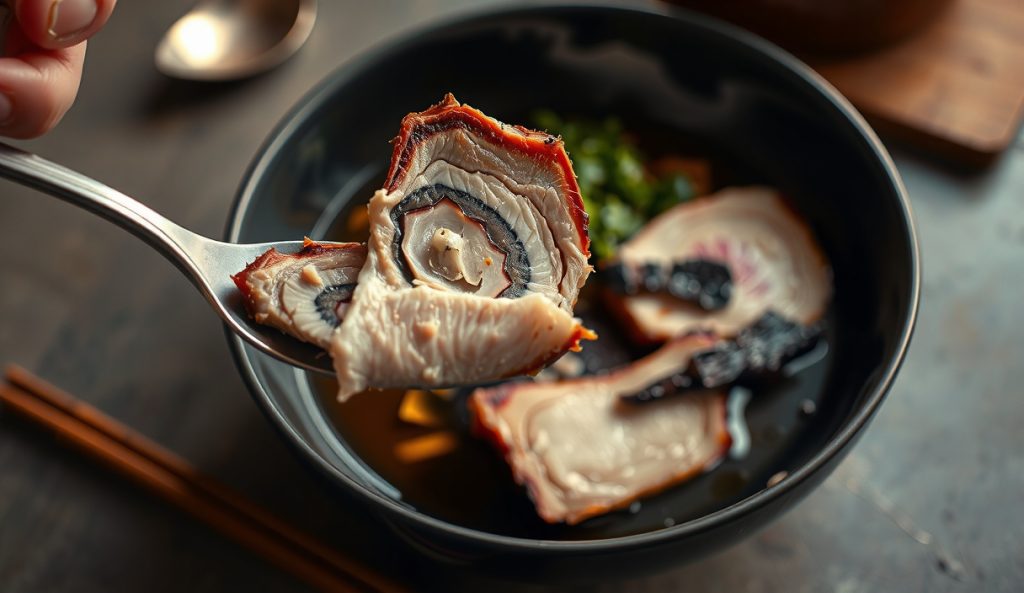
The 60-hour, 150°F sous vide smoked pork belly is engineered for a yielding, almost custard-like texture — the kind found in a serious ramen shop’s chashu pork — rather than the firm, sliceable structure of the canonical 48-hour, 165°F method. If the belly is destined for a tonkotsu bowl, a braising sauce, or any application where slow dissolution into surrounding liquid is a virtue, this is the version to run.
What changes at 150°F over 60 hours?
Dropping the bath temperature from 165°F to 150°F and extending the cook from 48 hours to 60 hours fundamentally shifts the collagen-to-gelatin conversion curve. At 150°F, actin denaturation is complete and the belly is held safely above pasteurization thresholds, but the lower thermal gradient slows collagen hydrolysis — the conversion of triple-helix tropocollagen into soluble gelatin proceeds at roughly half the speed compared to 165°F. Extending the window to 60 hours compensates for that slower kinetics, driving gelatin conversion closer to completion than the canonical bath achieves.
The practical result is a higher dissolved gelatin fraction in the bag liquid and a connective tissue matrix in the pork belly that offers almost no resistance. Fat pockets between the muscle seams soften further as well, since lipid crystalline structure continues to loosen over the additional 12 hours beyond the standard bath. The bag liquid from this 60-hour version is exceptionally rich and should always be reserved — strained and reduced, it functions as a finishing glaze or a base for tare.
What stays the same as the canonical recipe?
The vacuum-seal setup, ice-bath chill protocol, seasoning rub, and optional cold-smoke step are all unchanged from the standard method. This 60-hour variant adjusts only the thermal setpoint and the clock — every other step in the canonical workflow applies directly to this version without modification.
When is the 60-hour version the better choice?
Choose the 60-hour, 150°F version when the pork belly is heading into a bowl of ramen, a braised bao filling, or any dish where prolonged contact with hot liquid will continue cooking the slices post-plate. The higher gelatin output also makes this the preferred version for anyone reducing the bag liquid into a sauce — the dissolved gelatin yield per bag is measurably greater than the 48-hour run produces. If you need clean, pressable slices for a charcuterie board or a smoked platter, the canonical 48-hour version will serve you better.
Use the full method, equipment, and rub measurements from the original Sous Vide Smoked Pork Belly — 48-Hour.