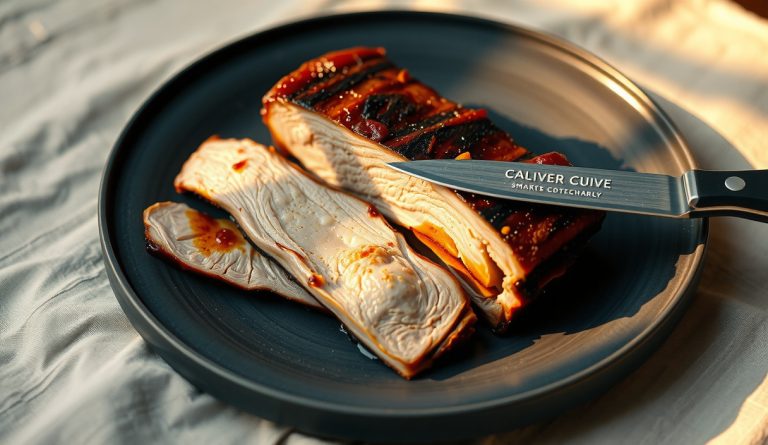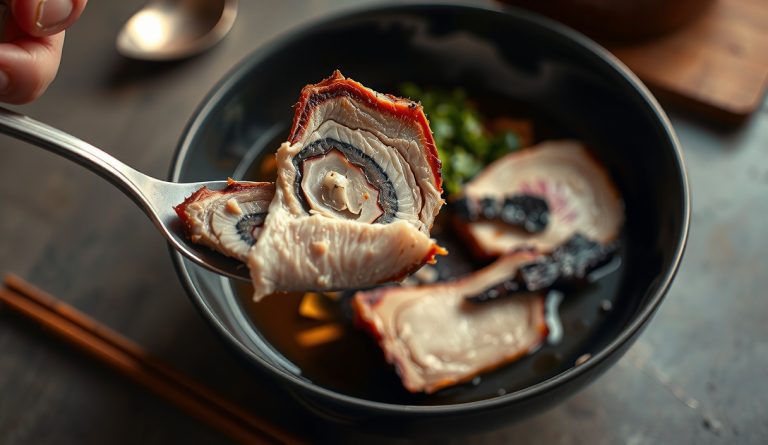
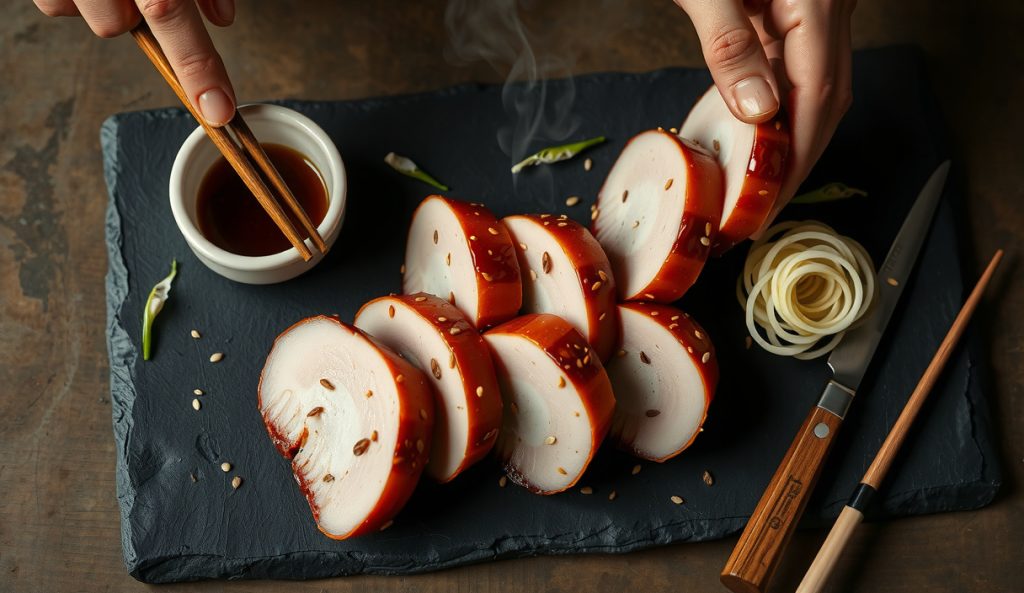
Chashu — braised rolled pork belly — is one of the defining toppings of Japanese ramen, and the sous vide circulator replicates its low-and-slow braising environment with greater precision than a stovetop pot. This variant redirects the canonical recipe away from smoke entirely and toward a soy-mirin-sake cure that permeates the muscle during the 48-hour bath, producing a deeply savory belly with none of the smoke character. The result is purpose-built for ramen bowls, bao buns, rice plates, and fried rice applications where smoke aroma would compete rather than complement.
What changes in the Asian-style chashu variant?
Before vacuum sealing, massage the pork belly thoroughly with soy sauce, mirin, sake, sliced fresh ginger, and roughly chopped scallion. The soy contributes sodium chloride for osmotic seasoning penetration and glutamate for umami depth. Mirin adds residual sugar — typically 40–50 Brix — that contributes to glaze caramelization during the final sear. Sake introduces volatile esters that carry aromatics directly into the muscle fiber during the bath.
Vacuum sealing the pork belly with these wet aromatics creates a high-humidity, high-pressure aromatic environment around the meat for the full 48 hours. The setpoint for this variant is 158°F — intentionally lower than the canonical 165°F — producing a texture just firm enough to roll and slice cleanly for ramen presentation while still achieving thorough collagen conversion. The cold-smoke step is omitted entirely.
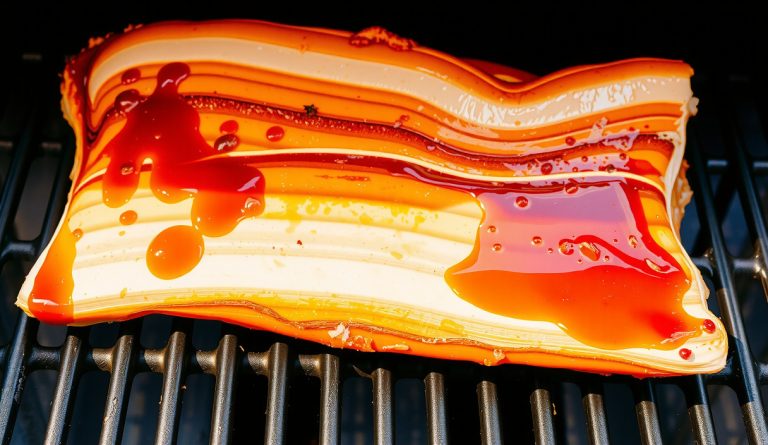
After the ice bath, slice the pork belly and sear the cut faces in a neutral oil over high heat in a cast iron or carbon steel pan. Strain the bag liquid and reduce it in the same pan until syrupy, then use it to glaze the slices during the final 30 seconds of the sear. The glaze step converts what would otherwise be discarded bag drippings into a concentrated, lacquer-finish sauce with no additional ingredients required.
What stays the same as the canonical recipe?
The 48-hour bath duration, vacuum-seal process, and ice-bath chill protocol remain exactly as written in the canonical recipe. The collagen conversion target, food safety envelope, and bag-liquid recovery logic are all identical. Only the seasoning profile — soy, mirin, sake, ginger, scallion instead of the smoke-oriented rub — and the finishing method change between the two versions.
When is the Asian-style chashu variant the better choice?
This variant is the correct choice when the pork belly is destined for an East Asian culinary context — ramen, bao buns, donburi, or fried rice — where smoke aroma would read as a mismatch rather than an enhancement. The chashu version is also well suited to cooks who do not have cold-smoke or hot-smoke equipment, since the entire cook completes indoors using only a circulator, a vacuum sealer, and a heavy pan.
The bag-liquid glaze step eliminates the need for a separately prepared tare or dipping sauce, making the overall workflow more streamlined than it might appear. Use the full method, equipment, and timing from the original Sous Vide Smoked Pork Belly — 48-Hour, substituting the seasoning and finishing steps described here.