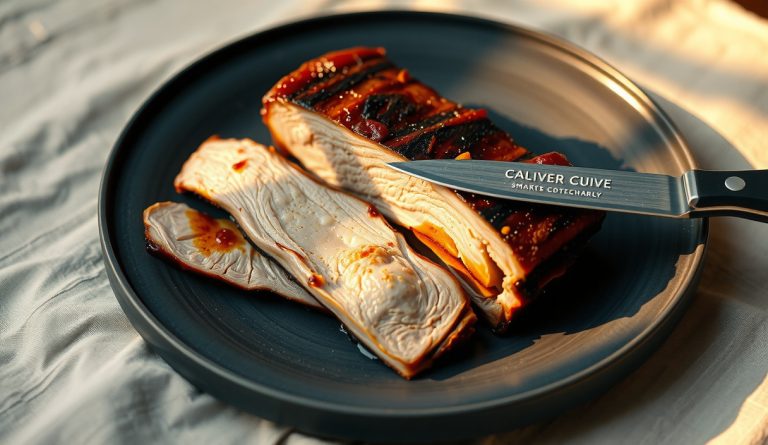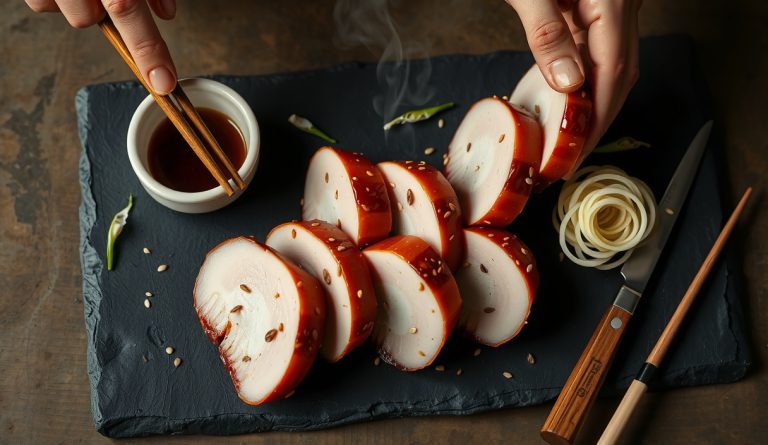
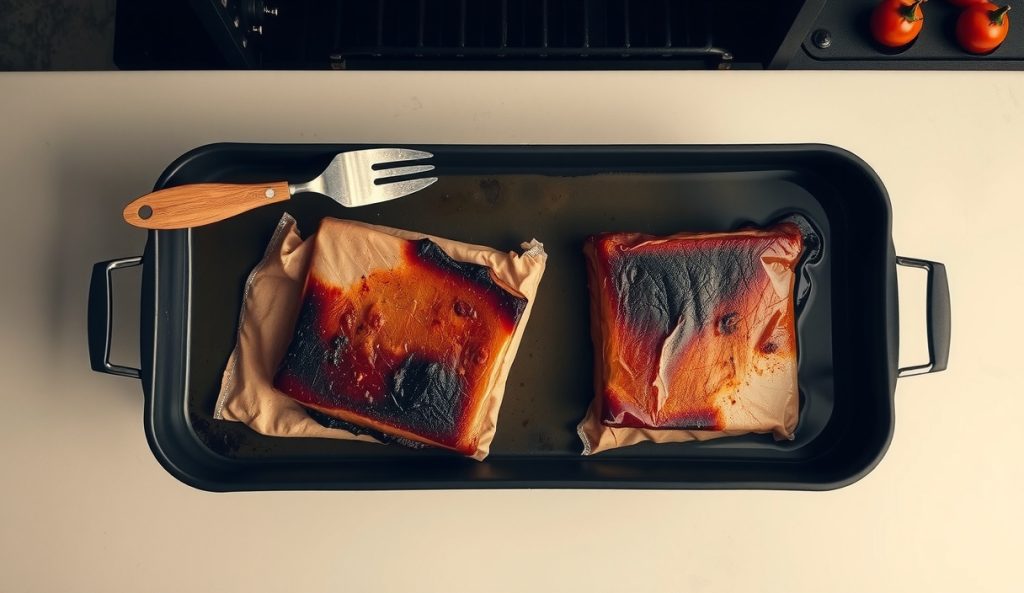
The sous vide method scales with unusual reliability because time and temperature — not total volume — govern the cook. Two or three pork belly slabs running in the same water bath reach the same internal condition as a single slab, provided each slab is individually sealed and water circulates freely around every bag. This variant covers the practical equipment decisions required when total batch weight pushes above 8 pounds, and how to extend the cold-smoke step to cover multiple slabs without degrading smoke penetration.
What changes when scaling up a sous vide pork belly batch?
Each pork belly slab must be vacuum sealed in its own bag. A single oversized bag containing multiple slabs creates stacked contact surfaces where water cannot circulate, producing uneven collagen conversion and potential thermal dead zones in any slab that is not fully exposed to the bath.
Vessel size matters significantly for batches over 8 pounds total. A standard 8-quart container will lose temperature during the initial warm-up phase as cold meat mass absorbs energy from the water. A 12-quart Cambro or a large stockpot gives the circulator sufficient water volume to buffer that thermal load. The governing factor is the ratio of water mass to meat mass — a higher ratio means a shorter recovery window after bags are introduced.
Circulator wattage becomes relevant at batch scale. A 1000W or higher unit maintains setpoint through the warm-up phase without extended lag. Lower-wattage units (750W or below) will recover, but the extended time below target temperature at the start of the bath marginally lengthens the effective cook window.
For the cold-smoke step, lay pork belly slabs on separate grates with at least 2 inches of vertical clearance between each. Smoke is a convective phenomenon and requires unobstructed airflow across all exposed surfaces to deposit particulate and volatile compounds evenly. Stacking or allowing slabs to touch produces unsmoked contact patches that are visible in the final color of the bark.
What stays the same when cooking multiple slabs?
Time, temperature, seasoning, ice-bath protocol, and all finishing steps are identical to the canonical single-slab method. This batch-scale variant changes only vessel size, circulator wattage guidance, and smoke chamber loading — not the cook itself.
When is the batch-scale approach the better choice?
Use this approach any time you are cooking for a group — a dinner party, a pop-up, a catering run, or a meal-prep batch intended to be portioned and frozen. The sous vide and cold-smoke steps both accommodate multiple slabs with minimal added effort; the primary investment is in appropriate vessel and circulator selection before you start.
Finished pork belly slabs can be individually chilled, vacuum resealed, and held refrigerated for up to two weeks or frozen for up to three months. A large batch is therefore economically efficient even for smaller households, spreading the effort of a 48-hour cook across many meals.
Use the full method, rub measurements, and timing from the original Sous Vide Smoked Pork Belly — 48-Hour — apply it identically to each individually sealed slab.