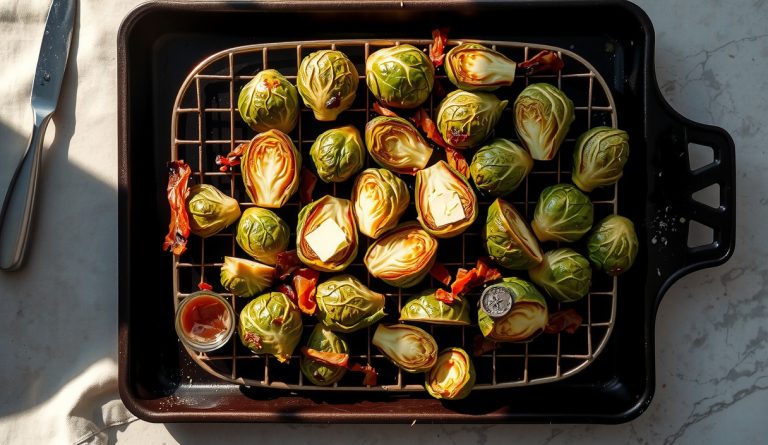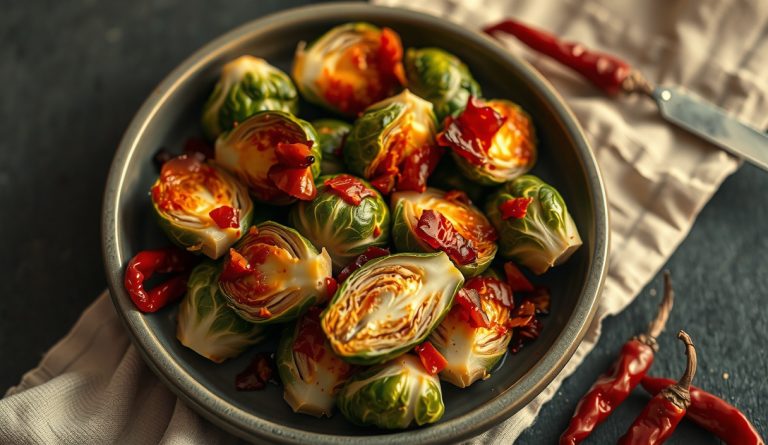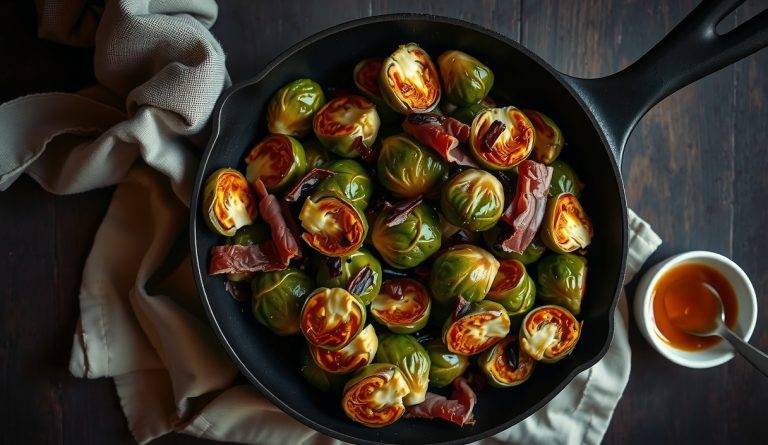
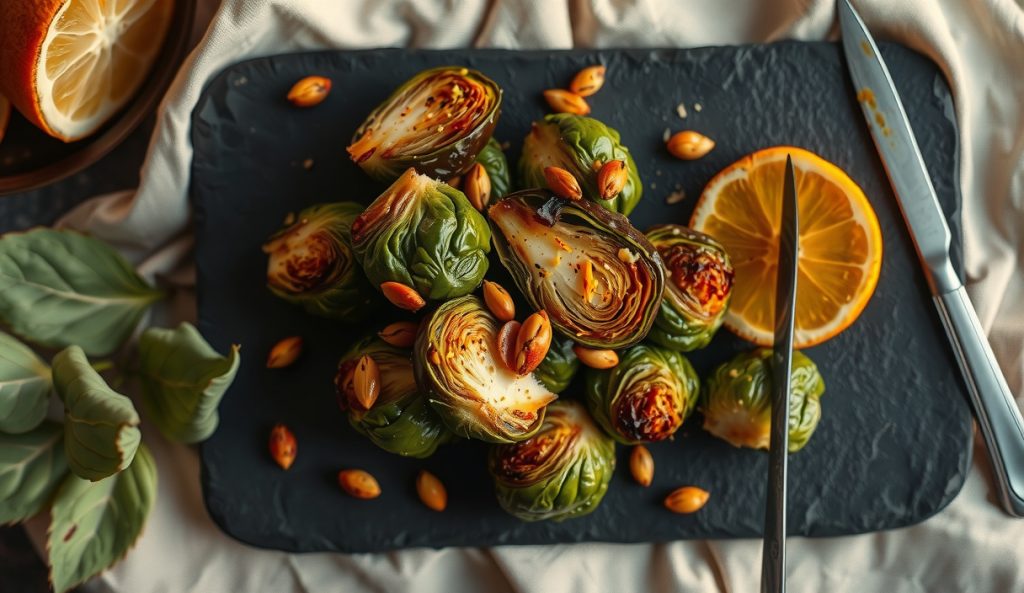
This vegan variation proves that the bacon-forward original is fundamentally about technique, not protein. Swap the animal fat and lardons, preserve the smoke, and the result is a Brussels sprout dish with an identical caramelized exterior — and a finish that is arguably brighter than the canonical build. The adaptation is a natural fit for plant-based guests or any occasion where a lighter side still needs to earn its place on the board.
What changes in the vegan version?
Replace the bacon fat with refined coconut oil or high-smoke-point avocado oil — both rated above 400°F (204°C), which comfortably covers the grate temperatures used in this cook. Refined coconut oil carries a subtle, neutral sweetness that leans into the maple in the glaze rather than competing with it. Avocado oil is more neutral and lets the smoke character lead.
Drop the bacon lardons entirely. In their place, fold in a handful of toasted pepitas just before serving. The pepitas provide the salty, fatty, textural counterpoint that the lardons were doing, without any animal product. A squeeze of fresh lemon or lime at the finish adds brightness that bacon’s rendered fat was quietly suppressing in the original build.
One common misconception worth addressing: fat does not cause browning — fat facilitates heat transfer to the Brussels sprout surface and helps seasonings adhere. The Maillard reaction and caramelization chemistry are entirely dependent on surface temperature and available sugars. Swapping the fat carrier does not alter browning kinetics, provided the replacement fat’s smoke point is sufficient to maintain grate-level heat without burning off before contact.
What stays exactly the same?
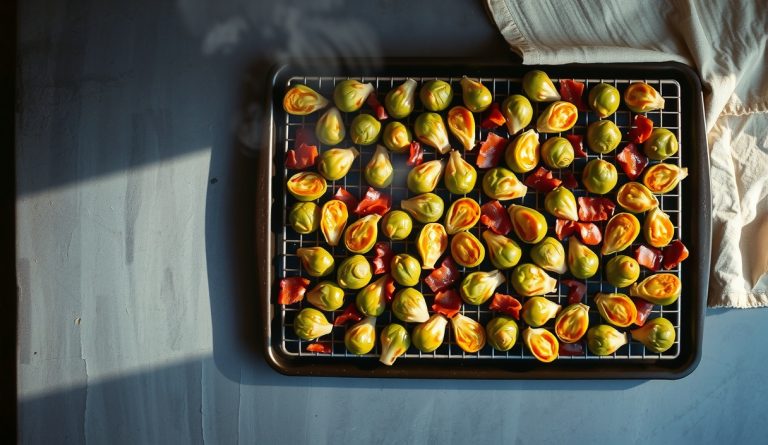
The smoke temperature, wood selection, halved-and-face-down orientation, glaze timing, and Maple-Dijon glaze formula all remain unchanged from the original recipe. The structural goal — a well-desiccated, mahogany-crusted Brussels sprout with a tender interior — is identical. Cook time does not shift.
When is the vegan variation the better choice?
Choose this variation when serving guests with pork restrictions, vegans, or anyone avoiding animal fat. The adaptation also works well as a standalone side on menus where the protein course already carries heavy pork influence and a vegetable dish that does not double down on that flavor direction is preferable. The citrus finish makes the vegan build more versatile alongside fish or poultry than the canonical bacon version.
Use the full method, equipment, and glaze measurements from the original Smoked Brussels Sprouts with Bacon and Maple-Dijon Glaze.