The canonical recipe fills a 12-inch cast-iron skillet and serves 8 generously. For Thanksgiving at scale — holiday gatherings of 12 to 14, or any occasion where the dressing is the centerpiece rather than a single side among many — a 9×13-inch pan is the right vessel. The ingredient math is straightforward, but the cook time is not simply proportional, and that distinction is worth understanding before you commit to a larger batch.
What changes when you scale up to a 9×13-inch pan?
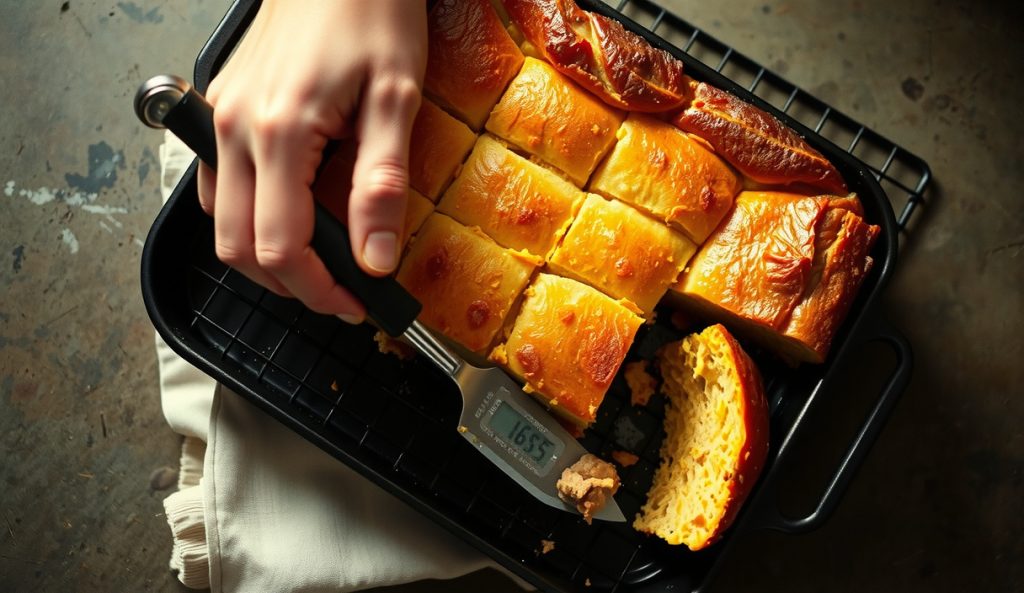
Multiply every ingredient in the canonical recipe by 1.5 and transfer the mixture into a 9×13-inch baking pan. Extend the smoke time to 75 to 80 minutes, but treat those numbers as a starting window rather than a finish line — always verify doneness with an instant-read thermometer reading 160°F at the center of the pan, which is the last point to receive heat.
The reason clock time alone fails here is heat penetration kinetics. A deeper, wider mass of dressing requires thermal energy to travel a greater distance to the geometric center of the pan. The surface and edges reach temperature well before the core does, and visual cues — browning, set edges, pulling from the sides — all appear at the exterior first. Pan material matters too: a metal baking pan conducts heat differently than cast iron, which retains and radiates heat from the base. Neither surface appearance nor pan type substitutes for a probe at the center. Pull the smoked cornbread dressing at 160°F internal temperature regardless of clock time.
What stays the same when scaling the smoked cornbread dressing?
The 275°F smoker temperature, the wood species, the sausage-to-cornbread ratio, the egg binder quantity (scaled proportionally), and the 160°F internal finish target are all unchanged when moving to the larger pan. The flavor profile, the texture, and the overall method are identical to the canonical recipe — only the volume and vessel differ.
When is the 9×13-inch version the better choice for your cook?
Use this scaled version any time you are feeding more than 8 people and want a single pan to handle the full load without juggling two skillets on the grate simultaneously. The 9×13-inch pan is also the smarter logistics choice when your smoker is at capacity — one 9×13 pan occupies less grate space than two 12-inch skillets side by side.
The only trade-off is a slightly thicker cross-section, which means the center of the smoked cornbread dressing sets a few minutes later than it would in the shallower skillet. An instant-read thermometer at the geometric center eliminates that uncertainty entirely.
Use the full method, equipment, and rub measurements from the original Smoked Cornbread Dressing with Sausage and Sage.