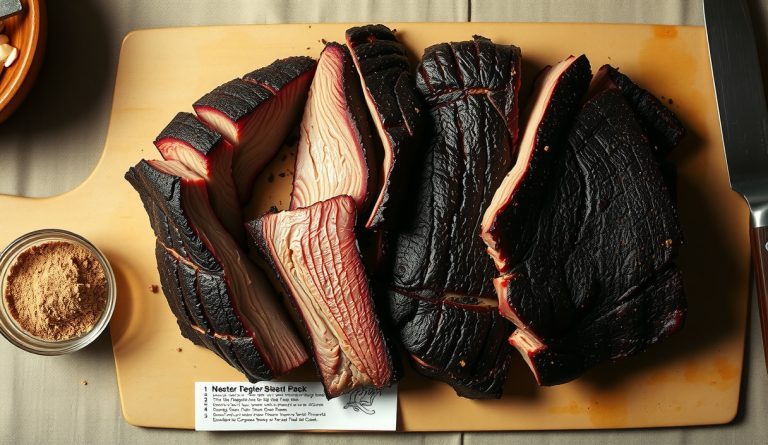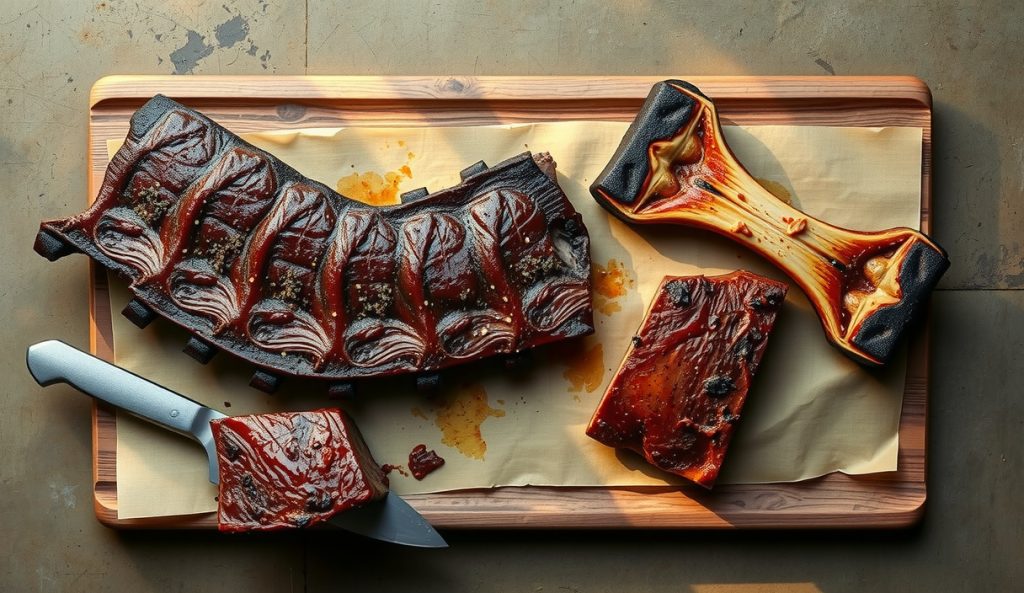
Beef plate ribs and chuck ribs share the same core flavor logic as brisket — high intramuscular fat, long collagen conversion, deep bark potential — but their geometry changes how a salt-and-pepper rub performs. A blind transfer of the canonical brisket approach will over-season the finished rib. A small set of adjustments corrects for this without introducing a new flavor system.
What changes when you move from brisket to beef ribs?
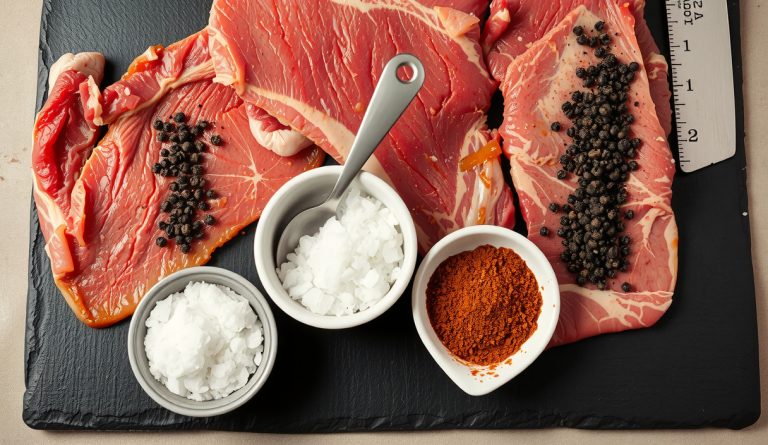
Reduce the application rate to approximately 1/3 teaspoon of rub per pound of trimmed rib weight, down from the more generous brisket rate. Beef ribs have a higher bone-to-meat ratio and thinner muscle sections relative to their total weight, which means proportionally more surface area is exposed per pound of actual protein. Both the osmotic salt draw and the piperine heat register more intensely as a result — applying at brisket rates produces a crust that reads over-salted and pepper-harsh on the shorter, thinner muscle fibers.
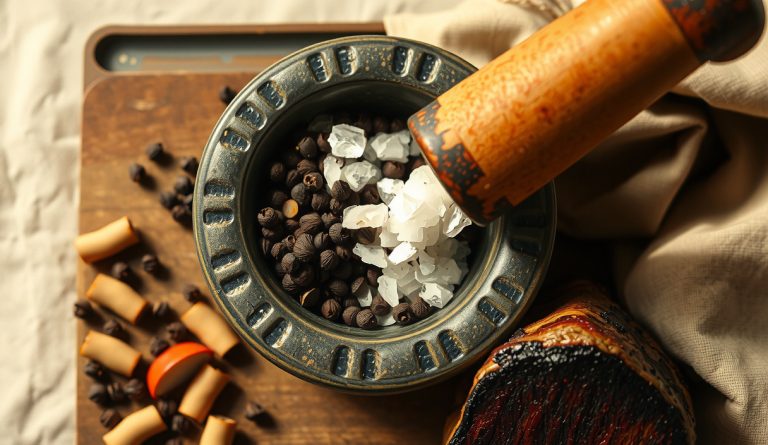
Consider shifting the ratio to 45 percent salt and 55 percent pepper, then replacing 5 percent of the total rub weight with white pepper ground to the same mesh. White pepper is processed from fully ripened berries with the outer hull removed; it carries a slightly softer, more earthy piperine profile and introduces a secondary aromatic compound set — 3-methylindole and skatole at trace levels — that adds a subtle funk note well-suited to the richer fat render of plate ribs over mesquite. Beef ribs also contain less total collagen per pound than a full packer brisket, so the collagen-to-gelatin conversion window is shorter, meaning the rub needs to read fully at a slightly earlier stage of the cook.
What stays the same between the brisket rub and the rib rub?
Particle geometry, surface prep, and the core cook method remain identical to the canonical approach. The dry, cold surface before application rule still applies. The rub is still spread evenly and allowed to hydrate on the meat. Smoke management and internal temperature targets do not change from the standard Texas beef method.
When is this rib-specific adaptation the better choice?
Use this adaptation any time you are cooking plate ribs or chuck ribs rather than a full brisket. The reduced application rate — approximately 1/3 teaspoon per pound of trimmed weight — prevents over-seasoning on thinner muscle sections. The white pepper addition, replacing 5 percent of the total rub weight, pairs specifically well with mesquite smoke, which can amplify harshness when black pepper is the only aromatic carrier at full brisket-rate application.
Use the full method, equipment, and rub construction from the original Texas-Style Beef Rub: The 50/50 Salt and Pepper Method, applying the rate and ratio adjustments described here.