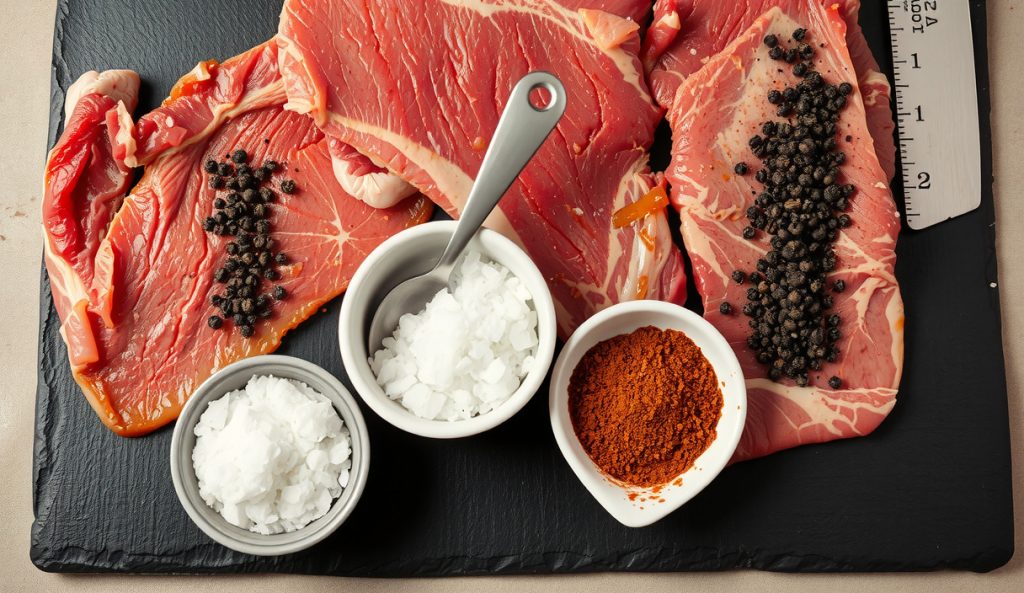
Reducing sodium in a salt-forward rub sounds like a compromise, but the bark mechanics of the Texas 50/50 method depend on osmotic protein denaturation — a process that potassium chloride drives through the same ionic pathway as sodium chloride. A partial substitution is functionally sound. A full substitution is not. Understanding where that line sits determines whether this low-sodium adaptation works or fails at the surface.
What changes when you lower the sodium in a Texas beef rub?
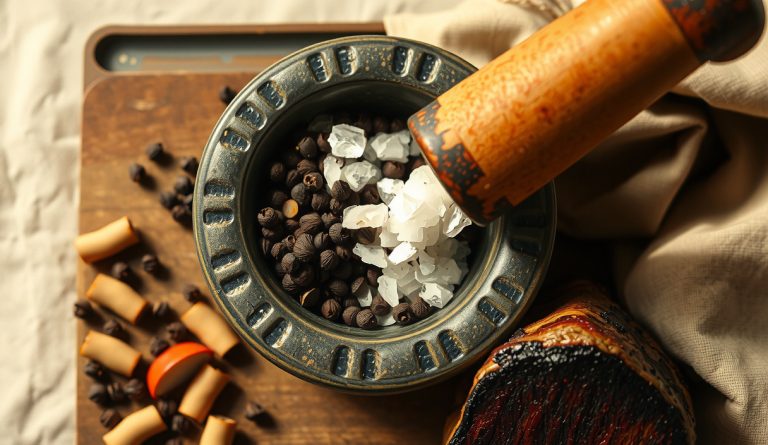
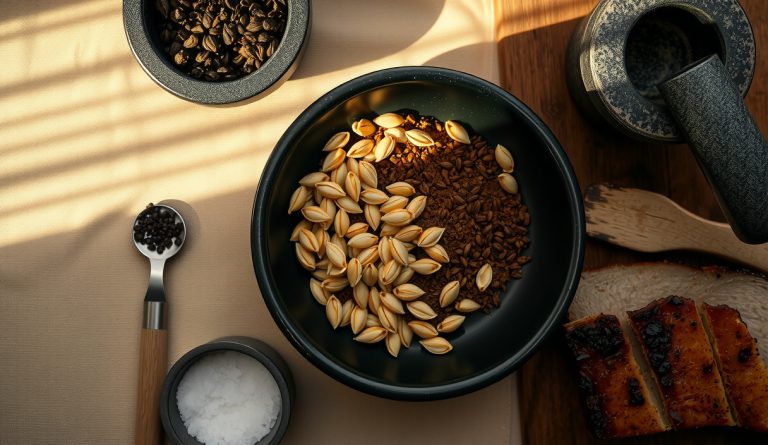
Replace 50 percent of the kosher salt by weight with potassium chloride — sold under brand names such as Nu-Salt or marketed generically as a salt substitute in most grocery stores. Potassium chloride (KCl) carries the same ionic charge profile as sodium chloride (NaCl) at the protein surface. It draws moisture from the myofibrillar proteins via osmosis, facilitates the same surface adhesion layer that anchors pepper particles during the cook, and produces a visually and texturally equivalent bark.
At standard application rates, this 50/50 NaCl-to-KCl substitution within the salt fraction reduces total sodium content by approximately 45 to 50 percent without altering cook time, crust color, or structural crust integrity. The mechanism is the same; only the cation changes.
The flavor difference is real but manageable: potassium chloride delivers a slightly more mineral, less clean-finish saltiness compared to pure sodium chloride. This off-note is effectively masked by the black pepper load in the 50/50 rub ratio — piperine’s forward aromatic presence suppresses the mineral edge in the same way it suppresses some bitter compounds in the Maillard crust.
Do not attempt a full potassium chloride substitution. At concentrations above the 50 percent threshold, KCl introduces a distinct bitter, metallic character. Critically, piperine — the primary alkaloid in black pepper — amplifies rather than suppresses bitter compounds at high concentrations, which means a pepper-heavy rub with full KCl substitution will finish noticeably harsh and metallic rather than masking the off-note as it does at partial substitution rates.
What stays the same in the low-sodium version?
The 50/50 ratio by weight between the combined salt fraction (NaCl + KCl) and the black pepper fraction is unchanged. Application rate, surface prep, particle size requirements, and all cook-side technique follow the canonical method without modification. The only variable adjusted is the composition of the salt fraction itself.
When is the low-sodium adaptation the better choice?
This adaptation is appropriate when cooking for guests managing hypertension, sodium-restricted diets, or heart-health protocols — or when you want to reduce dietary sodium without switching to a fundamentally different rub system. It is not a flavor improvement; it is a nutritional modification that preserves function. If sodium is not a concern, the canonical kosher salt delivers a cleaner finish.
Use the full method, equipment, and pepper measurements from the original Texas-Style Beef Rub: The 50/50 Salt and Pepper Method, substituting into the salt fraction as described here.