In traditional eastern North Carolina whole-hog barbecue, the vinegar sauce serves two distinct functions: it finishes pulled meat at the table, and it works directly on the pit during the final stage of the cook. Mopping is not a casual or optional technique — applying it at the wrong moment actively harms bark formation. Executed correctly within the final two hours, eastern North Carolina vinegar mop sauce is one of the oldest and most mechanically purposeful tools in the whole-hog pitmaster’s kit.
What changes when you use vinegar sauce as a mop?
Apply eastern North Carolina vinegar sauce as a mop only during the final 2 hours of cooking — never before. The high water content of an ACV-based sauce creates evaporative cooling at the meat surface, which moderates surface temperature and slows charring during the long, hot finish on an open pit. This is the intended mechanism when pit temperatures run 250–275°F and the exterior risks over-darkening before interior collagen has fully converted to gelatin.
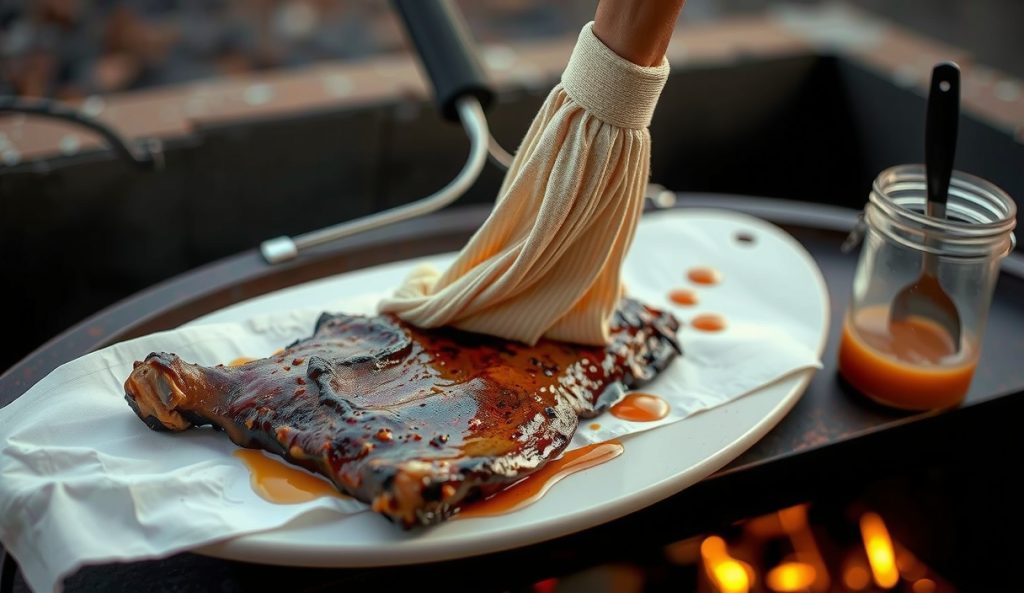
Applying the mop earlier than the 2-hour window is counterproductive. At pit temperatures of 250–275°F, sustained elevated surface water activity suppresses Maillard browning — meaning early mopping sacrifices bark formation during the precise window when bark is actively building. Once the final 2-hour window begins, apply the mop with a cotton string mop or a dedicated basting brush every 30–45 minutes. The recipe requires no modification; the same batch intended for table service works on the pit.
What stays the same when you mop versus serve?
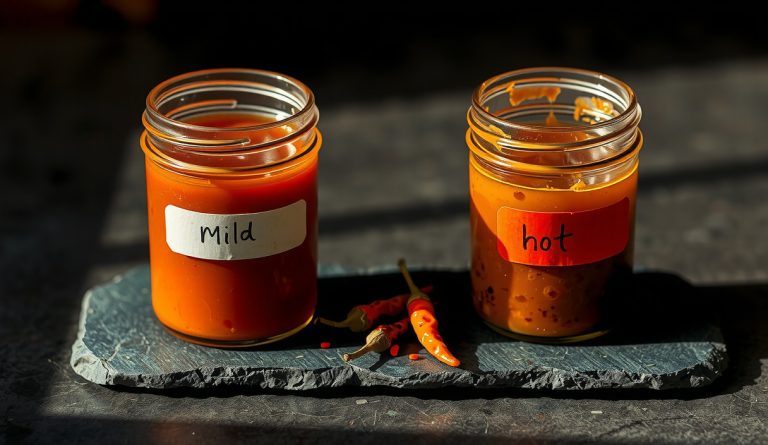
The vinegar sauce formula is identical whether the batch is destined for the mop or the table. No ingredient is added or removed for pit use. To preserve food safety, mop from one dedicated container and serve from a separate container — a pit-used utensil or mop brush must never re-enter the table-service supply.
When is the mop technique the better choice?
The mop technique is best suited to whole-hog cooks or very large bone-in shoulders cooked over direct or semi-direct heat, where the exterior is exposed to sustained radiant energy for an extended period. In those conditions, evaporative cooling from the ACV-based sauce is doing real thermal work. The technique is less relevant on indirect smoker setups with consistent low-and-slow temperatures, where bark typically develops without intervention and evaporative cooling is less critical.
When cooking in a traditional cinder-block pit or over a burn-down charcoal bed, the mop is not a stylistic choice — it is part of the method. Skipping it in those environments risks an over-charred exterior before the interior has finished rendering.
Use the full ingredient list, ratio, and resting time from the original Eastern North Carolina Vinegar Sauce.