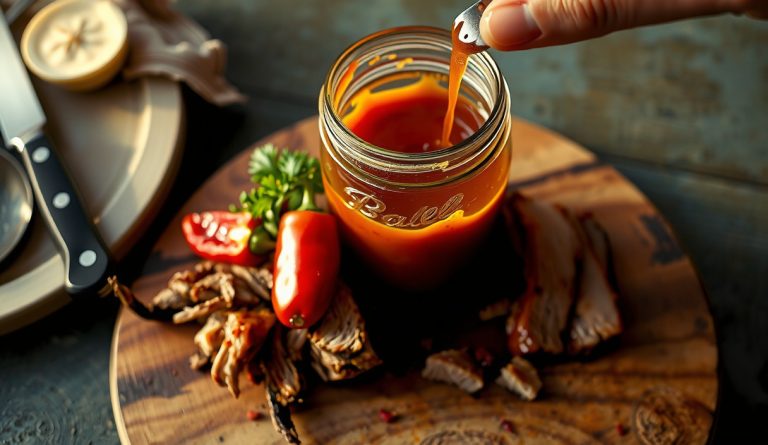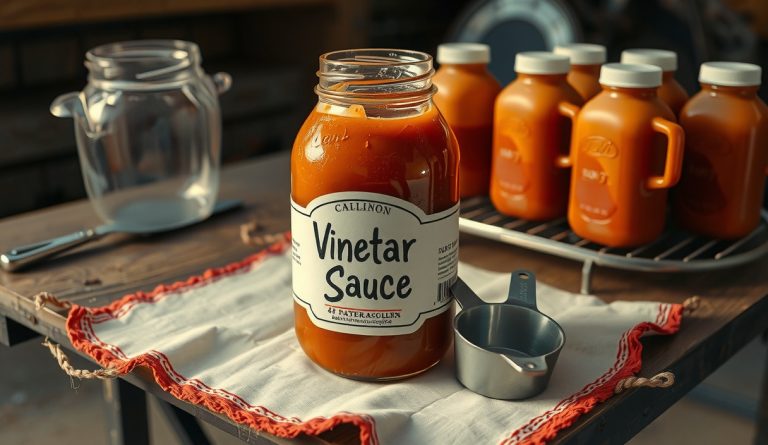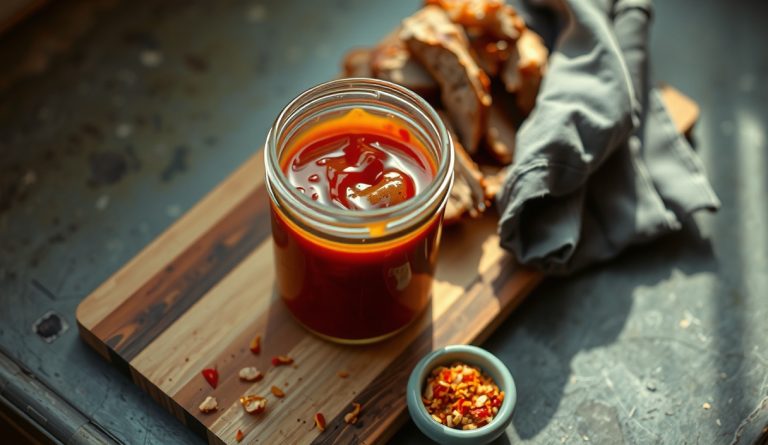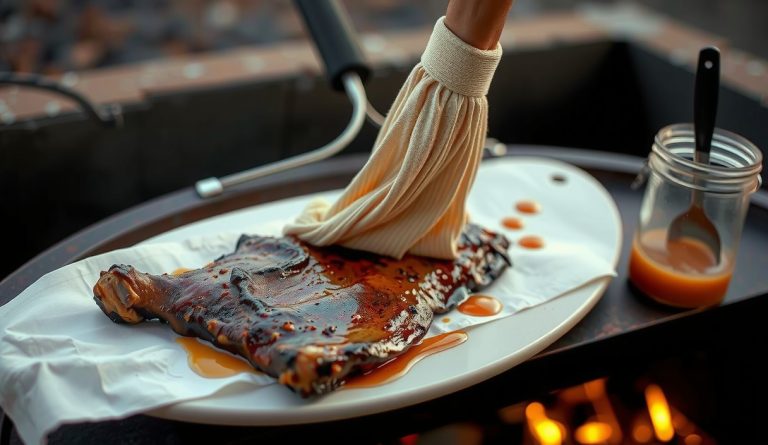
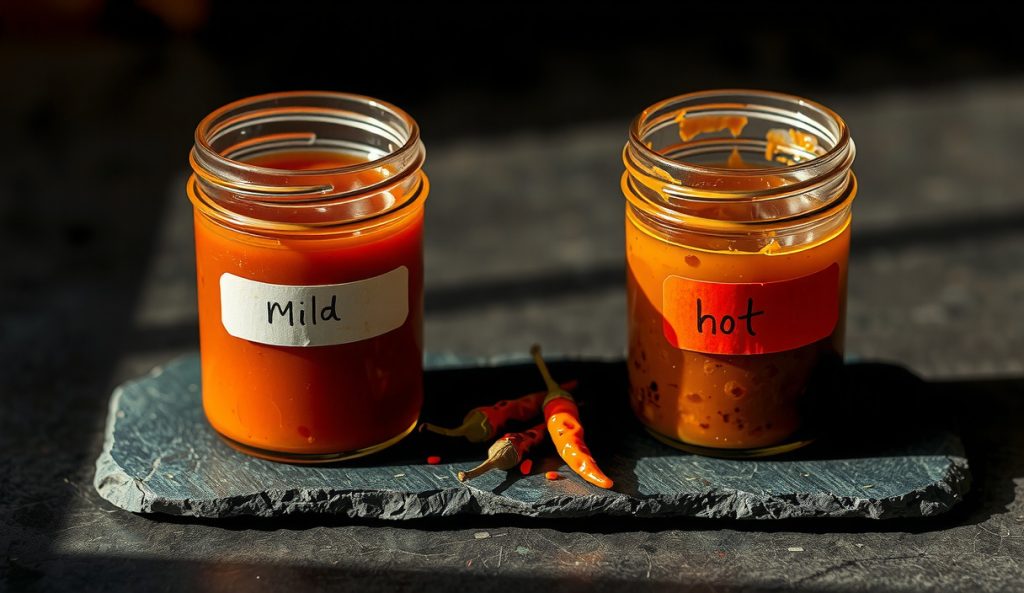
The base Eastern North Carolina vinegar sauce sits at a medium-hot register — present enough to notice, restrained enough to eat freely. That calibration suits most backyard cooks, but it is not the only valid position on the heat curve. Competition circuits favor an aggressive forward heat that reads quickly on the palate; family tables often need the opposite. Both variants are achievable with two-ingredient adjustments that do not compromise the sauce’s fundamental fat-cutting mechanism.
What adjustments shift the heat level in Eastern North Carolina vinegar sauce?
For a competition-level heat build, double the red pepper flakes to 2 teaspoons and add 1/2 teaspoon of cayenne powder. Capsaicin — the primary heat compound in both red pepper flakes and cayenne — binds TRPV1 receptors on the palate; increasing total capsaicinoid load shifts the perception from warming to aggressive. Cayenne is finer and more dispersed than flakes, so it integrates into the liquid phase more completely and delivers a faster, broader heat onset rather than the occasional hot spot that flakes can produce.
For a family-friendly version, reduce the red pepper flakes to 1/4 teaspoon and increase the sugar to 2 teaspoons. The additional sugar does not fully neutralize capsaicin — that is a myth — but it does compete for attention on the palate and slows the perception of heat onset. The fat-cutting function of the acetic acid operates entirely independently of capsaicinoid concentration, so both the hot and mild versions remain fully effective as a finishing sauce for fatty pork.
What stays the same across all heat-scaled versions?
Vinegar volume, black pepper, salt, and the warm-steep method are identical across all heat levels. The acid chemistry and pH range do not change between variants. Only the capsaicinoid load and, in the mild version, the sugar level are adjusted — every other element of the sauce remains fixed.
When is each heat-scaled version the better choice?
Use the competition build when cooking for experienced barbecue eaters who expect heat to be a feature, or when entering an event where judges reward assertive pepper presence. Use the mild build for multi-generational cookouts, when children are at the table, or when pairing with sides that already carry heat — jalapeño cornbread or spiced collards, for example. Offering both builds in separate squeeze bottles is standard practice at large cookouts and removes the need to compromise on either end.
Use the full base method and all remaining ingredient quantities from the original Eastern North Carolina Vinegar Sauce.