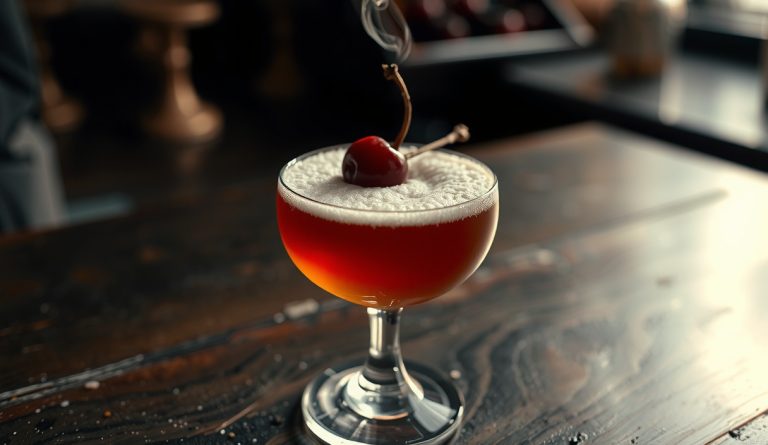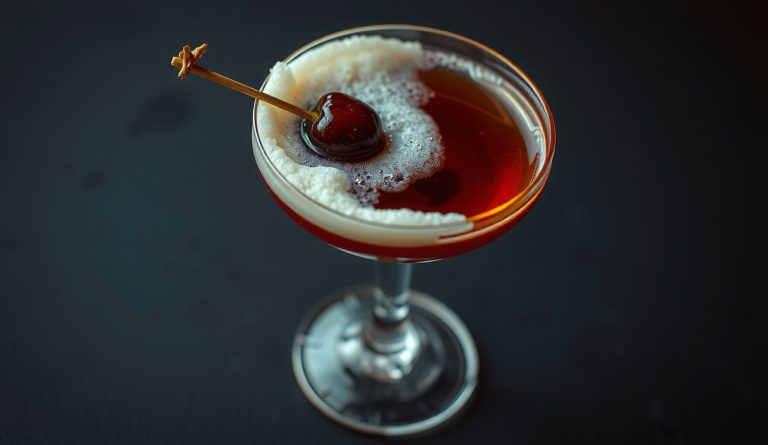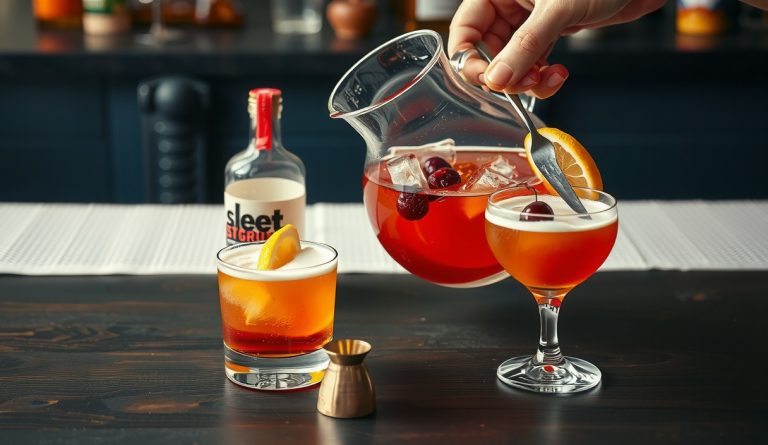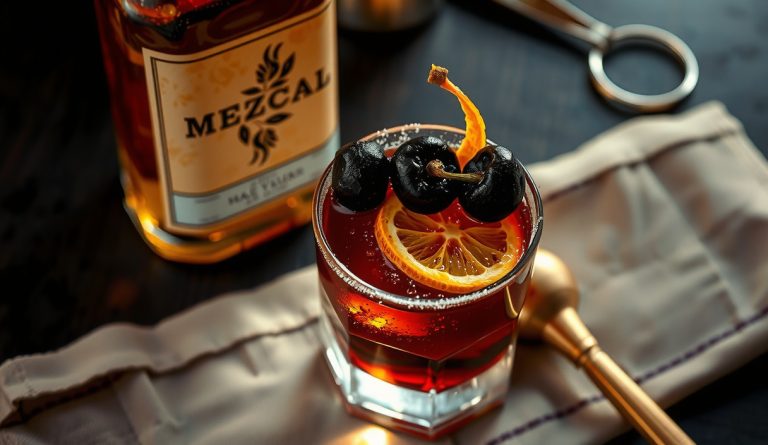
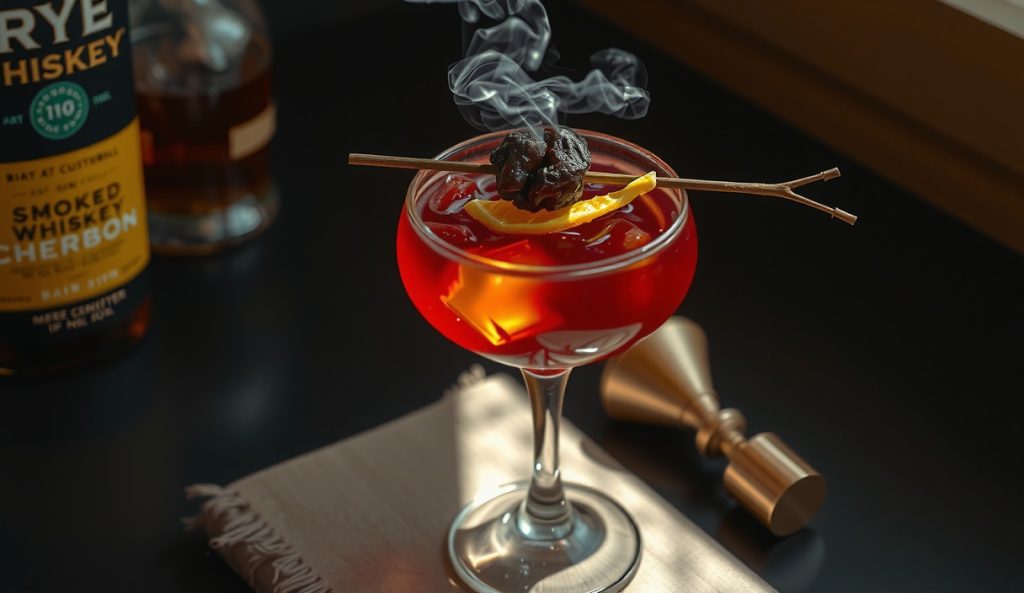
Bourbon brings corn sweetness and vanilla esters that soften cold-smoked cherry into something close to a dessert flavor. Rye whiskey dismantles that softness entirely. A high-rye mashbill at 51–70% rye grain content delivers methyl pyrazines and piperidine alkaloids that push spice phenols to the foreground — and the cherry, read against that spice backdrop, stops being round and starts being angular, dark, and forward. The rye version of the Smoked Cherry Bourbon Sour is not a gentler drink. It is a more confrontational one.
What changes when you swap bourbon for rye?
Swap the bourbon for a rye whiskey with a minimum 51% rye in the mashbill — higher percentages (62–70%) amplify the spice character further. The rye-derived methyl pyrazines are formed during grain kilning via Maillard condensation of amino acids with reducing sugars, producing roasted, nutty, and faintly astringent aromatic notes. Piperidine alkaloids, also rye-native, contribute a dry, almost peppery finish that shortens the sweetness tail. Together, these compounds pull the cherry shrub toward dark fruit and away from confection.
Adjust the sweetener ratio to 3:1 cherry shrub to maple syrup, rather than the canonical equal-parts measure used in the bourbon build. The rye’s dry, spice-forward character causes the full syrup measure to read as compensatory rather than balanced — it flattens the cocktail instead of anchoring it. Keep the lemon juice at the full canonical measure: the acid acts as a direct counterweight to the spice phenols and prevents the drink from reading medicinal.
What stays the same in the rye version?
The cold-smoked cherry shrub, the full lemon juice measure, the egg white dry-shake protocol, the double-strain, and the large-format cube are all unchanged from the original. The overall sour structure — spirit, acid, sweetener, foam — remains intact. The rye substitution changes the spirit’s flavor contribution and requires recalibrating the sweetener ratio to match; every other variable holds.
When is the rye version the better choice?
The rye build suits drinkers who find the bourbon version too approachable or dessert-adjacent — Scotch drinkers who don’t drink Scotch, Manhattan loyalists, or anyone who reaches instinctively for rye over bourbon in any application. The rye Smoked Cherry Sour pairs better with savory and umami-forward food than the original does, and it holds up alongside bold BBQ flavors — brisket bark, heavily peppered ribs, anything with a long smoke — where the bourbon version can be overwhelmed by the food.
Use the full method, equipment, and shrub measurements from the original Smoked Cherry Bourbon Sour.