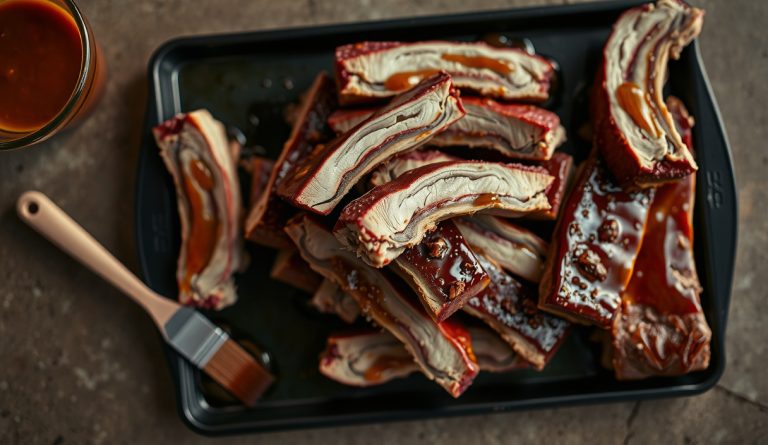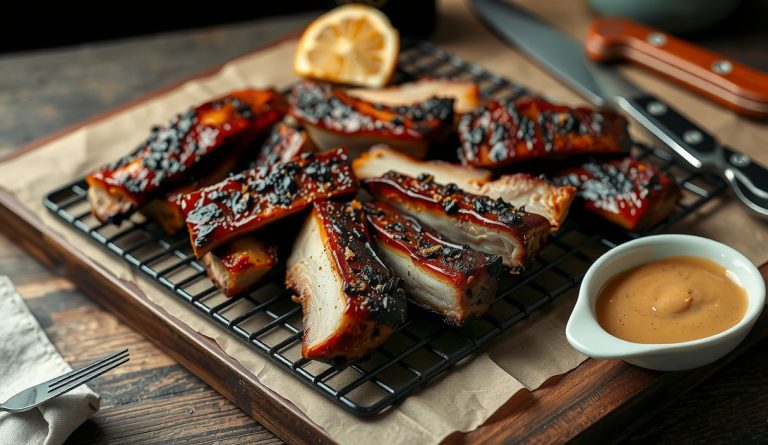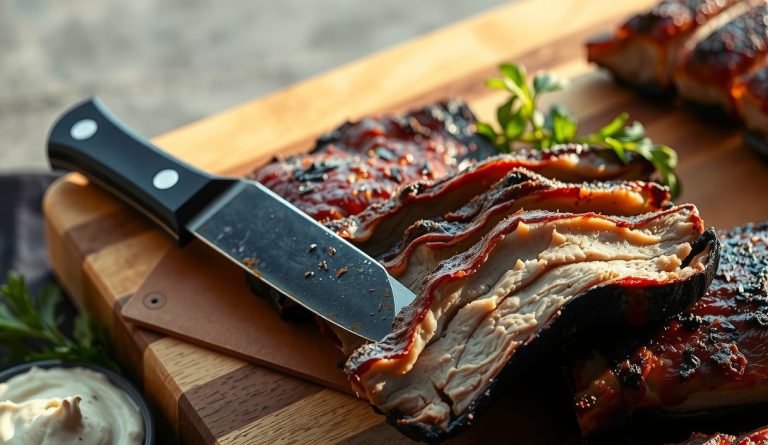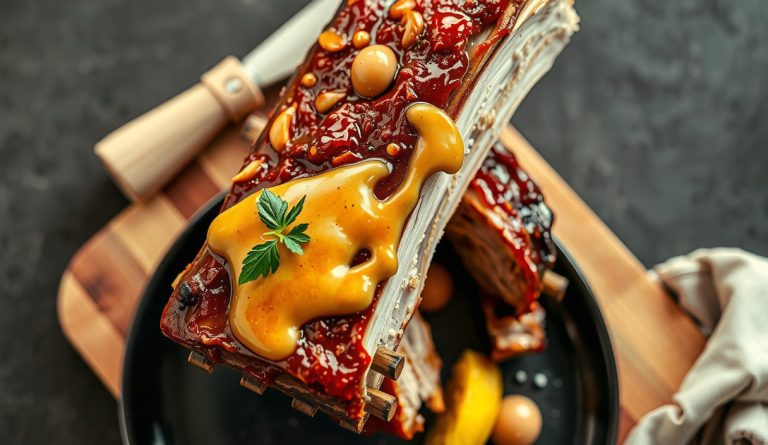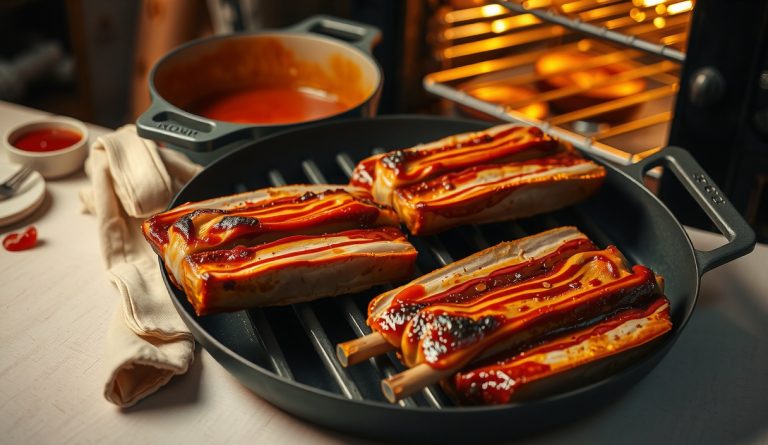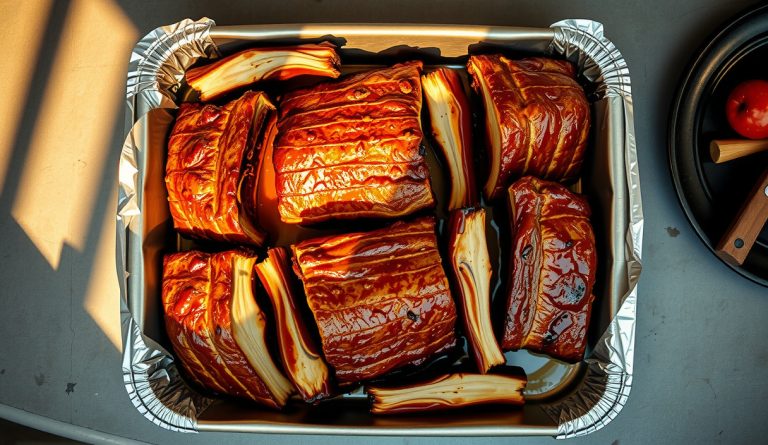
Korean BBQ and American smoke share more culinary DNA than they might appear to at first. Both traditions prize deeply savory, caramelized pork with a lacquered surface and a tender interior. This variation redirects the canonical smoked country-style rib toward a Korean register by swapping the finishing glaze and braise sauce for a gochujang-forward mixture, while the smoke, the long braise, and the high-heat finish all remain exactly as written in the original method.
What changes in the Korean-style variation?
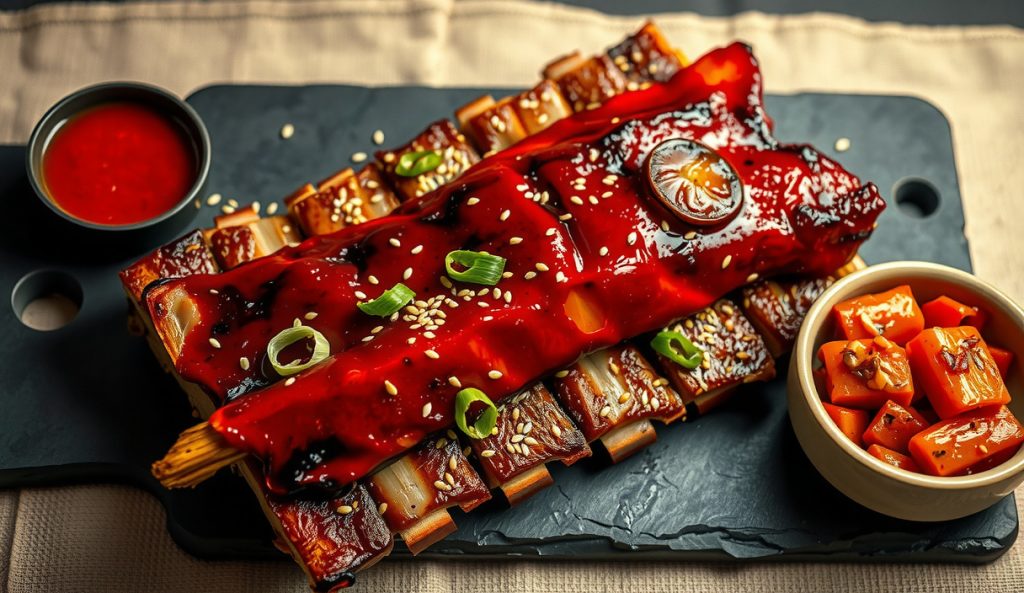
Replace the BBQ sauce in both the braise and the finishing glaze with a blend of gochujang (2 tablespoons), soy sauce (2 tablespoons), rice wine vinegar (1 tablespoon), sesame oil (1 teaspoon), and honey (2 tablespoons). The apple juice in the braise stays — it pairs cleanly with this flavor profile and keeps acidity in balance. Finish the glazed ribs with toasted sesame seeds and thinly sliced scallion greens applied immediately after the final high-heat pass.
Why does the Korean-style glaze work? The flavor science
The Korean-style glaze works because each ingredient contributes a distinct, stackable flavor mechanism rather than simply replacing sweetness with heat. Gochujang activates TRPV1 thermoreceptors through capsaicin, producing a heat perception that builds and lingers differently from black pepper’s piperine-driven bite. Soy sauce contributes free glutamic acid alongside IMP nucleotides — a combination that drives synergistic umami amplification well beyond what either compound achieves alone. Honey’s reducing sugars accelerate Maillard browning at the broiler stage and add a glossy, tacky set to the glaze surface.
What stays the same as the original smoked country-style ribs?
The dry brine timing, spice rub, smoke temperature, braise structure, and internal temperature targets are all unchanged from the base recipe. The same 195°F pull point, the foil pan braise, and the high-heat finishing step apply without modification. This variation is purely a sauce-layer decision — the texture outcome and the cook process are identical to the canonical smoked country-style pork ribs.
When is the Korean-style glaze the better choice?
Choose this variation when cooking for an audience that wants something visually and aromatically distinct from a traditional American BBQ plate. The Korean-style glaze integrates naturally into a mixed spread with banchan, steamed rice, and quick-pickled cucumbers, or any occasion where a bolder, spicier profile is explicitly the goal. The variation also works well as a standalone appetizer format: slice the finished ribs thin, arrange on a platter, and the sesame-scallion finish makes presentation straightforward without extra work.
Use the full method, equipment, and rub measurements from the original Smoked Country-Style Pork Ribs.