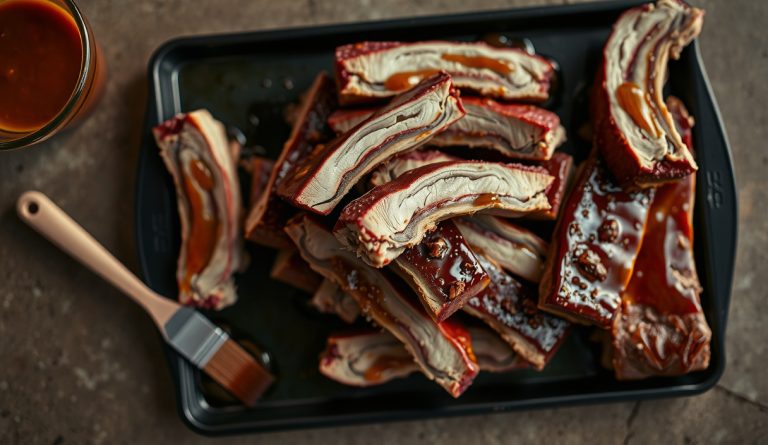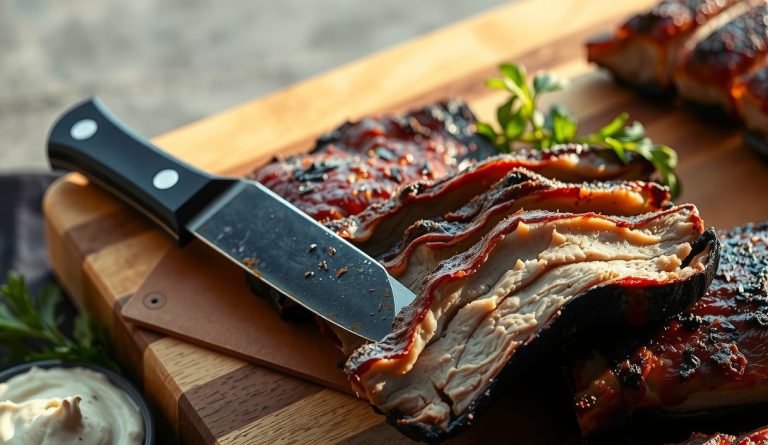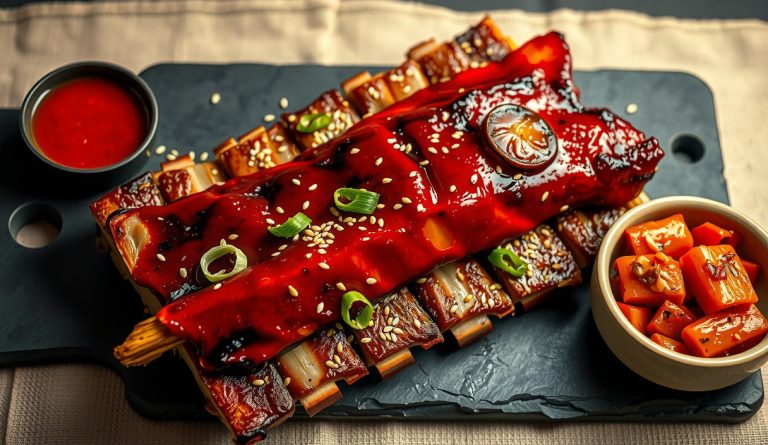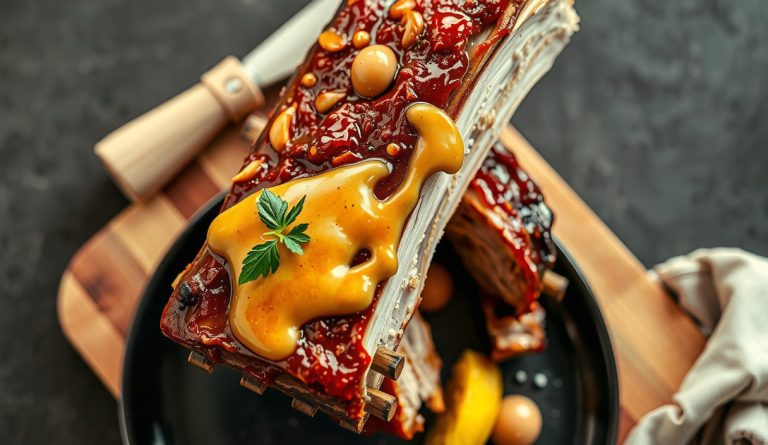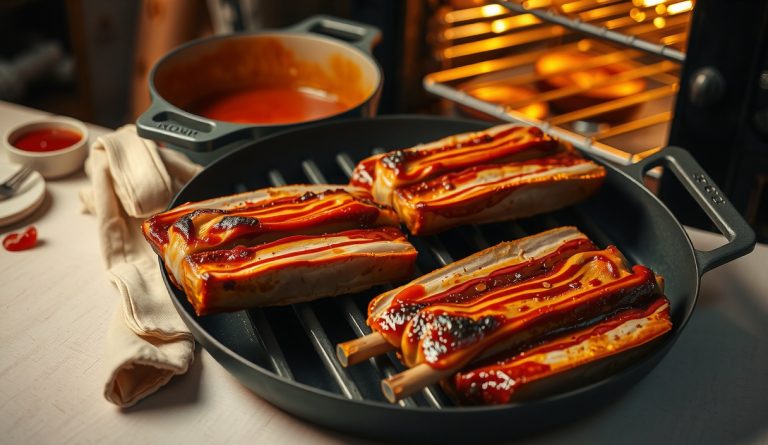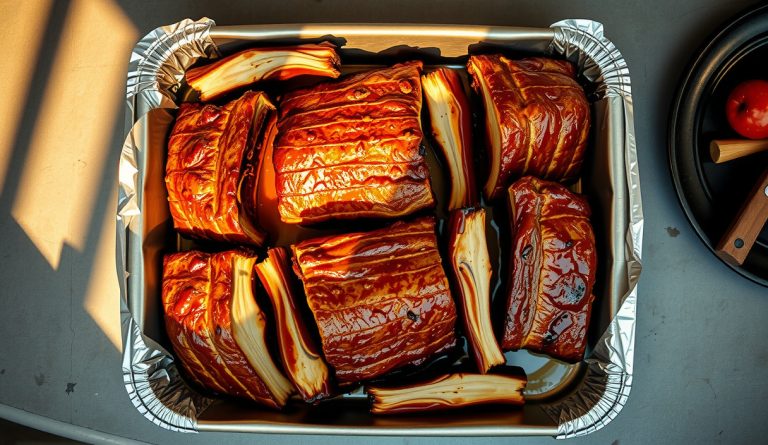
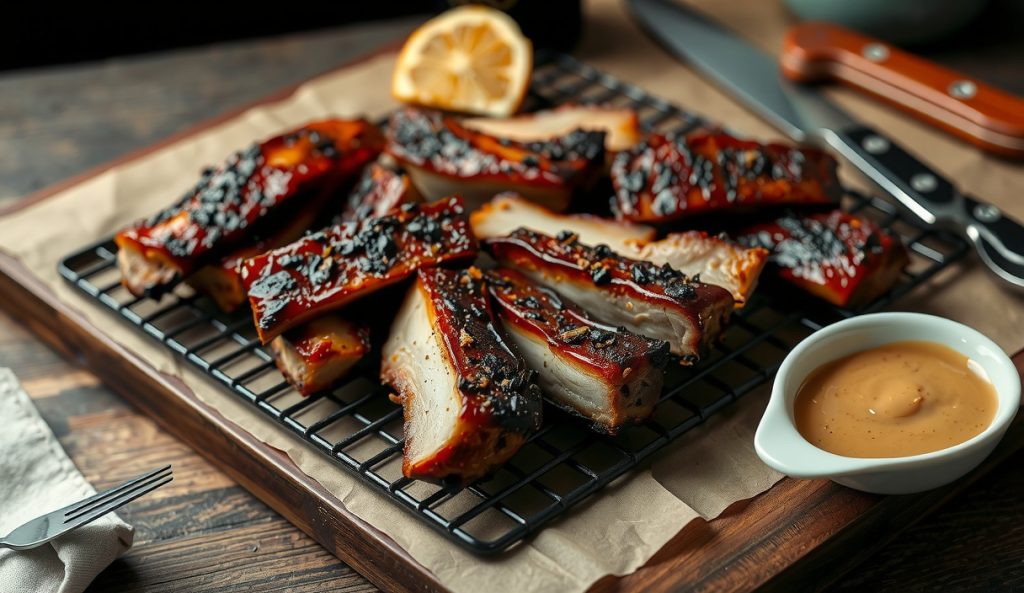
The smoke-and-braise technique at the heart of Smoked Country-Style Pork Ribs is naturally gluten-free in its architecture — pork, hardwood smoke, fire, and time contain no gluten whatsoever. The vulnerabilities are entirely in the pantry: the commercial BBQ sauce in the braise liquid, the finishing glaze, and any store-bought dry rub you reach for. This adaptation names each culprit precisely and gives you the science-backed swap so nothing is lost except the gluten.
What needs to change — and why?
BBQ sauce (braise liquid and finishing glaze). Most commercial BBQ sauces use distilled malt vinegar — derived from barley — or add modified food starch from wheat as a thickener, and some contain soy sauce as a savory backbone. Both are active gluten vectors. Read the label for “malt vinegar,” “natural flavors (contains wheat),” or any starch not explicitly declared as corn or tapioca starch. Certified gluten-free BBQ sauces — Stubb’s Original and Primal Kitchen are widely available with verified GF labels — are direct swaps with no technique adjustment required.
Alternatively, build your own BBQ sauce: combine ketchup made with cider vinegar, brown sugar, smoked paprika, garlic powder, onion powder, and a splash of GF Worcestershire, then thicken with ¼ teaspoon xanthan gum per cup. The viscosity is functionally identical to commercial sauce, preserving the hydrocolloid-phase moisture barrier that protects the meat surface during the braise.
Worcestershire sauce. Standard Worcestershire — Lea & Perrins in the US being the most common — contains barley malt vinegar in its formulation. The US version is widely considered low-risk by many celiacs, but barley-derived ingredients are not certified gluten-free. The safe swap is a certified GF Worcestershire (Wan Ja Shan makes one) or coconut aminos, which delivers the same savory umami depth from free glutamates without any grain-derived vinegar. Use a 1:1 ratio for either substitute.
Dry rub. Pre-mixed commercial rubs occasionally use wheat flour or wheat-based maltodextrin as an anti-caking agent in their spice blends — it will not appear prominently on the label but may hide under “anti-caking agent” or “starch.” Building the rub from scratch — smoked paprika, black pepper, garlic powder, onion powder, kosher salt, dry mustard, and celery seed — guarantees no cross-contamination at the manufacturer level. All of these individual spices are inherently gluten-free.
Apple juice. Pure unfiltered apple juice is gluten-free and carries the mildly acidic pH (3.5–4.0) and reducing sugars that accelerate collagen hydrolysis and drive the final Maillard glaze exactly as the canonical recipe describes. No substitution is needed — simply verify that the label lists no added “natural flavors” derived from grain sources.
Cross-contamination. If your spice grinder previously processed wheat-containing blends, residual flour dust can linger in burr grooves — rinse and dry thoroughly or use a dedicated GF grinder. Sharing a basting brush between a wheat-flour-dusted product and these ribs is also a contamination path; use a clean grill grate or line with foil for the first cook session.
What stays exactly the same?
The entire low-and-slow method — 215°F to 225°F smoke phase, foil-pan braise to 195°F internal, open-lid caramelization finish — is unchanged. The collagen hydrolysis kinetics, the smoke ring chemistry, the Maillard crust formation, and the apple-juice acid hydrolysis mechanism all operate identically whether the sauce label reads “certified GF” or not. This adaptation changes ingredient sources and label choices, not the cooking science.
Who is this version for?
Any table that includes a guest with celiac disease or non-celiac gluten sensitivity — where trace contamination in a shared sauce bottle is a genuine health issue, not a preference — benefits from this fully audited version. It is also the smarter default for any cook who wants to stop reading the backs of sauce labels at every cookout.
For the complete smoke-and-braise method, temperatures, and timing, follow along with the original Smoked Country-Style Pork Ribs recipe.